

Beyond liquidity: Inside Lighthouse Canton’s full-cycle advisory model for UHNW families
by Hamish McDougall
An entrepreneur in London once told Jagjit Singh Matharu that he saw every reason to leave England. Most of his peers already had, chasing lower-tax regimes and friendlier jurisdictions to build wealth faster. He stayed, and gave Matharu, of the wealth manager Lighthouse Canton, the plainest possible reason why. “I don’t want to pay a life tax that’s more than my financial tax,” he said. His parents were getting older. His kids loved their school. “I could sit in a room somewhere and say I’ve got an extra zero to my name,” he told Matharu, “but I’d also have zero friends.”
This very scenario reflects the same argument Matharu makes about wealth at the top end: the financial decision is rarely the real decision. It’s a distinction that mirrors how Lighthouse Canton started by capitalising on a regulatory shift that separated custodial relationships from investment management, allowing genuinely independent wealth management across asset classes and custodians.
An asset management arm followed, with proprietary strategies in real estate, venture capital, and private equity built specifically around gaps other wealth managers weren’t filling. While Matharu joined Lighthouse Canton in 2024, when the firm turned its attention to what he calls the pre-liquidity event scenario.
“Predominantly, wealth management is dealing with liquidity events,” he says, “but the thing is, clients need help and advice along the way.” The moment a business, a shareholding, or a family’s wealth turns from illiquid to liquid, is the point at which, Matharu argues, families need the most help and get the least of it. This fortifies the advisory piece for families in transition by capturing the “full life cycle of wealth management”, from a business still sitting illiquid through to the point it converts to cash and beyond.
The firm now runs as a fully integrated global platform anchored in Singapore, with a large Dubai business, a substantial presence across India, and a growing London office, adding proprietary strategies in real estate, venture capital, and private debt along the way and is on track to achieve US$10b of Assets Under Management (AUM) by 2027. Artificial intelligence sits at the centre of where the firm is investing next, both inside the business and in the digital interface clients use to interact with it.
What hasn’t changed, Matharu says, is the instinct that separates a good outcome from a bad one: understanding what a family actually wants, long before it’s time to write a cheque.
Why volatility doesn’t move the plan
“Smart people don’t panic,” Matharu says of how clients have behaved through recent turbulence. They might shift gears on the parts of a portfolio that are easy to manage—dropping leverage, adjusting an exposure—but the strategic decisions, the ones with a 20- or 30-year view attached, tend to hold their shape. He points to the UAE as the clearest recent test of that thesis: despite regional conflict, year-on-year growth has held up by his account, which is supported by views from Knight Frank and CBRE, and strategic investors moving into the market for the first time have largely kept their plans in place, adjusting timelines, or negotiating leverage rather than direction.
The aim, Matharu says, is simple to state and harder to deliver: to be there for “the relevant conversation with the client, regardless of which stage of the life cycle they are in”—which is why hiring, in his account, has been deliberately measured rather than rapid.
Real estate, in Matharu’s telling, has been reframed. Where clients once measured a property purely on capital growth and income, he now hears clients talk about “security yield”—an asset’s ability to anchor a family that moves between jurisdictions, or, in the case of commercial real estate, to give a client something to be operationally involved in, rather than simply own.
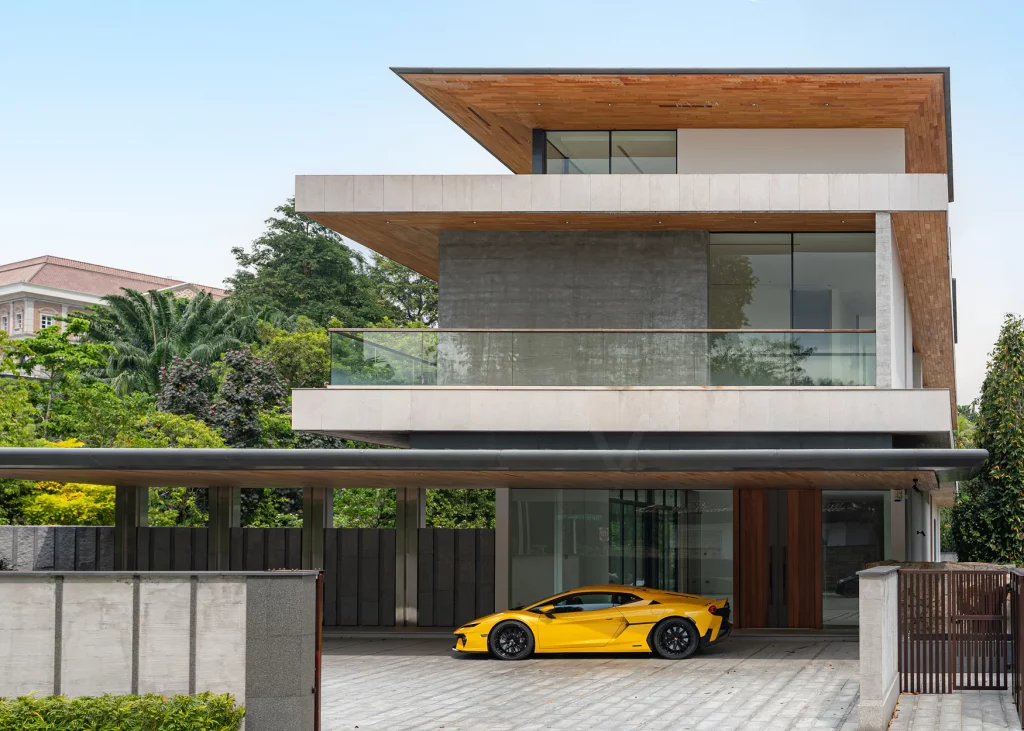
A newly built good class bungalow, for sale in Singapore. Top: Inside the Porsche Design Tower in Bangkok.
Underneath both observations sits what Matharu calls a flywheel effect: succession plans, life choices, and investment strategy moving in lockstep, on a much longer lens than a single transaction. “If you look in isolation, someone’s gone and bought a big GCB in Singapore,” he says, “but there’s a lot more attached to that than meets the eye.” Non-financial factors—proximity to ageing parents, a child settled at school—routinely outweigh a more favourable tax regime elsewhere, which is precisely the calculation his London client had already made for himself.
Connection over transaction
At a certain level of wealth, Matharu says, disposable income stops buying one more asset and starts buying a lifestyle built around several. Clients now track a calendar across third, fourth, and fifth homes—a chalet in Verbier for winter, a base near Cannes for film season—and create a kind of silk road strung between their own properties. In Asia Pacific specifically, Singapore and Hong Kong remain the anchor points for the region’s wealthiest, but entrepreneurial clients are increasingly adding a third market, rather than relocating outright.
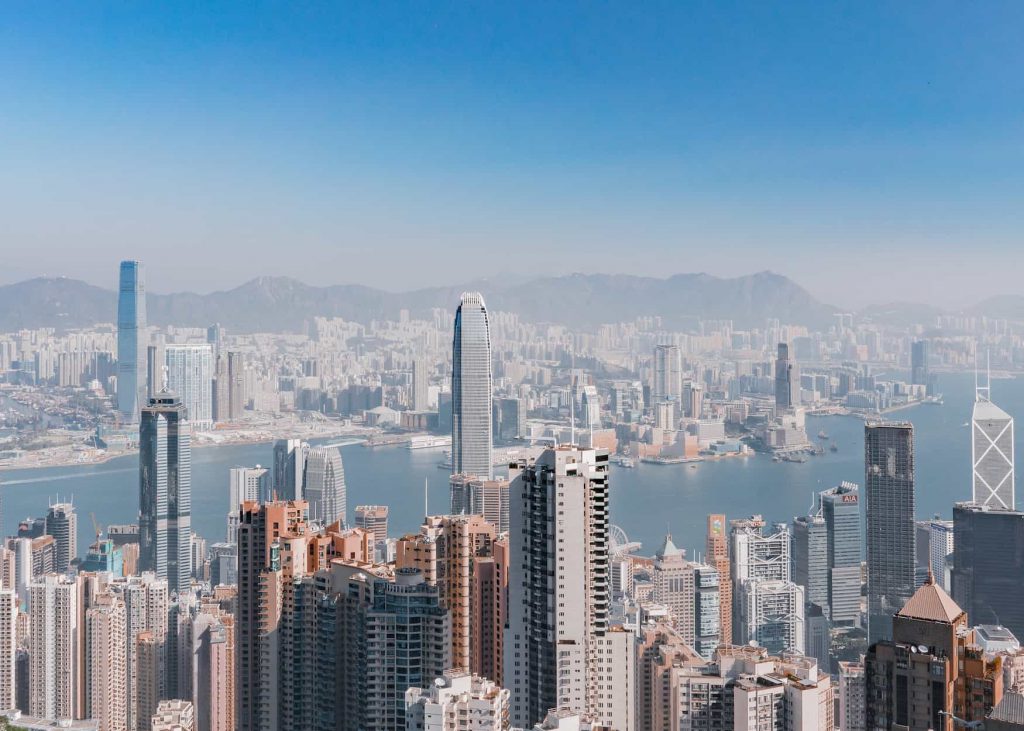
An aerial view of Hong Kong.
Bangkok is one of the markets doing that well, and Matharu points to the Porsche Design Tower as the clearest evidence—a project by Thai firm Ananda Development, founded by Chanond Ruangkritya, Matharu has followed the firm’s growth over 15 years across more than a hundred Thai condominium developments in the region. What impresses him isn’t the branding so much as the standard: HVAC and building systems designed for owners who might only be in residence a couple of months a year, built to a level that most developers in the region don’t bother reaching.
That standard, Matharu argues, is the exception rather than the rule—most developers still chase the wrong details, fixated on unit-level finishes over what he calls hygiene factors: connectivity to the airport, schooling, healthcare, a workable tax and residency regime.
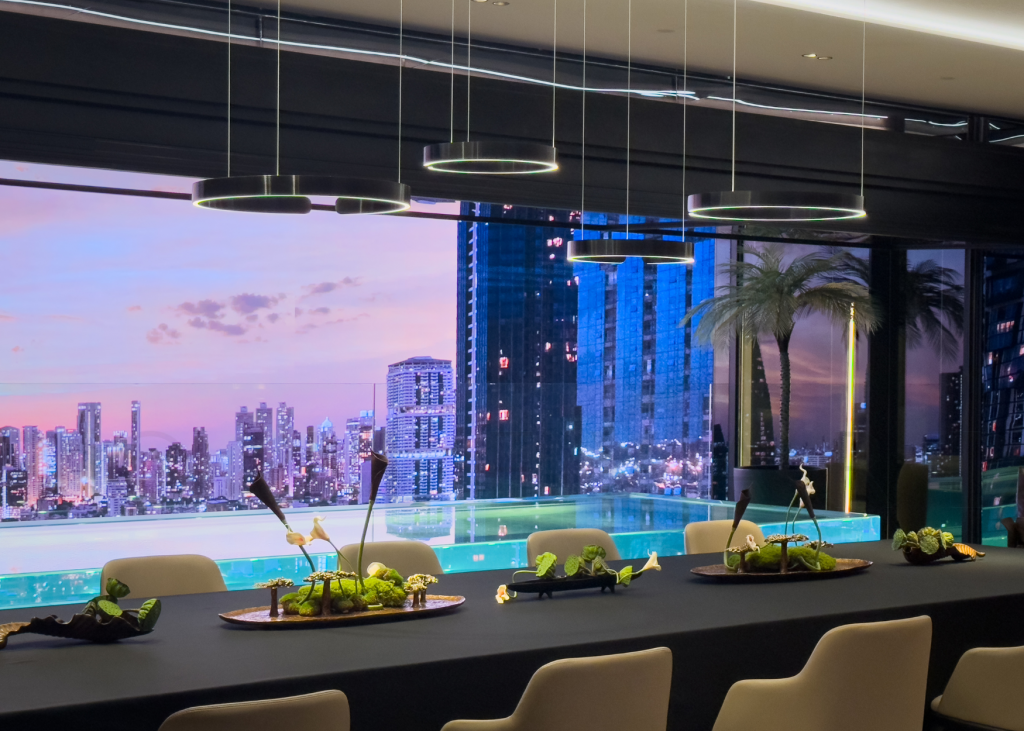

The Porsche Design Tower’s crown design draws on the intricate lighting details of the marque’s heritage.
Clients now come to Lighthouse Canton wanting help with exactly those gaps—currency questions, introductions to peers who’ve made the same move, an honest account of what life actually looks like—beyond the brochure. Buyers’ fatigue, in Matharu’s experience, comes from being shown the same properties by the same people in the same way for months on end, until even a genuinely good option gets tainted by association. “People lead with the transaction and not the connection,” he says.
The generation now inheriting that wealth wants something quieter than the one before it: privacy over display in cars, in business class cabins, in homes that no longer need to seat 40 people once a week. The old model of one sprawling, intergenerational family house is fading in favour of personal space and experience. This is a generation that draws knowledge from short-form media, peer conversation, and AI tools rather than analysts, and the intergenerational arguments Matharu mediates have shifted shape accordingly—growth versus sustainability, rather than growth versus caution.
His own job, distilled, is to listen to every voice in a family and advise the group as one. What he says he’s still learning, after two decades in the industry, is how rare real patience is: a client once told him that “having a few billion dollars is like carrying a barrel full of water—spend your time just making sure it doesn’t spill over the top—while everyone else is still trying to fill theirs up.”
Read next:
- Why family offices and fund managers are trading Singapore’s priciest leases for flexible co-working at Arcc Spaces
- The interview: Proudputh Liptapanlop on Thailand’s evolving luxury property landscape
Explore international luxury properties.
The brief: Lighthouse Canton
Headquartered in Singapore, Lighthouse Canton is a global investment institution with wealth management, asset management, advisory, and capital solutions capabilities. Operating across Singapore, Dubai, India and London, the company oversees over USD 6 billion in assets under management as of 30th June 2026. Named best independent wealth manager for Asia, Singapore and UAE at the 2026 Euromoney Private Banking Awards, Lighthouse Canton creates value through innovative investment solutions for accredited private clients, institutional investors, and an ecosystem of founders and entrepreneurs globally.
Jagjit Singh Matharu is a Managing Director of the Key Clients and Institutions business at Lighthouse Canton and joined the firm in late 2024. Matharu had over two decades of experience in originating and delivering landmark transactions, wealth and asset management advice for ultra-high-net-worth individuals, family offices, and institutional clients from all over the world
The model: Most wealth management begins at the liquidity event. Lighthouse Canton moved deliberately upstream of it: mid-2024, the firm built out advisory for families whose wealth is still tied up in a business, this focus was established by the incoming leadership of Amrit Singh, Balaji Prasanna and Henrik Aslaksen who are well known Investment and Private Banking Global leaders. Jagjit Singh Matharu was the first to join the new division in late 2024—to cover what he calls the full life cycle of wealth management, from illiquid holding through conversion to cash and everything after. Running alongside it are proprietary strategies in real estate, venture capital, and private equity, built around gaps other managers weren’t filling.
What’s changing: Two shifts Matharu reports from the top of the market. Real estate is no longer underwritten on capital growth and income alone but on what clients now call security yield: an asset’s ability to anchor a family that moves between jurisdictions, or to give an owner something to be operationally involved in. And the strategic layer of a plan has stopped responding to volatility: clients trim leverage and adjust exposures, but 20- and 30-year decisions about where the business, the property, and the family sit hold their shape. He cites the UAE through recent regional conflict as the clearest test—timelines renegotiated, direction unchanged.
The takeaway: Lighthouse Canton’s actual product isn’t a portfolio or a property—it’s the years spent understanding what a family wants before the moment it has the money to act on it. The industry’s persistent error, in Matharu’s account, is the reverse: leading with the transaction instead of the connection.
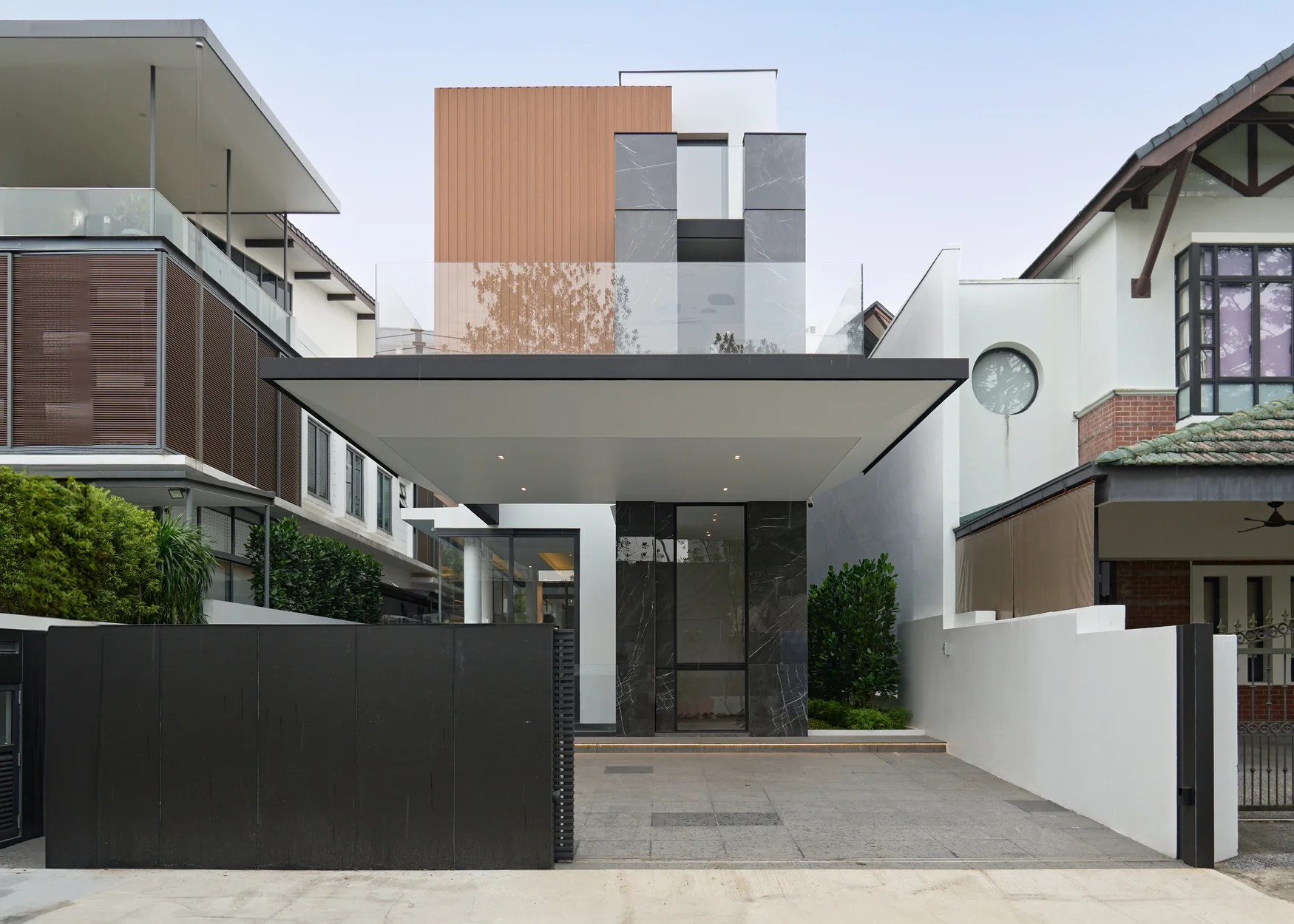
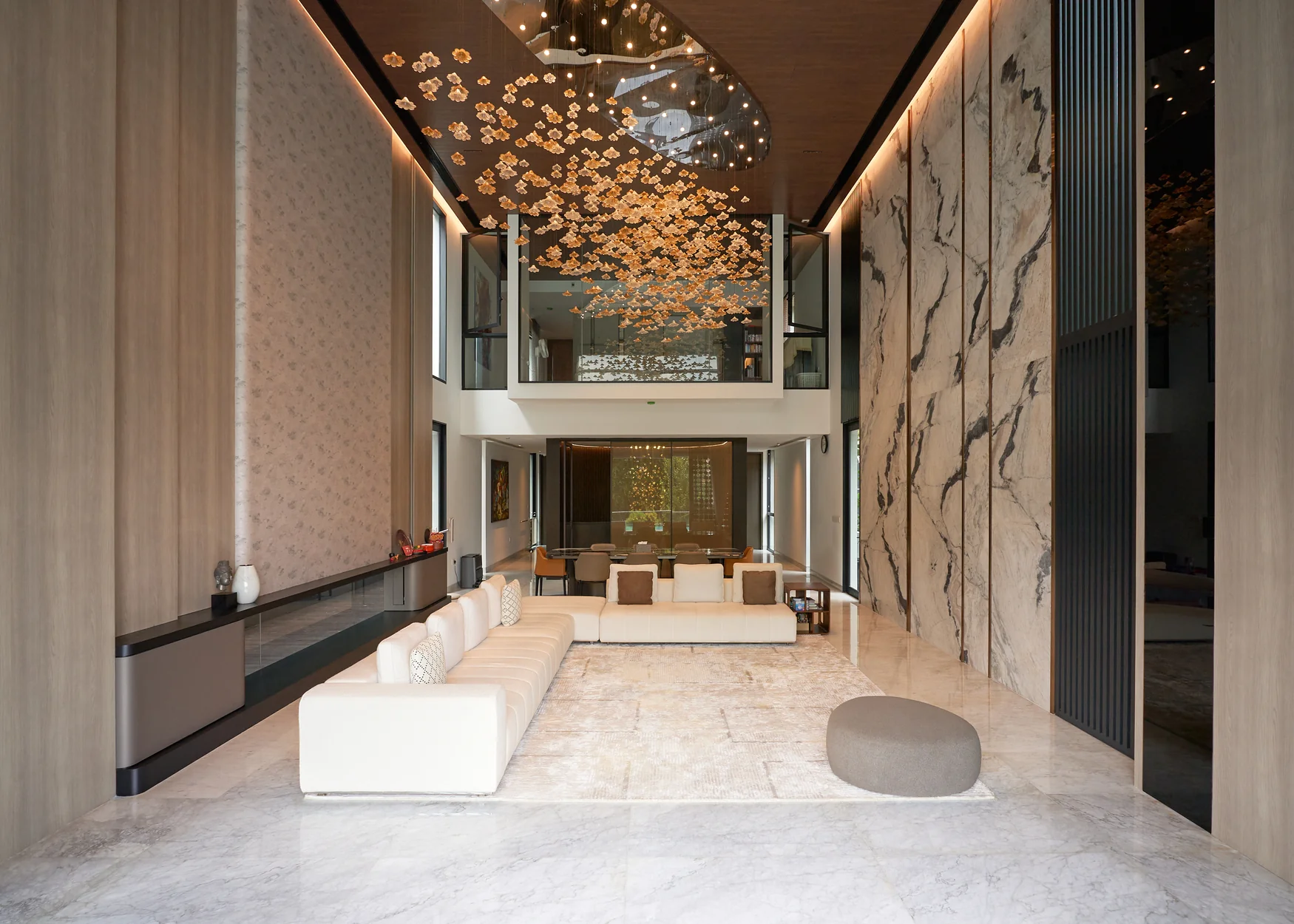
8+1 bed | 10,200 sqft area 19,500,000 SGD
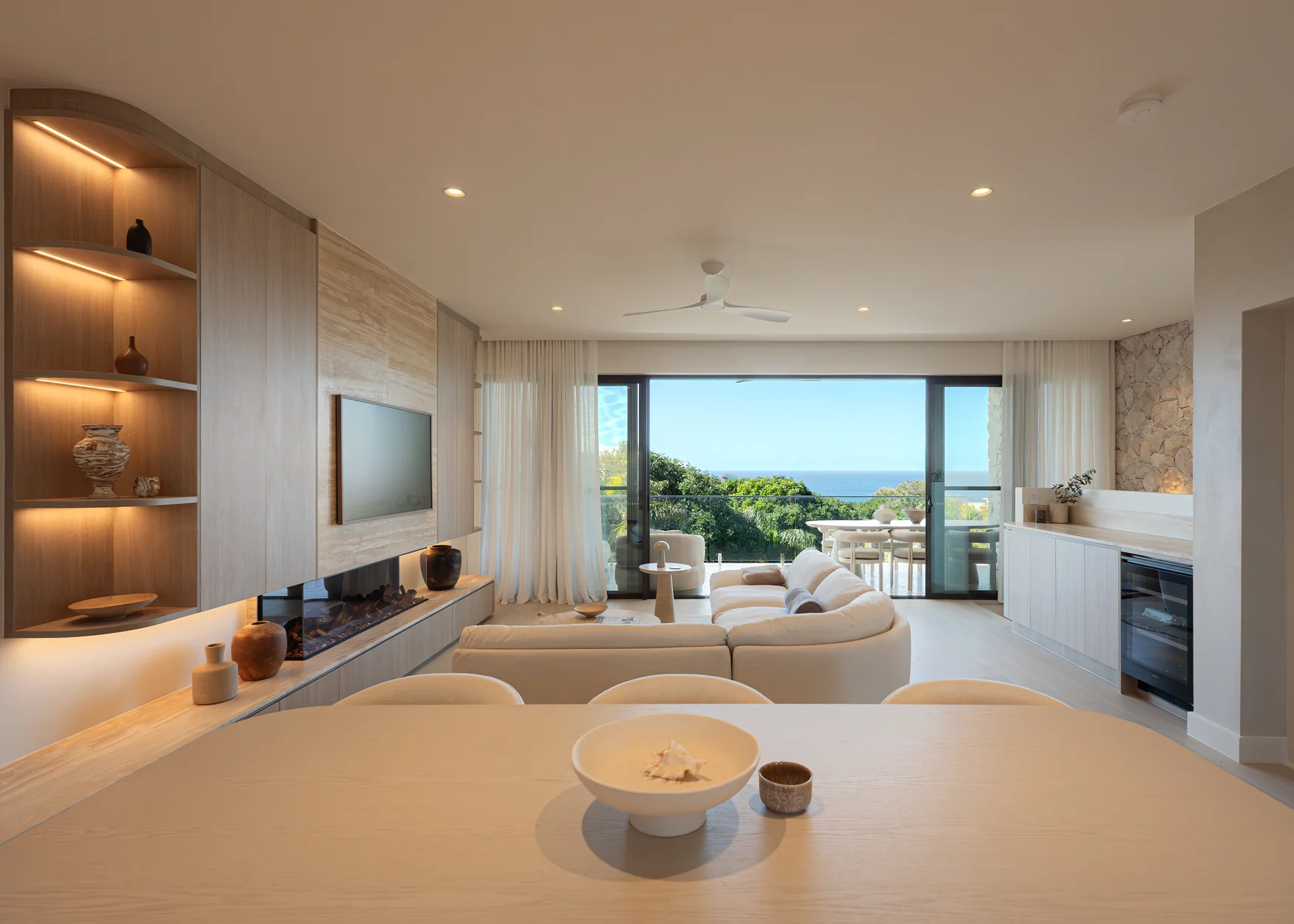
5 bed 19,380,000 SGD
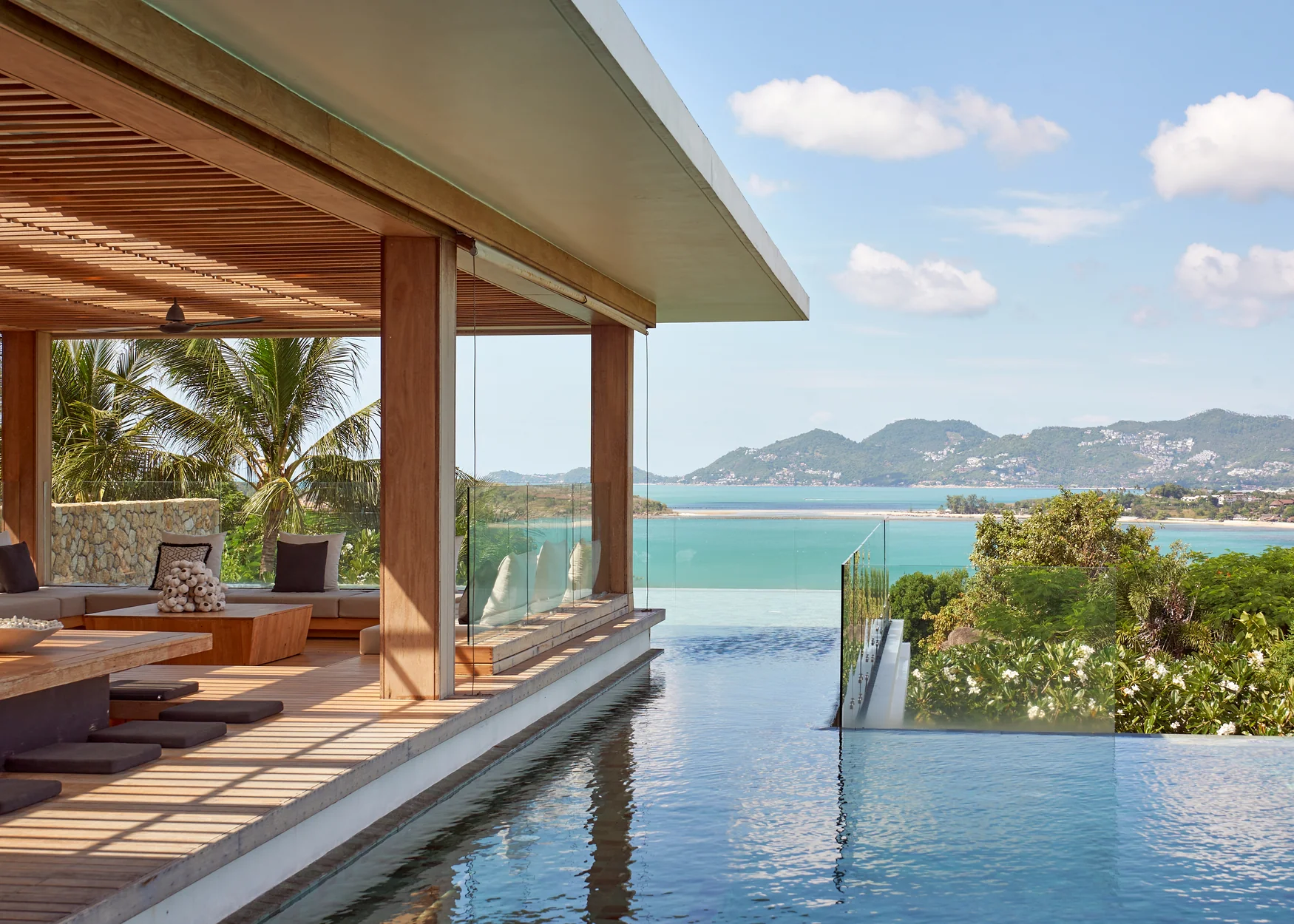
4 bed | 4,208 sqft area POA
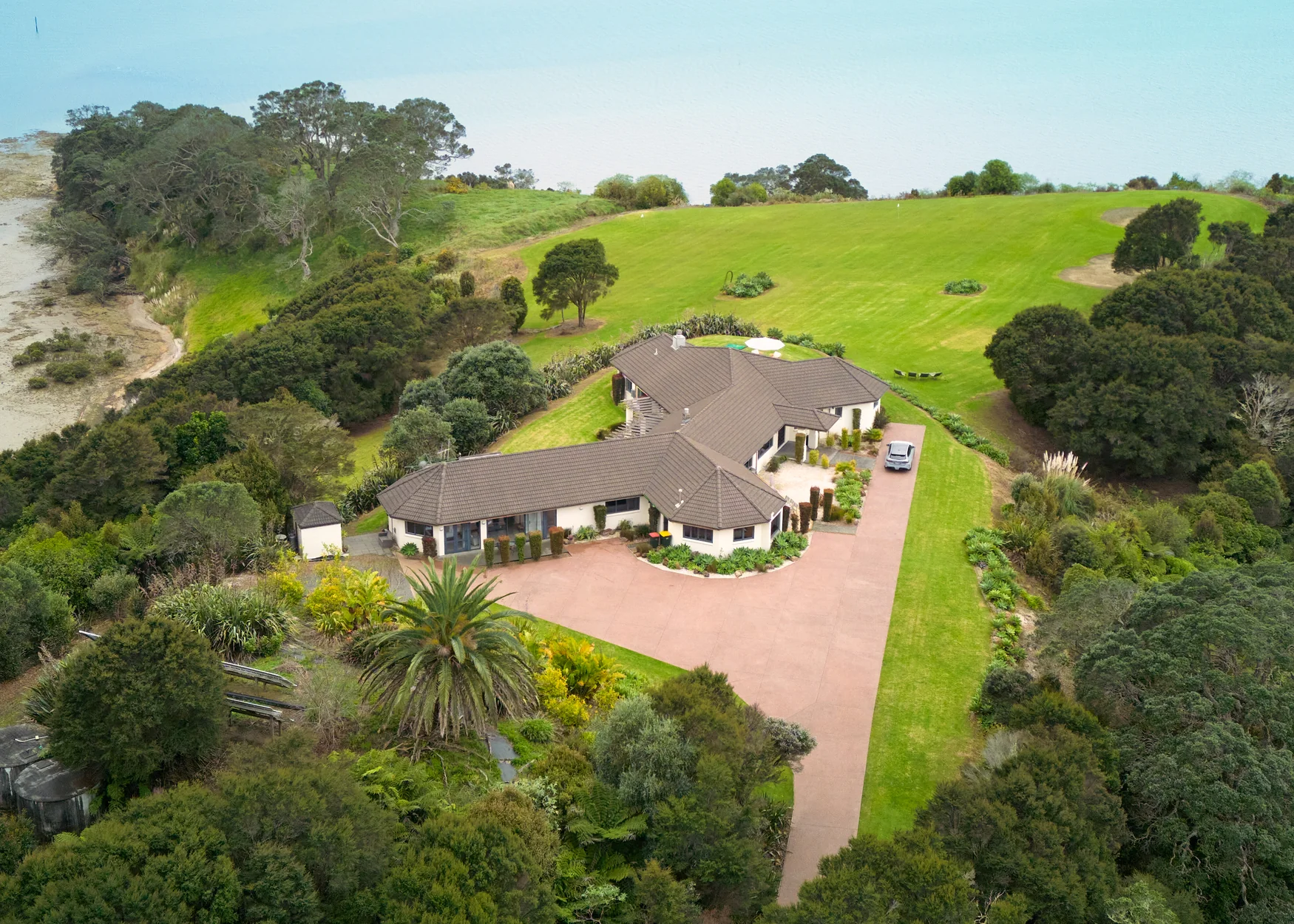
3-8 bed | 699,654 - 784,080 sqft area POA
6 bed POA