Why family offices and fund managers are trading Singapore’s priciest leases for flexible co-working at Arcc Spaces
by Mac Fabella
Interview by Karishma Tulsidas
Arcc Holdings has been buying, leasing, and subdividing office space in Singapore for more than three decades, long enough to have watched the shared workspace industry arrive in the mid-2000s, swell through the WeWork years, and settle into something more segmented today. Its premium serviced office provider arm, Arcc Spaces, now operates nine locations across Singapore, Kuala Lumpur, Shanghai, and Hong Kong. The latest addition just opened at the Bank of Singapore Centre in Raffles Place.
Running the business is Justin Chen, who joined the family company his father, Tony Chen, built out of Singapore real estate. “In this day and age, with so much access, gone are the days you can dominate one industry,” he shares. “Our strategy is to take a more nuanced, bespoke position.” He has spent the last two decades transforming what began as a leasing arbitrage into something closer to a hospitality brand, and the timing is not incidental. Singapore’s CBD has recorded six consecutive years of rising Grade A rents, and the pipeline of new office supply through 2027 is running at less than half of what historical demand would require, a squeeze that is pushing companies who once assumed a 10-year lease was the price of a Raffles Place address to weigh their options differently.
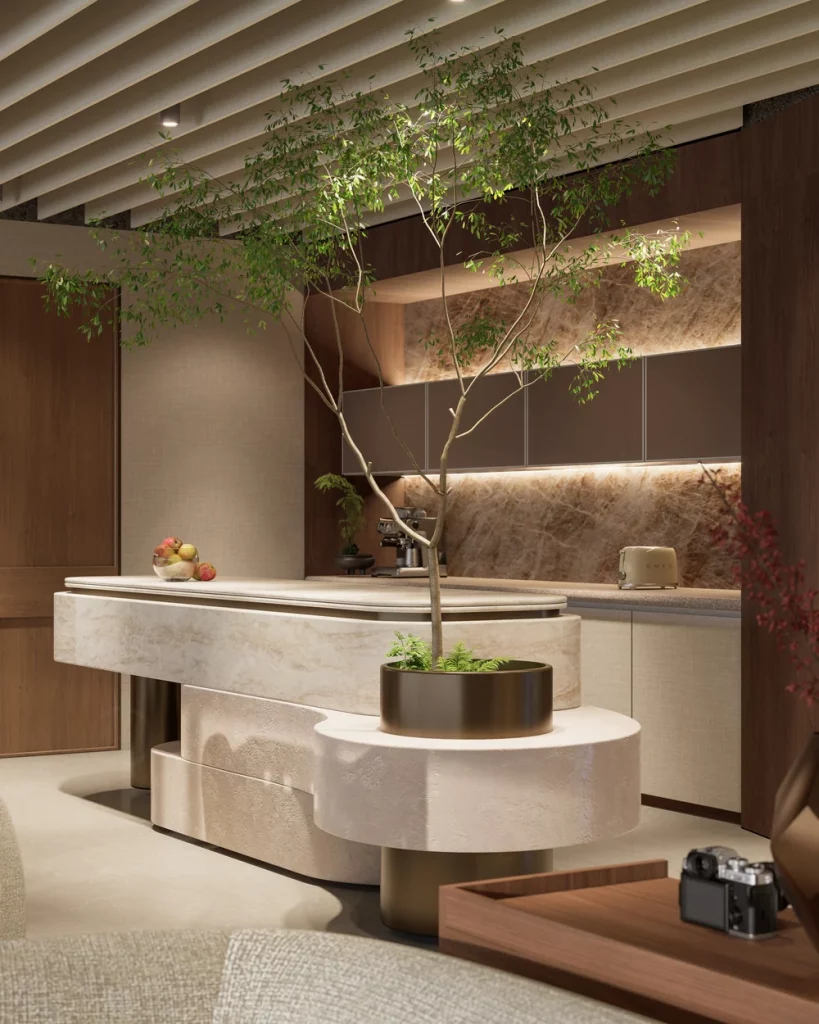
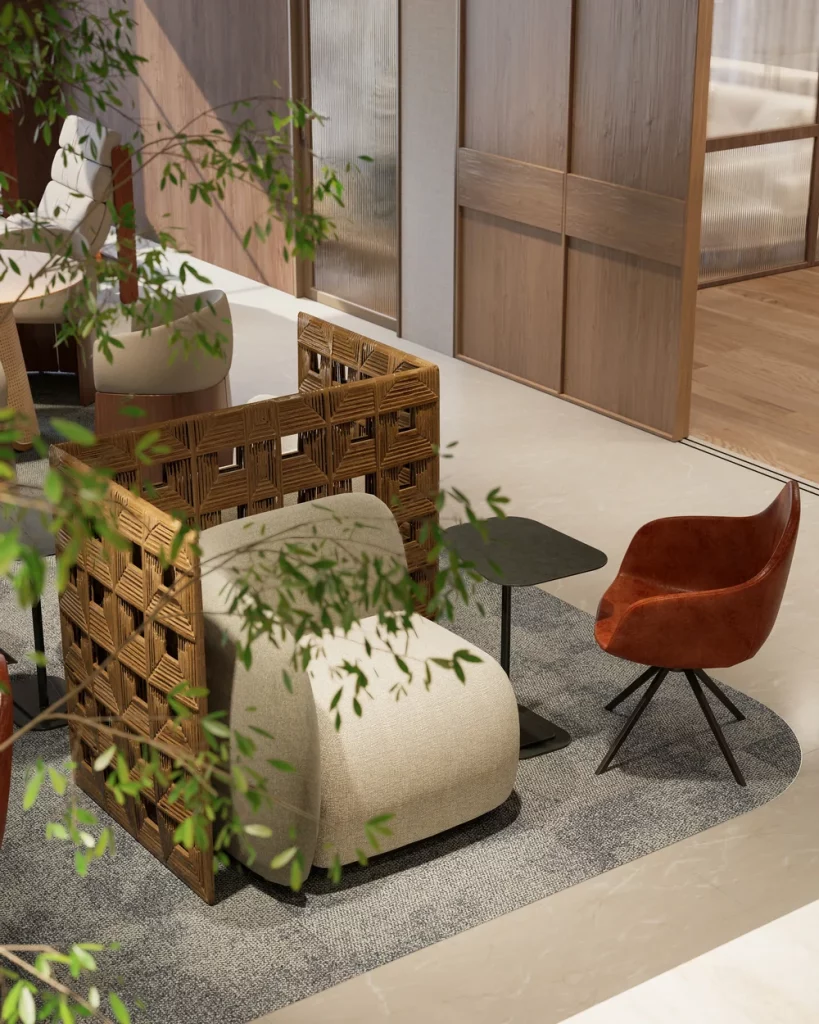
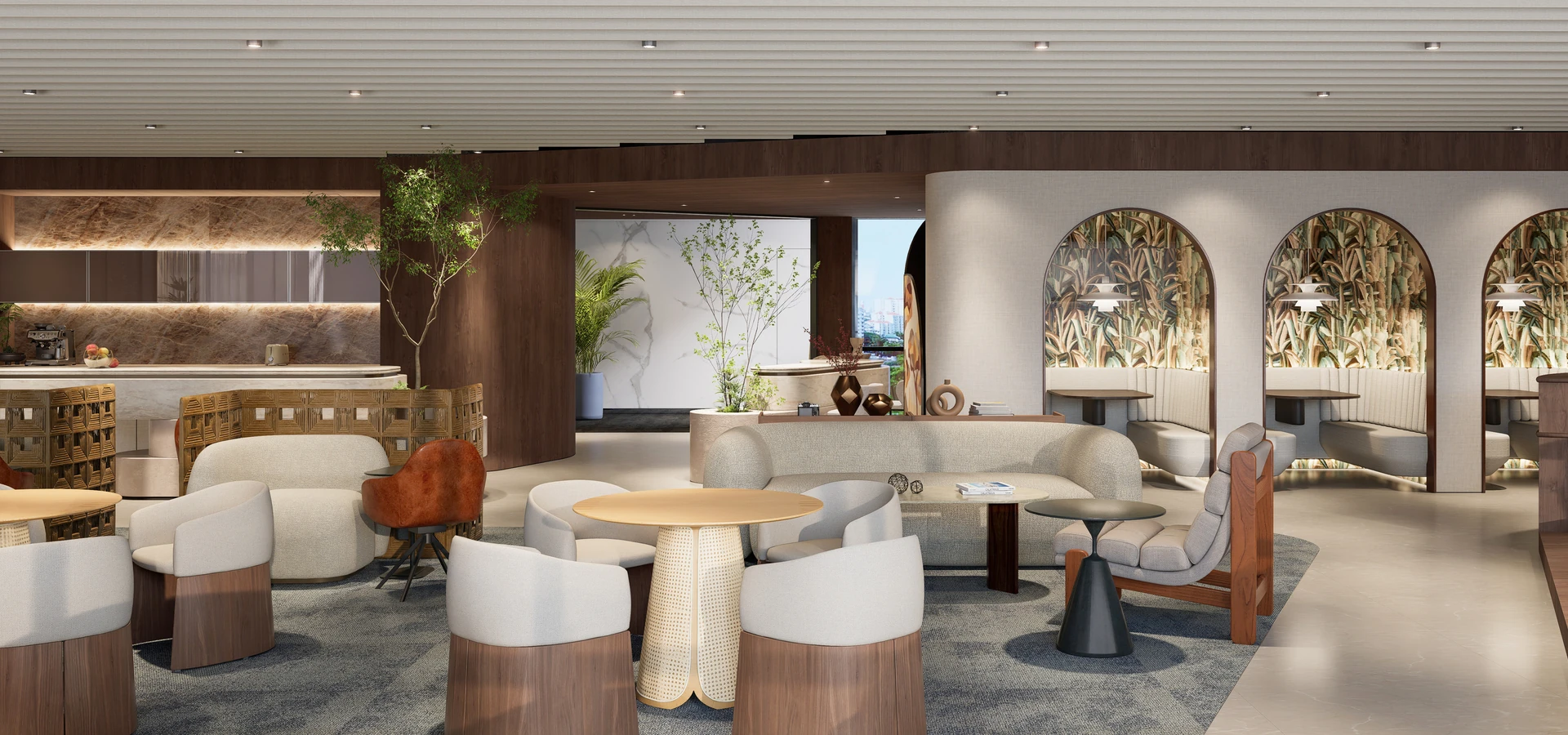
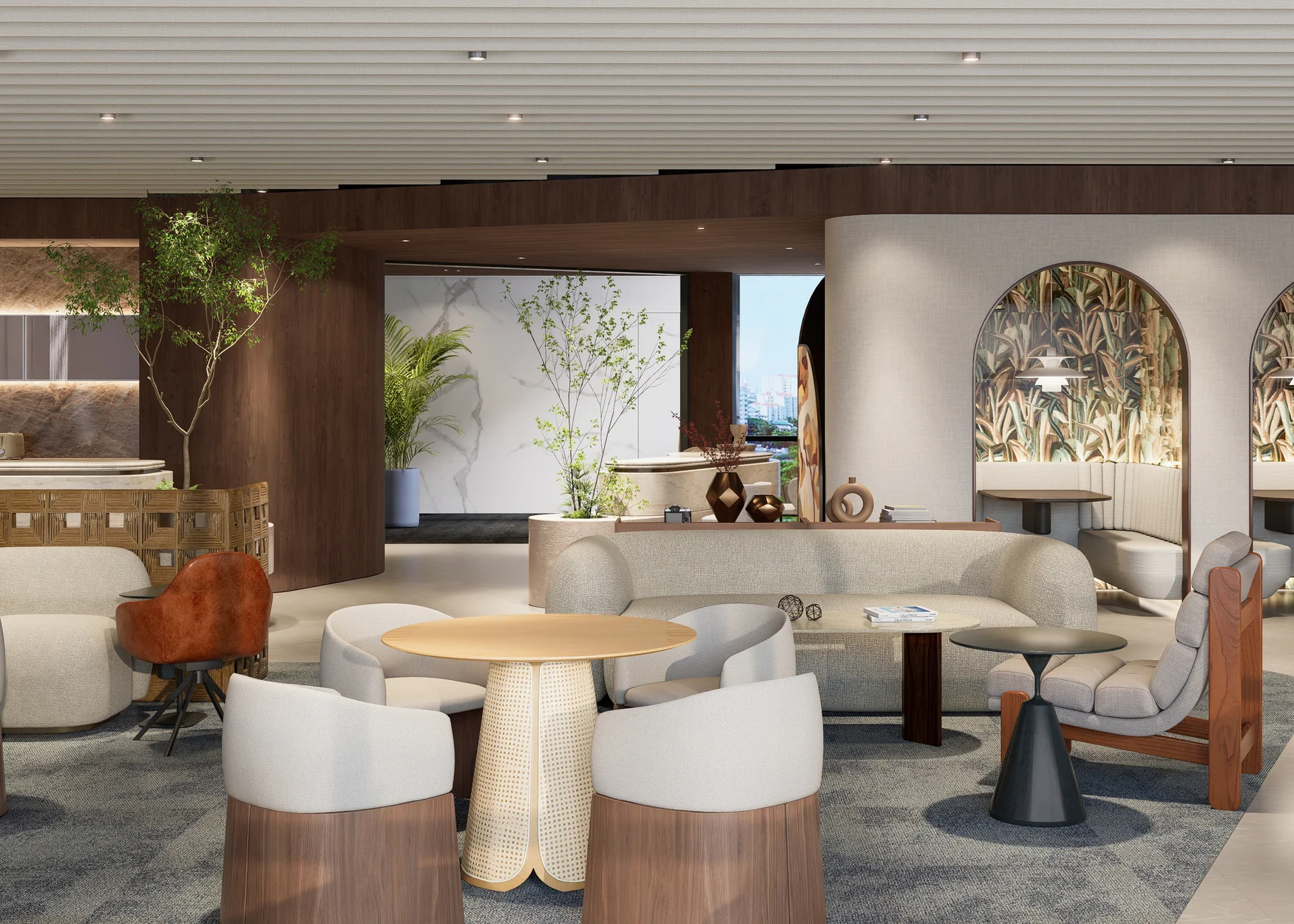
Artist’s rendering of the social bar (left) and furniture details (rights) in Arcc Spaces’ latest location at Bank of Singapore Centre in Raffles Place. Top: A wide view of The Landing Room, a signature hospitality-led welcome and social hub located on Level 7. (Photos courtesy of Arcc Spaces)
The decision to take three floors at 63 Market Street was a bet on what their own occupancy was telling them: Arcc’s One Marina Boulevard location is practically full. The wider backdrop helped too. “Singapore still holds such strong appeal, especially in the midst of all this geopolitical uncertainty,” he says. He adds that the city-state probably has the most diversified and developed shared workspace market in Asia. “You see the full range, from startup-style accelerator spaces all the way up to premium spaces such as ourselves.” At Bank of Singapore Centre, he found a tenant base that skews smaller than a typical office lease might attract; the average client comprises around seven people, drawn heavily from family offices, fund managers, and corporate consultancies. “They require a certain kind of prestige,” Chen remarks. “The credibility effect, especially as a small SME, is important to cut through the noise.”
That demand has been decades in the making. Chen remembers a time, in the early 2000s, when explaining the very idea of a serviced office required a comparison: “it’s like a serviced apartment, but an office.” The product only really entered the mainstream with WeWork’s arrival in the mid-2010s, which is when co-working began accumulating layers beyond simple cost and flexibility: design and branding, staff welfare, and, for a period, an intense sense of community and networking. Some spaces specialised by industry; Chen once ran a co-working floor called The Co at 75 High Street built almost entirely around scale-up tech companies, counting Evernote, Hootsuite, Sequoia Capital, and Coca-Cola among its early tenants. As the market has expanded since, he says that early intensity of community has thinned out, spread across tenants who now come to shared space for a mix of reasons—cost, flexibility, or a specific network—rather than one shared identity.
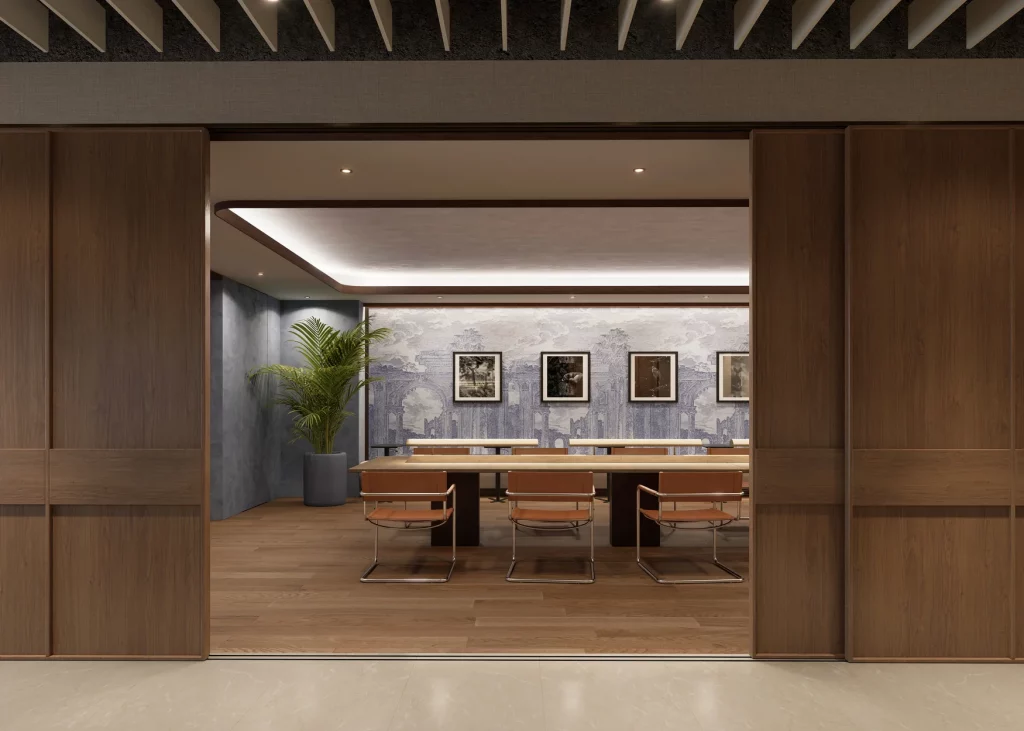
Artist’s rendering of the conference hall on Level 7 of Arcc Spaces, Bank of Singapore Centre. (Photo courtesy of Arcc Spaces)
He expects that to reverse, though. Once the market consolidates, Chen sees room for community-centric spaces to return, built around narrower groups: artists, filmmakers, production, makers, the tech community. He points to experiments already testing the idea, including a space for working mothers with a daycare centre attached, one for F&B start-ups with a shared test kitchen, and a maker space fitted with 3D printing and a woodworking shop. “These kinds of specialised, niche products still have a place,” he says, “especially now that it’s much more accessible to find your tribe.”
Another formative chapter in Arcc’s story was a members’ club it ran in Beijing back in 2016, called The City, built with an attached restaurant on top of an existing office floor once members started asking for more private space to entertain and host events. The club has since closed, but Chen credits it as the project that taught the group how to think about hospitality design, how a space should feel, how welcoming and multifunctional it needs to be—lessons he says carried directly into Arcc Spaces’ newer locations and eventually into Else, the group’s own hotel brand.
The Bank of Singapore Centre hub itself follows that hospitality logic. Spread across levels five to seven of 63 Market Street, the 25,782 sqft space is finished in deep autumn tones, terracotta, ochre, burnt orange, alongside natural materials and greenery, a deliberate departure from the beige-and-glass default of a corporate fit-out. Enterprise suites can be customised to a tenant’s own branding by Arcc’s in-house design team, while open lounges, alcoves, a members’ lounge, and a full run of meeting and conference space fill out the rest. The property now counts family offices, fintechs, law firms, education and recruitment businesses, and at least one steel trading company among its tenants.
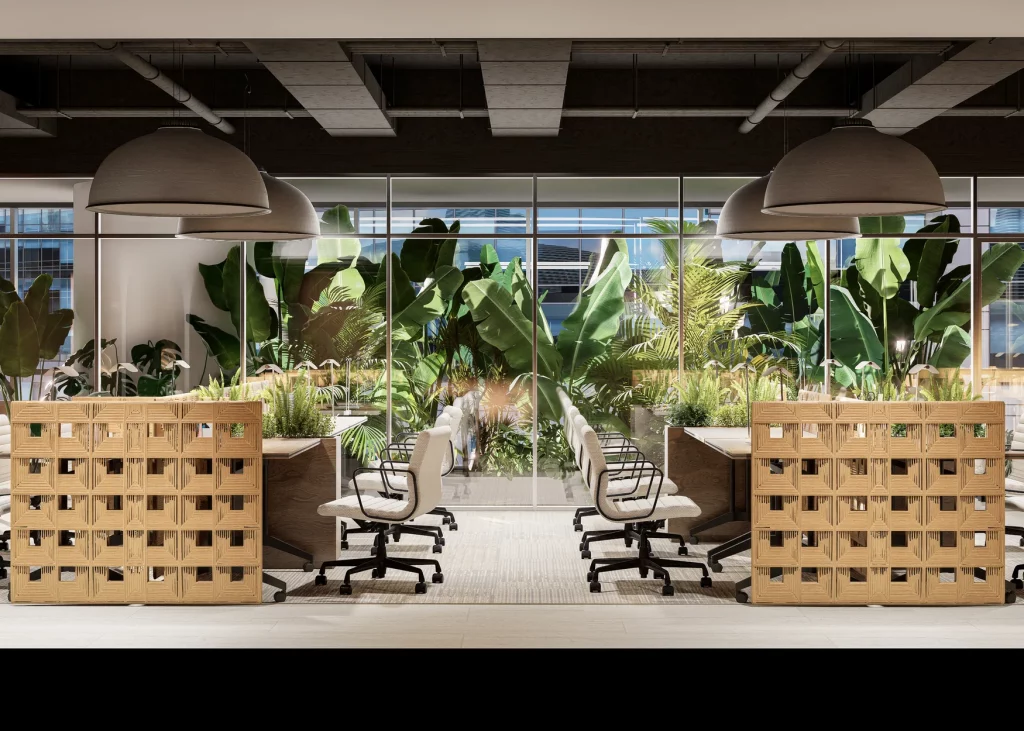
Artist’s rendering of the coworking studio. (Photo courtesy of Arcc Spaces)
The architect’s brief
Chen is an architect by training, though he is quick to reframe what that actually taught him. “I don’t describe architecture primarily as a design background,” he states. “What I’ve appreciated most about it is problem-solving.” He explains it this way: an architect receives a brief from a client, and the job is to understand the need, ask the right questions, assemble the right people, and coordinate the whole process through to delivery. “That end-to-end process taught me the value of working with people,” he says. “The other thing is intentionality, knowing the right questions to ask, because if you start with the wrong questions, you get the wrong answers.”
That framing shapes how Arcc allocates its own resources, deciding what the group builds in-house and what it hands to partners. It also shapes what keeps Chen up at night, which he says has less to do with the property business than with people—bringing together the right teams, motivating them, and orienting them towards the same goals and focus. “I think that is continuously the mission, and I suppose also the challenge that we have,” he remarks, pointing to the widening gap between what different generations want from work as one of the harder problems to design around. “I hold the view that if you solve the people side, the business side naturally follows.”
Chen traces some of that instinct to his own background. Canadian by nationality, with family from Shanghai and Hong Kong, he grew up across Asia, mostly in Singapore, with stretches in Africa and North America along the way. “That’s afforded me the vantage point to recognise there are multiple perspectives, that things aren’t black and white. They’re more grey,” he shares. It is a perspective he thinks is getting harder to hold onto. “Attention spans are increasingly shortened,” he says. “People can only look at the headlines, or need shorthand to understand situations. We don’t have the time, or the interest, to try to understand each other any more. People are more focused on the things that separate us, such as views or identity, and we’ve forgotten there are more things that bring us in common.”
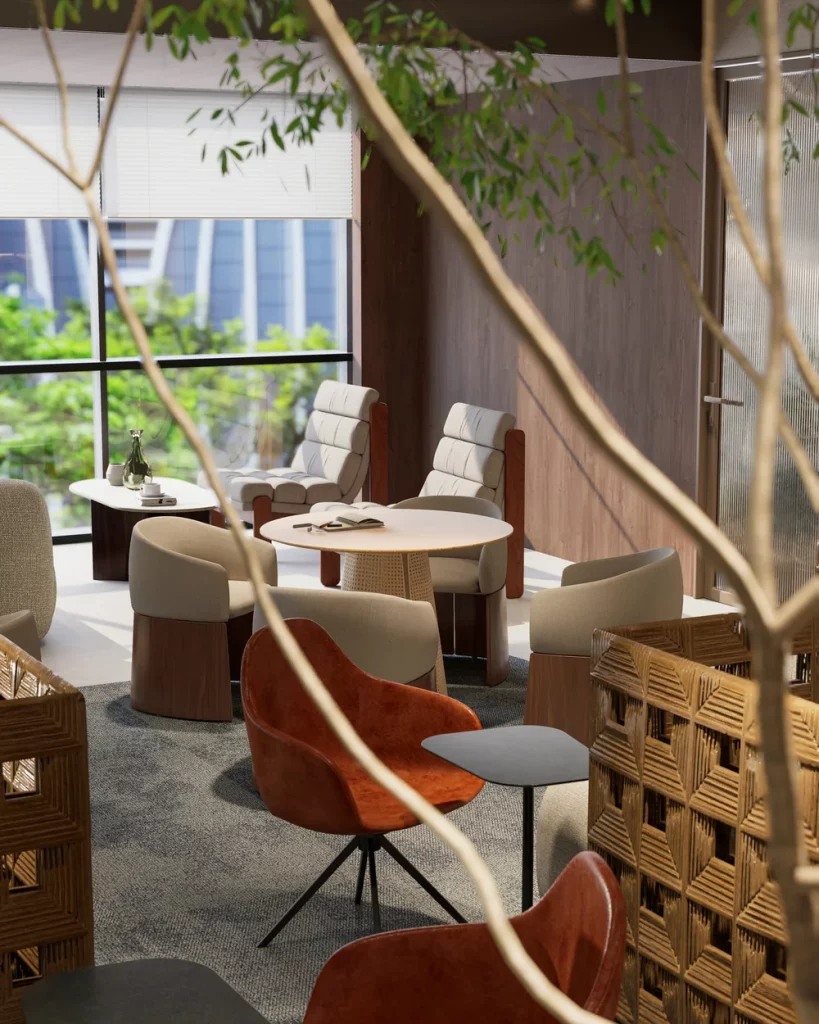
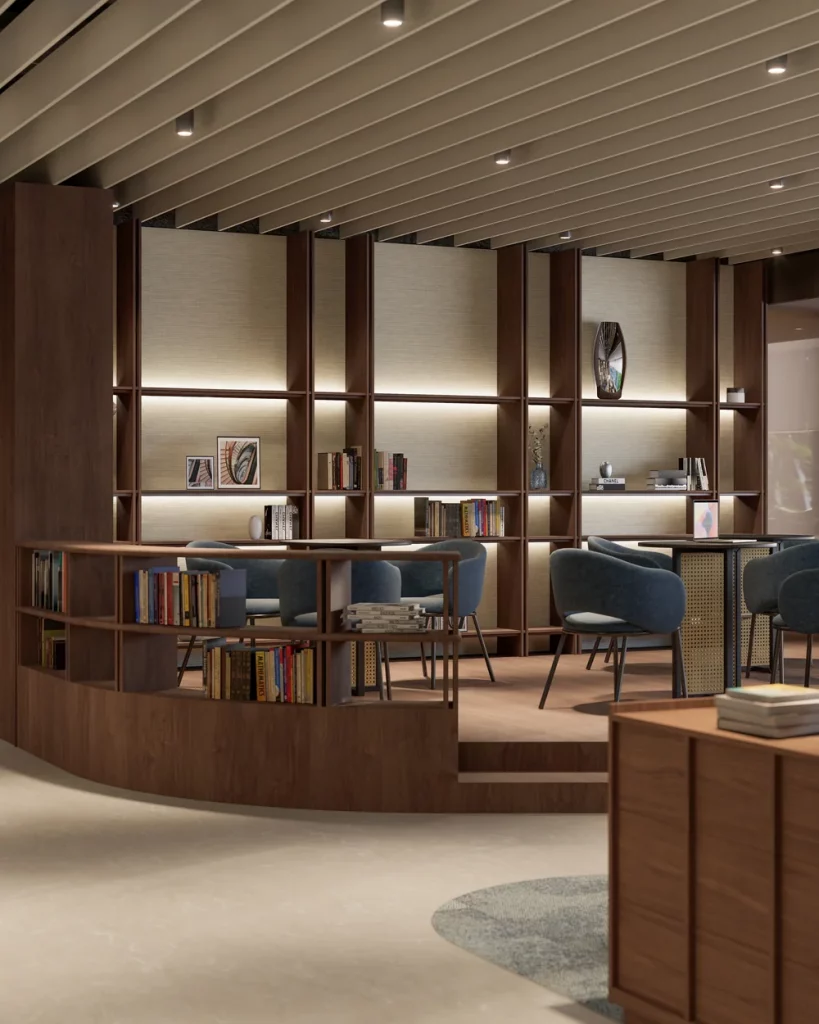
Left: Seating in The Landing Room. Right: The Library. (Photos courtesy of Arcc Spaces)
Building rooms for conversation
That is, in Chen’s account, the real job of a space like Arcc’s: not premium desks and meeting rooms, but a reason to be in a room with other people. “We’re in the business of creating spaces people want to gather in, to have face-to-face conversations again, because I think we’ve lost so much of that,” he says. It is why the group runs a regular calendar of community events and its own talks series, Being.Human, pairing entrepreneurs, changemakers, and authors with members who might not otherwise cross paths.
It is a theme that seems to follow Chen outside the office too. This year, alongside a heavier travel schedule, he has been building two pottery studios, one in Malaysia and one in Japan, deliberately unconnected to Arcc. “You realise you sometimes need to take yourself out of context to understand your current context better,” he said. For a business built on getting people back into the same room, it is a fitting way to spend the time in between: hands on clay, away from a screen, relearning what it feels like to make something slowly.
Read next:
- The interview: Anya Evans on why investors should not ignore consumer brands in the beauty, lifestyle and fashion space
- The precious metal refusing to tarnish: Watch and jewellery insiders on the rising prices of gold and how the luxury market is adapting
More CEO interviews from Boulevard.
Luxury properties for sale in Singapore.
In brief: Arcc Spaces
The brand: Arcc Spaces is a premium flexible workspace operator headquartered in Singapore, operating nine locations across Asia. It is part of Arcc Holdings, a Singapore real estate group founded by Tony Chen.
Justin Chen is CEO of Arcc Spaces and deputy CEO of parent company Arcc Holdings. Trained as an architect, he joined the family business in the early 2000s and has led its expansion into shared workspace and hospitality.
The location: Arcc Spaces has opened its ninth location at Bank of Singapore Centre in Raffles Place. Spread across Levels 5, 6, and 7 at 63 Market Street, the 25,782 sqft property “gives businesses of all sizes a flexible path to one of the city’s most sought-after business addresses” without the exposure of a long-term lease.
The property also runs a curated programme of community events alongside the signature Being.Human series, featuring conversations with entrepreneurs, changemakers and authors, open to members across locations.
The network: Tenants draw largely from family offices, fund managers, and corporate consultancies. Beyond the workspace, members join the broader Arcc Spaces network spanning Singapore, Kuala Lumpur, Shanghai, and Hong Kong.
8+1 bed | 10,200 sqft area 19,500,000 SGD
5 bed 19,380,000 SGD
4 bed | 4,208 sqft area POA
3-8 bed | 699,654 - 784,080 sqft area POA
6 bed POA