Inside Singapore’s ultra-prime property market: Where are UHNW buyers looking?
Despite a 60 per cent stamp duty for most foreign purchases, Singapore’s ultra-prime residential market continues to set extraordinary prices, from tightly held good class bungalows to the best addresses around Nassim, Orchard, and Tanglin. Boulevard speaks to the agents, developers and architects working at the top of the market about what is selling, who is buying, and where demand is moving.
Explore luxury properties for sale in Singapore
A bungalow on Nassim Road changed hands in the second quarter of this year for S$64.9 million, or S$4,550 a square foot on the land alone, the highest rate recorded on the street. Across Singapore’s good class bungalow market, just 36 properties changed hands in 2025, from a stock of roughly 2,800.
The condominium market has been setting records of its own. Park Nova’s penthouse sold for S$38.888 million in January 2025, at S$6,593 a square foot, while the first sale at The Skywaters reached S$6,501 a square foot later that year. Knight Frank puts prime residential values across Singapore up 7.9 per cent in 2025, against a global average of 3.2 per cent.
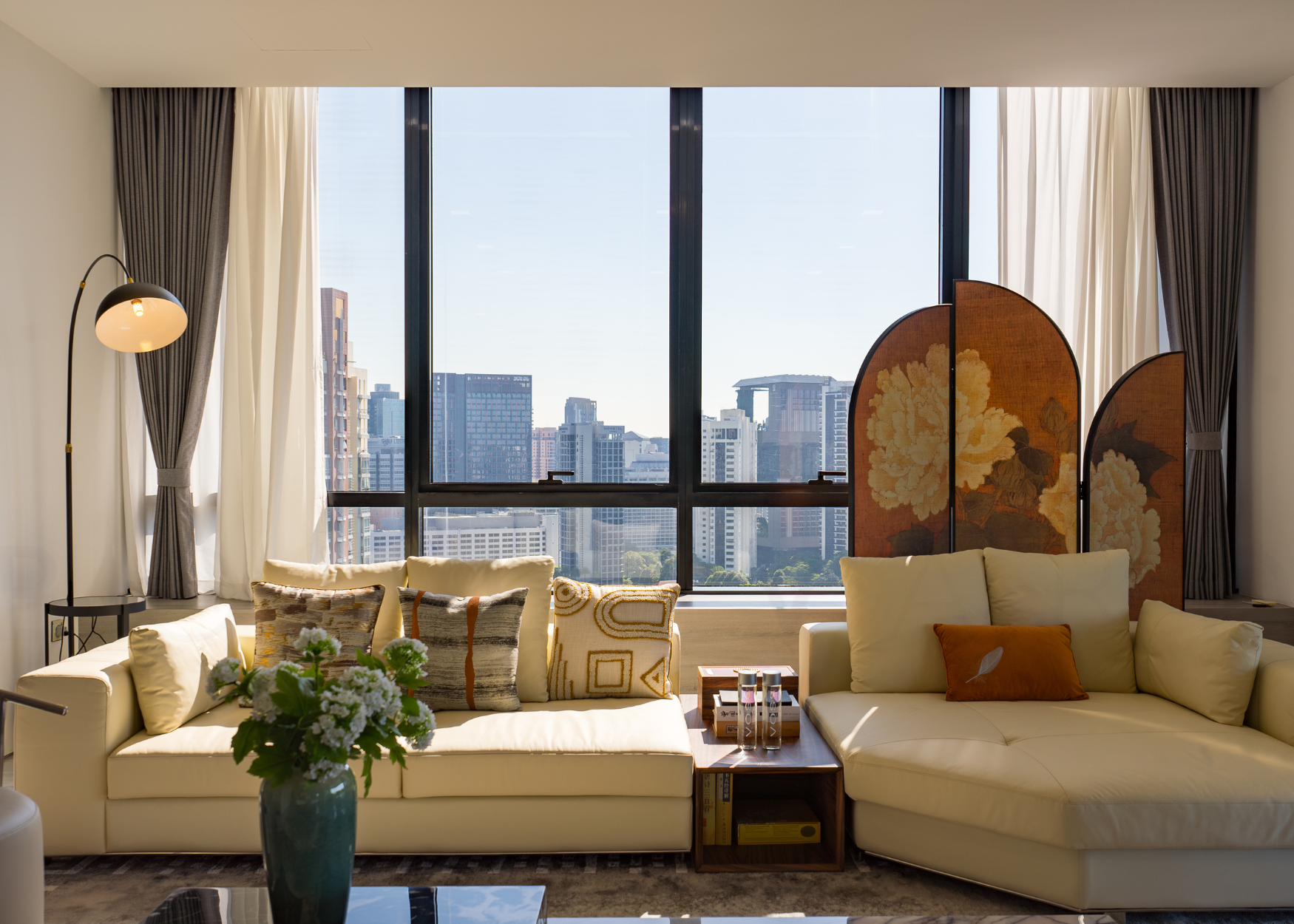
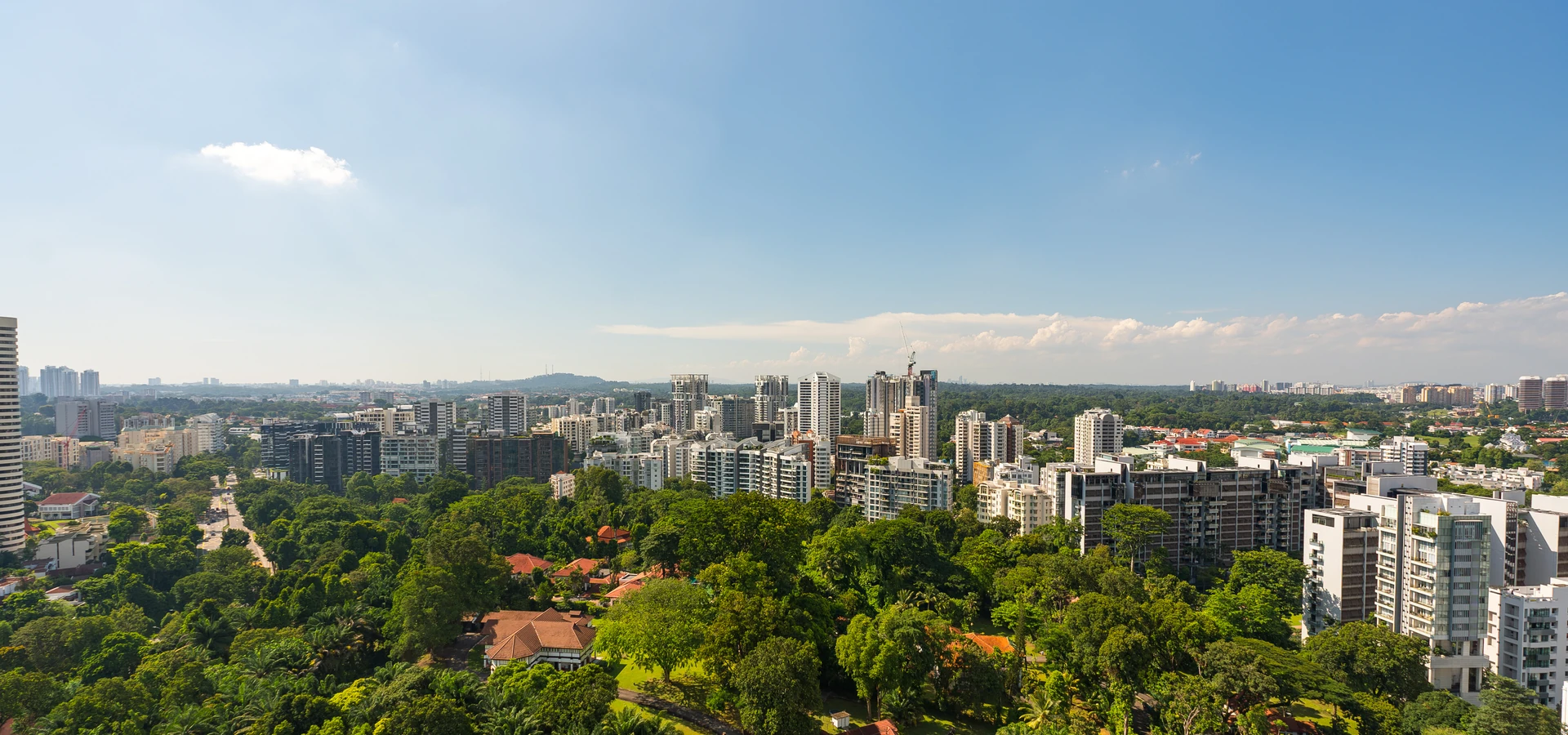
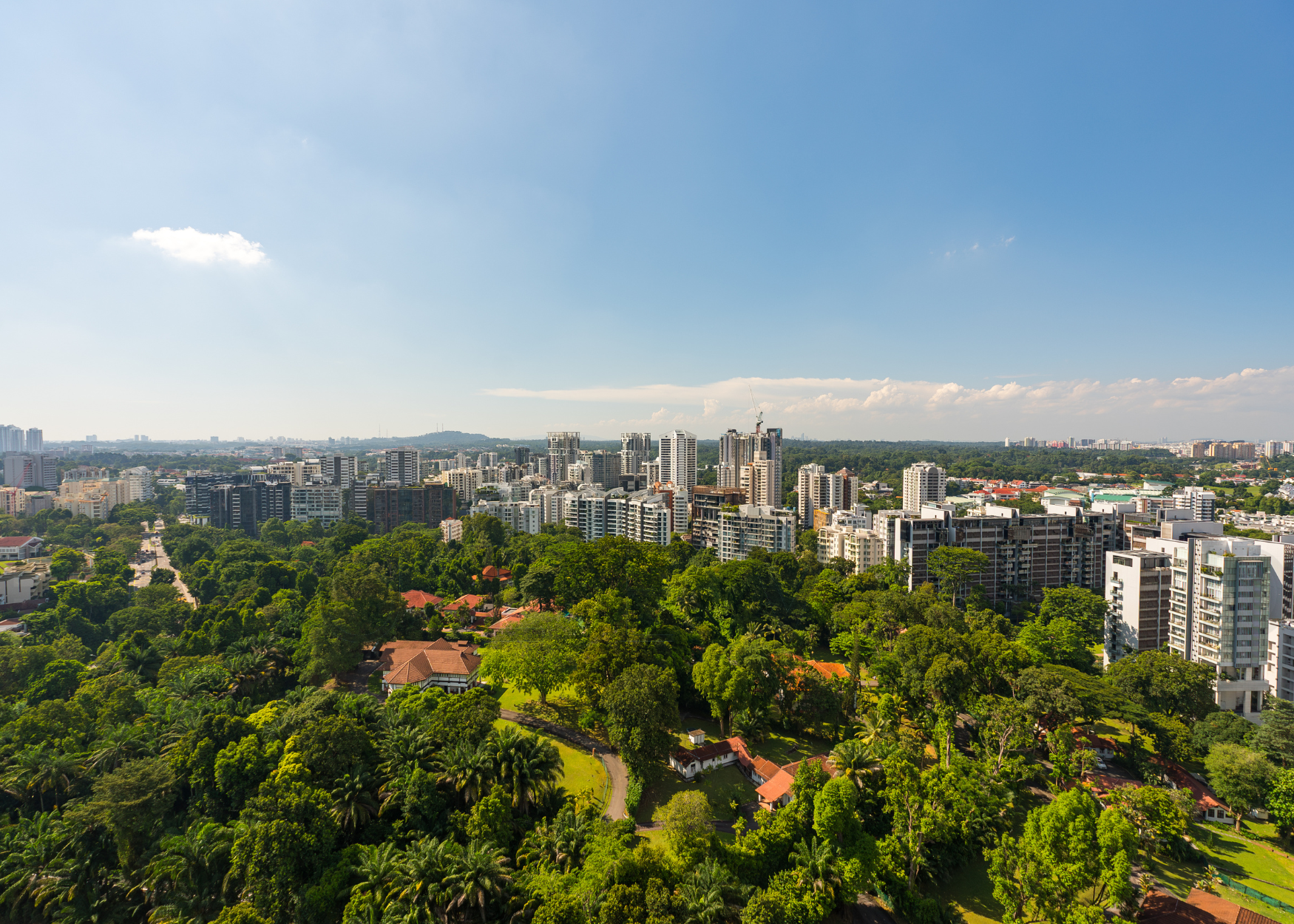
Inside a high-floor condo with a sky garage at Reignwood Hamilton Scotts, Orchard. Top: Reignwood Hamilton Scotts’ view of Goodwood Hill’s conservation estates, Bukit Timah hill, and the Orchard district skyline.
All of this is happening in a market with unusually high barriers to entry. Most foreign buyers of residential property pay Additional Buyer’s Stamp Duty of 60 per cent, while landed property is subject to considerably tighter ownership restrictions. Between 2012 and 2021, just five foreign buyers received approval to acquire a good class bungalow, two through inheritance; the Ministry of Law said in October 2024 that none had been approved since 2021.
The restrictions have changed who is buying at the top of the market, but Singapore also has a formidable domestic base of wealth. Knight Frank estimates the number of residents worth at least US$30 million increased from 4,642 in 2021 to 7,171 in 2026, and forecasts a further 46.4 per cent increase to 10,495 by 2031.
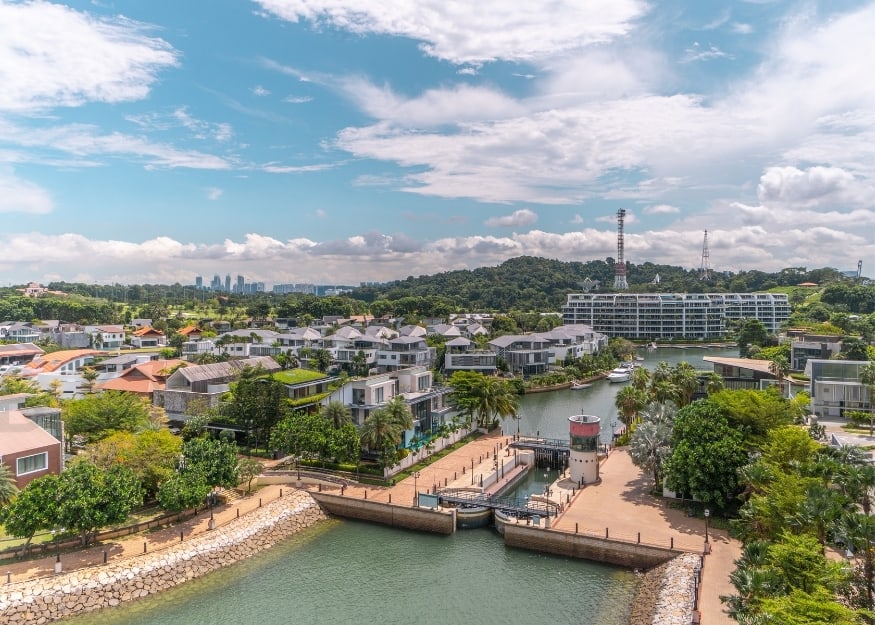
Sentosa Cove’s waterfront landscape, seen from the Seascape Sky Villa penthouse.
“It’s really scarcity that’s driving price growth in Singapore,” says Otto Twist, Southeast Asia director of international residential sales at Savills.
The good class bungalow
No part of the residential market embodies that scarcity more clearly than the good class bungalow. GCBs are confined to 39 gazetted areas, with plots of at least 1,400 square metres, or about 15,070 square feet. Development controls preserve their low-rise character and generous grounds: no more than 40 per cent of the site can be built on, and houses are generally limited to two storeys and an attic. The total stock is roughly 2,800.
The combination of limited stock and extremely low turnover creates a market in which an individual property can be difficult to replace. “The challenge is the extremely limited supply—very few owners are selling,” says Martin Goh, principal consultant at Realstar Premier Group. “And when something does come onto the market, the price is typically high.”
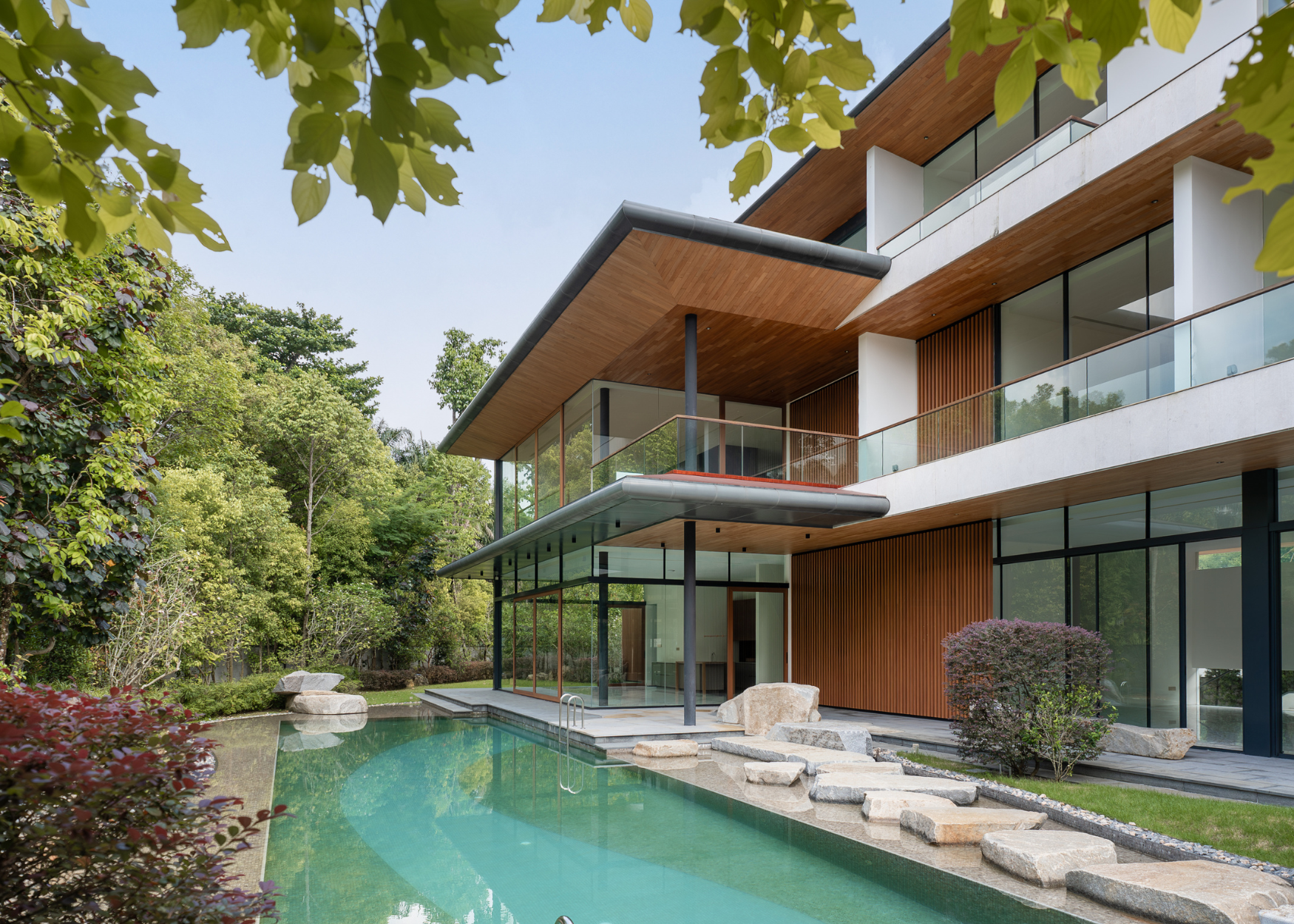
A brand-new good class bungalow in Tanglin, with architecture by Moya Design and landscaping by Shunmyo Masuno.
About S$1.36 billion of GCBs traded in 2025, with an average land rate of S$2,134 a square foot. That equates to annual turnover of little more than one per cent of the total stock, with substantially fewer transactions in the most closely held enclaves.
Nassim sits at the apex. The road runs alongside the Botanic Gardens and within minutes of Orchard and Tanglin, yet its largest properties occupy substantial, heavily landscaped sites that bear little resemblance to the surrounding city.
“Singapore’s most prestigious enclave, Nassim’s gently undulating terrain presents a mix of majestic mansions with wide frontages and private villas perched on higher grounds,” says Leong Boon Hoe, founder and chief executive of Arcadia Consulting. “Larger plot sizes average well over 20,000 square feet, and only rarely come up for sale; just four caveats have been lodged since 2010, alongside some prominent transactions without caveat—including the record S$230 million sale of an 84,839 square feet estate back in 2019.”
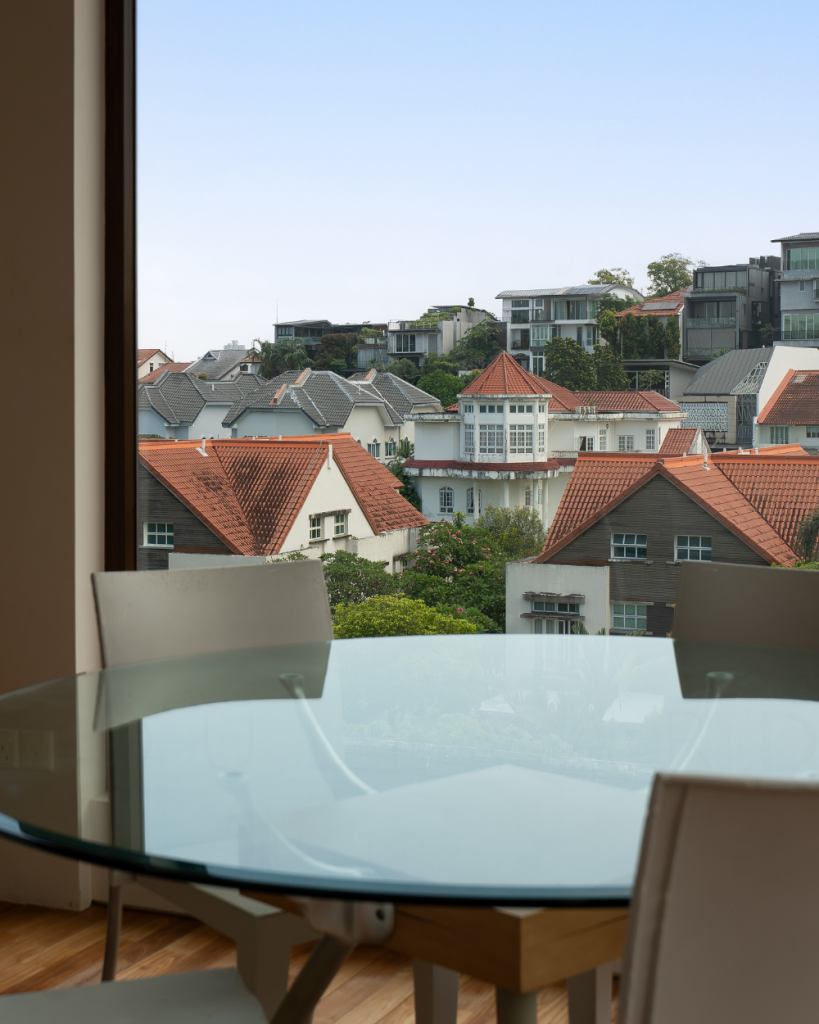
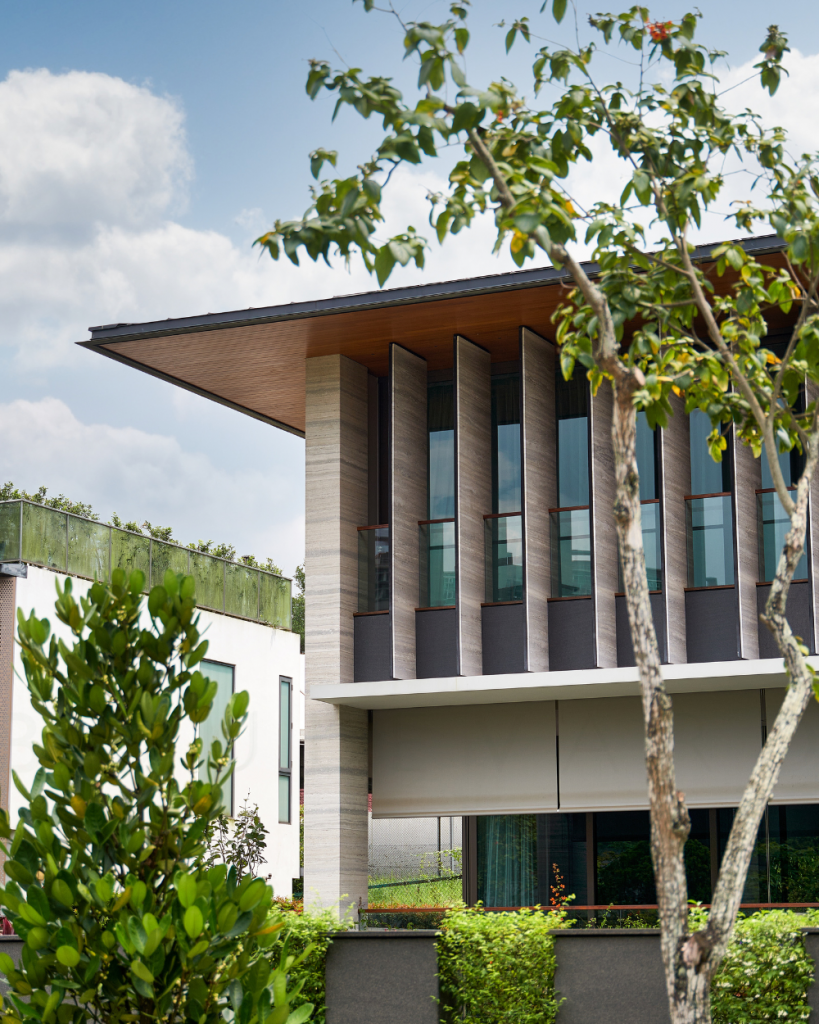
Left: View of the elevated GCB enclaves of Coronation Road West and Namly Hills from a prime bungalow at Bin Tong Park, Bukit Timah. Right: Contemporary facade of a GBC on Jervois Hill.
Other enclaves have their own appeal. Bin Tong Park, near Holland Village and Bukit Timah, is particularly tightly held. “Only three to four properties [have changed] hands in the last eight years,” says Tricia Ang, vice president of residential at CBRE. She points to regular plots on slightly elevated ground and their rebuilding potential, which has attracted a newer generation of entrepreneurs and chief executives.
Jervois, meanwhile, combines large plots with proximity to Orchard Road. Jessica Lim of Realstar Premier describes it as one of Singapore’s most popular GCB enclaves, with embassies among its residents and sites generally ranging from about 15,000 to 30,000 square feet. In each case, the existing house is only part of the proposition. Older properties are regularly acquired for substantial renovation or complete rebuilding, giving architects room to work at a scale rarely available elsewhere in Singapore.
From Nassim to Orchard
The same addresses support a very different ultra-prime market above ground. Nassim, Orchard, Cairnhill, Ardmore, and Tanglin contain many of Singapore’s most expensive apartments, with the best developments competing on privacy, scale, architecture, and increasingly elaborate amenities rather than simply location.
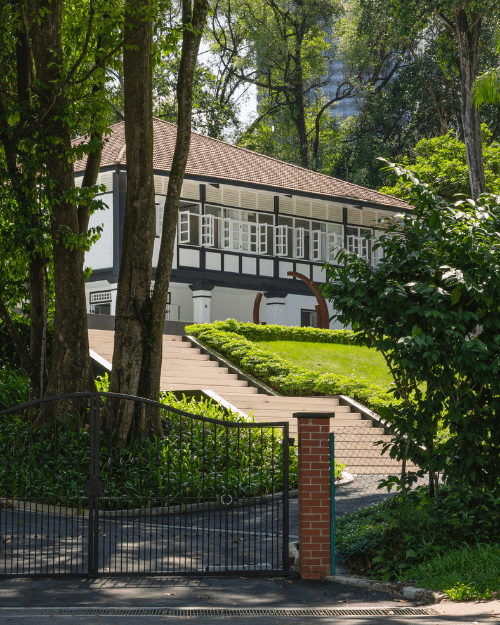
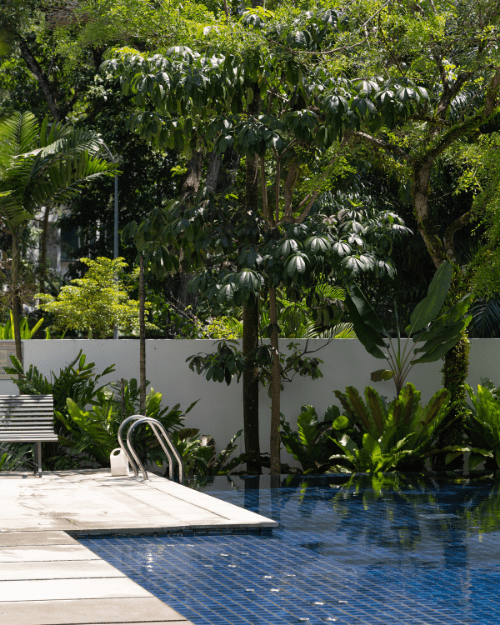
Famous for its good class bungalows and grand colonial-era black-and-white mansions, Nassim Road defined by a dense canopy of old-growth heritage trees and massive foliage that completely muffles the noise of the surrounding city.
The broader Core Central Region has been rising steadily rather than spectacularly: 4.5 per cent in 2024, 1.9 per cent in 2025, followed by gains of 0.6 and 1.8 per cent in the first two quarters of 2026. At the top of it, however, homes selling for more than S$5 million averaged S$2,689 a square foot in the first half of 2026, up 8.3 per cent on the preceding six months. There were 23 sales above S$10 million in the second quarter, the highest quarterly number in almost four years.
Many of the developments commanding the highest rates are deliberately small. Park Nova and 21 Angullia Park each contain 54 residences; The Nassim has 55, Skyline at Orchard Boulevard 40, and Les Maisons Nassim just 14.
For architect Rene Tan of RT+Q, who designed Petit Jervois for SC Global, the quality of this market is not necessarily about extracting the maximum possible floor area from a site. “One of the things that stands out for me at Petit Jervois is optimising, as opposed to maximising,” he says. “It’s not about how many units you can pack in, or how much architecture you can build. It’s about proportion, how much weight to put on, when it’s enough.”
At the other end of the scale, buyers are also looking for apartments large enough to provide some of the qualities of landed living. The penthouse at KOP Group’s Dalvey Haus extends to 9,006 square feet. Leny Suparman, KOP’s co-founder and chief executive, describes it as “almost like living in a house, in a GCB”.
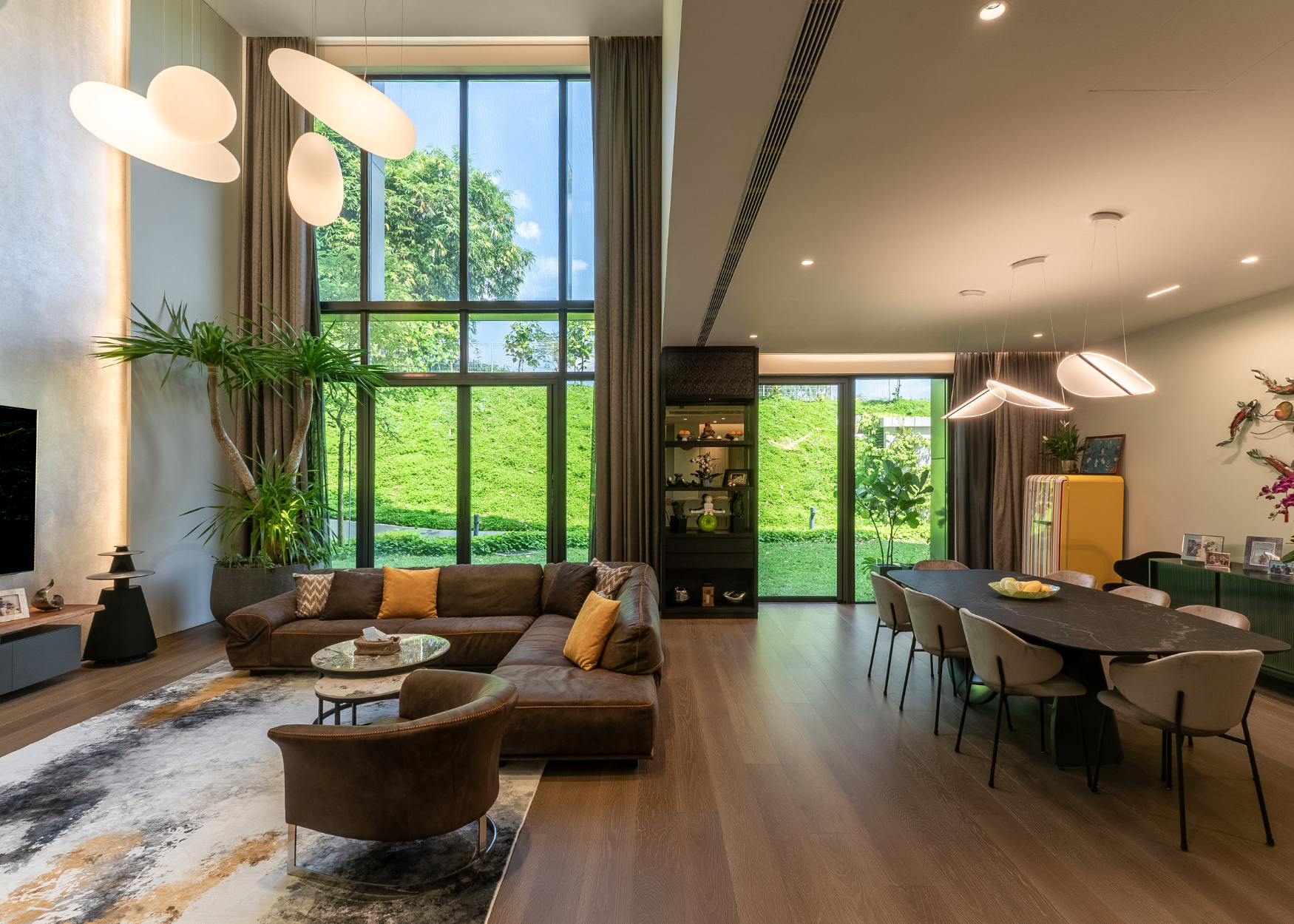
The double-volume living area at Dalvey House, custom designed by Attic Studio, with statement chandeliers.
She has also seen the nationality mix at the top of the condominium market broaden. “There’s a wider variety of buyers looking at high-end properties,” she says. “It’s not just the traditional buyers from China or Indonesia—which were the biggest markets for the luxury market in the past.”
The 60 per cent ABSD is an obvious part of that change, although it does not apply uniformly to every international buyer. Nationals of the United States, Iceland, Liechtenstein, Norway, and Switzerland receive Singapore-citizen treatment under free-trade agreements, while permanent residents face a different duty regime. The market is therefore more domestically weighted than it was before the duty increased in 2023, rather than closed to international demand altogether.
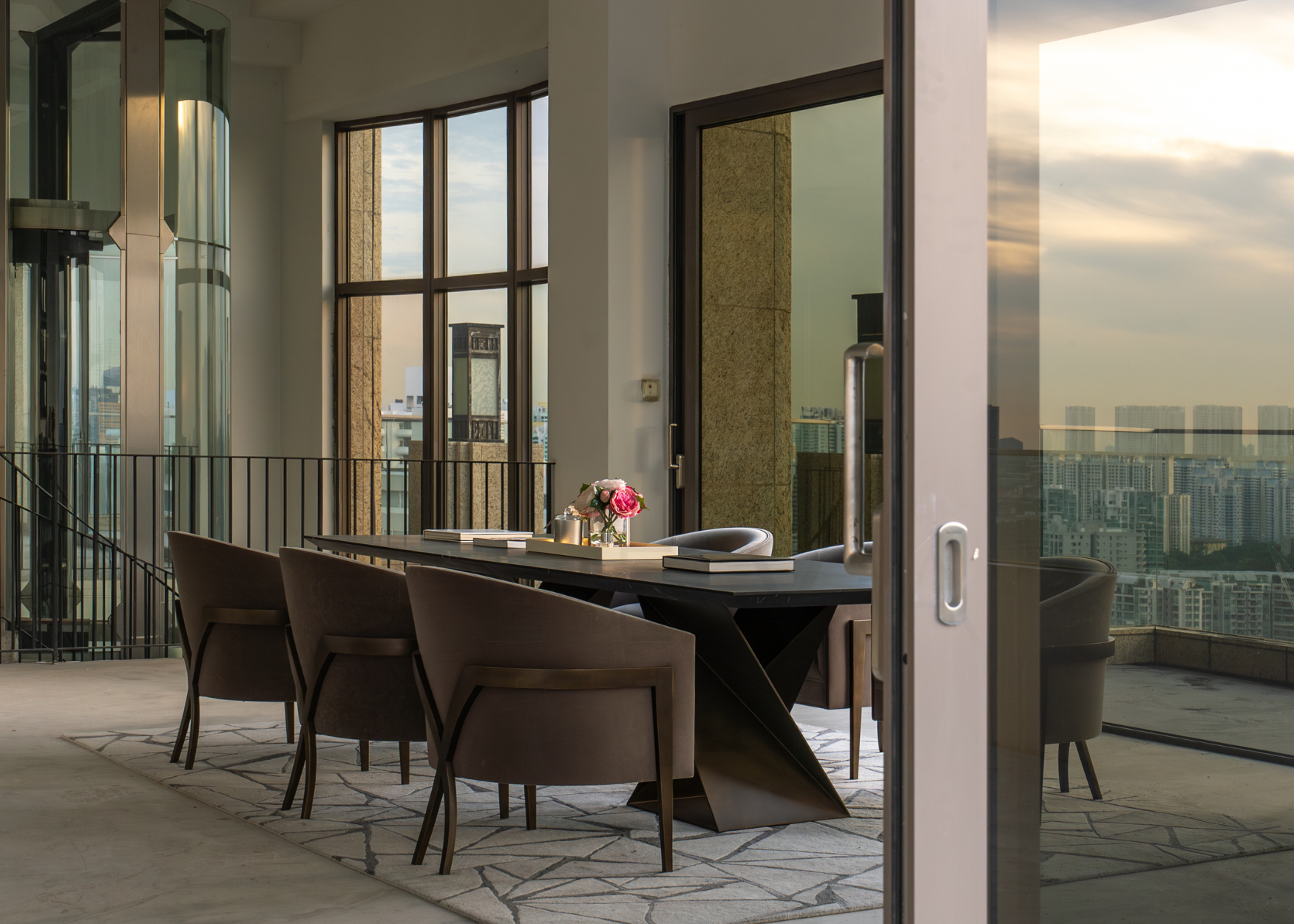
The super-penthouse atop Parkview Éclat, where the dining area opens onto terraces overlooking the city skyline and the GCB enclaves of Chatsworth and Bishopsgate.
The branded question
Given Singapore’s concentration of wealth, international hotel groups, and luxury property, branded residences remain surprisingly limited. Only four major schemes have been completed over roughly two decades: St Regis Residences in 2008, The Ritz-Carlton Residences and The Residences at W Singapore Sentosa Cove in 2011, and Pullman Residences Newton in 2024. New supply is now coming, including W Residences Marina View, while Aman’s first Singapore address at The Skywaters recorded its first sale in October 2025 at S$6,501 a square foot.
Leong estimates that branded residences can achieve a 20 to 35 per cent premium over comparable unbranded property in Singapore, while Ang says hospitality partnerships with the strongest luxury hotel brands have generally performed best. But the economics of development in Singapore complicate the model.
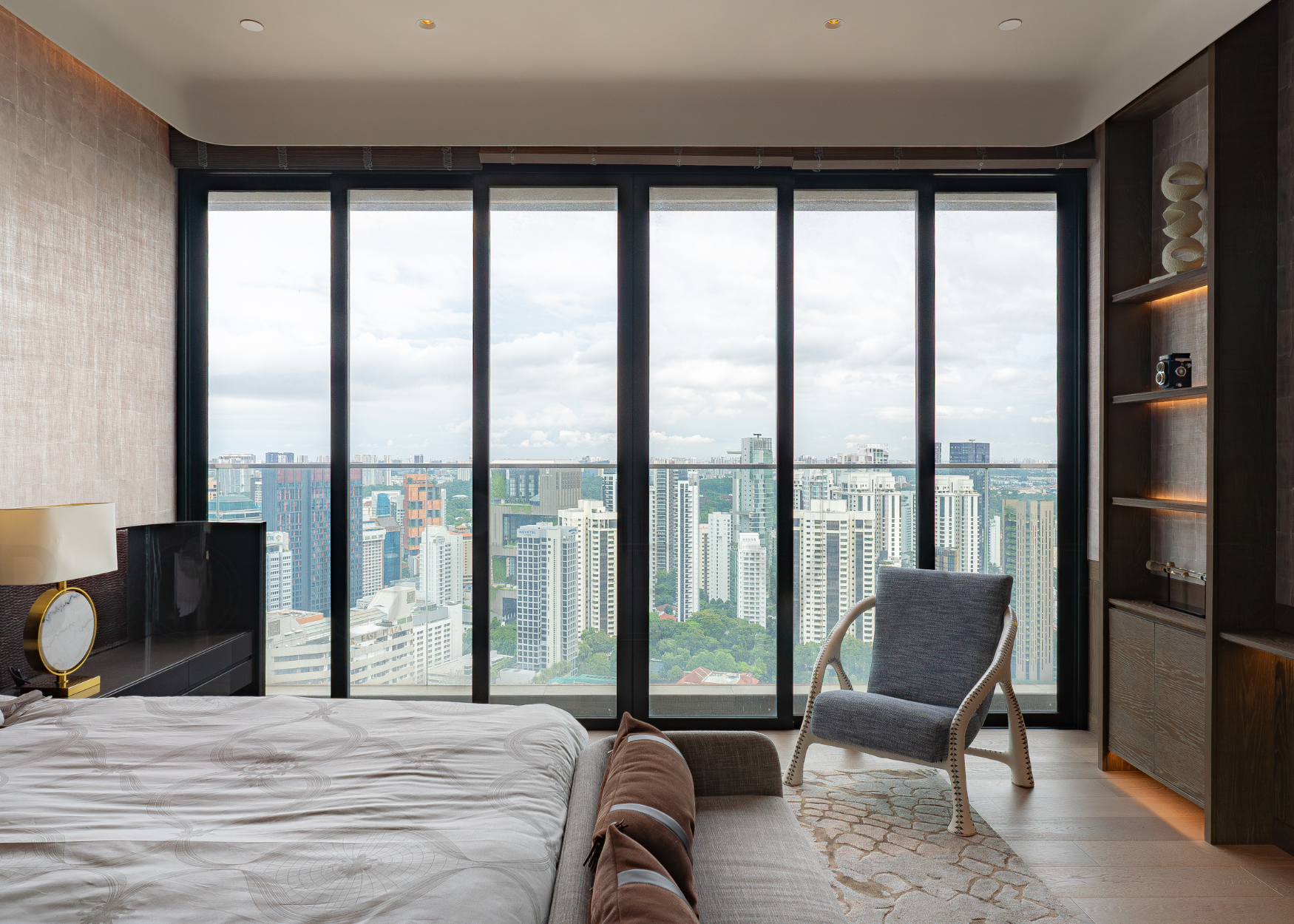
Bedroom at The Ritz-Carlton Residences’ penthouse, overlooking the city skyline.
Suparman knows that first-hand. KOP developed The Ritz-Carlton Residences on Cairnhill Road, the brand’s first residential project outside North America. “We thought that the brand would help us a lot in terms of pricing and sales,” she says. “Surprisingly, I would say that wasn’t the reason why people bought it. It’s not just the Ritz-Carlton brand—it’s also managed by Ritz-Carlton.”
The additional costs matter when the land underneath the development is already expensive. “Our land price being quite high, having these branded or international management companies adds on to the cost,” she says. “In other markets, they have a huge margin to play with. But for our market, it’s a little bit challenging.”
Waterfront addresses at Sentosa Cove
Sentosa Cove occupies a separate corner of the market, geographically, and commercially. Built around a marina and a network of canals on Sentosa’s eastern side, it offers a form of waterfront living that is difficult to reproduce elsewhere in Singapore: apartments overlooking the marina and detached houses with sea frontage, private pools, and, in some cases, their own berths.
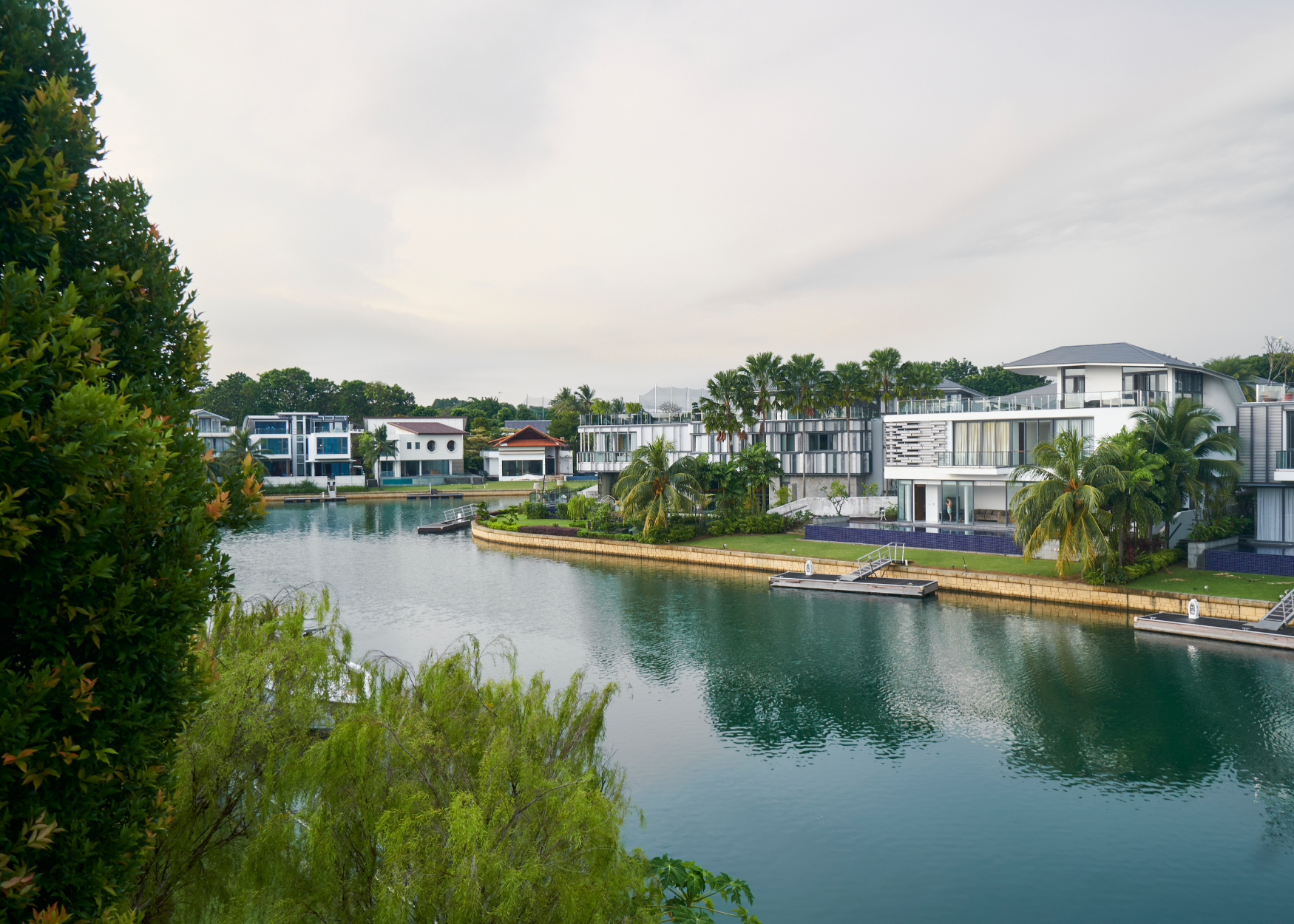
The Sentosa quayside as seen from 15 Cove Grove, a two-storey bungalow.
It also offers international buyers something the mainland landed market generally does not. “Sentosa remains the only enclave in Singapore where true seafront and marina-front landed homes are available to foreign buyers with approval,” says Ang. That approval remains subject to the Land Dealings Approval Unit, with conditions including a maximum land area of 1,800 square metres and owner occupation; the 60 per cent ABSD also applies.
“Sentosa is truly one of a kind,” says Rowena Chan of Arcadia Consulting. “It offers a laid-back, resort-style living that’s very rare in Singapore—something that’s often compared to Monaco or waterfront enclaves in California or Sydney.”
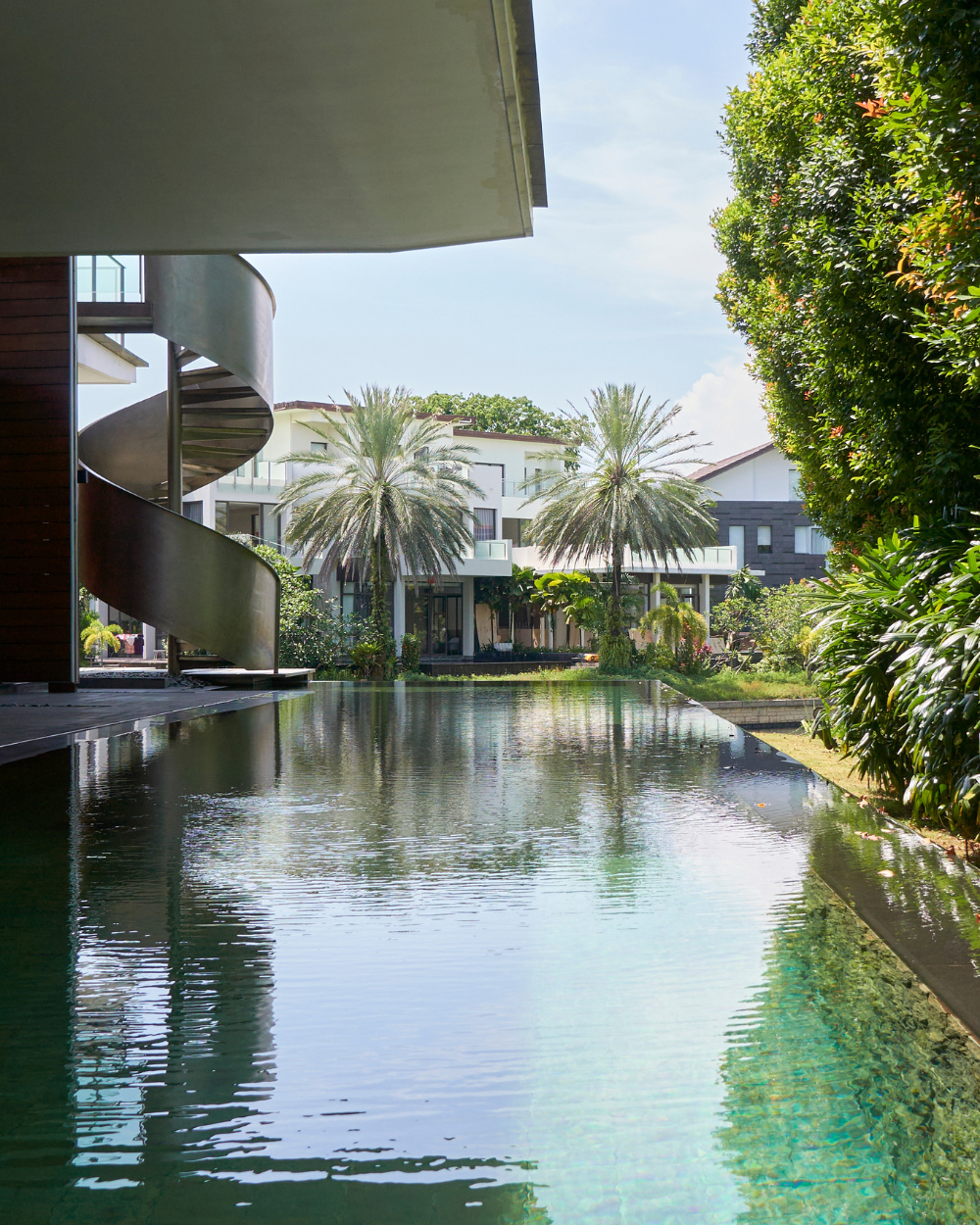
An architectural waterfront home at 72 Ocean Drive, Sentosa, where a statement spiral staircase leads down to the pool (right).
Pricing, however, has been moving differently from the mainland prime market. Non-landed values at Sentosa Cove averaged S$2,125 a square foot in 2023, falling to S$1,792 in 2024 and S$1,728 over the first nine months of 2025. Landed values declined from S$2,210 to S$1,842 over the same period. Of 244 non-landed resales between 2021 and the first half of 2026, 161 sold at a loss; slightly more than half of 47 landed resales did likewise.
Ang points directly to the tax changes: “The 60 per cent ABSD has dampened foreign interest.” Chan has seen the buyer base adjust accordingly. “We’ve seen some softening in both the sales and rental market, particularly for landed homes,” she says. At the same time, “we’ve seen a growing number of local buyers—along with Indian permanent residents—being drawn to Sentosa for the lifestyle.”
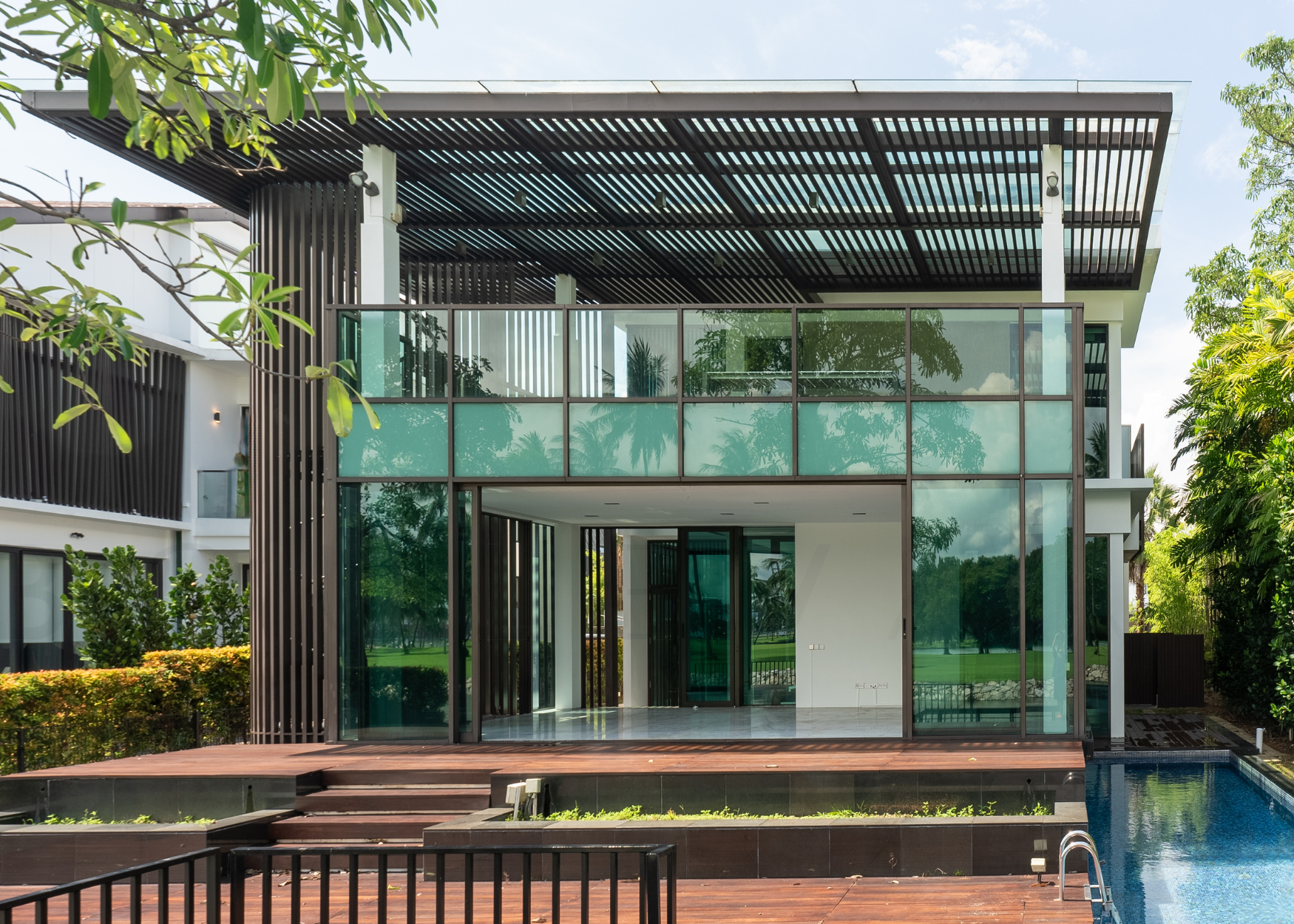
A contemporary harbourfront bungalow on Ocean Drive, with a pool and patio extending toward the waterfront.
That demand is selective. Chan sees particular interest in houses with wider frontages, private berths, and sea views, and in larger four-bedroom apartments from around 2,500 square feet. Ang puts current asking ranges at roughly S$12 million to S$40 million for landed houses and S$1,800 to S$3,500 a square foot for condominiums.
The response to the right pricing can be immediate. When W Residences relaunched unsold stock in April 2024 from S$1,648 a square foot—more than 40 per cent below its original 2010 pricing—it sold 65 units in two days.
Where demand moves next
The regulatory settings that reshaped the market remain in place. ABSD rates for individual buyers have been unchanged since April 2023, while seller’s stamp duty was tightened in July 2025, extending the holding period from three to four years and increasing the applicable rates.
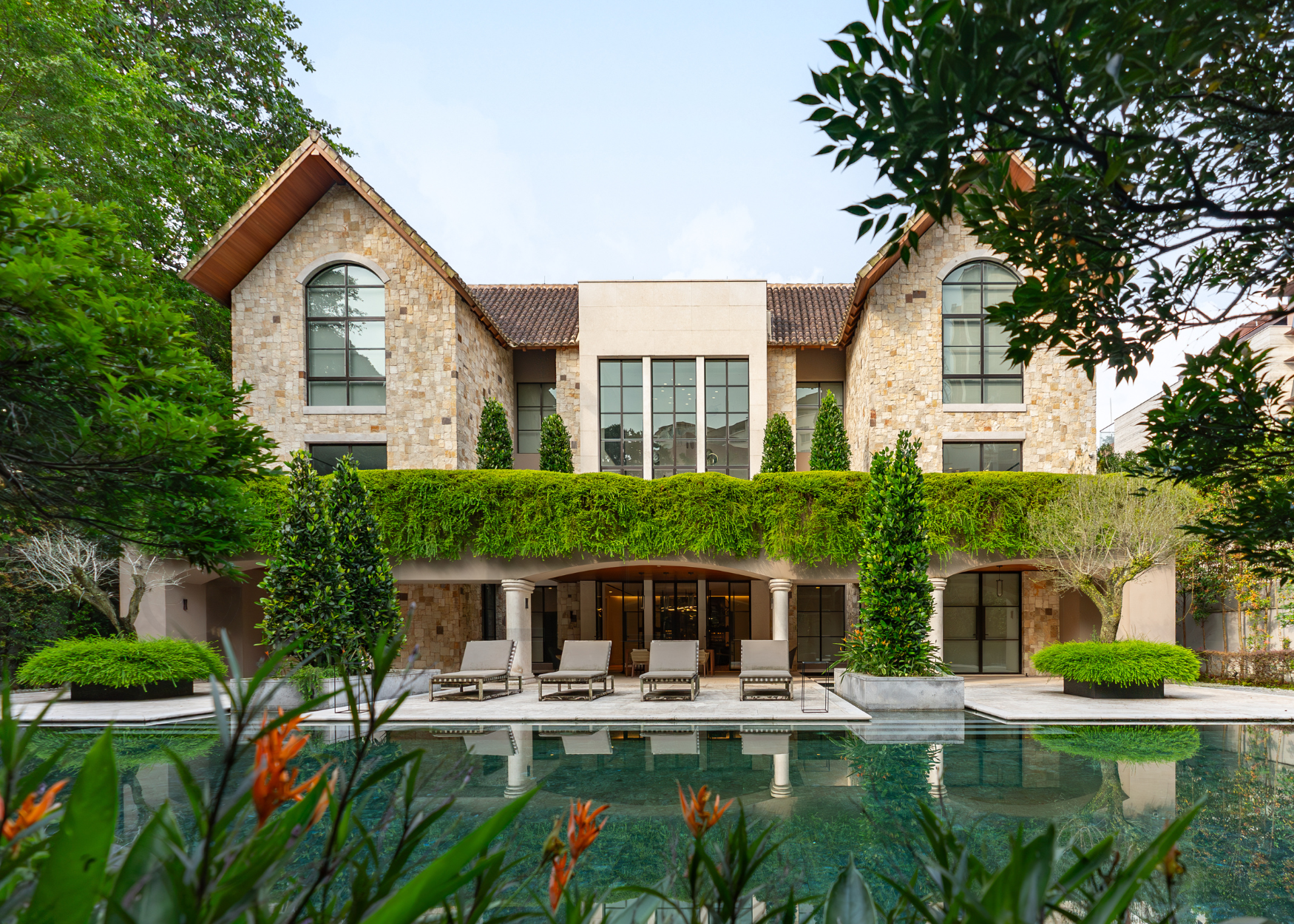
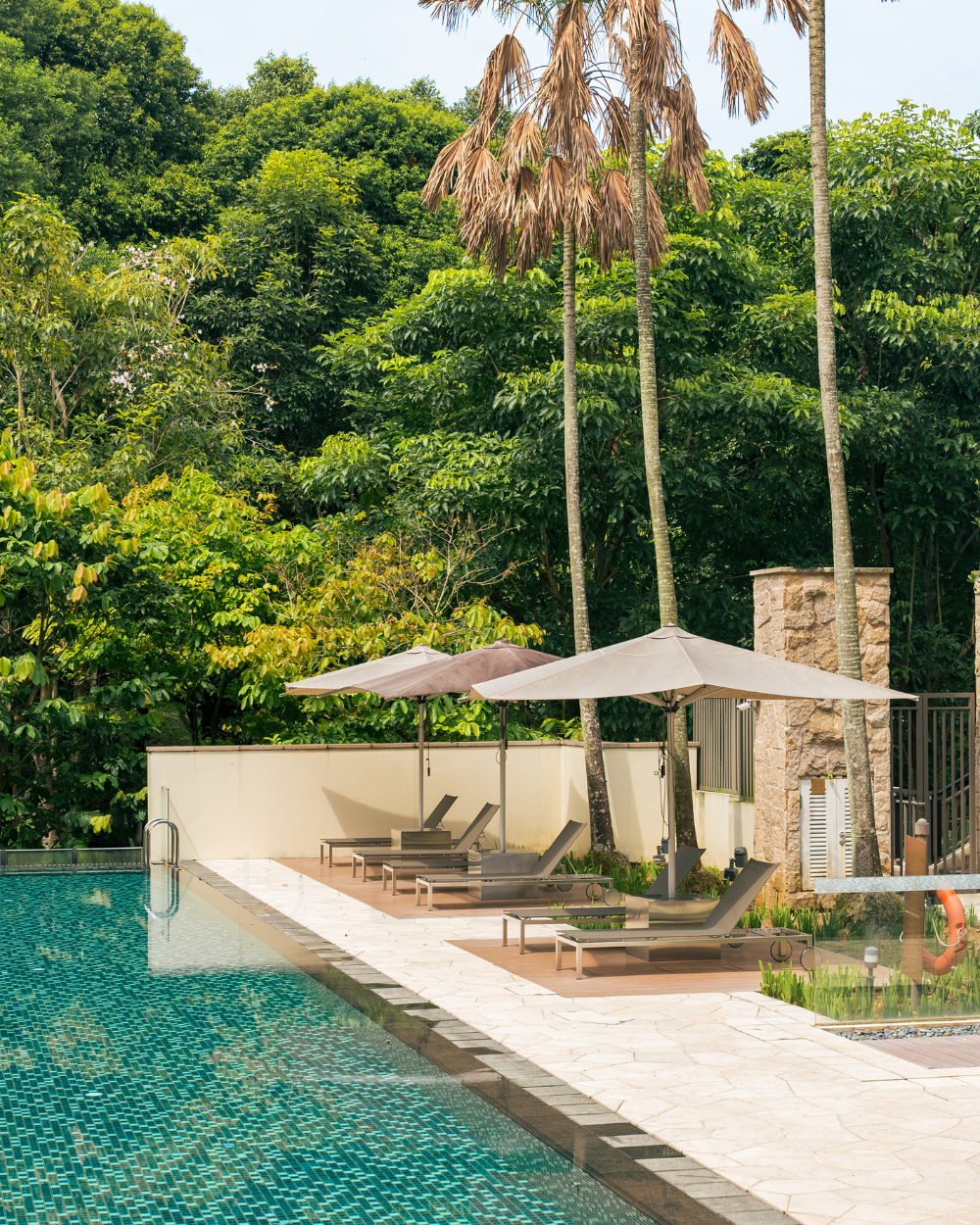
Left: An oversized pool framed by sun terraces at an East Sussex Lane GCB in Holland Village. Right: The pool area at Bishopsgates Residences in Tanglin, surrounded by greenery.
Against that, the domestic wealth base continues to grow, and the agents Boulevard spoke to remain positive on demand. “There is still a lot of wealth coming to Singapore; the number of family offices continues to grow,” says Goh, who expects prices to continue rising progressively.
Suparman sees a period of adjustment to the measures rather than a fundamental change in the appeal of the market. “Once the dust settles in terms of the increased ABSD and all these new measures, people will get used to it,” she says. “In terms of pricing, it will be more controlled.”
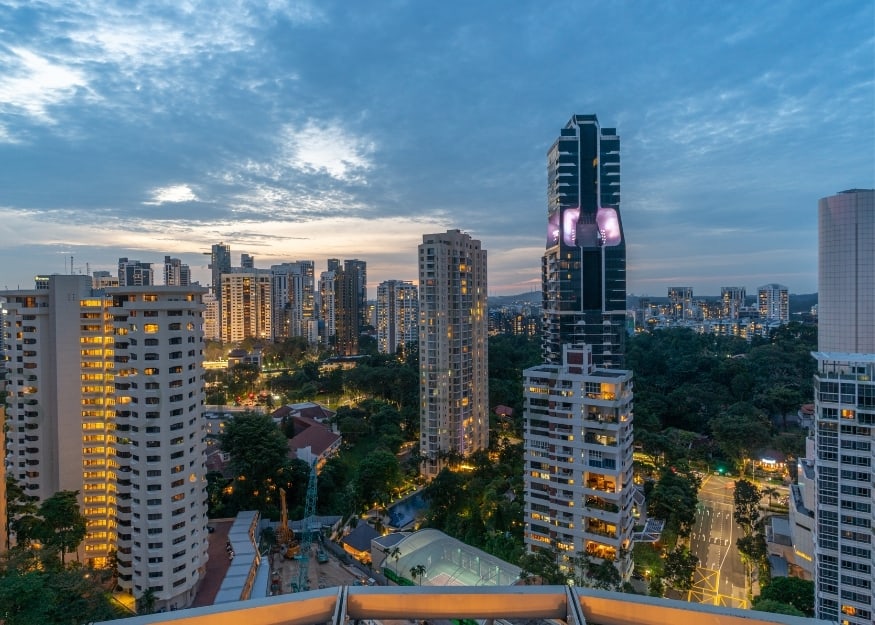
Outlook across the Orchard district from the penthouse at Cairnhill Rise.
For developers, the constraint is more physical. The central sites capable of supporting the next generation of ultra-prime projects are difficult to assemble, particularly in the established districts where buyers have demonstrated a willingness to pay the highest rates.
“But we’re running out of land, especially for the high-end locations,” says Suparman. “For central locations, you have to wait for the collective sale market, and that’s going to take time.”
Read next:
- The report: Otto Twist of Savills Singapore on the markets reshaping Southeast Asia’s branded residences
- The report: Tricia Ang on the rise of branded residences in Singapore and global cities
In brief: Singapore’s ultra-prime property market
Singapore’s ultra-prime residential market divides broadly into three segments: good class bungalows; high-end condominiums concentrated around the Core Central Region, including Nassim, Orchard, Cairnhill, Ardmore, and Tanglin; and the waterfront landed and condominium market at Sentosa Cove.
- Good class bungalows: roughly 2,800 homes across 39 gazetted GCB areas. Plots must be at least 1,400 square metres (about 15,070 square feet), with low-rise and site-coverage controls. Around 36 GCBs changed hands in 2025, worth about S$1.36 billion in total, at an average land rate of S$2,134 per square foot. Nassim is among the most tightly held enclaves: Leong Boon Hoe cites just four caveats since 2010, alongside off-market transactions, including the S$230 million sale of an 84,839 square foot estate in 2019.
- Prime condominiums: homes above S$5 million averaged S$2,689 per square foot in the first half of 2026, across 128 transactions worth about S$1.1 billion. At the very top, recent benchmark transactions have exceeded S$6,500 per square foot, including Park Nova’s S$38.888 million penthouse at S$6,593 per square foot and the first sale at The Skywaters at S$6,501 per square foot. Several leading ultra-prime developments are unusually small: Les Maisons Nassim has 14 residences, Skyline at Orchard Boulevard 40, Park Nova 54, TwentyOne Angullia Park 54 and The Nassim 55.
- Sentosa Cove: current asking ranges cited by CBRE are approximately S$12 million to S$40 million for landed homes and S$1,800 to S$3,500 per square foot for condominiums. Larger four-bedroom apartments from about 2,500 square feet are particularly sought after, while the most desirable houses tend to combine wider frontages, private berths or sea-facing views. Non-landed transaction values averaged S$1,728 per square foot over the first nine months of 2025, down from S$2,125 in 2023; landed values fell from S$2,210 to S$1,842 over the same period.
- Foreign ownership and tax: most foreign buyers pay 60 per cent ABSD on residential purchases. GCB ownership is substantially more restricted: five foreign purchasers were approved between 2012 and 2021, two through inheritance, and the Ministry of Law said in October 2024 that there had been no approvals since 2021. Sentosa Cove provides a more accommodating route for foreign buyers of landed property, but Land Dealings Approval Unit approval is still required, the 60 per cent ABSD still applies, and qualifying conditions include owner occupation and a maximum land area of 1,800 square metres.
- Wealth: Knight Frank estimates Singapore had 7,171 residents worth at least US$30 million in 2026, up from 4,642 in 2021, and forecasts 10,495 by 2031. Its PIRI 100 recorded Singapore prime residential price growth of 7.9 per cent in 2025.
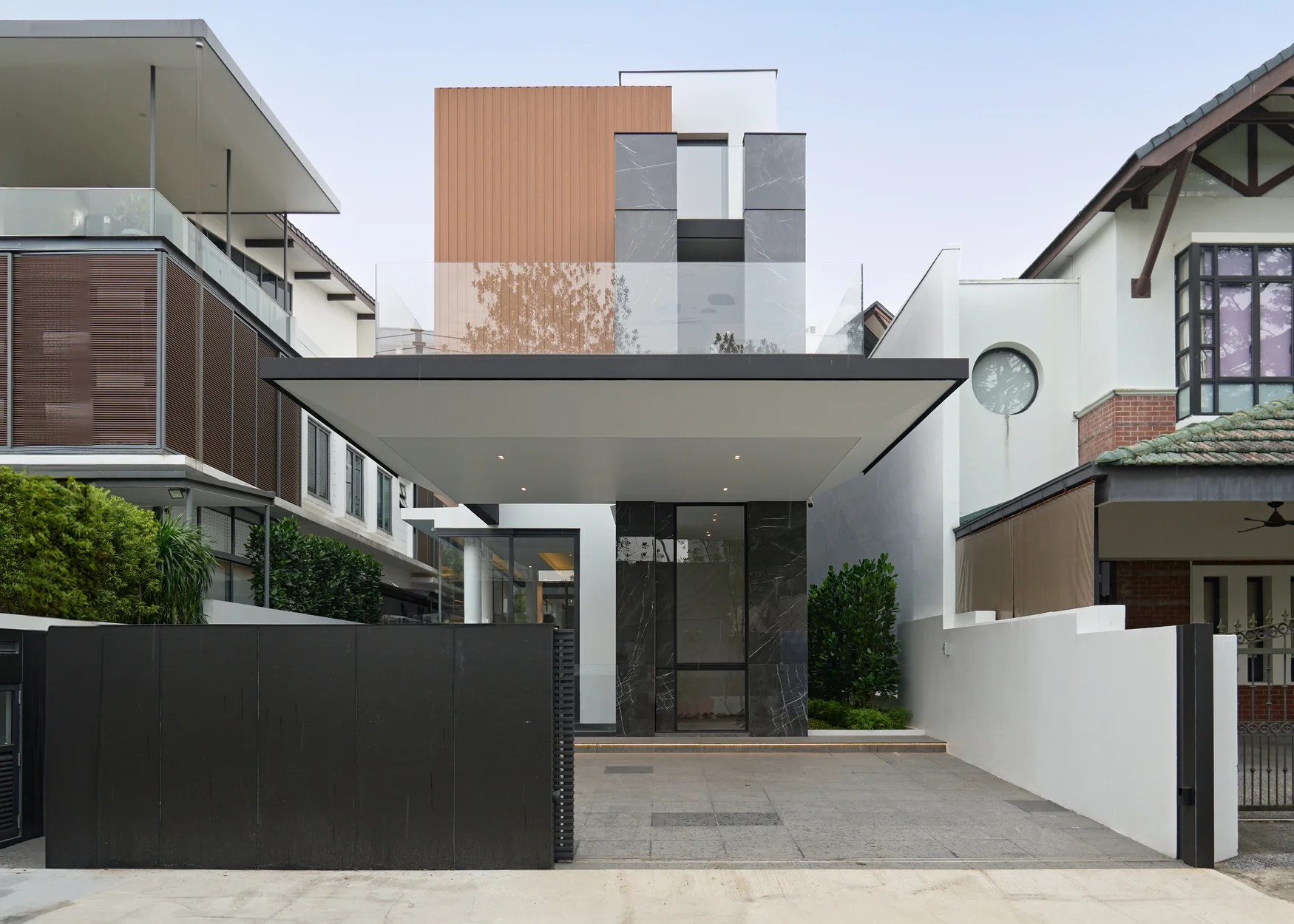
8+1 bed | 10,200 sqft area 19,500,000 SGD
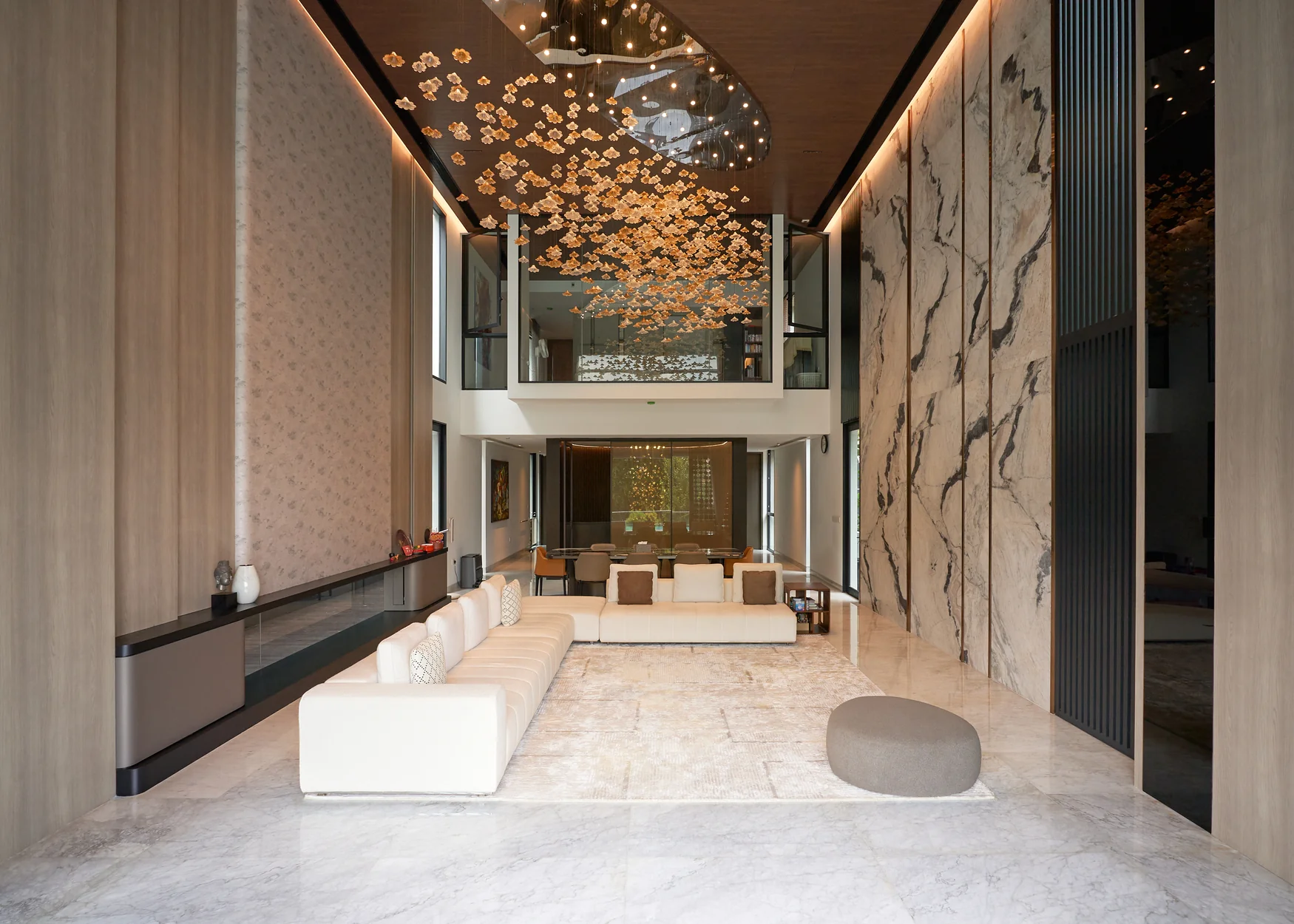
5 bed 19,380,000 SGD
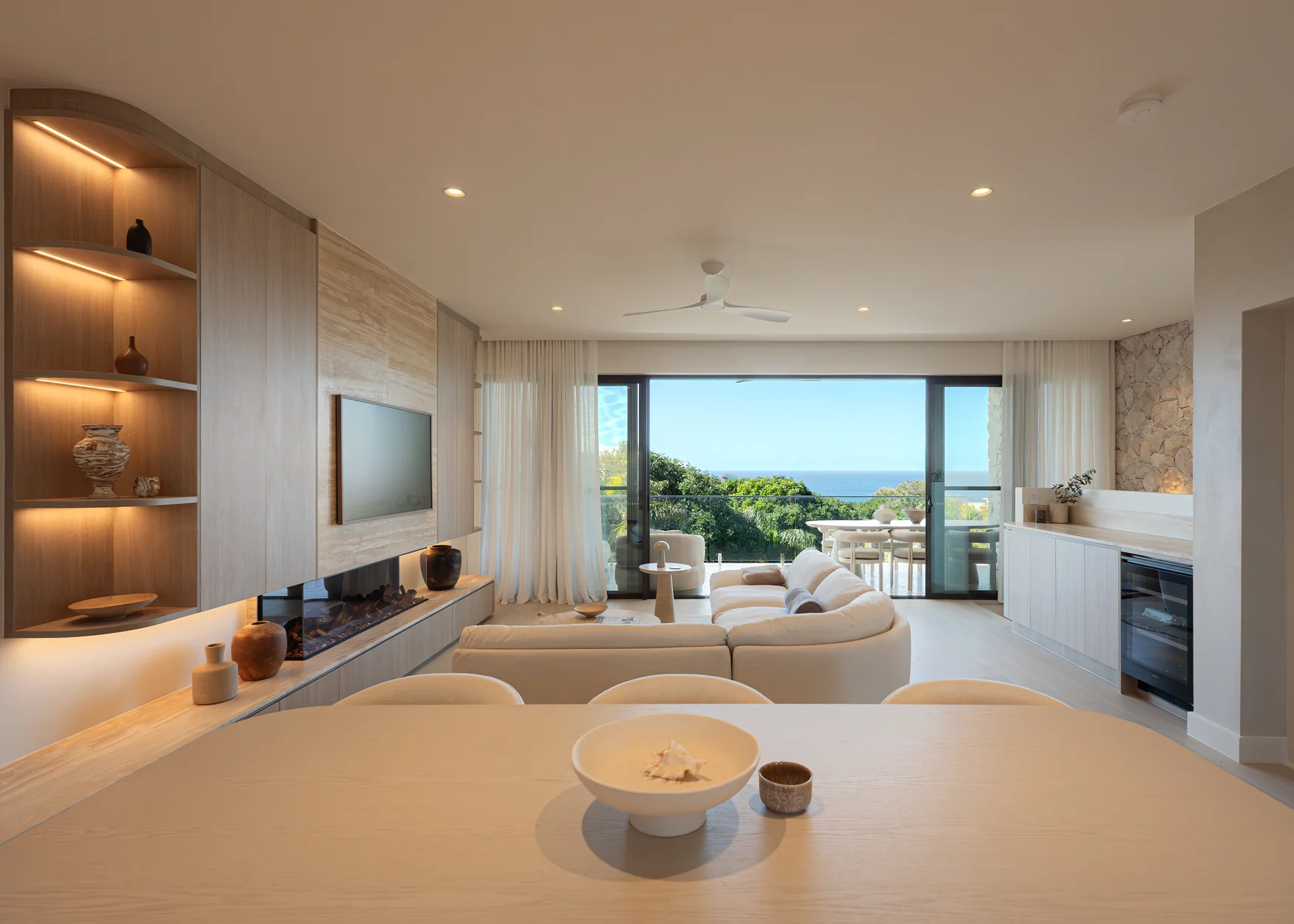
4 bed | 4,208 sqft area POA
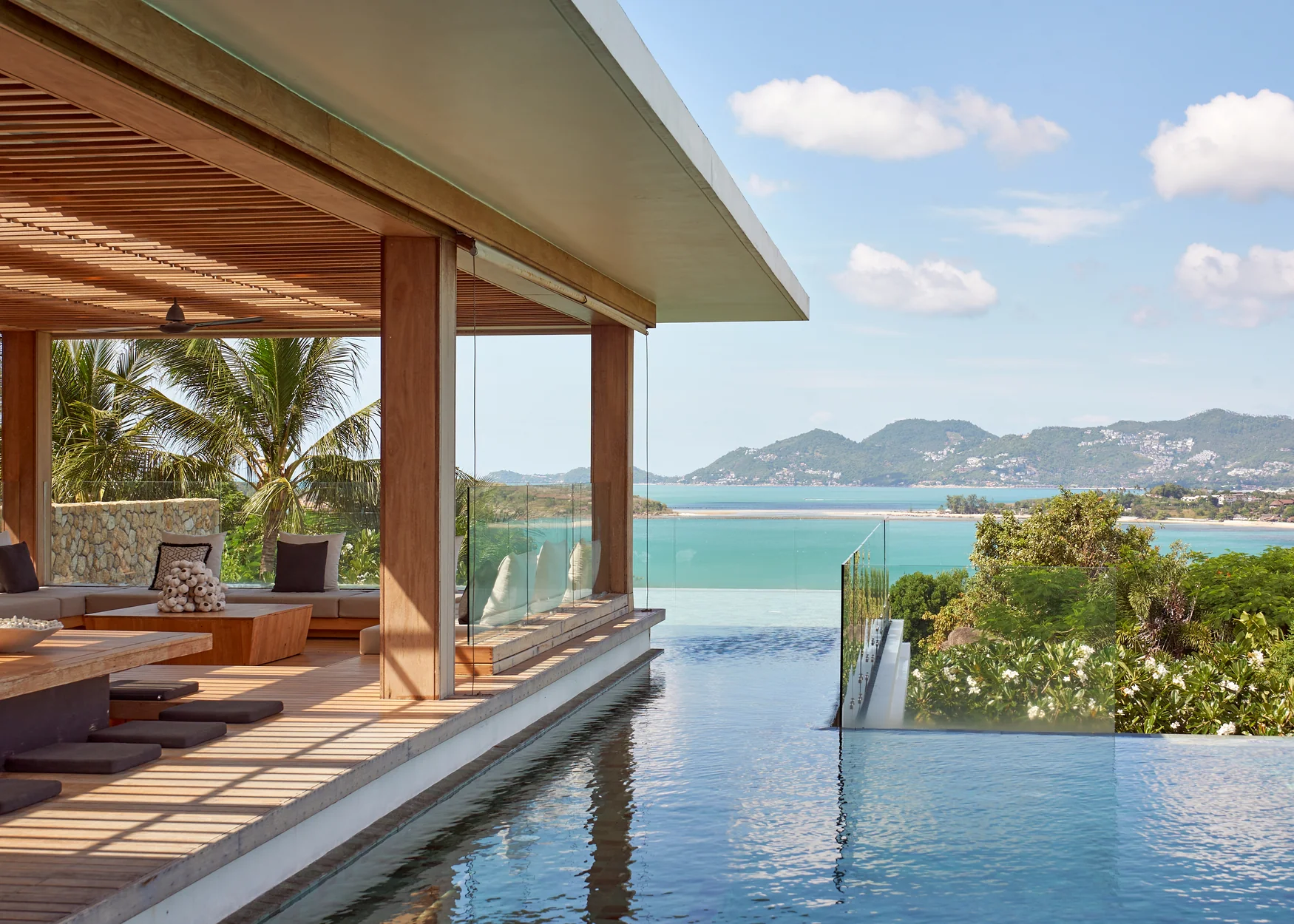
3-8 bed | 699,654 - 784,080 sqft area POA
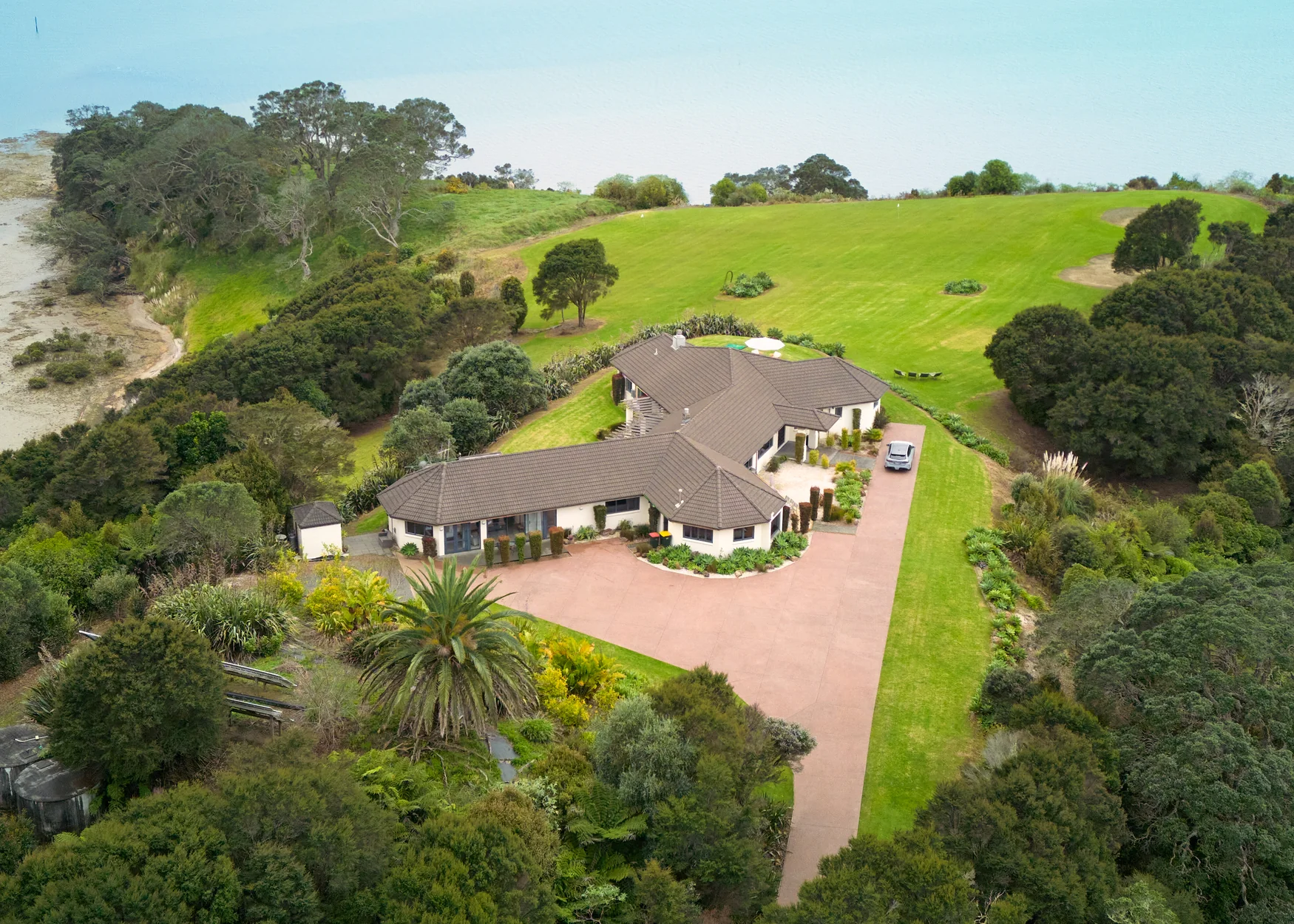
6 bed POA