The report: What global investors should know about Phuket and Bangkok’s luxury property market, according to CBRE Thailand’s Artitaya Kasemlawan
Interview by Hamish McDougall
Few people have a clearer view of Thailand’s luxury property market than Artitaya Kasemlawan. As Head of Residential Sales-Project at CBRE Thailand, she sits at the intersection of data, deal flow, and the evolving ambitions of high-net-worth buyers from across the globe.
CBRE, the world’s largest commercial real estate services firm, operates across more than 100 countries and has long been the benchmark for institutional-grade market intelligence in Asia. Its Thailand advisory practice spans primary sales, leasing, property management and valuation, giving Kasemlawan and her team a panoramic view of market dynamics that few can match.
In conversation with Boulevard, Kasemlawan draws on years of frontline experience to paint a nuanced picture of where Thailand’s residential markets stand today and where they are heading. Her perspective spans Bangkok and Phuket, mass market and ultra-prime, and the full arc from holiday home to permanent residence—a breadth that reflects both CBRE’s reach and her own deep engagement with the market.
Boulevard: Can you give us an overview of Bangkok’s residential market right now?
Artitaya Kasemlawan: Bangkok saw few projects launched during Covid, but last year we started seeing more developments come to market, because many projects had been on hold for three to four years. Since the economic situation has stabilised, those projects are now launching. The most sought-after area remains Lumpini Park. With the launch of super luxury and branded residences in the area, and more to come in the pipeline, we expect this to be a significant year for branded residences in the capital.
Blvd: What is the picture in Phuket?
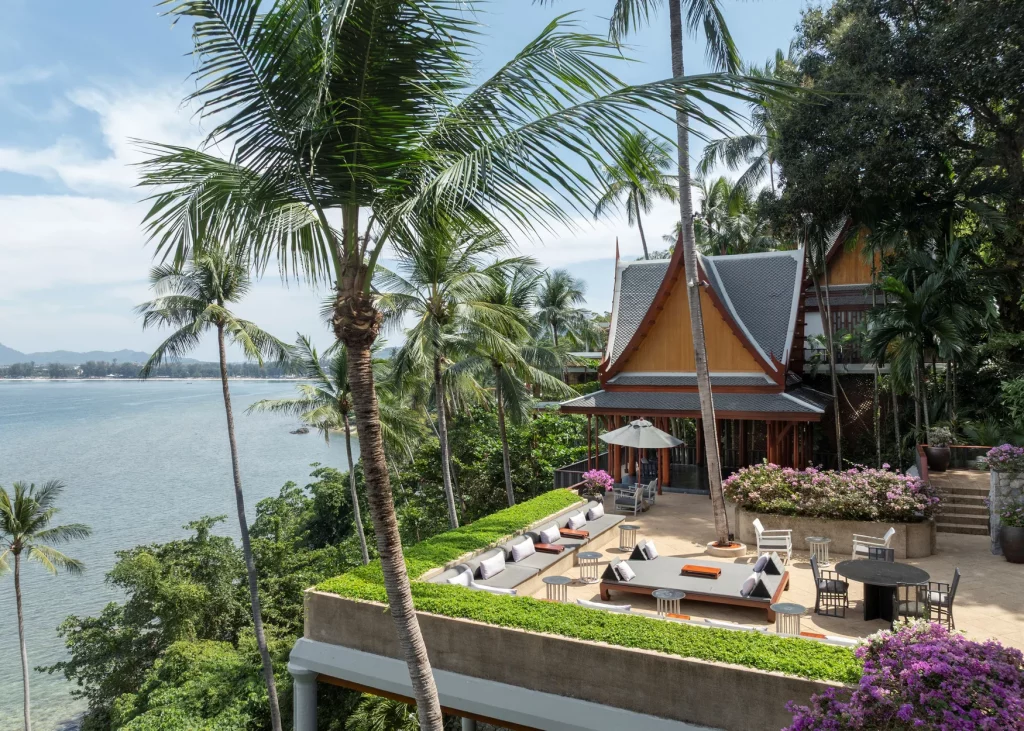
“Beyond the horizon: The ultimate oceanfront villa at Amanpuri”. (Photo courtesy of CBRE Thailand)
Kasemlawan: Both the primary and secondary markets are doing well. Many Bangkok-based listed developers entered Phuket during Covid, when the capital was quiet, and that influx really drove the boom we saw over the past three years. On the resale side, buyers looking for ready-to-move-in product find existing supply often at better prices than new launches—so that market is active too. Overall, the residential market in Phuket is healthy.
Based on CBRE Research data, Phuket’s luxury and branded residential market has continued to demonstrate strong sales performance across both villa and condominium segments. The villa segment remained one of the market’s strongest-performing sectors, recording a sales rate of 73 per cent in 2023, rising to 76 per cent in 2024, and remaining stable at 73 per cent in 2025, highlighting the constrained supply conditions within the segment.
Blvd: How has the market adjusted to the volatility of the past six months?
Kasemlawan: It has become quite stable compared to two to three years ago, when the market was booming. That earlier period was exceptional—Phuket significantly outperformed Bangkok. A lot of that supply has now been absorbed, and over the past 12 months, we have seen genuine buyers coming in: not speculative, but people buying for their own use or as long-term investments. Looking forward, 12 months from now, I expect much the same—a steady, real market. We are attracting multinational families and executives who work remotely from the island.
Blvd: Is the much-discussed oversupply a problem across the whole market, or is it concentrated at a particular price point?
Kasemlawan: At the entry-level to high-end segment, there is a lot of supply, and the absorption rate is slow—household debt, mortgage rejection rates and individual financial circumstances all play a role. We used to see high rejection rates at around seven million baht. That threshold has now crept up to 10 million.
But the luxury segment and above—including branded residences—tells a completely different story. Supply is limited, buyers have high spending power and can often pay cash, and sales performance is running at around 90 per cent. We are not worried about the top of the market.
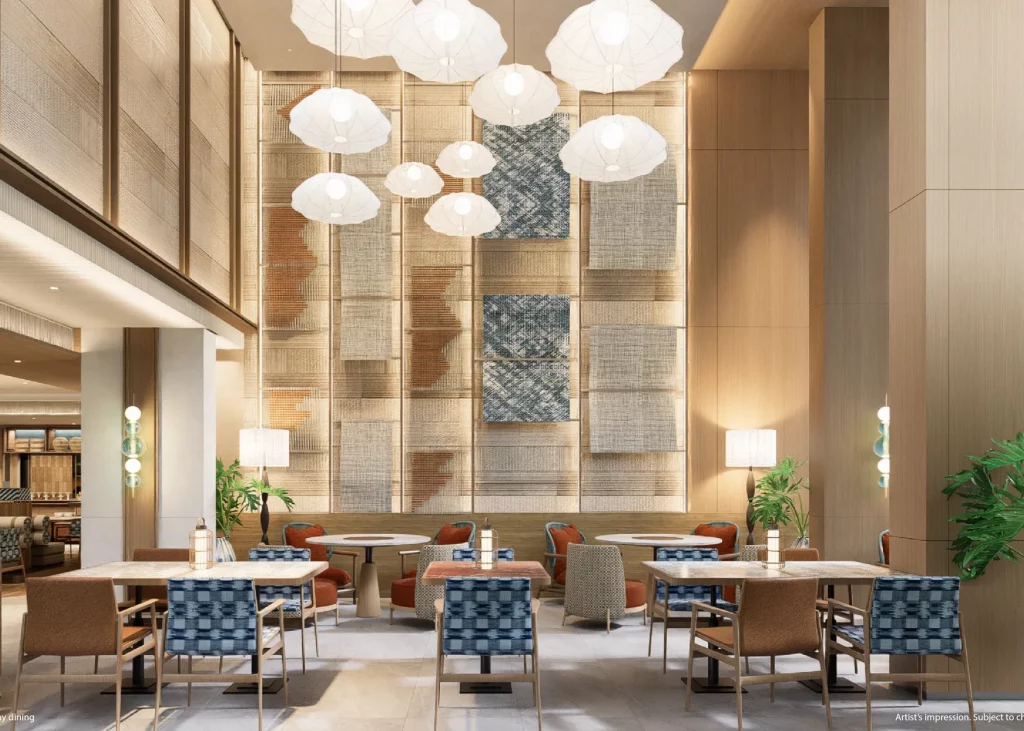
Inside Peylaa Phuket, a luxury branded condominium development managed as the first Autograph Collection Residences by Marriott International in the Asia-Pacific region. (Artist’s rendering, courtesy of CBRE Thailand)
Blvd: With more than 40,000 units reportedly coming to market over the next five years, how much of that would you consider luxury or ultra-prime?
Kasemlawan: For Phuket, the luxury and branded residence segment accounts for perhaps 12 per cent of total supply. As with Bangkok, the bulk of the market is entry-level to high-end. But at the very top—limited supply, high demand, good absorption rates—it is a small portion of the market, and the picture is very healthy.
Blvd: How are buyers at the luxury end thinking about investment versus lifestyle?
Kasemlawan: Based on CBRE Phuket Luxury and Branded Residence Transactions (2023–2025), buyer demand continues to be driven by both lifestyle and investment considerations. It is very difficult to separate the two nowadays. Lifestyle comes first—you have to genuinely love the place. But investment appeal is always a factor in closing a decision. People may plan to stay for some years, then rent to other high-net-worth clients, or resell further down the line. Investment and lifestyle have to come together. Capital appreciation is always part of the equation, because at this price level, the asset value is significant.
In the condominium segment, more than 70 per cent of purchases were investment-oriented, with buyers seeking rental income and long-term investment, while approximately 30 per cent purchased for personal use. In contrast, the luxury villa market showed a more balanced buyer profile, with around 50 per cent acquiring properties for investment and 50 per cent for owner occupation. Many villa buyers initially purchase for personal enjoyment, holiday use, or long-stay living, while retaining the flexibility to generate rental income when the property is not occupied.
Blvd: We are seeing more people move to Phuket as a primary residence rather than a holiday home. What are you observing?
Kasemlawan: Before Covid, it was almost entirely seasonal. Now we regularly see clients looking to settle: moving their families to Phuket, looking for properties close to international schools and lifestyle hubs, planning for long-term stays with remote working in mind. The requirement has shifted from a holiday property to a family home. We see it clearly in the conversations we have and in what clients are asking for.
Blvd: Which areas of Phuket are most compelling for international investors right now?
Kasemlawan: The Laguna area is most sought-after for luxury condominiums, because of the density of amenities. From street food to Michelin-recognised restaurants and beach clubs, buyers find everything they need within a very short drive. For villas, buyers looking for privacy and sea views tend to go further north—Kamala, Layan, Surin. Different lifestyle needs point to different areas, but the common thread is that people want to feel like everything is within reach.
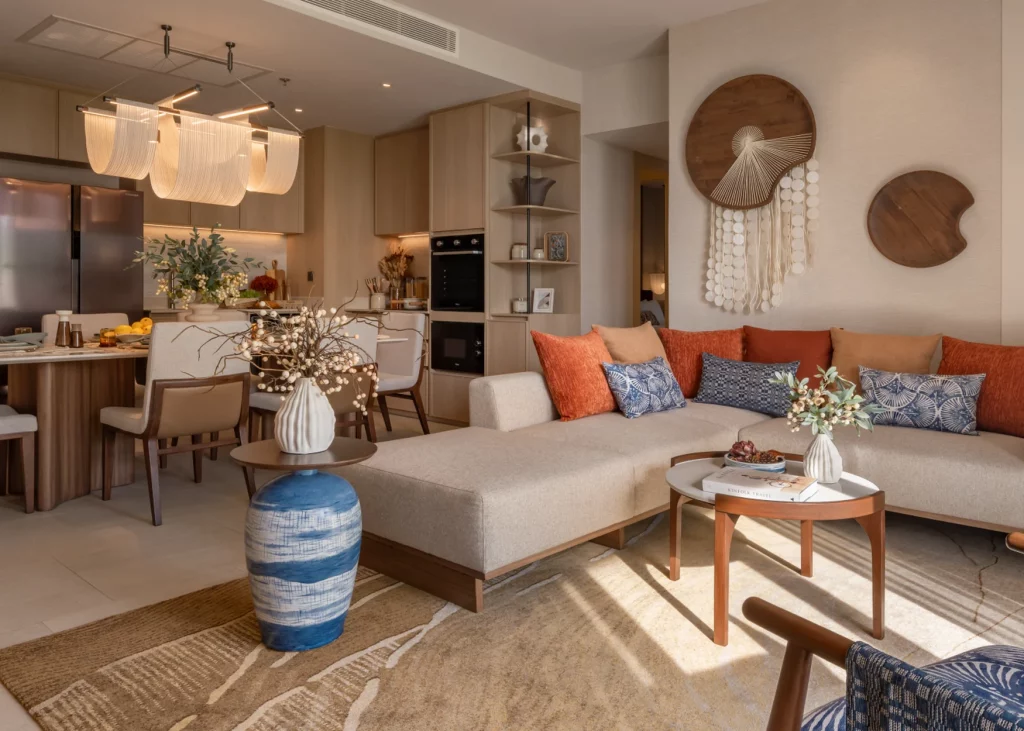
Developed by Capstone Asset Co, Ltd, Peylaa is a THB 3.4 billion project featuring 408 fully furnished units across three 7-story buildings. (Artist’s rendering, courtesy of CBRE Thailand)
Blvd: What are the yield prospects at the luxury end in Phuket?
Kasemlawan: Rental yields in Phuket are higher than in Bangkok. Bangkok typically delivers around 3 to 6 per cent; Phuket can reach 8 to 11 per cent. That is quite attractive for buyers who want to generate income from their asset while they are not using it.
Blvd: The buyer profile has diversified considerably. Where is demand coming from now?
Kasemlawan: Based on CBRE Phuket Luxury and Branded Residence Transactions (2023–2025), Thai buyers remained the dominant purchaser group in Phuket’s luxury and branded residences market throughout the period. However, foreign buyer demand continued to be shaped by post-pandemic travel recovery, expanding air connectivity, and Phuket’s emergence as a global luxury residential destination. During this period, buyers from Russia, Japan, the United Kingdom, the United States, and Germany represented some of the most active foreign purchaser groups in the market.
The market is far more international than it was five years ago. Foreign buyers have been increasingly attracted to Phuket’s luxury and branded residences market for a combination of lifestyle and investment considerations. Demand has been supported by the island’s high quality of life, international-standard infrastructure, growing expatriate community, access to reputable international schools and healthcare facilities, as well as its strong global tourism appeal.
Looking ahead, many foreign buyers are no longer purchasing solely for holiday use, but increasingly view Phuket as a primary residence, second home, or long-term lifestyle investment. Demand is being further supported by the rise of remote working, long-stay living trends, wellness-focused lifestyles, and the growing appeal of internationally branded residential developments.
The evolving mix of foreign buyers reflects Phuket’s transformation from a holiday destination into a globally recognized luxury residential market, supported by tourism recovery, enhanced international connectivity, and the continued expansion of internationally branded residential developments.
Blvd: How does Phuket stack up against competing destinations—Bali, Lombok, Danang?
Kasemlawan: It always starts with the emotional connection—you are not going to invest in a country you do not know and love. But beyond that, Phuket is a fully established island community. You are close to nature, but you also have shopping malls, international food, a major airport, international schools, medical centres and wellness facilities. The cost of living remains very attractive by global standards, and because it draws global citizens, your investment is not dependent on a local market—you can find tenants and buyers from around the world. That breadth of demand is what distinguishes Phuket from markets that are still primarily domestic or purely seasonal.
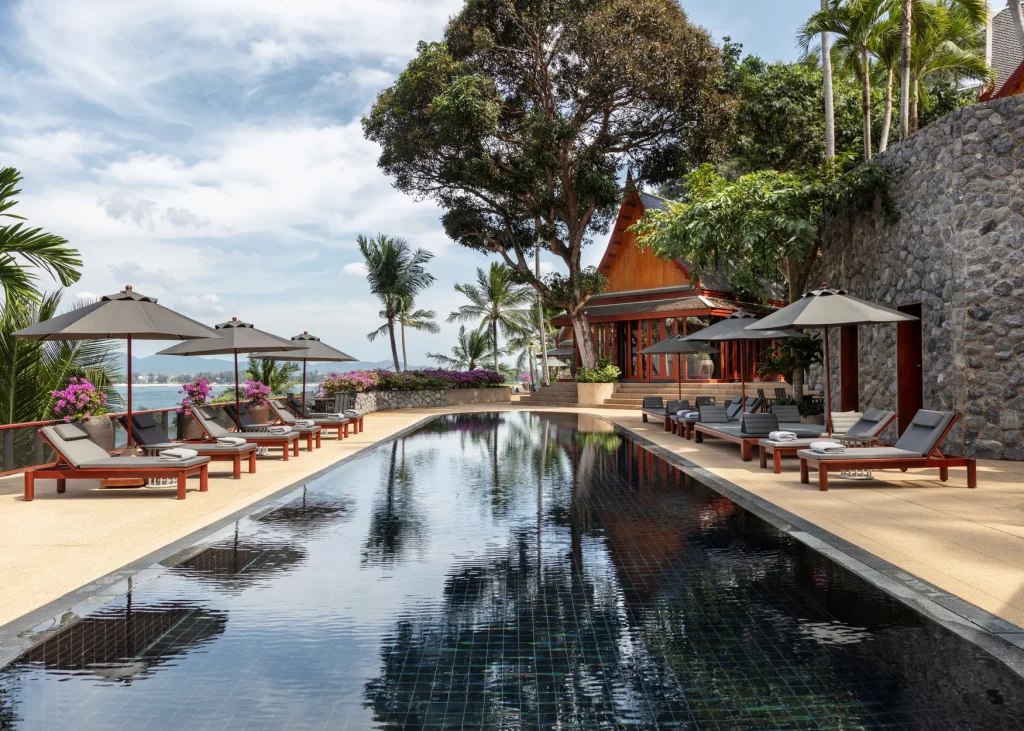
“Beyond the horizon: The ultimate oceanfront villa at Amanpuri”. (Photo courtesy of CBRE Thailand)
Blvd: Wellness and medical infrastructure seem to be growing rapidly as an attractor. How significant is that?
Kasemlawan: Wellness is the up-and-coming trend globally, and Thailand is positioning itself as a hub for both wellness tourism and residential wellness. In Phuket specifically, you have excellent nature, food, leisure, and now genuinely world-class wellness and medical facilities—at a fraction of the price you would pay in Switzerland or other established wellness destinations. Crucially, it is not an isolated wellness stay. You can spend time at a clinic or retreat and still go to the beach, eat extraordinary food, and live a full life around you. That combination is very hard to replicate elsewhere, and it is bringing a new category of visitor—and increasingly, resident—to the island.
Blvd: What should foreign buyers be aware of before committing?
Kasemlawan: Two things. First, due diligence. At this price level, buyers must engage a lawyer to verify the property history and the developer’s track record. Confidence in completion and quality is everything, and it cannot be assumed. Second, the ready-to-move-in challenge. Many buyers want immediate occupancy, but much of the existing supply was launched several years ago, and the design, layouts and finishes can feel dated. New supply that meets current expectations is limited, and completing to a high standard takes time. Buyers need to decide whether they want something that is available now, or something that fully reflects how they intend to live.
Blvd: CBRE positions itself as more than a sales agency. How does that play out in practice?
Kasemlawan: We see ourselves as a trusted advisor, our role as an agency goes far beyond selling properties. Purchasing luxury property is a highly personal decision; trust and a tailored approach are essential. Beyond sales, we have a leasing team and resale team. If a client buys from us and wants to lease their property, we connect them directly with our leasing team to handle furnishing and tenant placement. If they want to exit at the right moment, our resale team can assist with that too. The aim is genuine one-stop service across the full ownership lifecycle.
Read next:
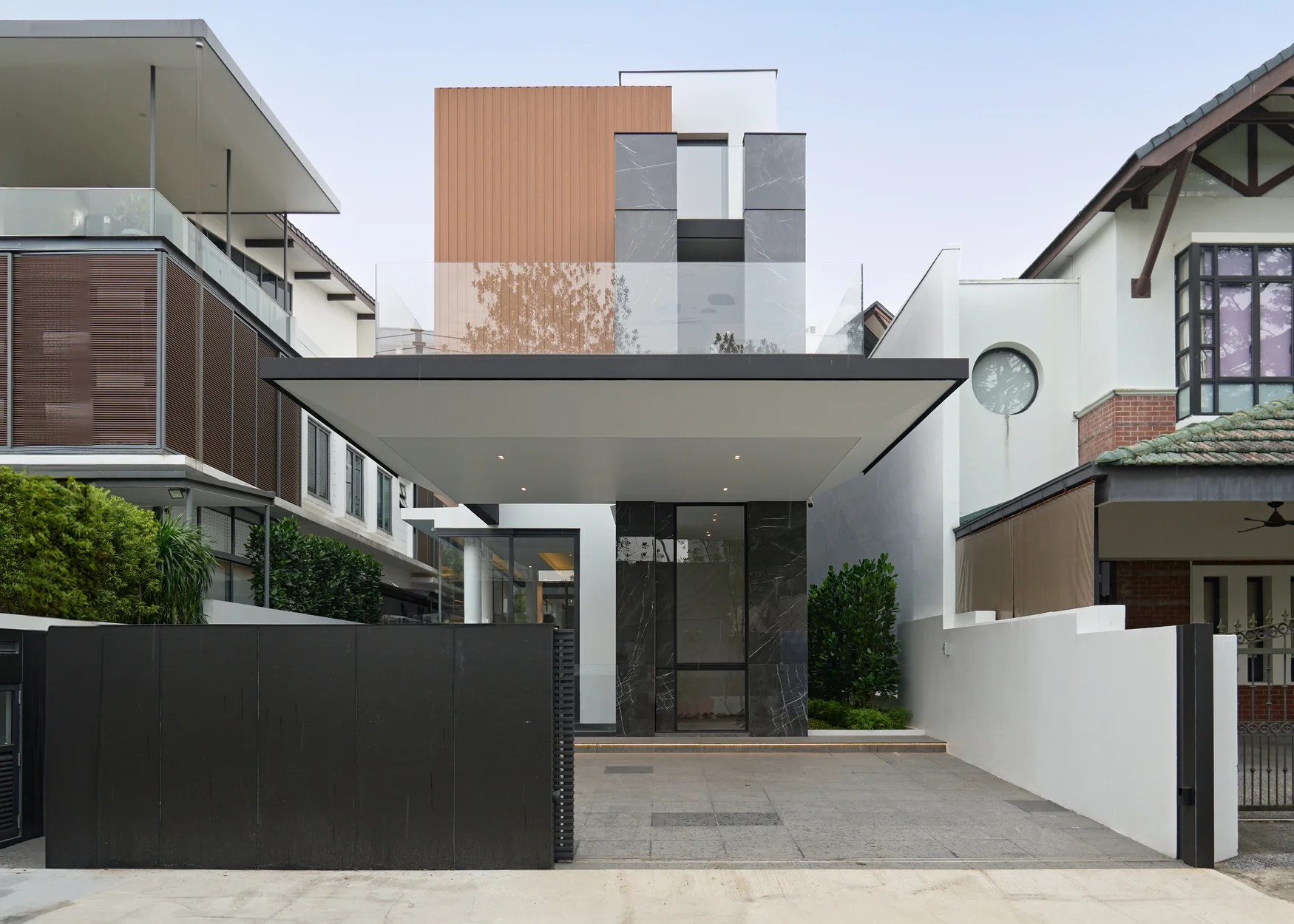
8+1 bed | 10,200 sqft area 19,500,000 SGD
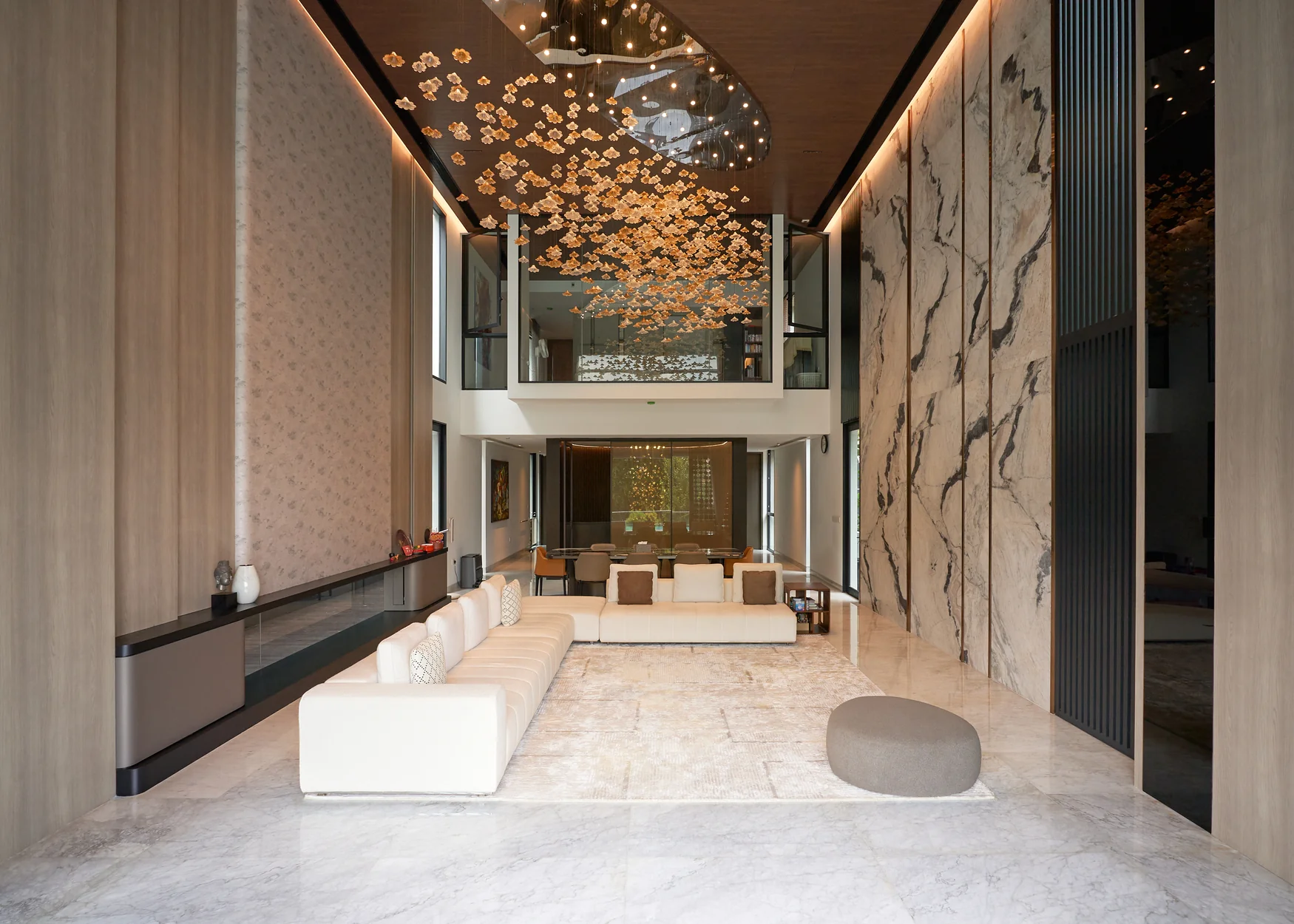
5 bed 19,380,000 SGD
4 bed | 4,208 sqft area POA
3-8 bed | 699,654 - 784,080 sqft area POA
6 bed POA