How a remote Indonesian resort puts purpose and community first: “The ultra-luxury traveller wants stories, not photographs”
by Mac Fabella
American entrepreneur Michael Schwab, who has been dubbed many a time by the presses as an “adventure capitalist”, first visited Rote, an island in Indonesia’s southernmost territory, on a surf trip in 2008. Enchanted by the island and its waves, he returned in 2011 after reconnecting with Greg Sarkissian, a university fraternity brother who had become an expatriate businessman in Jakarta.
Together, with their Jakarta partners, they visited the remote, undeveloped beach of Bo’a. The local government, eager to attract investment and tourism, proposed a public-private partnership to develop the land into a resort that would bring jobs and prosperity to the island.
It would take almost a decade. Schwab and Sarkissian later connected with Chris Burch and James McBride of Nihi Sumba, a luxury resort in eastern Indonesia; and over the course of the next five years, the developing beachfront resort would evolve to become the first expansion of the Nihi brand. Nihi Rote had its soft opening in April 2026, with full completion scheduled for October, 18 years after Schwab’s initial visit to the island.
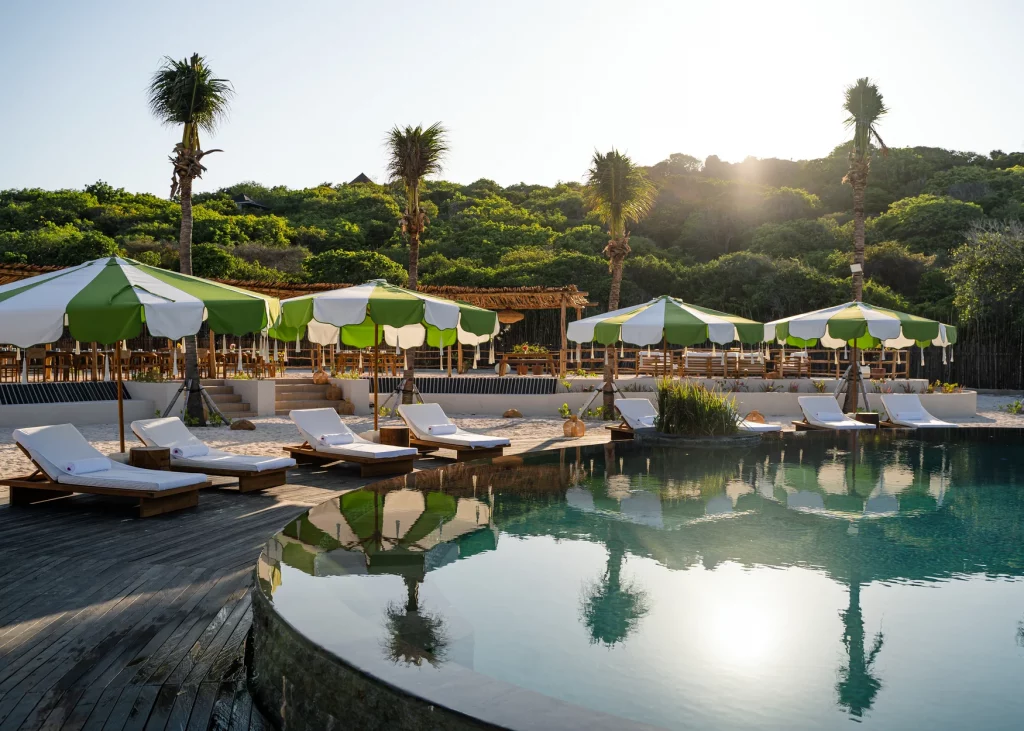
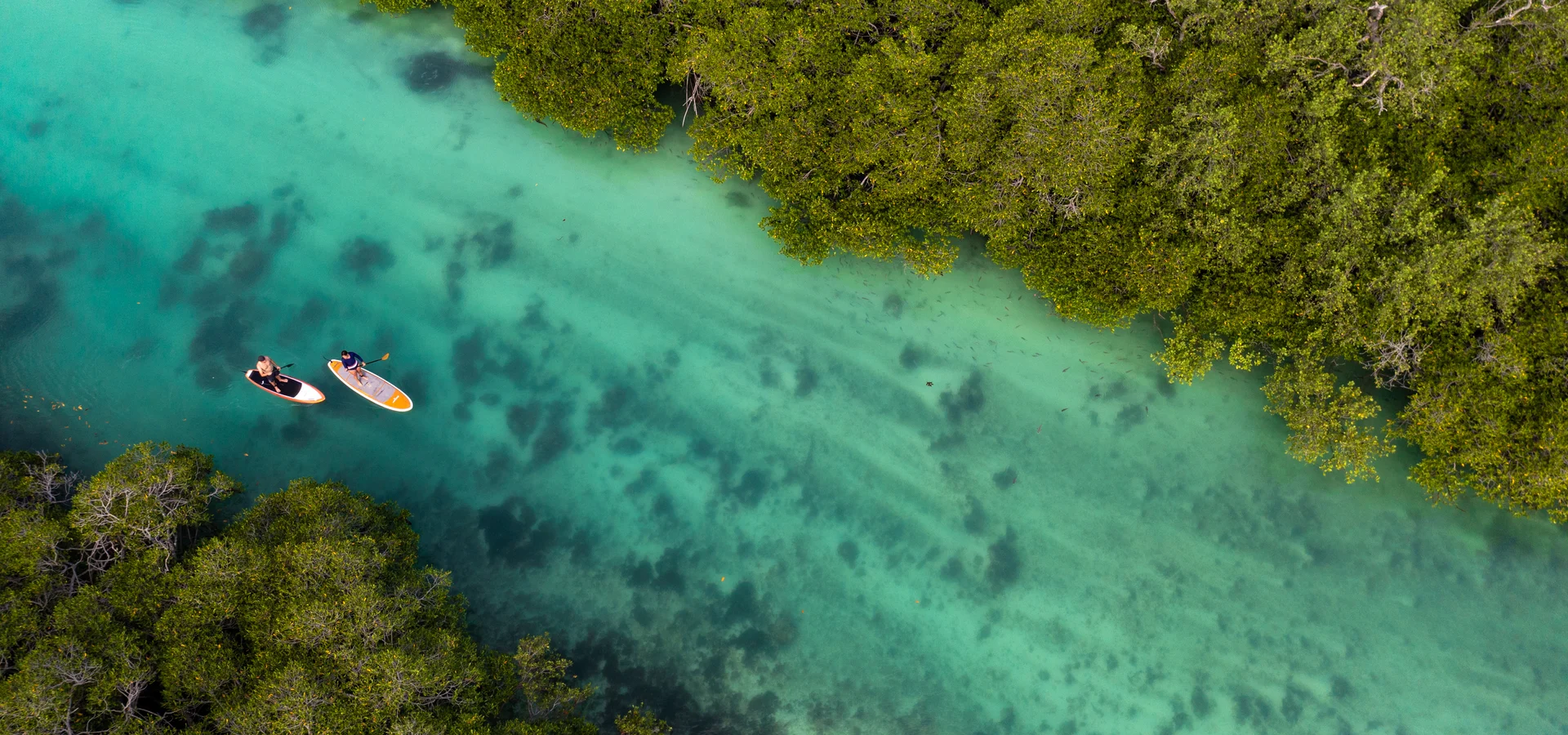
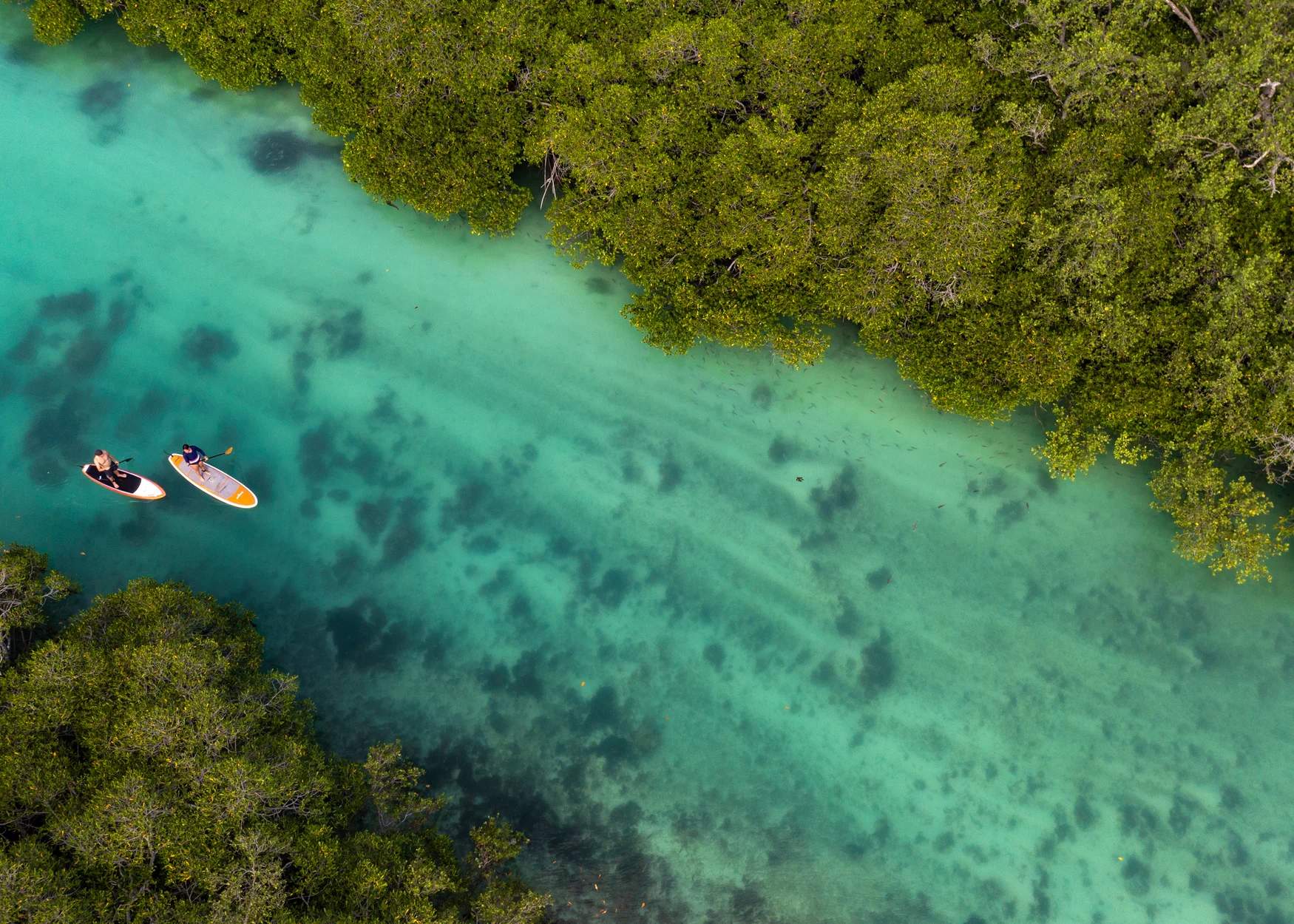
Golden hour at the Nihi Rote resort. Top: Rote island’s lush mangrove forests offer ideal environments for paddleboarding and kayaking at high tide. (Photo courtesy of Nihi Rote)
Kenny Knickerbocker, general manager of Nihi Rote and Hospitality Academy, recalls this origin story in conversation with Boulevard. In the resort’s first few months, they’ve welcomed guests from all over the globe, including Indonesian locals who are also hearing about Rote island for the first time.
“Guests are looking for space, freedom, wellbeing, authenticity, and experiences that feel connected to the destination. They want to feel that their time is being valued and that every detail has been considered, but without the experience feeling too formal or overproduced.”
What sets it apart, perhaps, is that it also houses the Rote Hospitality Academy, a non-profit school and immersive training ground integrated directly into the 21-villa property. Now in its fourth year, with a fully Rotenese class of students, the academy is modelled after traditional huts and located at the centre of the grounds, acting as a main arrival point for visitors and underscoring Nihi’s distinct brand of luxury.
We asked Knickerbocker about his read on today’s ultra-luxury traveller, what it is they are searching for when they arrive at this remote paradise, and what he’s still learning about the world of hospitality.
Boulevard: What do you think today’s ultra-luxury traveller is searching for when they come to Indonesia, or more specifically Rote Island?
Kenny Knickerbocker: Today’s ultra-luxury traveller is looking for something far deeper than traditional luxury. Of course, comfort, privacy, beautiful design, and exceptional service are still expected, but those elements are now just the foundation. What many guests are truly searching for is authenticity, space, connection, and a sense of discovery.
When they come to Indonesia, and especially to a place like Rote Island, they are looking for experiences that feel rare and meaningful. Rote offers a very different rhythm from more established destinations. It is raw, beautiful, culturally rich, and still relatively untouched. There is a sense of freedom here: open landscapes, dramatic coastlines, world-class ocean experiences, and a local community with a very strong identity.
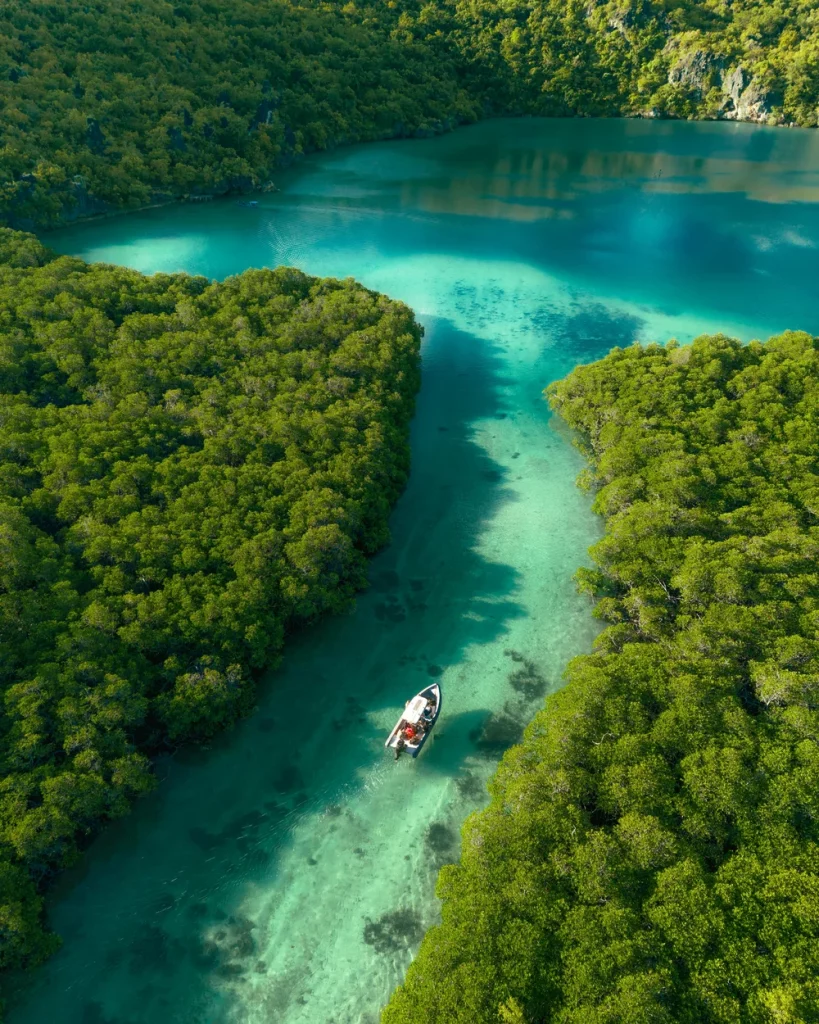
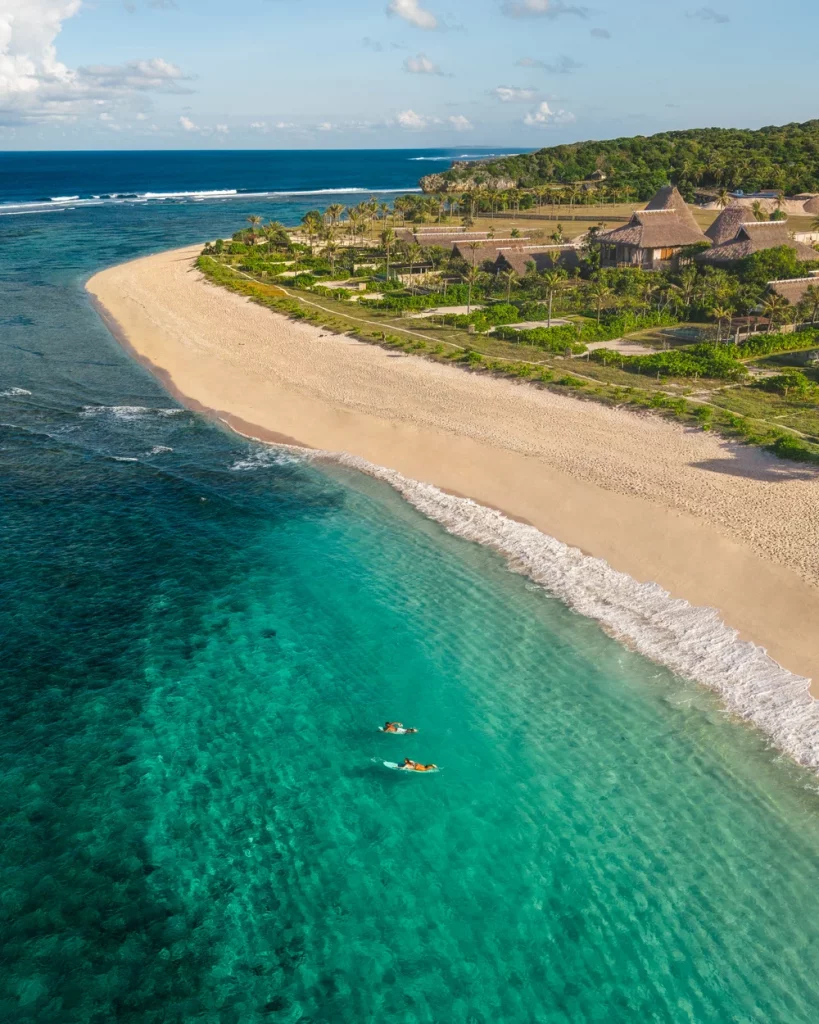
Aerial perspective of Rote island’s natural beauty. (Photo courtesy of Nihi Rote)
For Nihi Rote, I think the opportunity is to deliver ultra-luxury in a way that feels natural and deeply connected to place. It is not about over-polishing the island or removing its character. It is about creating comfort and excellence while allowing guests to feel the spirit of Rote, through the ocean, the people, the culture, the food, the landscape, and the feeling of being somewhere truly special.
Ultimately, the modern ultra-luxury traveller wants to return home changed in some way. They want stories, not just photographs. They want privacy, but also connection. They want beauty, but also purpose. Rote has the ability to offer all of that in a very honest and powerful way.
Blvd: Where are your guests typically coming from, and what are they looking for?
Knickerbocker: Many of the guests are coming from the USA, Australia and Europe, with a mix of local Indonesian guests who are for the first time also hearing about Rote Island.
They are looking for space, privacy, authenticity, and a genuine sense of place. Ultra-luxury travellers today are not only looking for beautiful villas and high levels of service; they are looking for experiences that feel emotionally rewarding and personally meaningful.
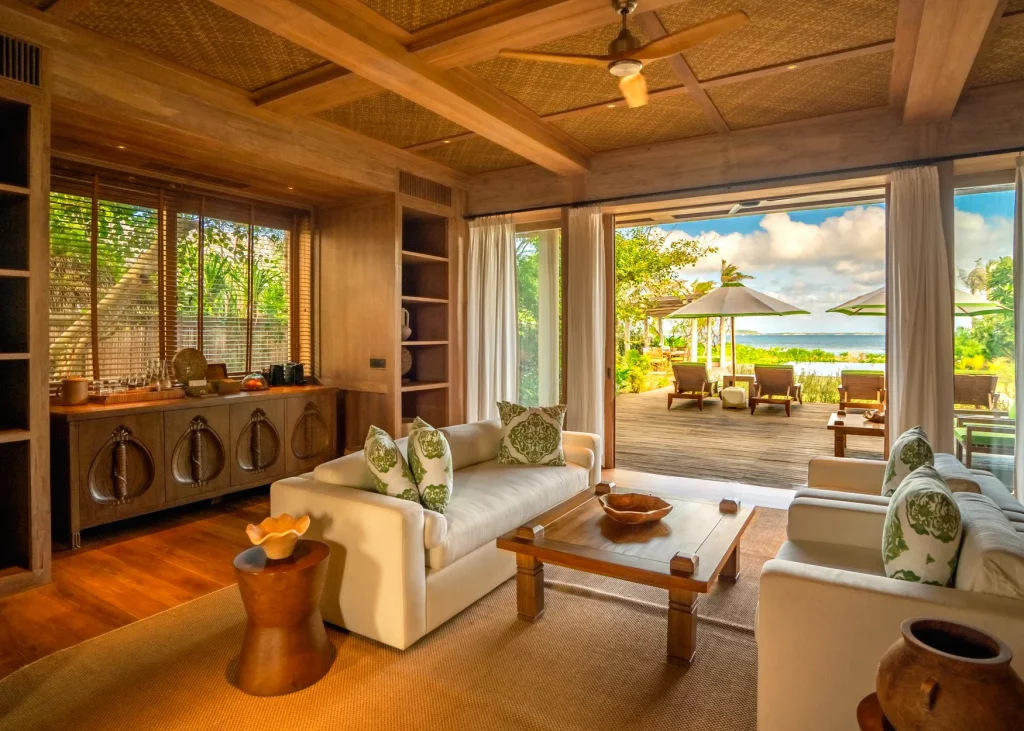
Inside a modern Nihi Rote beachfront villa. (Photo courtesy of Nihi Rote)
In Rote, that may mean waking up to untouched ocean views, surfing or exploring remote coastlines, connecting with local culture, enjoying food that reflects the island, or simply having the freedom to slow down in a place that still feels wild and undiscovered.
They are also looking for trust. They want everything to be seamless and well considered, but not overly staged. The true luxury is feeling completely taken care of while still feeling connected to the natural beauty, culture, and rhythm of the destination.
Blvd: How have their expectations changed over, say, the last five years? How do they define luxury?
Knickerbocker: Over the last five years, expectations have changed quite significantly. Ultra-luxury travellers still expect exceptional comfort, privacy, design, food, and service, but those things are now almost assumed at this level. They are the starting point.
Today, luxury is much more personal. Guests are looking for space, freedom, wellbeing, authenticity, and experiences that feel connected to the destination. They want to feel that their time is being valued and that every detail has been considered, but without the experience feeling too formal or overproduced.
There has also been a clear shift toward privacy and purpose. Travellers want places that feel safe, uncrowded, and deeply restorative. They want nature, culture, meaningful activities, and a sense of emotional connection. In many ways, luxury is now defined by access, access to untouched places, authentic experiences, thoughtful service, and moments that cannot easily be replicated elsewhere.
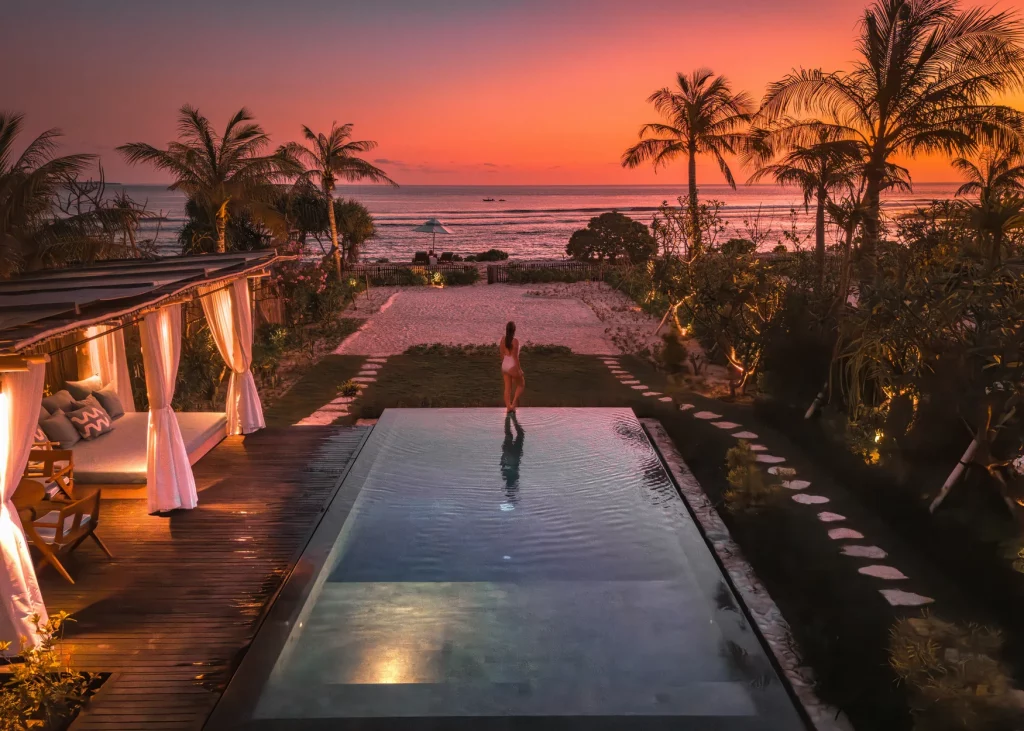
Golden hour serenity at the infinity pool, overlooking pristine beach and ocean. (Photo courtesy of Nihi Rote)
For Nihi Rote, this is very relevant. The luxury is not only in the villas or the physical product, but in the space, the ocean, the landscape, the people, and the feeling of being somewhere rare and still very real. Modern luxury is about how a place makes you feel, not just what it provides: intuitive service and genuine experiences.
Blvd: What are your favourite moments in the resort?
Knickerbocker: Time at the Rote Hospitality Academy and the Academy Night Dinner. Philanthropy has been part of the DNA of Nihi since day one. The Rote Hospitality Academy has entered its fourth year and now has a class of 21 students, all local Rotenese, who will spend the next year in the academy learning English, character and confidence building, learning the Nihi brand pillars and philosophy, while simultaneously being able to learn and practice actual hospitality skills in real time with the academy at the heart of the resort.
The Academy Night (our version of The Sumba Foundation Night at NIHI Sumba) celebrates the Academy, starting with guests coming to the academy courtyard for sunset drinks and enjoy a sense of community before sitting around the firepit to enjoy traditional Rotenese dances, musical performances and storytelling of local Rotenese legends by staff graduates from the Academy. Dinners follows with a traditional Liwetan dinner and Rotense Sassando (local string instrument) musical accompaniment. It is a magical night under the stars.
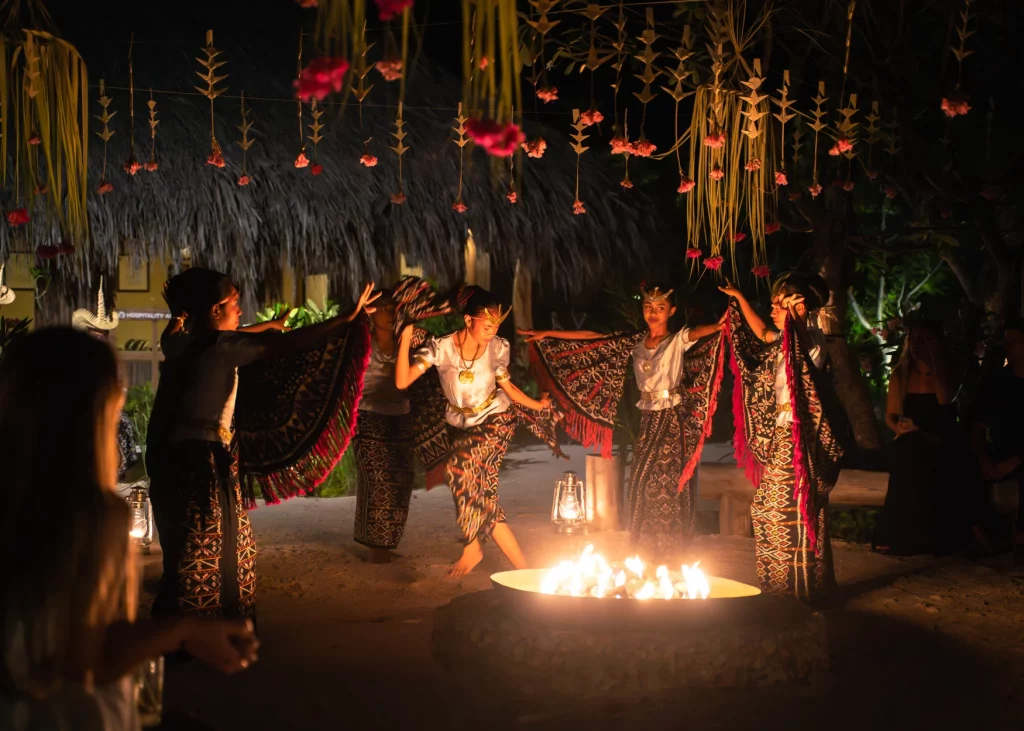
Rotenese locals perform traditional dances at the Academy Night Dinner. (Photo courtesy of Nihi Rote)
Blvd: What are you still learning about the world of luxury and hospitality?
Knickerbocker: I think one of the most important things I am still learning is that true luxury is very personal. It is not a fixed formula. What feels luxurious to one guest may be privacy and silence, while for another it may be adventure, connection, celebration, or a very high level of personal attention.
In hospitality, especially at this level, you are constantly learning how to read people better: how to understand what they need before they ask, how to create comfort without being intrusive, and how to make service feel natural rather than scripted.
We are also learning more and more that luxury is not only about what we provide, but how we make people feel. The villa, the food, the design, and the experiences are all important, but the lasting memory often comes from the human connection, the sense of care, and the feeling that every detail was considered with sincerity.
At Nihi Rote, I think this learning is especially important because we are not trying to create luxury that feels generic. We are building something connected to the island, the local culture, the ocean, and the people. So for me, the learning continues every day, how to balance world-class expectations with authenticity, simplicity, and a strong sense of place and it all starts with the heart of the resort at The Academy.
Read next:
8+1 bed | 10,200 sqft area 19,500,000 SGD
5 bed 19,380,000 SGD
4 bed | 4,208 sqft area POA
3-8 bed | 699,654 - 784,080 sqft area POA
6 bed POA