Exploring Bawah Reserve, one of the world’s most remote private island resorts
by Hamish McDougall
Photography by Jin Cheng Wong
Adrift in the South China Sea, Bawah Reserve is an archipelago of breathtaking natural drama—and home to one of the region’s most extraordinary private islands. Resort COO Paul Robinson talks us through the origins, building something genuinely different, and the art of knowing exactly who you want to welcome.
Consider the journey. A guest boards in London or Frankfurt, flies past the Maldives—past the very atolls that define the global shorthand for paradise—and lands in Singapore. From there, a ferry to the Indonesian island of Batam, a transfer on land, and finally a seaplane. It would have been so much simpler to stop hours earlier and find a beach elsewhere.
That so many people choose not to is, in a sense, the whole story of Bawah Reserve.
Bawah Reserve resides in Indonesia’s remote Anambas archipelago.
Comprising six islands of the Anambas archipelago—discovered, as the best of these things tend to be, by accident, when Singaporean shipping magnate Tim Hartnoll sailed in some years ago and found little more than a few huts and a disused army base—Bawah is a place that resists easy comparison. Paul Robinson, the resort’s chief operating officer who has spent more than eight years redesigning and rebranding it, reaches for three references at once.
“When I first arrived, I thought it was like the Maldives had crashed into the Seychelles—and then into Fiji. If you take the nuances of each of those places and bring them together, that’s Bawah,” he says. “You have the warmth of Indonesian culture and people, the rock formations, forests and greenery of the Seychelles, and then the beaches, coral reefs, incredible diving, snorkelling and those aqua seas you associate with the Maldives.”
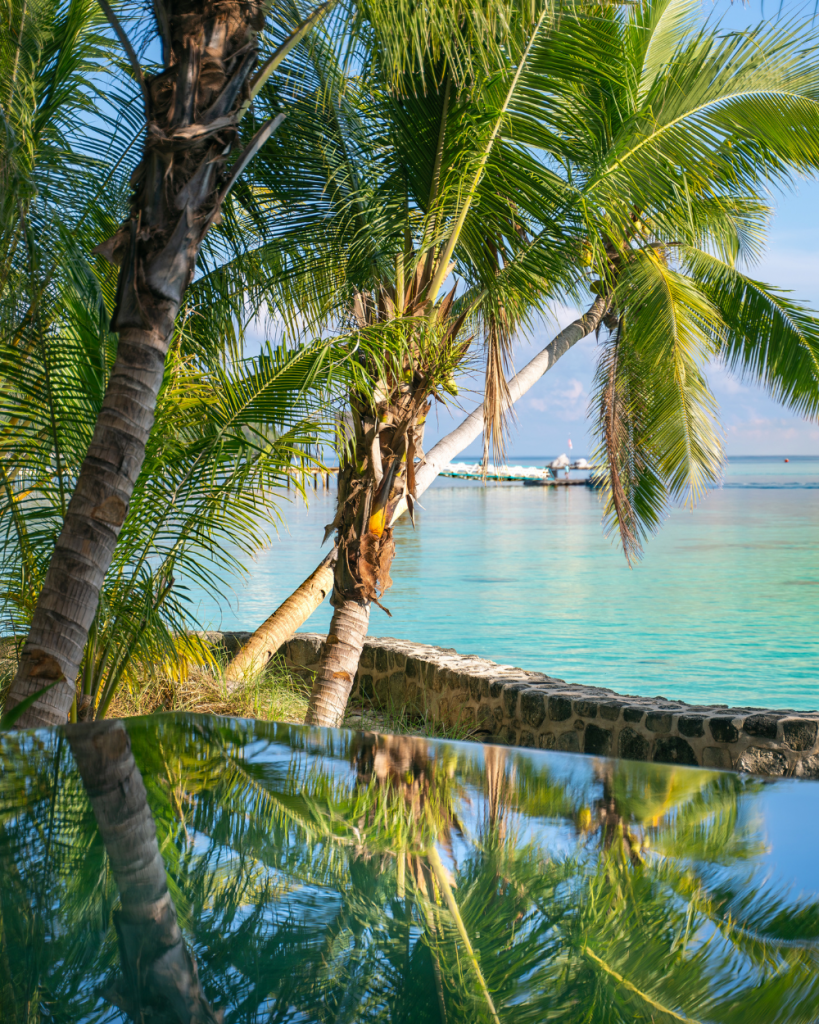
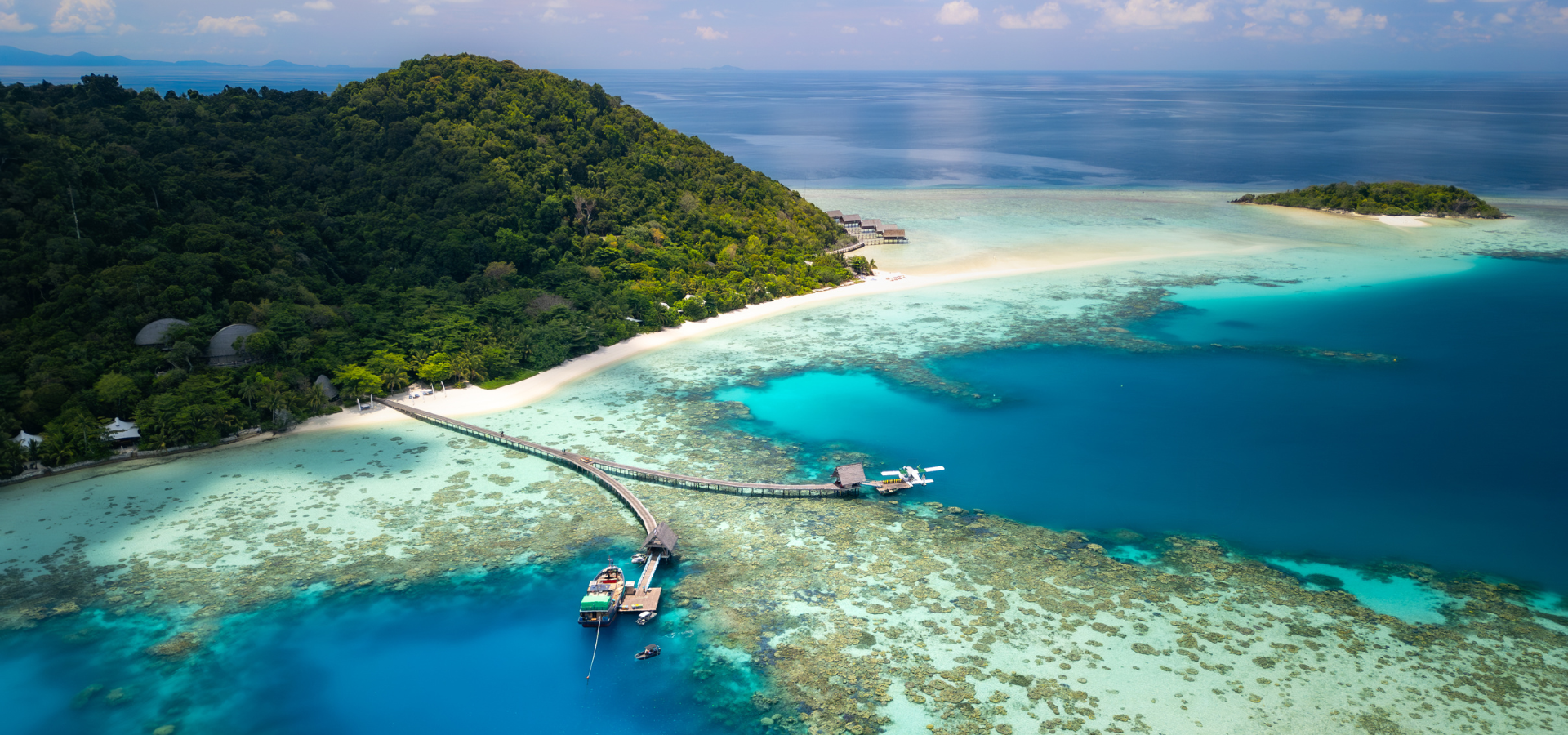
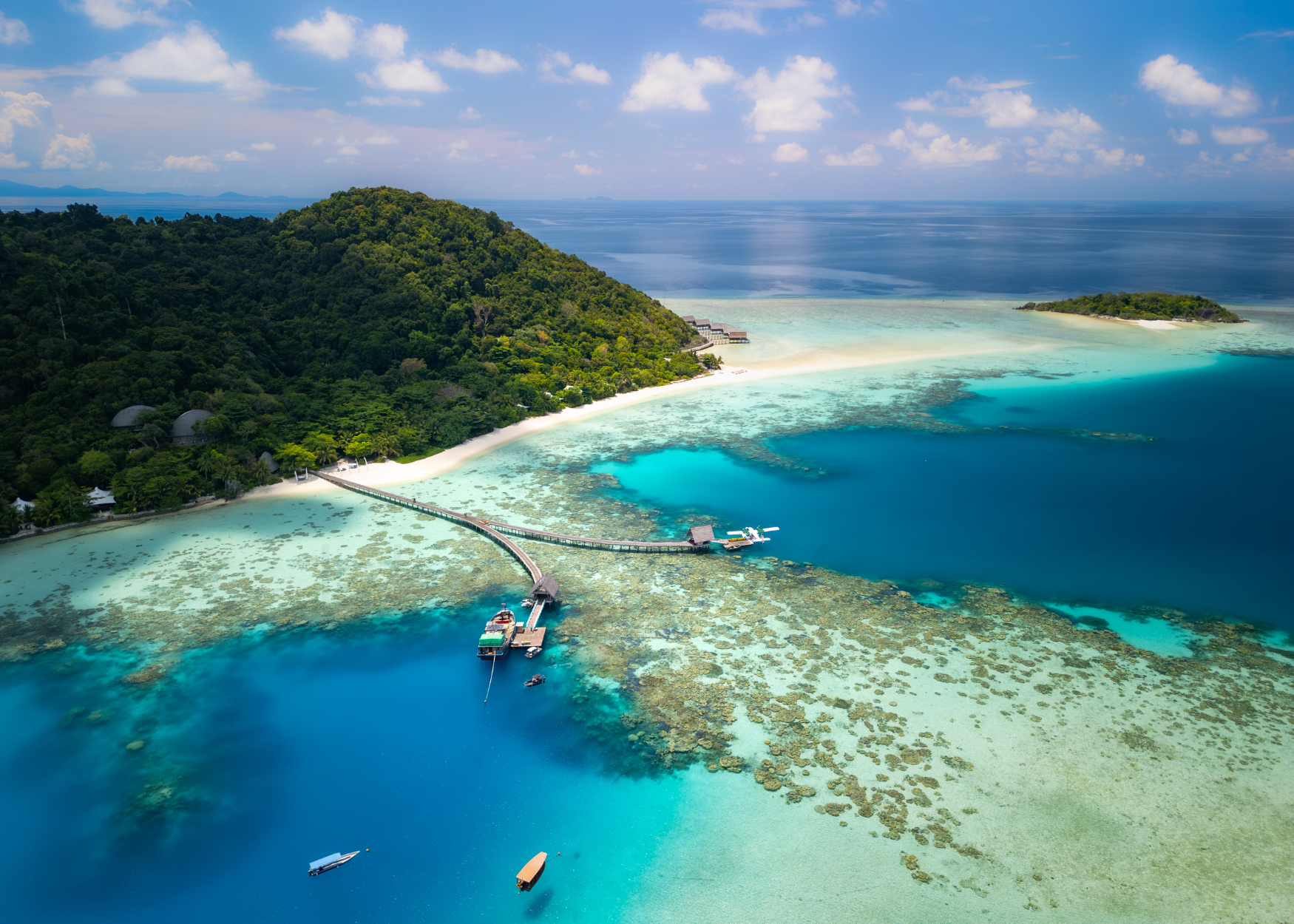
Bawah is composed of six islands, three lagoons, 13 beaches and 100 hectares of untouched forest.
Earth-first philosophy
If there is a single idea holding the place together, it is one Robinson is careful to define on his own terms. The industry’s word is sustainability. He won’t use it.
“I prefer ‘earth-first philosophy,’ because I think ‘sustainable’ means to sustain, whereas we are trying to rejuvenate and restore what humans have destroyed, while constantly working to roll back the damage we cause.”
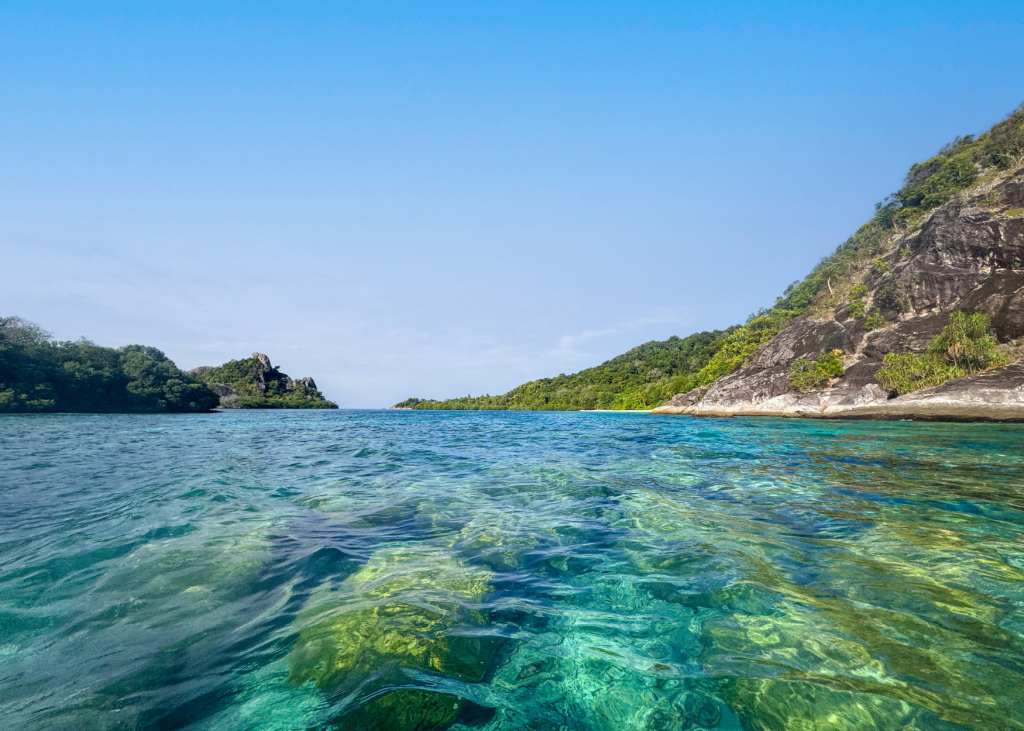
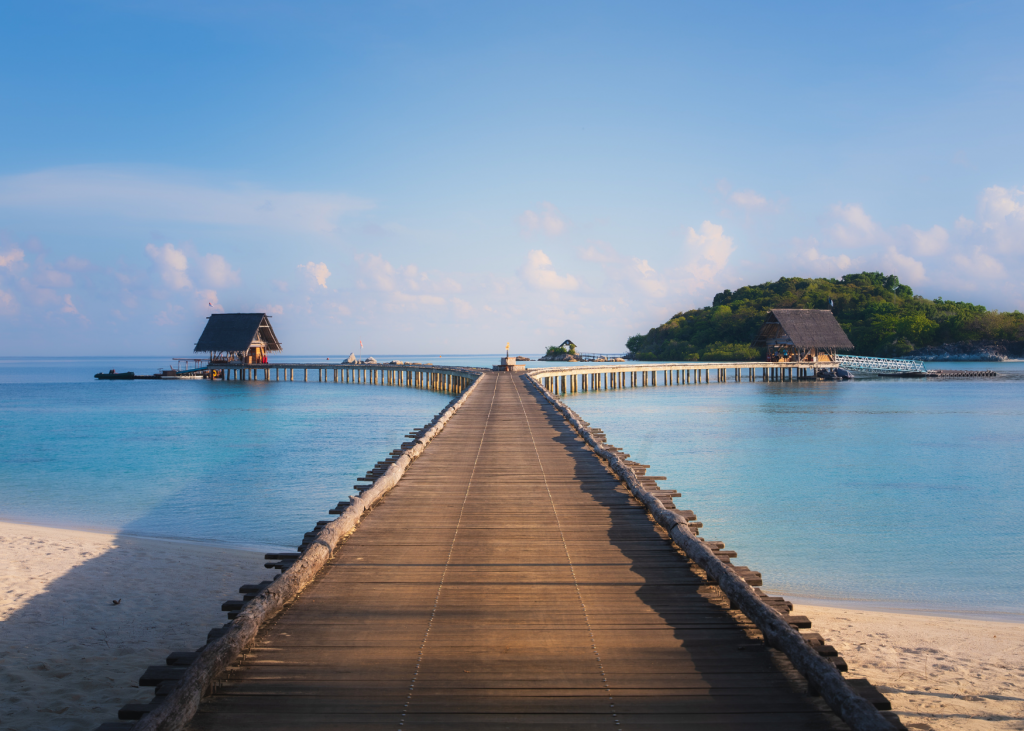
Crystalline waters that take one’s breath away.
It is a distinction with teeth, and he is the first to acknowledge the contradictions. “Of course, we still have diesel generators, people still arrive by plane, and we still use boats. But what we’re trying to create is something with more meaning.”
What he is really chasing is something less tangible than carbon ledgers. “I wanted service from the heart, something with more soul, more feeling. You should be able to feel it.” It is a philosophy he models personally, and without much ceremony. “Alongside the team I clean the beach, I empty the bins, I notice everything that’s not right. Sometimes I can’t sleep at night because I’m grinding my teeth thinking it’s not world-class enough yet.”
The guests who take their own shoes off
Bawah, by design, does not chase volume. “We don’t want everybody. We want the right guests,” Robinson says. “I’m off to Germany and Switzerland in a few weeks to meet travel agents, and the message is always the same: I don’t want everybody. I want the right person.”
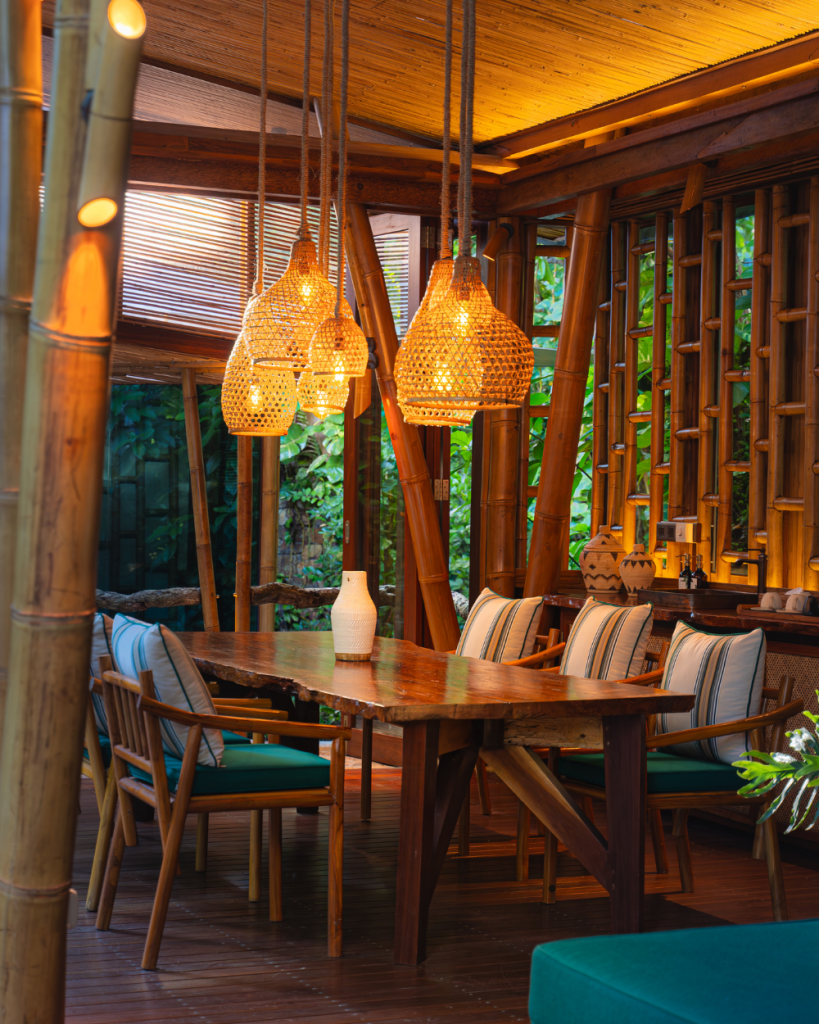
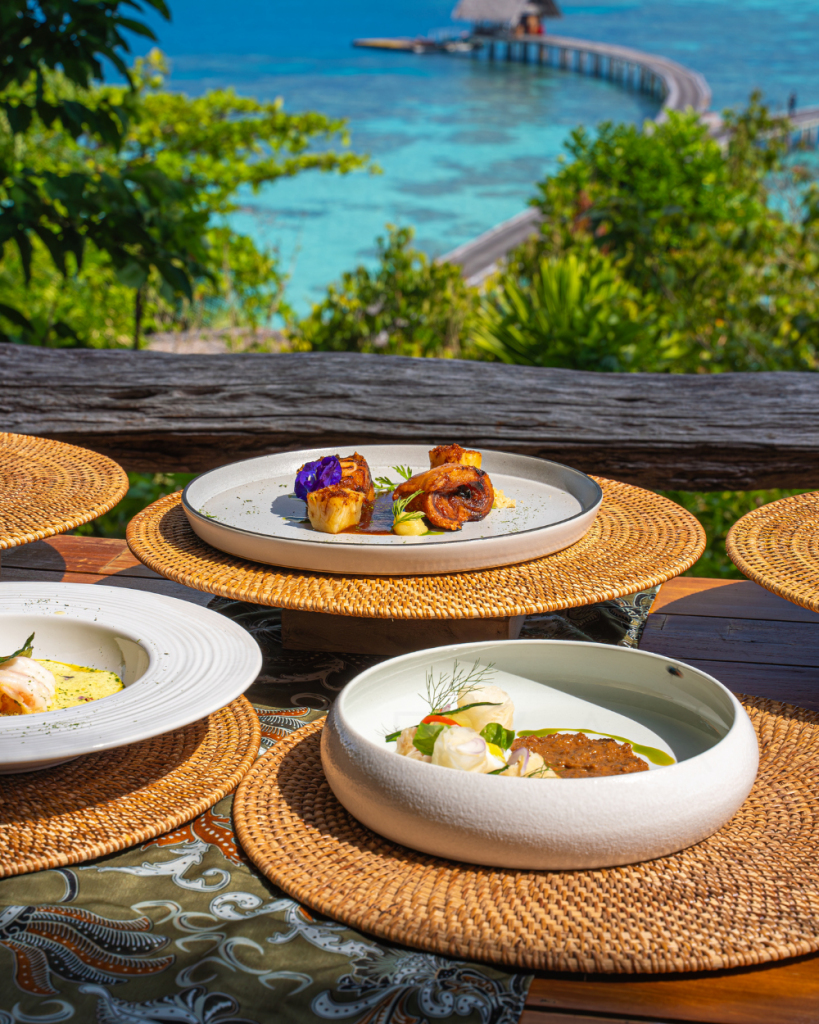
Left: One of the 36 standalone villas in Bawah Reserve. Right: The Reserve offers two restaurants and two bars.
The right person, in his telling, is a particular type—and the type is not defined by spending power alone. “They tend to be well-travelled, worldly people. They’re the kind of guests who take their shoes off and carry them down the jetty themselves. They don’t want someone carrying their bags for them. They know what they like, they know what works.” The occasional mismatch only sharpens the picture. “Every now and then, someone steps off the boat in high heels with designer shoes and handbags, expecting someone to carry everything for them, and you think, my goodness, you really didn’t read anything or look at a photograph of where you’re coming.”
He is sceptical, too, of the perpetual churn of industry talk about how the luxury traveller has changed. “I’m constantly attending conferences where people sit there talking about the latest trend in luxury travel. But has it fundamentally changed? Not really. People are still the same.” What his guests want, he believes, is older than any trend: “They’re people looking for exploration. They’re curious, interested in life and in experiences. They don’t just want to fly somewhere, flop on a beach and be waited on endlessly. They want more substance. A sense of belonging.”
It helps that the approach is working on its own terms. For a resort only open since 2018, and through years interrupted by Covid, the proportion of guests who return is, by Robinson’s account, remarkable. “Just yesterday on a call, we had two more repeat guests book.”
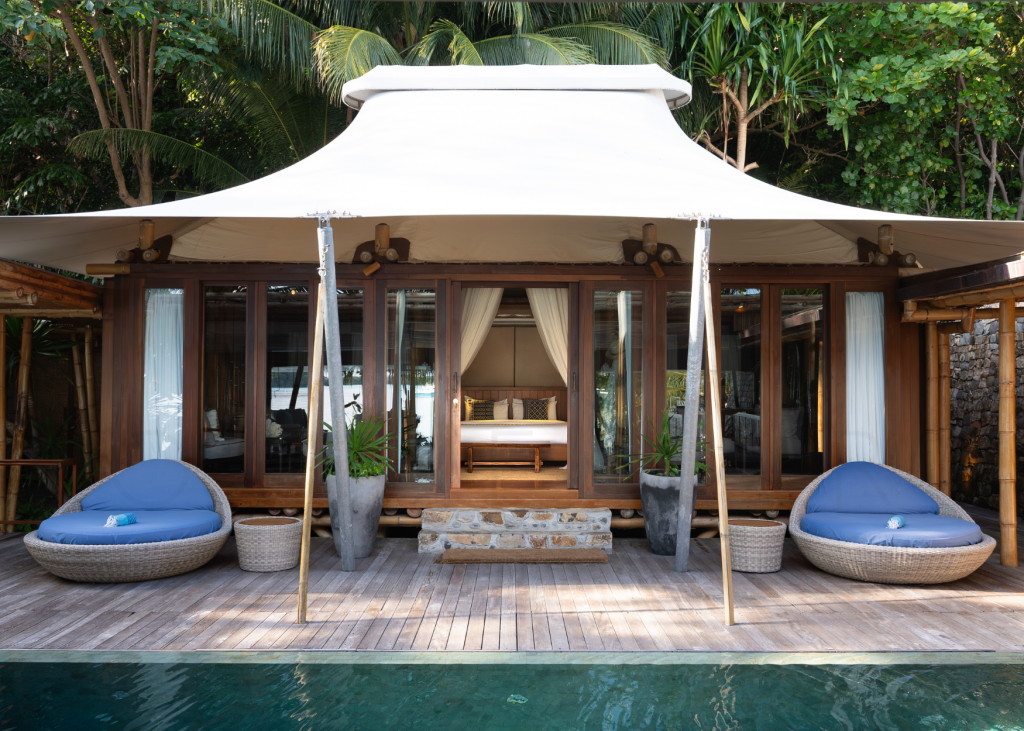
The 36 villas offer ten different configurations, framed by lush jungle and sea views.
“Do everything or do nothing.”
The jewel in the reserve—and the part Robinson most wants the world to understand—is Elang Private Island. Like Bawah itself, it began as something else entirely.
“Elang Private Island was originally intended to be the owner’s own holiday home,” he says. “I said, well, let’s expand it. Let’s do more with it and have guests stay here as well, rather than it simply sitting empty.”
What makes Elang quietly clever is its orientation. It sits directly in front of the main island, only two or three minutes away by boat, and yet the experience is engineered to feel like total separation. “We designed it so that everything faces away from Bawah. When you’re on Elang, you can hardly see Bawah at all. It’s only when you step onto the beach and look back that you catch a glimpse, and even then, all you really see is greenery.” The villas are elevated and outward-looking, positioned above the water—”at certain times of the day you can see the coral beneath you in the ocean.”
The island sleeps fourteen across seven bedrooms, with its own spa, a lawn tennis court, dedicated butlers, a clubhouse and a saltwater pool, and dining built entirely around the guest. “I always say, do everything or do nothing,” muses Robinson. “Some private island experiences can feel quite starchy or overly formal. Ours is whatever you want it to be. One day can be completely peaceful. The next, you can let your hair down and celebrate. We can arrange fireworks, special events, almost anything.”
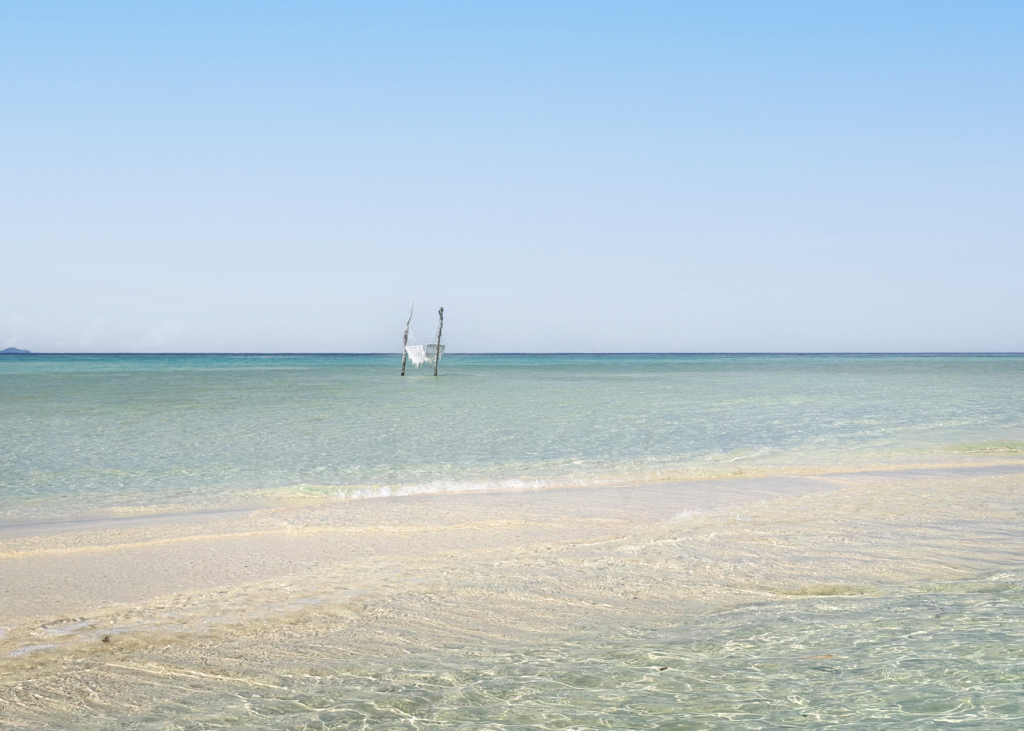
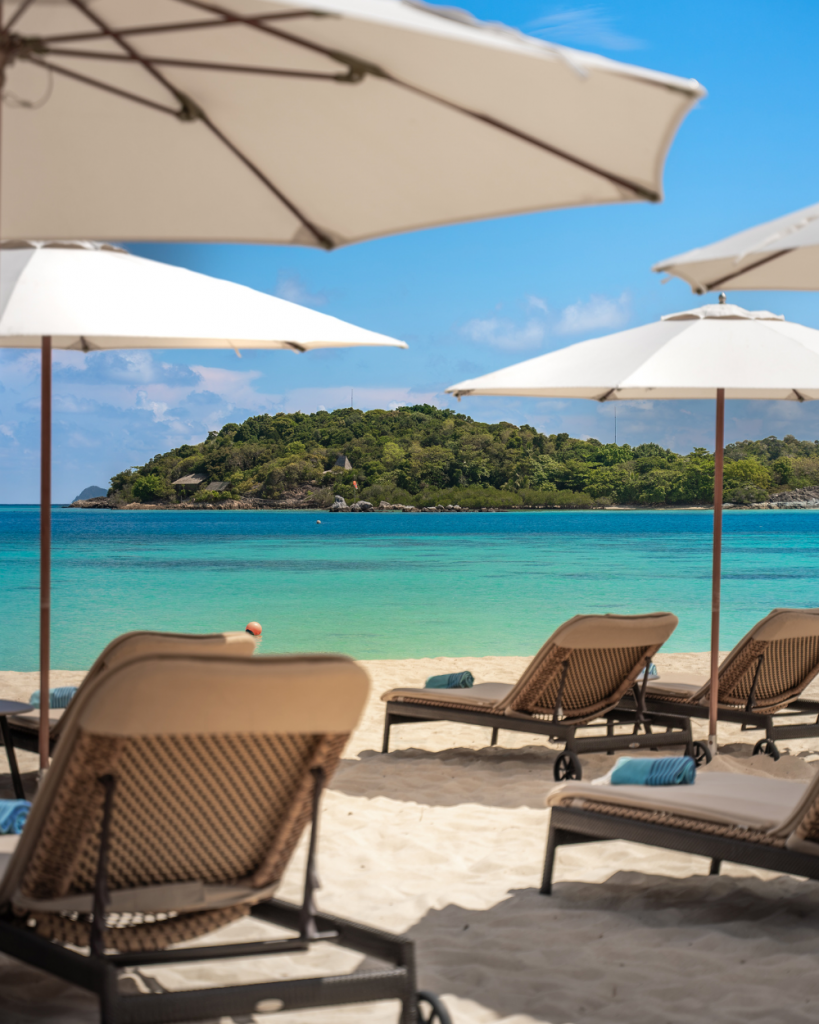
The Reserve’s abundance of beaches and lagoons provides guests with a blank canvas for personalised experiences on the islands.
What Robinson is still learning
For a man who once swore off returning to hotels—”I didn’t want to go back to always being nice, always smiling”—Robinson speaks about the work with undimmed enthusiasm. Ask what he is still learning about ultra-luxury travel, and the answer is, in essence, that it keeps surprising him.
He describes a recent conversation on the beach with guests from Chicago about the new Emirates first-class suites, the windowless middle cabins with their screens mimicking the view outside. “These are multi-millionaires, people who have experienced the very best, and yet they’re still genuinely excited by innovation. That’s what fascinates me.” For all the evolution, he keeps arriving at the same human bottom line. “No matter how wealthy people are, everyone wants value for money and wants to feel looked after. It’s just that different people have different expectations of what being looked after means.”
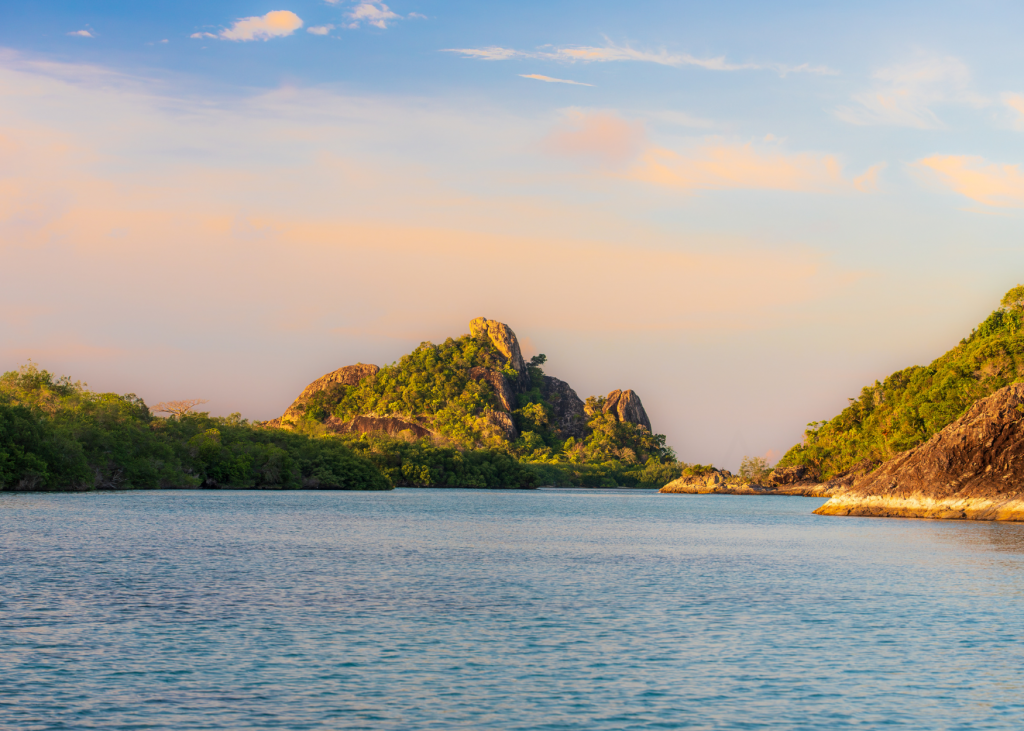
Sunset at Bawah.
Which is perhaps why his favourite moments at Elang are not the fireworks but the bookends—the arrivals and, more tellingly, the departures. “Most of our guests have stayed in the Maldives or at some of the best resorts in the world. But then they arrive at Elang and there’s this moment where they stop and say, wow.” And then, days later: “Sometimes guests tear up. They become emotional. They try not to cry because they don’t want to leave.”
He knows exactly who these guests are—”where they work, what their titles are, because we’ve done our research”—and makes a point of never mentioning it. On an island built to face away from everything, that, finally, may be the luxury that counts.
Read next:
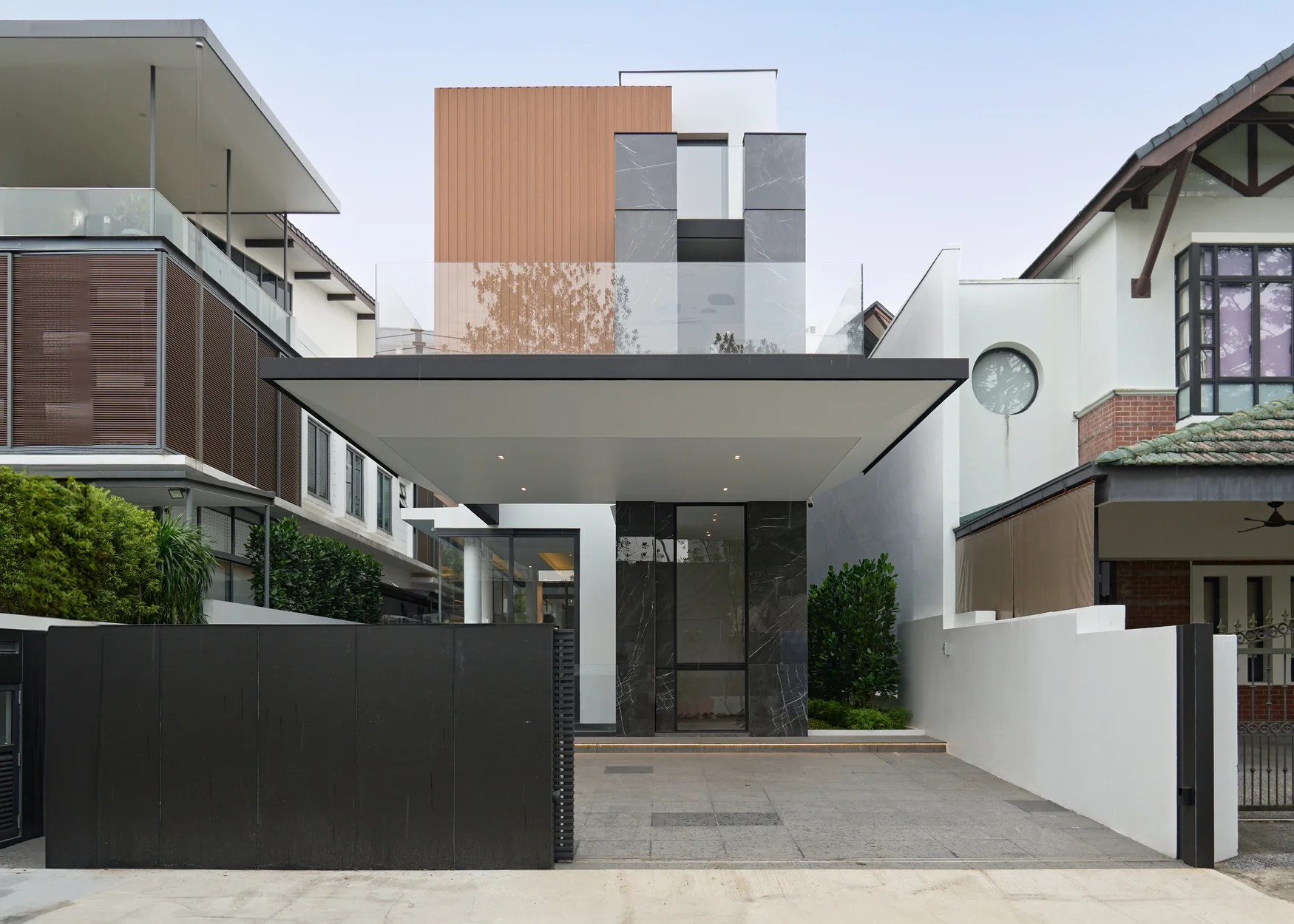
8+1 bed | 10,200 sqft area 19,500,000 SGD
5 bed 19,380,000 SGD
4 bed | 4,208 sqft area POA
3-8 bed | 699,654 - 784,080 sqft area POA
6 bed POA