Chalk Horse director Jasper Knight on supporting artists’ careers and his optimism about the Australian art market
by Mac Fabella
Chalk Horse opened in Sydney in 2007 as an artist-run space with little more than an idea and a roster of friends. Now, 19 years later, it represents 24 artists, occupies a 300-square-metre gallery in Darlinghurst, ships work to both local and international art fairs each year, and has just opened a residency in a converted shophouse in Bangkok.
Jasper Knight, one of the gallery’s co-founders and directors, is an artist himself. He recalls the moment that set him on that path: fellow Aussie painter Idris Murphy was holding a residency at the Cité des Arts in Paris, and Knight went to see him at work. Inspired by watching Murphy create art “in his blue overalls and big beard”, Knight decided he would be an artist. By his early twenties, he was doing well enough that offers to show his work were starting to come in from other galleries.
Instead of choosing one, he decided he would rather build a place himself, for the artists and friends he wanted to work alongside. “It seemed really natural to do that,” he tells me now, dialling in from the two-storey gallery on William Street.
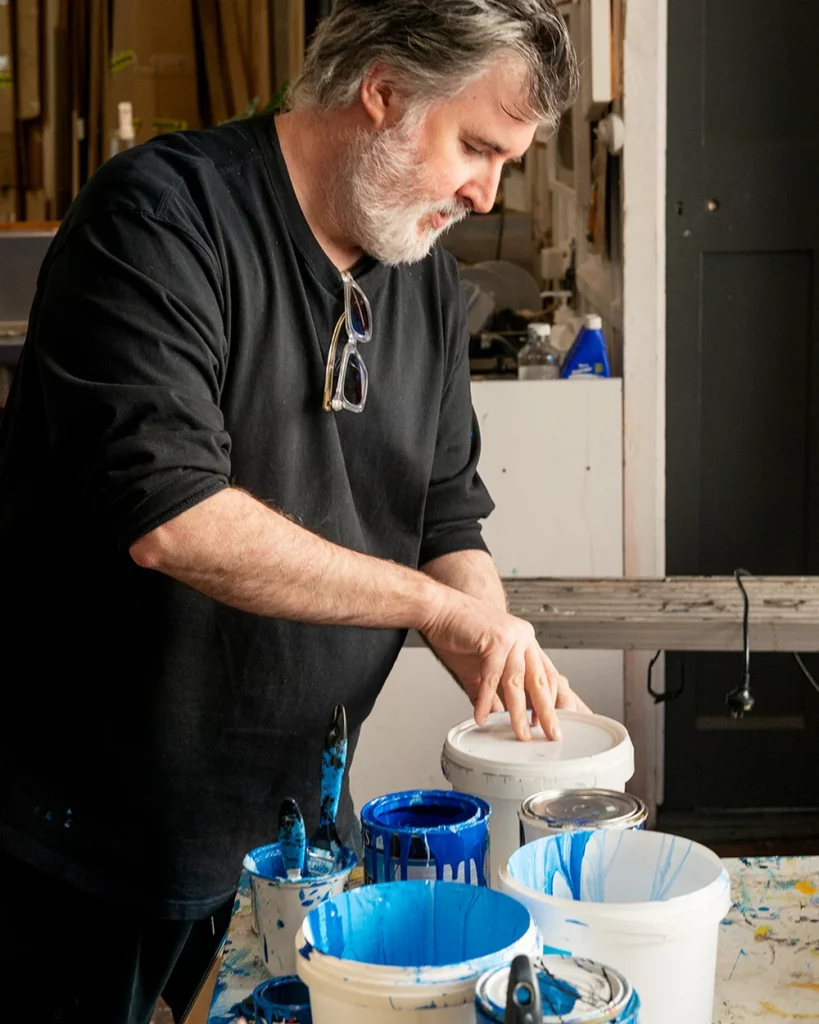
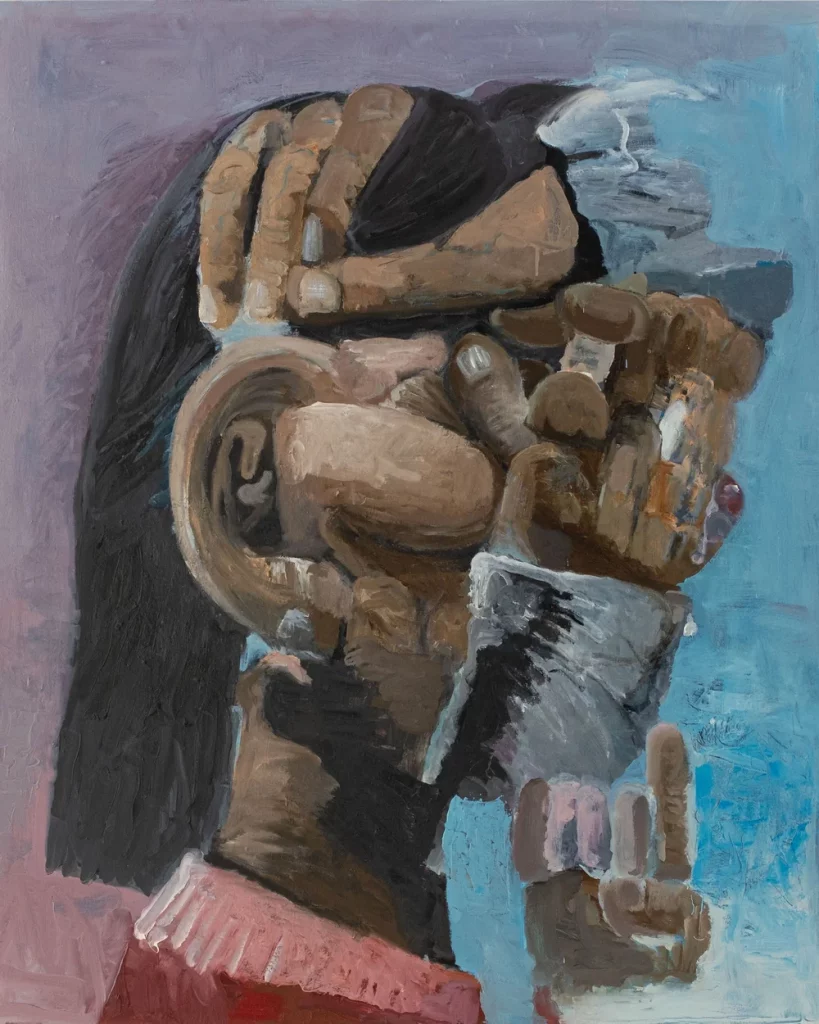
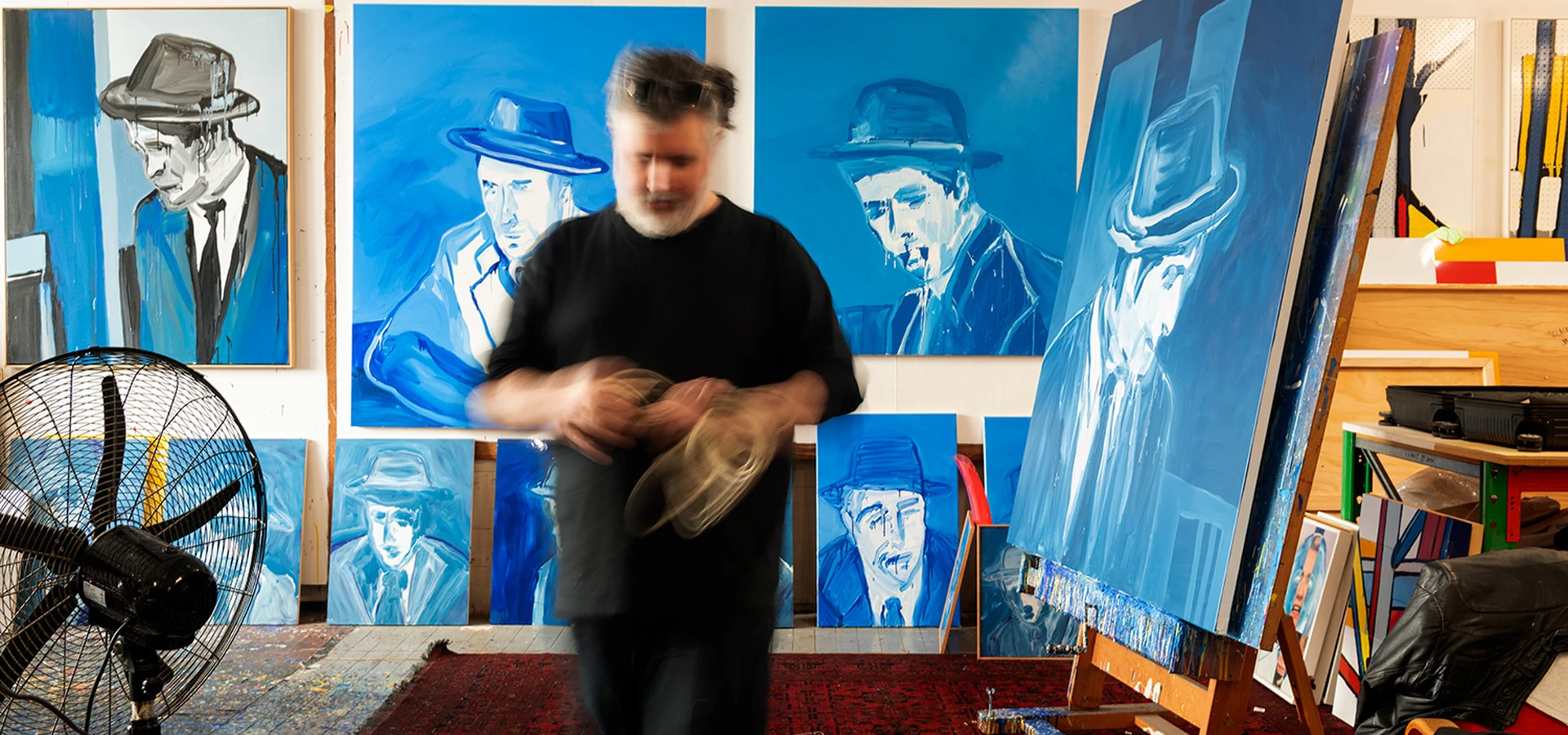
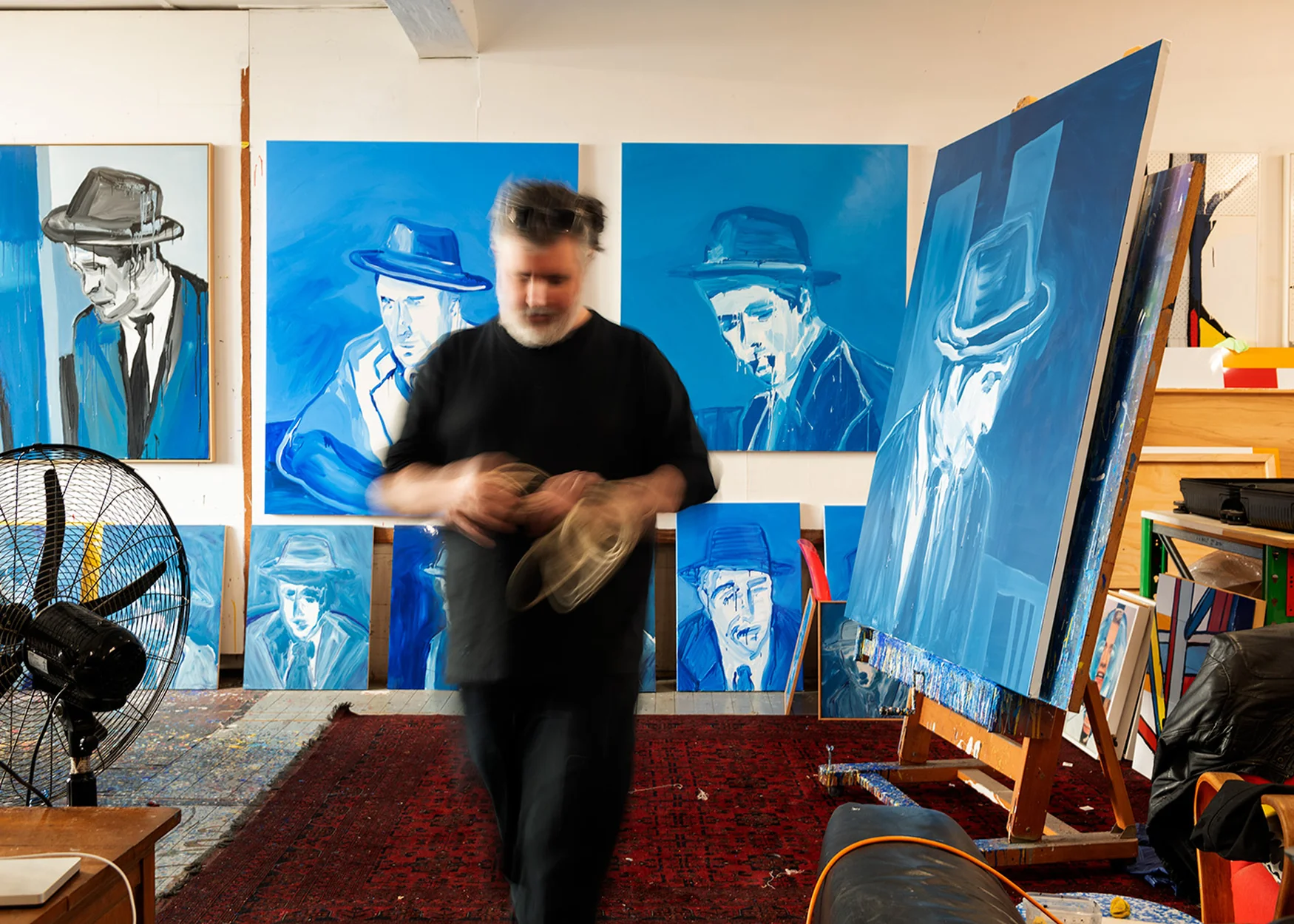
Left: Jasper Knight in his studio. Right: Shhhh by Thai artist Arm Wantaya. Top: Knight and his signature style of portraiture on display. (Photo courtesy of Chalk Horse)
For a good 10 years, Chalk Horse operated as what the Australian art world calls an artist-run initiative: a space without the commercial infrastructure of representation and sales, built instead around opportunity for artists who had none. Knight counts more than 300 artists who showed there at the very start of their careers—the stage of an artist’s career he still finds the most exciting to work with. It has since transitioned into a commercial gallery, with a “very well-established stable of 24 artists”.
Some of these artists have been with the gallery for well over a decade, and Knight describes the relationship as personal before it is professional. “I consider them, first and foremost, a friend, and secondly, an artist,” he remarks. His insight into the journey, sharpened by having lived it himself, gives Chalk Horse a distinct point of view. “I’ve shown in every form of artist-run space, entered every art prize, and been in every kind of group show there is,” he says. “I’ve had to work at home, on my kitchen table, in shared studios. So I understand the different levels of an artist’s trajectory.” That history is why he does not confine himself to artists who are already established.
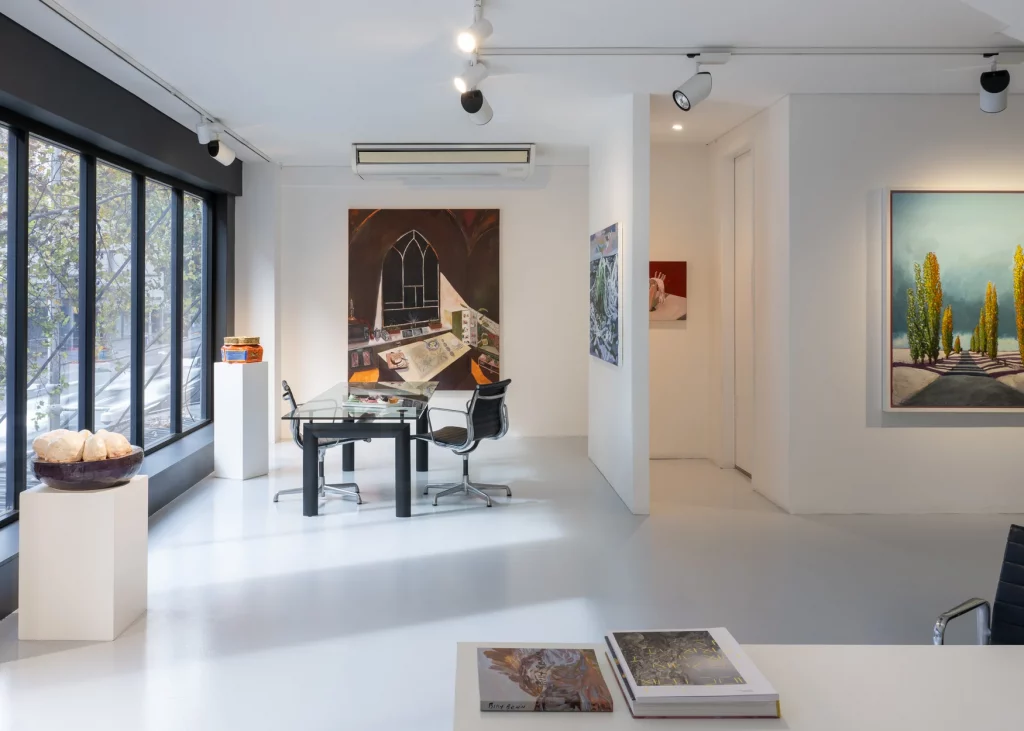
Inside the gallery’s second level on William St, in Darlinghurst, Sydney. (Photo courtesy of Chalk Horse)
New names on the wall
Knight’s word for what he has found this year is not discovery so much as rediscovery. Adrian Jangala Robertson, a Warlpiri artist born at Papunya in 1962 and now based in Alice Springs, has been showing for years—he won the Telstra National Aboriginal and Torres Strait Islander Art Award in 2020, the Alice Prize in 2022, and in 2024 became the first Aboriginal artist to be a finalist in the Wynne, Archibald, and Sulman prizes. What Chalk Horse has just done with him is new: his first bronzes, unveiled at Sydney Contemporary. “I’ve discovered his amazing ability to make sculptural work,” Knight says, “and it’s been this great journey we’ve been on with him over the last few months.”
The other name he mentions is Arm Wantaya, a Bangkok-based artist Chalk Horse found through its new residency space in Thailand. He has already shown in a group exhibition there and is being lined up for a first solo show in Sydney.
The residency, called CHOK MAA, occupies a four-level shophouse in Bangkok’s Khlong San district, featuring two exhibition floors, two studio floors with accommodation built in, and an outdoor space. It is not Knight’s first venture into the region: he ran a gallery called Future Perfect for five years at Gillman Barracks, Singapore’s contemporary art precinct, in its earliest days, before the precinct had an MRT stop, undercover walkways, or anywhere to eat. He’s always been well-connected to the art world in Thailand, and a close friend working out of Bangkok became the route in.
CHOK MAA opened in April 2026 with a three-artist show, featuring Knight, Wantaya, and Jason Phu, the residency’s inaugural artist-in-residence. The programming since has included a show curated with a Chiang Mai printmaking collective that brought together roughly 28 artists, mostly from Thailand, and a screening in late October, organised with the curator of the Biennale. From next year, the plan is a more curated mix of Chalk Horse’s own artists and open applicants, with the residency itself free of charge.
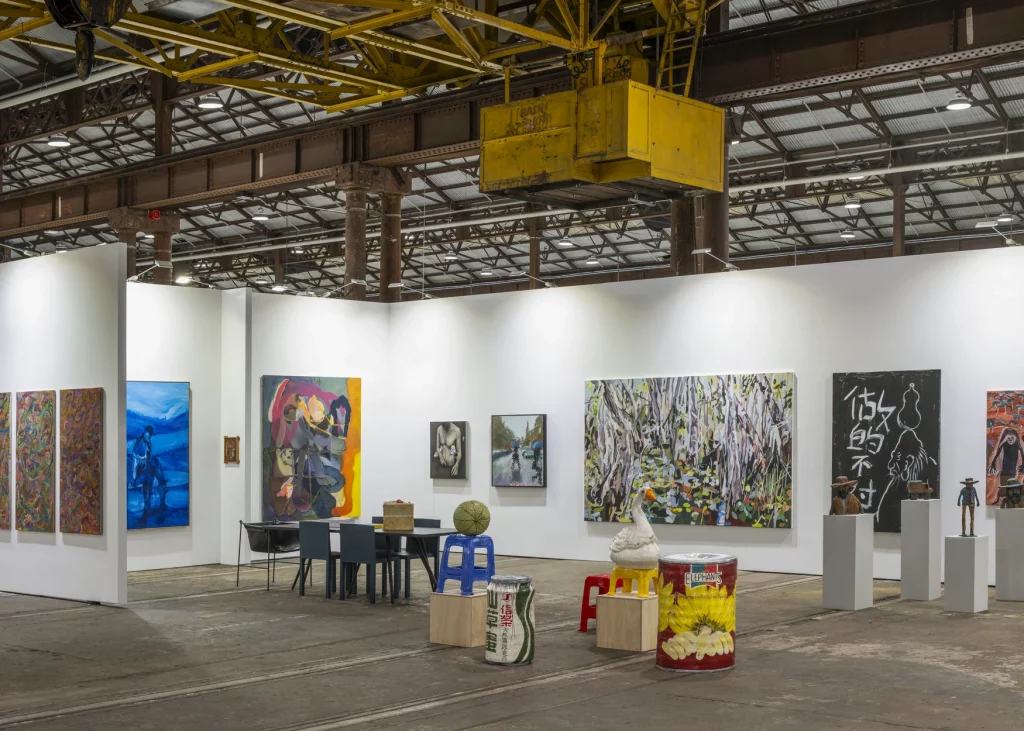
Chalk Horse at Sydney Contemporary 2026. (Photo courtesy of Chalk Horse)
When asked how the market has shifted in 19 years, Knight says it is not that collectors have changed—Chalk Horse has always had loyal, serious buyers, some of them repeat collectors from the earliest days—but that the gallery now has access to a different tier of them, as its artists’ résumés have caught up with its ambition.
This year alone, four Chalk Horse artists are having solo shows in state galleries, alongside monographs and international projects, and thus drawing in “bigger, often international, collectors”: people who buy in multiples and spend more than the entry-level buyer taking a chance on someone new. Much of that access has been built at art fairs, where Knight says Chalk Horse’s attendance is split close to evenly between Australia and overseas.
Inspiration and optimism
Knight’s own studio is a warehouse a few minutes from the gallery, in the same Darlinghurst streets he has lived and worked in for more than twenty years. The neighbourhood is also, more or less, his subject matter. “My idea of landscape isn’t the rolling green hills of Australia,” he says. “It’s the urban landscape, the built environment, the flashing lights of ambulances and police cars, the sodium light hitting concrete walls.”
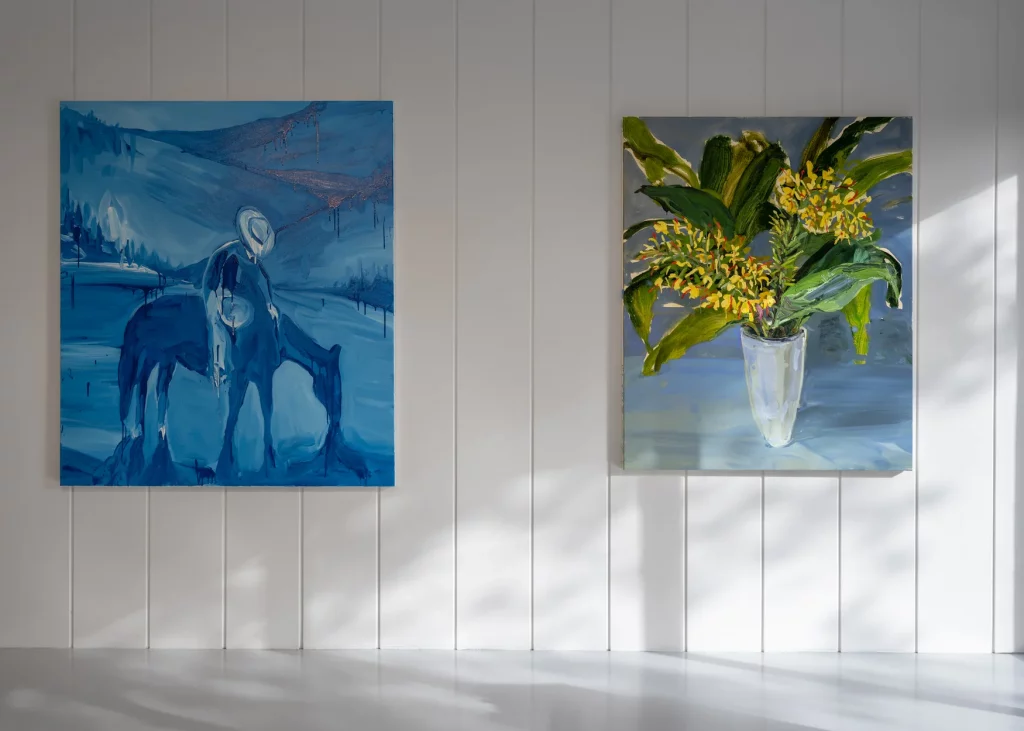
Knight’s artwork in the Chalk Horse gallery. (Photo courtesy of Chalk Horse)
That doesn’t stop him from spending half his time travelling: six times a year, minimum, but never longer than a week each time. “I’m just parachuting in and out of different places, getting a little snapshot, talking to people about their art, their collections, visiting a few museums and contemporary galleries, and just seeing what’s happening in the world.”
It is that vantage point, seeing Australian art all over the circuit, that keeps him optimistic about the future of the market. He was recently at the Darwin Aboriginal Art Fair, and it settled something for him. “The work I saw there was incredible. That made me think we have the best paintings in the world,” he says. “That’s all I need to say.”
Read next
- Inside the “Spring Moments” exhibition: How Israeli artist David Gerstein invented a language of his own
- The interview: Esin Güral Argat, CEO of Joali, on art, architecture and design
Explore luxury properties in Sydney
The brief: Chalk Horse
The gallery: Founded in Sydney in 2007 by Jasper Knight, James Kerr, and Nick Curtis, Chalk Horse began as a decade-long artist-run space before becoming a commercial gallery, and now represents 24 Australian and international artists.
The founder: A practising painter as well as Chalk Horse’s co-director, Knight is an eight-time Archibald Prize finalist with work in the National Portrait Gallery and National Gallery of Australia collections. He’s best known for industrial landscapes, cars, and boats rendered in enamel paint on salvaged signage and plywood.
The residency: Chalk Horse’s Bangkok outpost opened in April 2026 in a four-level converted shophouse in the Khlong San district. It offers three-to-five-week studio residencies to Australian and international artists, with two exhibition floors and two studio floors with accommodation built in.
8+1 bed | 10,200 sqft area 19,500,000 SGD
5 bed 19,380,000 SGD
4 bed | 4,208 sqft area POA
3-8 bed | 699,654 - 784,080 sqft area POA
6 bed POA