From Asia, with love: Tracing the region’s influences on European high jewellery maisons
by Karishma Tulsidas
Photography by Kevin Khng
Shot on location at the Bentley showroom in Singapore.
In 1911, Jacques Cartier, the third and youngest Cartier son who was in charge of operations in London, travelled to India hoping to expand the family business across the British Empire. What he didn’t expect was that the Maharajahs in India weren’t particularly interested in the jewellery he had brought with him. For one, unlike in the West, these kings bought jewellery for themselves, and not simply for their wives. And two, they already had access to extraordinary jewels of their own, accumulated in royal treasuries over generations.
Regardless, that trip kickstarted what would become a symbiotic love affair with India.
The more time Jacques spent travelling around the country (fun fact: he would ship his Rolls-Royce to India so he could travel in style), the more he fell in love with its gemstones, colours and design codes. He developed relationships with local gem dealers, giving Cartier direct access to magnificent rubies, sapphires and emeralds.
Over time, too, the Maharajahs began commissioning European houses including Cartier, Boucheron and Van Cleef & Arpels to reimagine their jewels in the Western styles that were increasingly in vogue.
Although, as is so often the case, the story is a little more complicated than East simply adopting West. The Maharajahs brought their own stones, jewellery traditions and ideas about how jewellery should be worn. Sometimes they wanted European settings. Sometimes they commissioned traditional Indian forms made using European techniques.
Maharani Sita Devi of Baroda, for example, had access to one of India’s great royal treasuries, including historic Mughal jewels. She became an important client of Van Cleef & Arpels, commissioning the maison to reset some of those stones according to contemporary Western tastes.
The relationship was lucrative, too. Francesca Cartier Brickell, Jacques Cartier’s great-granddaughter and author of The Cartiers, has argued that the Indian business helped Cartier survive the Great Depression, as spending elsewhere collapsed.
Inevitably, the European jewellers working with the Indian clients began absorbing some of those ideas themselves.
Jacques himself, for all his self-effacing demeanour, would have an outsized influence on his family business thanks to his trips through Asia. In India, he encountered a way of using gemstones that looked very different from the delicate diamond-and-platinum jewellery then fashionable in Europe: beads and cabochons, deeply saturated colour and gemstones carved into leaves, flowers and berries.
The most famous expression of that fascination was undoubtedly Tutti Frutti. Cartier initially referred to these pieces as “Hindou jewels”: explosions of carved sapphires, emeralds and rubies that drew directly from Indian and Mughal jewellery traditions. A century later, Tutti Frutti remains one of Cartier’s most recognisable design codes, with historic examples still fetching record prices at auction.
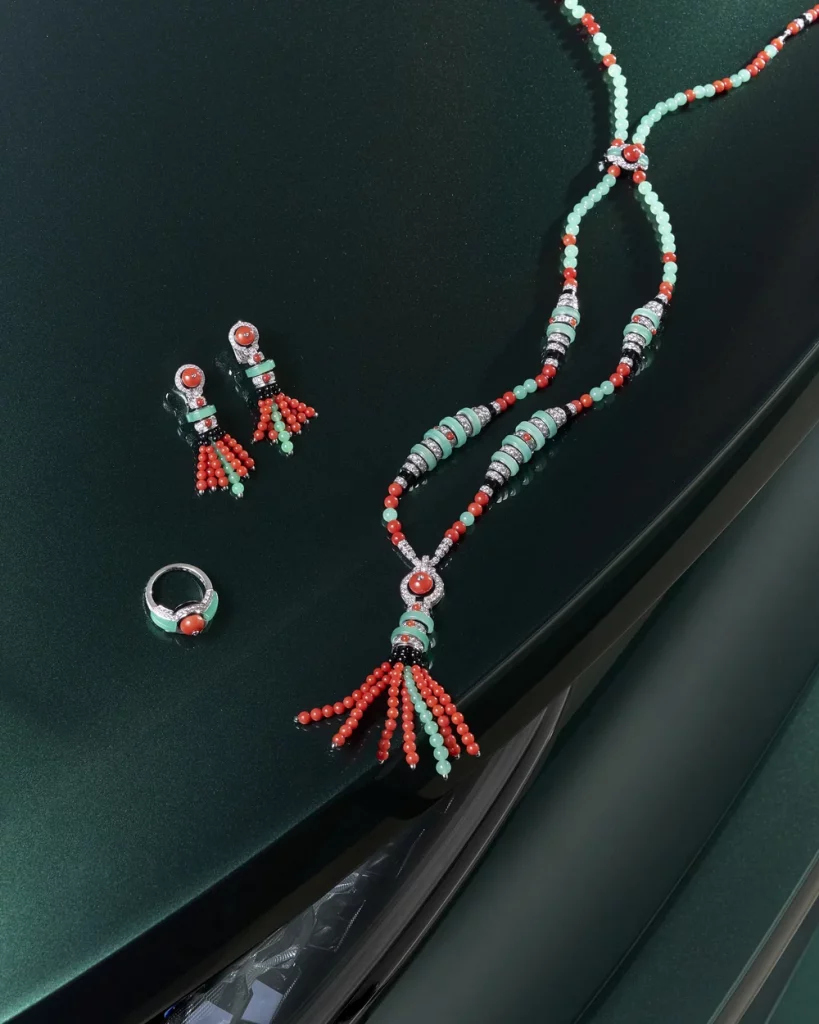
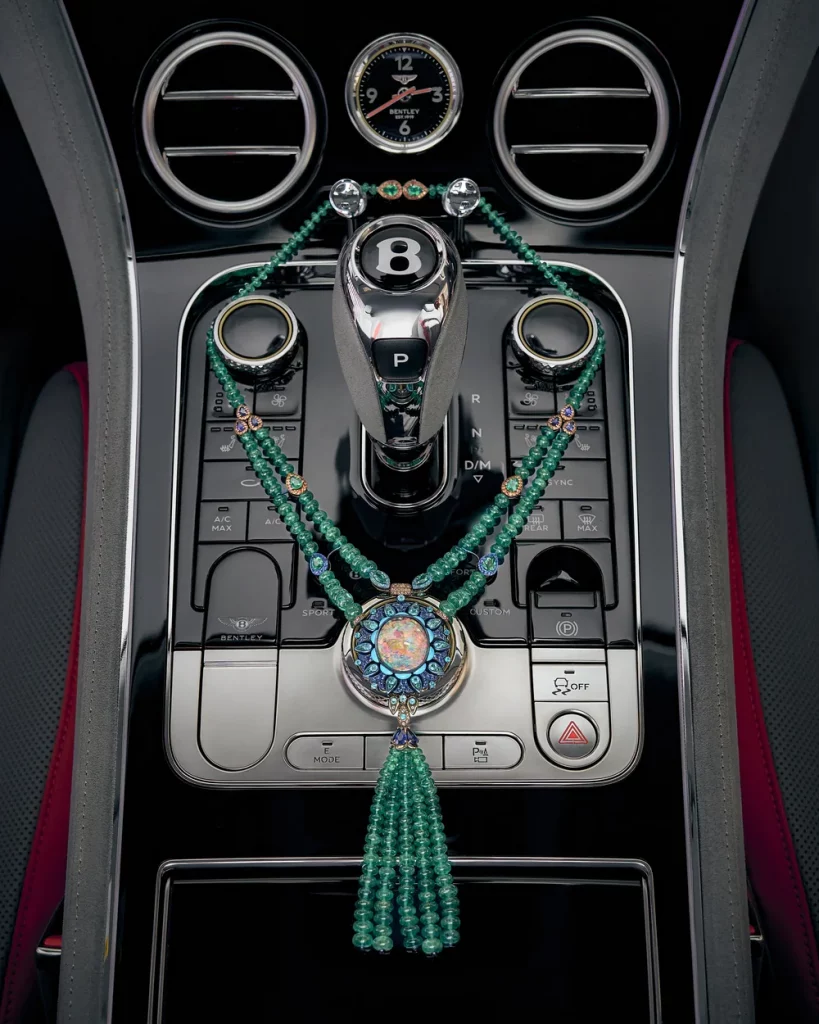
Left: “Geometry & Contrastes” necklace, earrings, and ring in white gold, each set with coral, chrysoprase, onyx, and diamonds, by Cartier. Right: Necklace with emeralds, sapphires, Paraíba tourmalines, turquoises, and a central opal, by Chopard.
Cartier was hardly the only house romanced by the vibrant colours, elaborate motifs and precious stones of South Asia. Van Cleef & Arpels developed its own long relationship with the subcontinent. Claude and Pierre Arpels travelled repeatedly to India, returning with gemstones, jewellery and even textiles.
You can still see the influence in the maison’s archives: emerald beads, engraved stones, tassels and those unmistakable combinations of rubies, emeralds and diamonds. In 1971, a necklace created for Begum Salimah Aga Khan featured 44 carved emeralds weighing a total of 478 carats.
The strands of emeralds, sapphires and other coloured gemstones that recur in high jewellery today (and seen on the Cartier and Chopard sautoirs pictured above) also have a precedent in Indian jewellery, where precious stones were often drilled and strung as beads rather than faceted and claw-set into metal. European jewellers encountered another way of treating a precious stone: as colour, volume and texture, rather than simply brilliance.
While Jacques was falling in love with India, his brother Louis, who ran Cartier’s Parisian operations, was looking in a slightly different direction, at Islamic art. He was himself a collector of Persian and Indian objects, and his fascination would eventually have a profound effect on Cartier’s design language.
Where the Indian influence can be seen in colour, carved gemstones and beads, the Islamic influence was often more graphic: geometric patterns, symmetry, arabesques, palmettes and interlacing, with forms borrowed from architecture, manuscripts, textiles and decorative objects.
Even some of the colour combinations we now see in various jewellery houses have roots here. Blue and green, for example, was an unusual pairing by the conventions of European jewellery at the time, but appeared repeatedly in Persian ceramics and architecture. These have been translated into combinations of sapphires, emeralds, turquoise and lapis lazuli at the likes of Cartier, Van Cleef & Arpels, Chopard and more.
Louis was looking at these objects at an interesting moment for European jewellery. The delicate garlands, bows and naturalistic flowers of the Belle Époque were beginning to give way to something harder-edged: stronger geometry, cleaner lines, repeated patterns and increasingly abstract forms.
Islamic art offered precisely that kind of visual language. Its architecture and decorative arts were built around geometry, repetition, symmetry and stylised rather than naturalistic forms. Cartier began translating those ideas into jewellery: architectural patterns became openwork; repeating motifs became borders; symmetry and abstraction increasingly replaced the free-flowing flowers of the previous generation.
This matters because these experiments were taking place before Art Deco had even acquired its name. We tend to think of Art Deco jewellery as quintessentially European, born in Paris and perfected by the great Place Vendôme houses. But look a little closer at the design language taking shape in those workshops, and its geography becomes considerably more complicated.
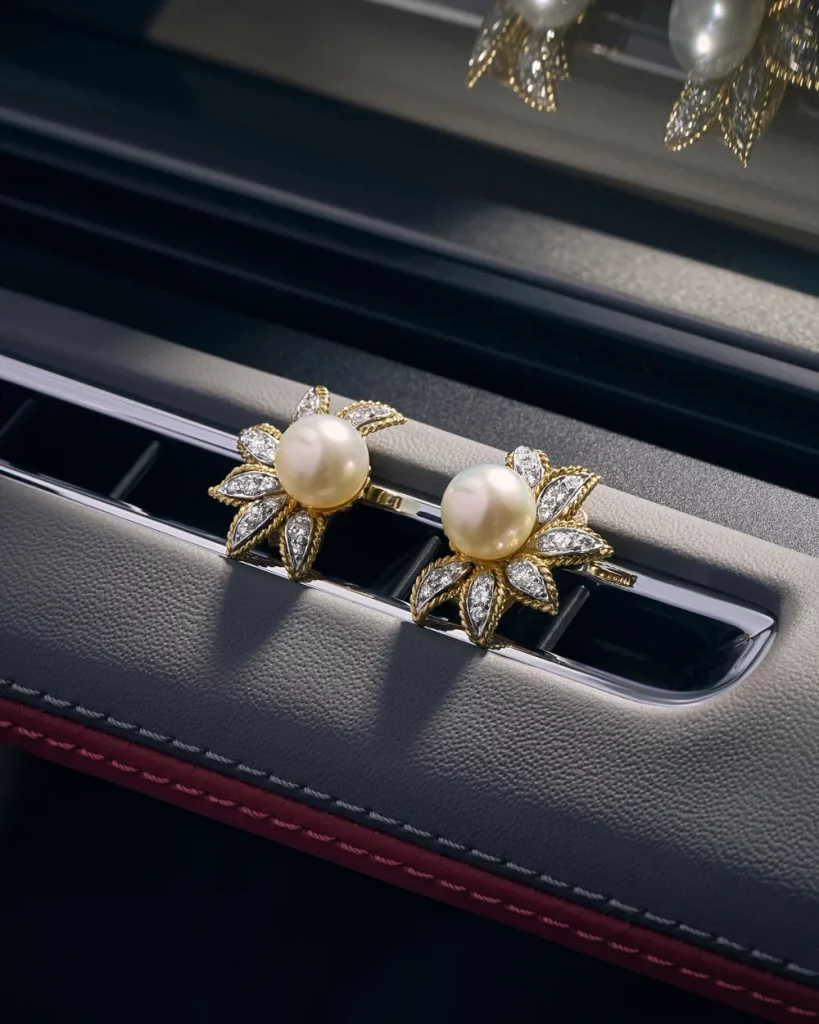
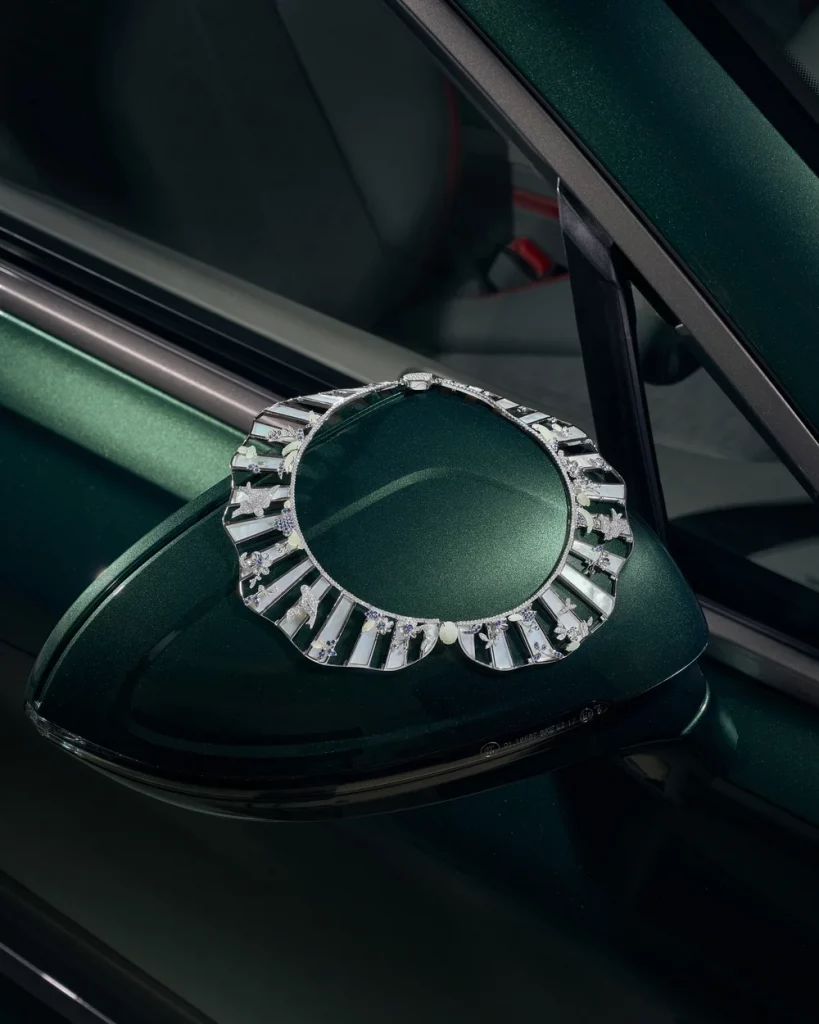
Left: Earrings in platinum, yellow gold, and white gold, with white cultured pearls and diamonds, by Van Cleef & Arpels. Right:
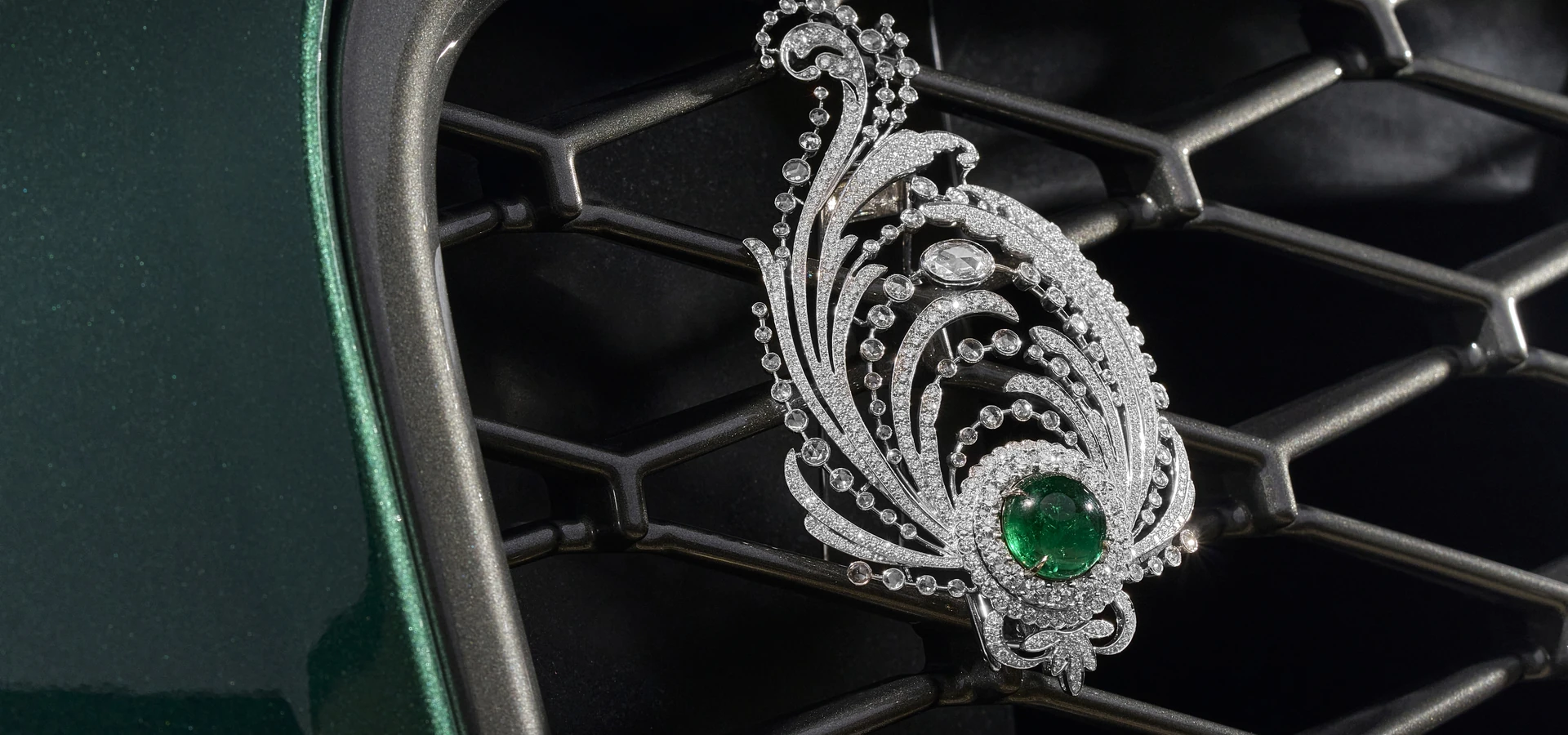
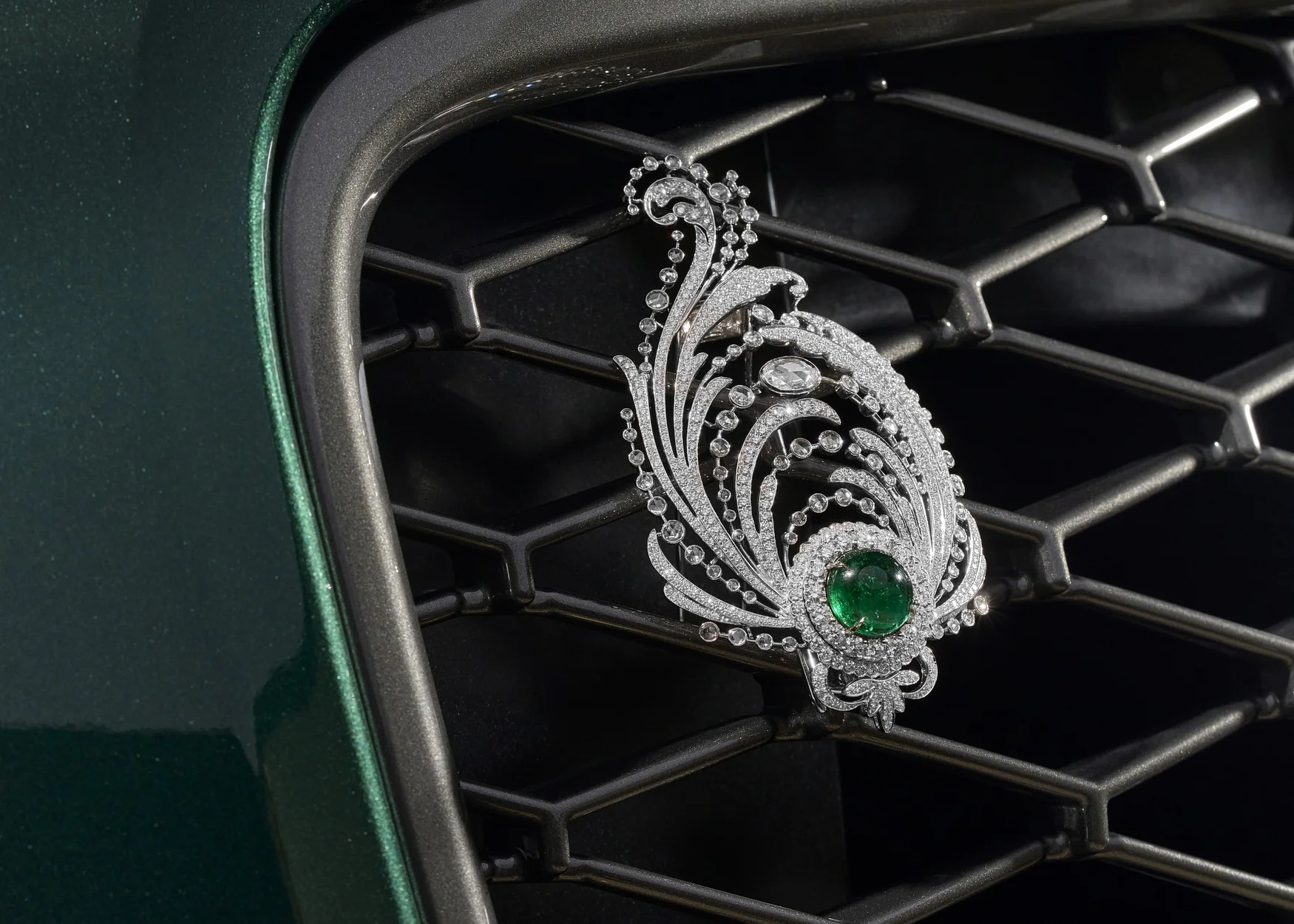
“La Grande Chinoiserie” necklace in white gold, set with diamonds, sapphire, ice jade, jadeite, and mother-of-pearl, by Simone Jewels. Top: ‘New Sarpech’ brooch in white gold set with an emerald and diamonds, by Boucheron.
It’s just good business
That the West has long borrowed from Asia is an open secret. In fashion, however, the extent of that influence has only become more visible in recent years. Dior’s 2023 Pre-Fall show at Mumbai’s Gateway of India placed the craftsmanship of Chanakya International and its School of Craft centre stage, drawing attention to Indian embroidery traditions, and artisans, that had long contributed to the maison’s collections. Of course, let’s be real: this was not altruistic. India’s rise as a luxury market gave European houses a compelling commercial reason to turn the spotlight towards its artisans.
High jewellery presents a slightly different story than fashion. Here, Asia was rarely invisible. Cartier openly called its Indian-influenced creations “Hindou jewels”; maharajas were celebrated clients of the great Place Vendôme houses; Persian, Indian, Chinese and Japanese motifs appeared quite visibly in their collections. If anything, European jewellers revelled in the exoticism of the East.
What has changed is how specifically that influence is acknowledged. Where an earlier generation might have spoken broadly of the “Orient”, or distilled India into colour, gemstones and opulence, contemporary maisons are increasingly rooting their references in particular traditions, techniques and ideas.
Boucheron’s 2025 Impermanence collection is a case in point. Creative director Claire Choisne names two Japanese traditions behind it: ikebana and wabi-sabi. And they aren’t simply aesthetic references. The 28 pieces form six botanical compositions, each accompanied by its own vase, while the collection gradually moves from light into darkness, drawing on the wabi-sabi acceptance of transience and decay.
Sometimes, that acknowledgement goes beyond inspiration altogether. When Chopard acquired the 6,225-carat Insofu rough emerald, the maison brought Indian stonecutters to Geneva to work on it. They spent almost a year studying and cutting the stone before its emeralds were transformed into high jewellery. The finished pieces may bear the name of a Swiss maison, but Chopard is explicit about the Indian expertise involved in making them possible.
Is that progress? Perhaps. It is also good business. Asia is no longer simply the distant “East” that offered European clients an enticing dose of exoticism. It is home to some of luxury’s most closely watched consumers, and being able to demonstrate an understanding of the cultures these houses borrow from has commercial value.
But motivations aside, there is something revealing about the change in language. A century ago, a Mughal carving technique or Persian motif could travel to Paris and eventually become absorbed into the “heritage” of a French maison. Today, we are more likely to ask where it came from.
Perhaps that is the more interesting way to look at Asian influence in high jewellery. Not as a neat story of East influencing West, or even of appropriation giving way to appreciation. Jewellery has never travelled quite so neatly. Stones, techniques, patrons and ideas have moved back and forth for centuries.
What has changed is our interest in tracing the journey.
Read next:
8+1 bed | 10,200 sqft area 19,500,000 SGD
5 bed 19,380,000 SGD
4 bed | 4,208 sqft area POA
3-8 bed | 699,654 - 784,080 sqft area POA
6 bed POA