The interview: Hautlence co-founder Guillaume Tetu on making watches for fun over investment
Interview by Hamish McDougall
Photography by Kevin Khng
For over two decades, Hautlence has made a habit of telling time the wrong way on purpose. Founded in 2004 in the valley between Fleurier and Neuchâtel—its name a play on the region itself—the brand emerged from a simple frustration: too many watches, in co-founder Guillaume Tetu’s view, were built around the same off-the-shelf movements and the same predictable ways of showing the hour.
Tetu, whose background was in building complete watches rather than just movements, set out instead to gather the artisans of the Neuchâtel valley and build something architectural: cases and dials with real depth, mechanisms that revealed themselves rather than hide behind a plain face. The result was the HL—debuted, quite memorably, to a queue outside a Starbucks in Basel in 2005—which featured a jump hour display and a “connecting rod” for the retrograde minutes that put Hautlence on the map.
Twenty years on, Tetu is still chasing that same instinct, just at a bigger scale. Hautlence now sits under the Meylan family’s MELB Holding, alongside H. Moser & Cie (helmed by Edouard Meylan), with Cédric Joos, who joined Hautlence in 2025 as brand manager, working alongside Tetu to push the brand beyond product and into a fuller lifestyle vision.
This year’s novelties span from the ultra-limited (a three-piece Retrovision ’64) to the brand’s most technically ambitious statement yet: the Sphere Series 4, a sandblasted titanium jumping-hour sculpture that Tetu and his team have deliberately opened up, exposing the wheels and mechanism that used to sit hidden behind the bridge. It’s a watch built to be watched.
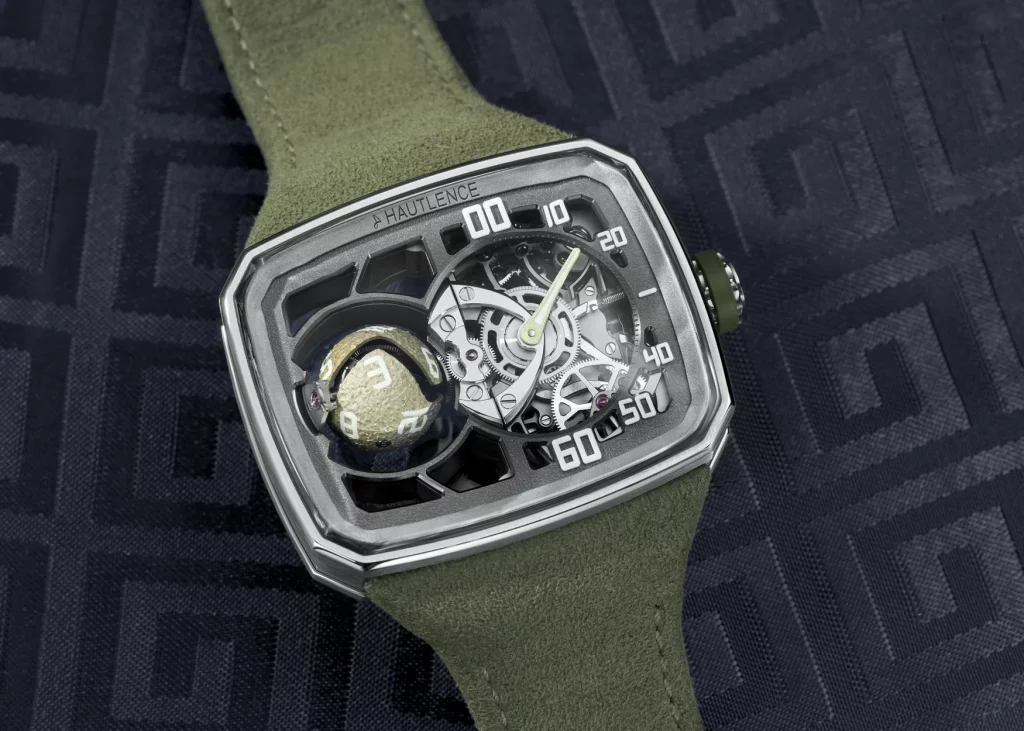
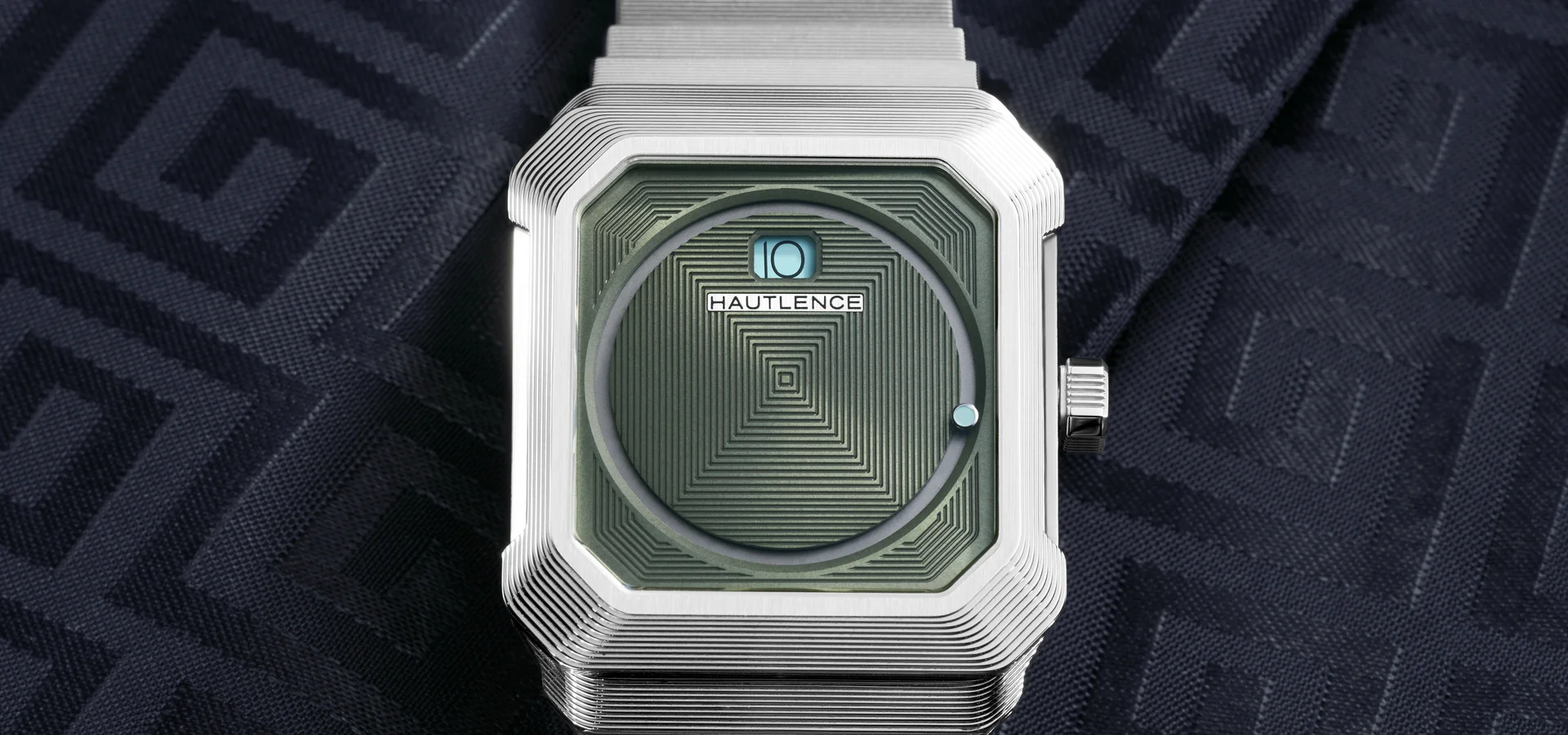
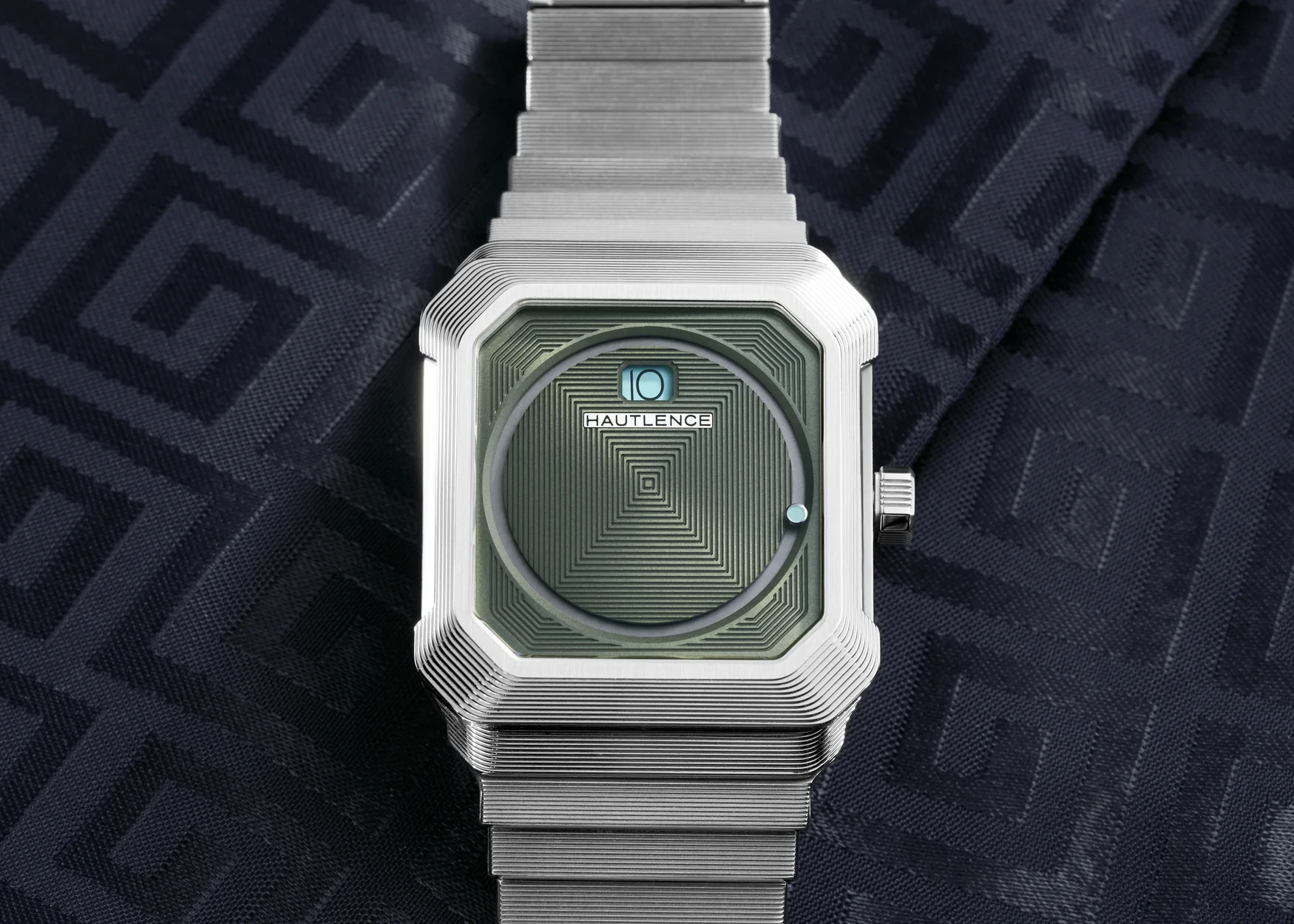
The Hautlence Sphere Series 4 redefines jumping hours by replacing a traditional dial with a rotating, three-dimensional titanium sphere. Top: The Hautlence Kubera Series 1 is a Cubist-inspired, sculptural timepiece featuring an unconventional handless display. It indicates the time via a jumping hour window at 12 o’clock and a peripheral minute cursor.
In conversation, Tetu is candid about who Hautlence is really for—not the first watch in someone’s collection, but the second box, the fun one, bought by collectors who already own the “serious” investment pieces and are looking for something with a sense of humour. That candour extends to the brand’s markets, its philosophy on scale and speed, and its newest chapter.
Boulevard: What was your journey like building Hautlence—why make watches for people who already have everything?
Guillaume Tetu: It started in 2004, when I was a bit fed up with brands relying only on ETA movements—one chronograph option, one day-date, one GMT, and that was it. Outside a handful of independents—Vianney Halter, Sven Andersen and Harry Winston’s Opus project with Max Büsser’s early ideas—there weren’t many real alternatives.
So the idea was to bring together the artisans of Neuchâtel under one team, and make creative watches for mechanical lovers, architecture lovers and designers. That’s why the brand’s name is built from the letters of Neuchâtel. My own background was in building whole watches—cases and dials, not just movements—so we ended up designing multilayered, sapphire-heavy, architectural pieces, starting with the disconnecting hour display.
The response on day one, in 2005, was a queue—we launched at a Starbucks in Basel, and there was a line out the door. Early success came mostly out of Singapore, and from our original audience in the Middle East and Europe.
After 20 years, and with input from Cédric, we’ve started wanting to do more than just build products to explain the lifestyle and the story behind it. It’s not just about the watch anymore; it’s about a vision and about stepping aside from what everyone else is doing.
That’s why we built this year’s booth like a lounge. We’re inviting people into a kind of club—all built around that same love of architecture, design and bringing people together. It started as a product story and has landed somewhere closer to a lifestyle and set of values. We’re still small next to the old, established houses, but we want to stay fresh and cool, and keep bringing new ideas to the table, always with a twist in how we show the time.
Blvd: Being smaller must give you more flexibility when the market shifts.
Tetu: Definitely. We can be agile because we don’t need three years to make a decision, only a few months. As chairman of the steering committee, I decide together with Edouard and the wider leadership of the [Meylan] family. We move fast. That agility is really what separates independents from the bigger houses. For us, as long as we’re aligned on the creative direction, we can just decide and do it.
Blvd: So what’s new this year?
Tetu: This year, we have the Retrovision ’64, inspired by a communicator from a certain sci-fi franchise. We like to play with that kind of concept. It’s not really commercial; it’s more animation. We have a group of collectors who like it and purchase it, but we try to keep it super limited. We’ll only do three pieces of the new one, at a price point of CHF 120,000. It’s really something to have fun with.
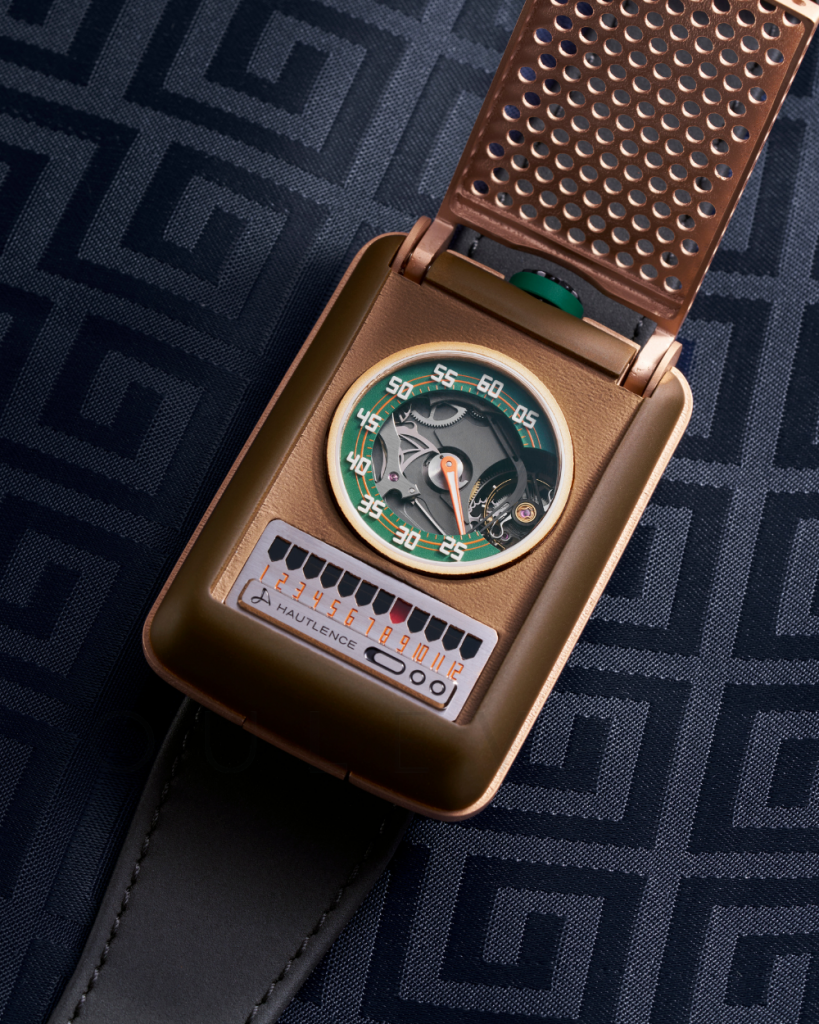
Hautlence Retrovision ’64 is an ultra-exclusive, retro-futuristic timepiece with a spring-loaded, flip-top grille cover.
The Sphere has really become an iconic product for us now. We redesigned the movement completely last year, in a smaller size, because the first edition was a bit wide in terms of movement-building. We also wanted to show more of the wheels and the mechanism, because we belong to a family with excellent talent in movement and finishing, so why not show it? That’s why we opened the bridge and the plates, to make things even more spectacular.
The new release, the Sphere Series 4, is a sandblasted titanium sphere in a beautiful sand-olive colour, with the same jump from 60 to zero every time—a spectacular animation as it jumps to the next arrow. We opened it up more so you can see through the wheels, because there’s a lot going on inside that people don’t always get to see. We’ve even made a bigger-sized model, 37mm, to show that mechanism off properly.
And it’s not just one wheel; it’s a full conceptual mechanism. To move from the nine to the 10, for instance, the mechanism travels 240 degrees, changing direction three times over 340 degrees in total. It happens fast—you enjoy it for two seconds.
We also partnered with Marcus Ehlinger, an independent designer who also worked with Moser on the Streamliner. Marcus had this idea for a shape and a complex bracelet 15 years ago. Working with him, and with Cédric and the team, we wanted to bring something new to the watch world—not just the crazy mechanisms we’re known for, but a broader design language for the brand.
Blvd: Where is Hautlence strongest as a market?
Tetu: Southeast Asia has always been close to a home base for us—Singapore, Malaysia, Indonesia—since day one. Latin America is picking up. The US is a strong market for the watch industry generally, but it’s never really been ours, and that’s fine. The Middle East tends to lean toward more recognised brands and pieces that feel like an investment.
We’re really more about fun than investment, which is why we do well with Russian and Singaporean collectors who already own everything and want something different. Hautlence isn’t the first watch [you buy]. It’s not even a first brand. It’s for people who’ve already embarked on their watchmaking journey and are ready for something else—the second watch box. You have to already own the investment piece before you get to the fun one.
Blvd: What are you still learning about watchmaking, after all this time?
Tetu: Every day—in materials, in display—there’s always something new. I also have other projects on the side, which is useful because it lets me bring a lot of different ideas together. These days, I’m more of an advisor at Hautlence, which leaves me time to have fun elsewhere too.
Go further with the 2026 edition of Watches and Wonders.
Read next:
8+1 bed | 10,200 sqft area 19,500,000 SGD
5 bed 19,380,000 SGD
4 bed | 4,208 sqft area POA
3-8 bed | 699,654 - 784,080 sqft area POA
6 bed POA