Verso Projects launches Brisbane’s first branded residence—and a new vision for luxury condos in Australia—at the historic Shaftston estate
by Hamish McDougall
For three decades, the third-oldest building in Brisbane was a language college. Shafston House—a Victorian villa begun in 1851 on one of the better bends of the river, two kilometres from the CBD—had already been a pastoralist’s mansion and a hostel. Somewhere in the shuffle, the city stopped noticing it was there.
Steve Laffey is chief executive of Verso Projects, the Brisbane developer that spent roughly five years negotiating with the state over the heritage elements of the Shafston estate and will now build the Capella Residences Brisbane on it. Verso is planning a 27-storey tower comprising a limited number of apartments, plus two “River Homes” along the embankment with a private marina and porte cochère with drop-off and pick-up facilities.
It is the first branded residence of any kind in Brisbane, Capella’s first in Australia, and only its third anywhere, after Seoul and Bangkok. Completion is set for 2029.
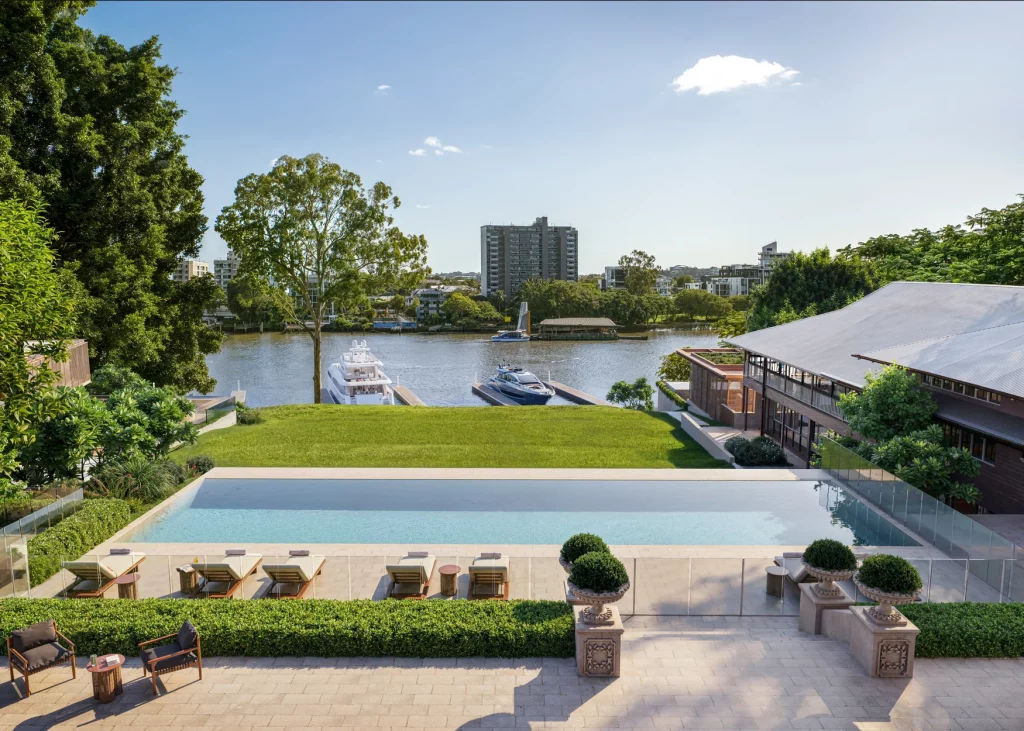
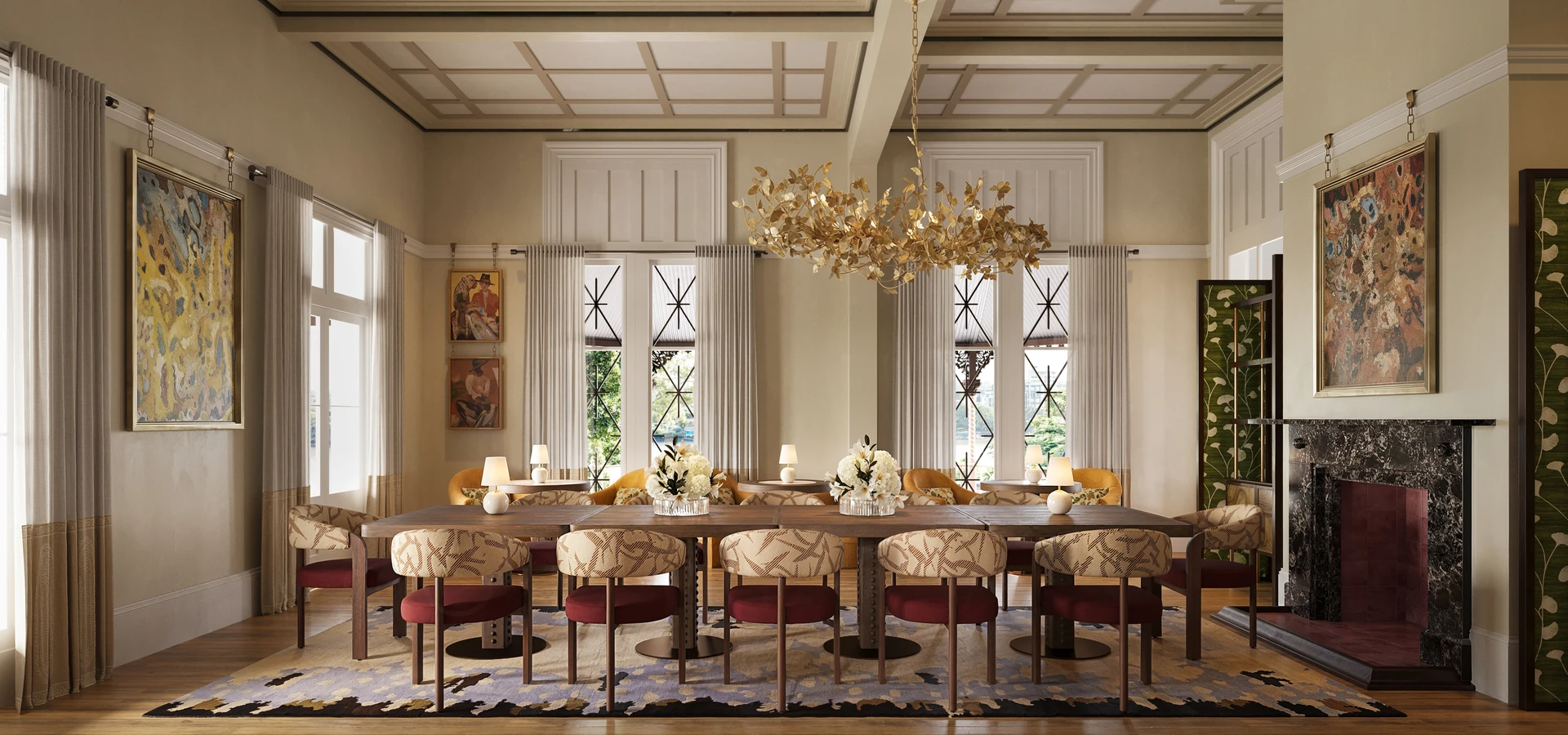
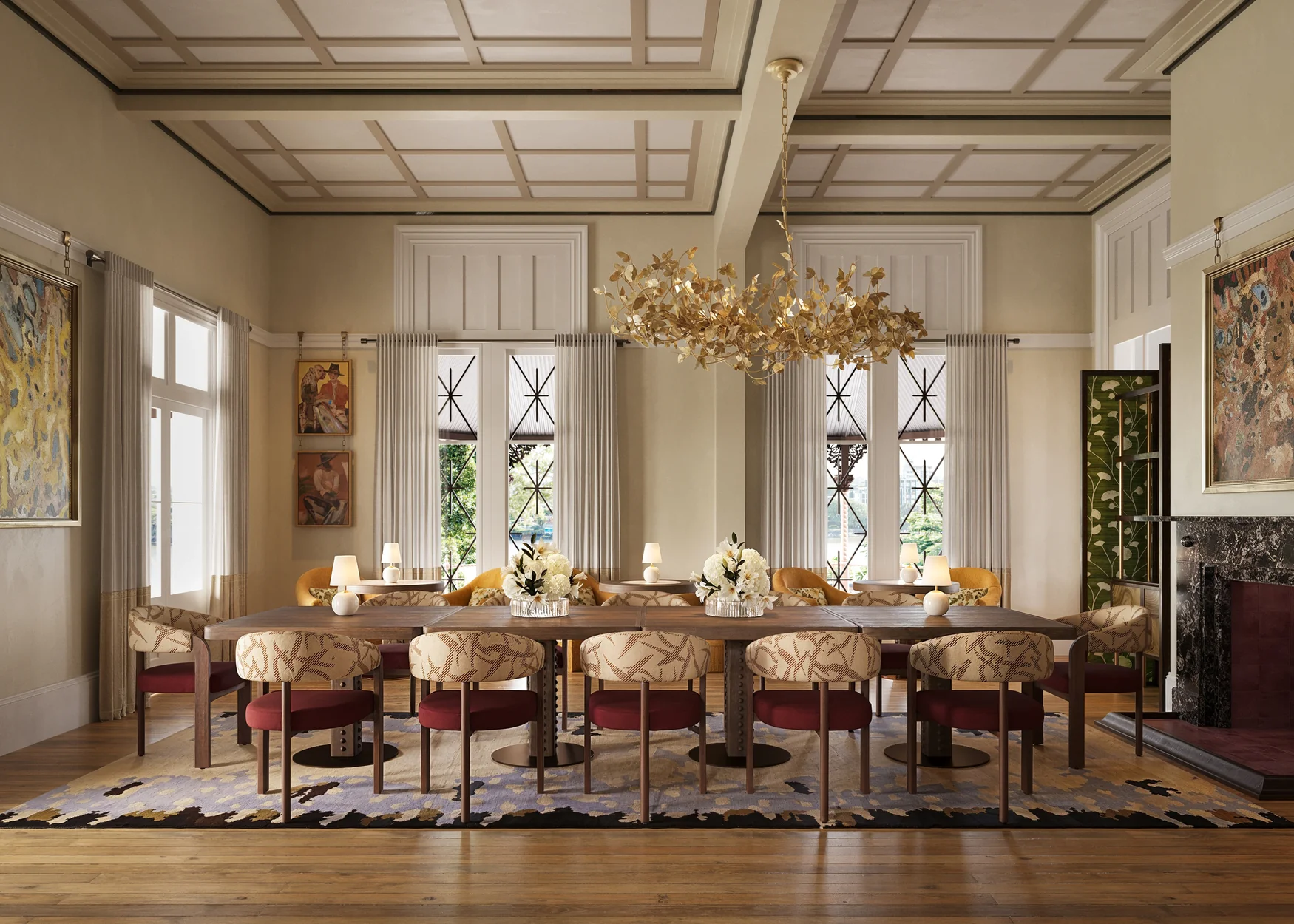
Artist’s rendering of Capella Residences Brisbane’s pool and view of the river. Top: Artist’s rendering of a multifunction room for residents. (Photos courtesy of Capella Hotel Group)
The parcel you can’t assemble
Laffey has been developing for 20-odd years, for large listed groups and for private ones, and he is aware of the cliché, even as he repeats it. “Every developer will tell you this is a once-in-a-lifetime opportunity,” he says. “Pound for pound, I don’t think you can find anything like this—certainly not on the east coast of Australia.” The pitch is underscored by the specifics: a one-hectare parcel, north-east facing, two stretches of river visible at ground level and four or five reaches of it from higher up, all within two kilometres of the city.
The point he keeps returning to is not the view, but the impossibility of doing it again. Assembling an equivalent site would mean buying up apartment buildings to reconstruct the same shape, at a cost that makes the exercise academic. And no amount of money produces the house. Shafston was begun in 1851 for the pastoralist and explorer Henry Stuart Russell, extended over the following half-century, and sits third in age among Brisbane’s buildings, behind Newstead House and Bulimba House.
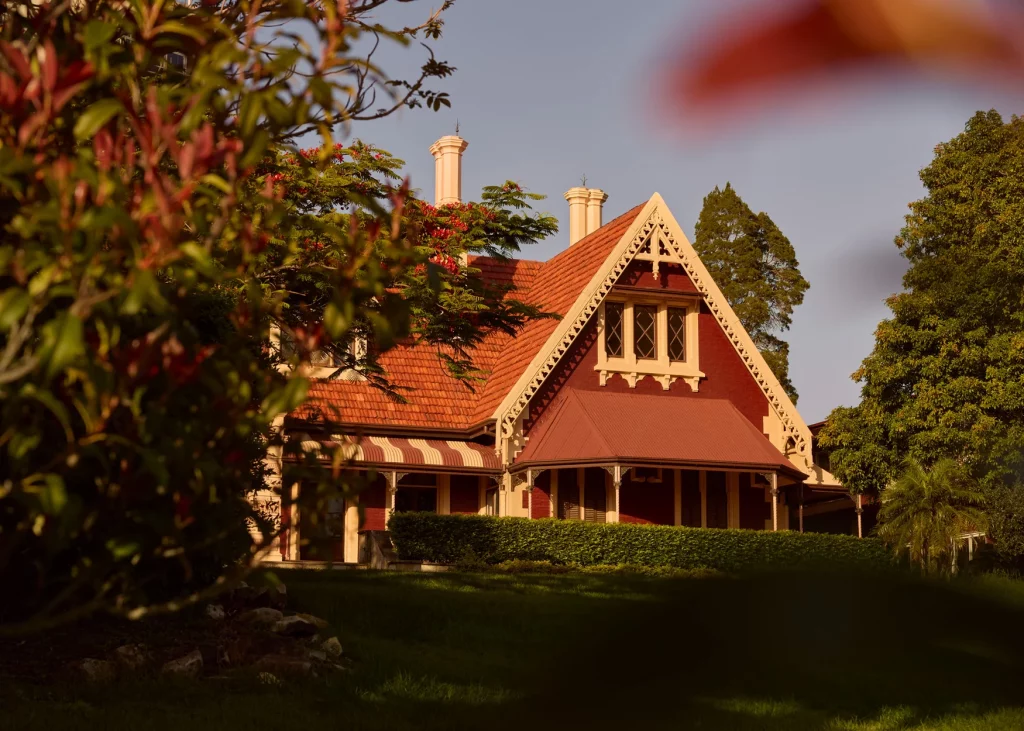
Shafston House is a heritage-listed villa in Kangaroo Point, Queensland, Australia. It was designed by Robin Dods and built from 1851 to the 1930s. (Photo courtesy of Capella Hotel Group)
“Think about a fine watch, or a beautiful car—those things go up in value because they’re not being made again.”
That framing—scarcity as the asset class, not the finish—is the whole thesis, and it is also what made the site expensive in time rather than money. Five years of negotiation with the state over the heritage components preceded anything that could be called a product. Laffey grew up in Brisbane, and describes the obligation in a longer register than a development timeline usually allows: buildings that have stood for 175 years, looked after for another 180.
Design-led, and holding the trowel
Verso is vertically integrated—construction, design, sales, marketing and management in the same business—which Laffey concedes is not unique, then defends more sharply than he introduced it. “In all honesty, I don’t know how you actually deliver something if you aren’t the builder.” In south-east Queensland, where the construction pipeline is committed for the better part of two decades, controlling the trade is not a philosophical position.
The second claim is harder to test but easier to see in the drawings. “A lot of other developers will be led by the bottom line and by the numbers, and will want to tweak that as hard as they possibly can. Whereas our approach is more about being design-led and doing what is right for the site.” The evidence he offers is a decision Verso made against its own interest. The company builds modular—and chose not to here. “We have the ability to do it differently, but while it’ll take more time, the end product will be better reflective of what people are expecting.”
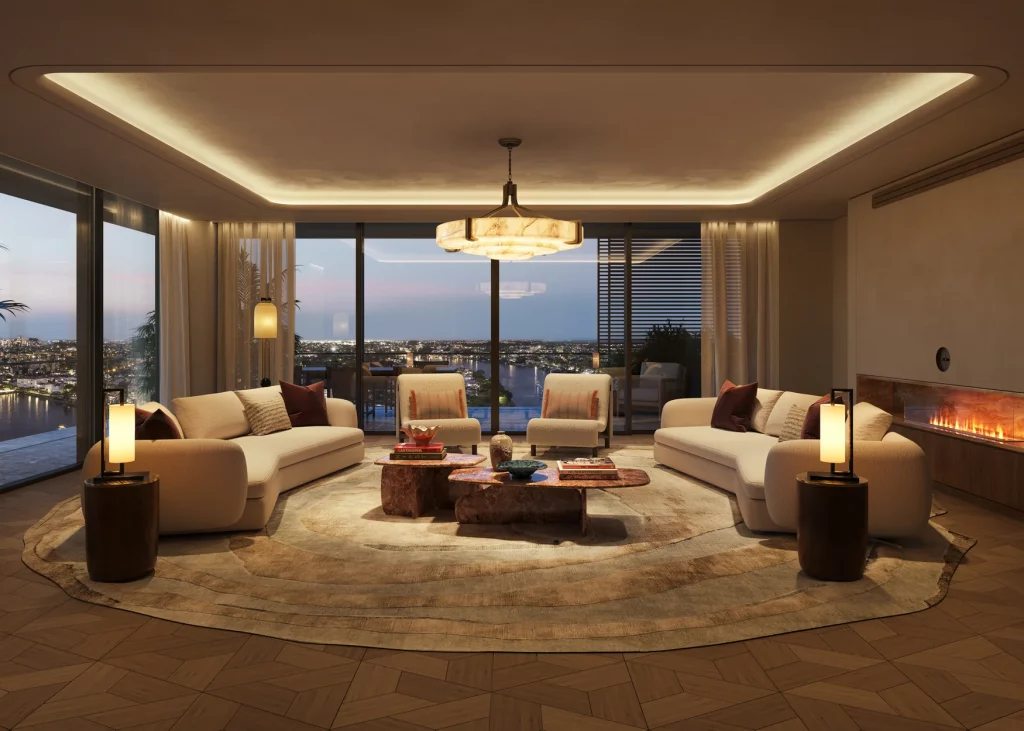
Artist’s rendering of a Capella Residences Brisbane living room. (Photo courtesy of Capella Hotel Group)
Building, as he points out, has barely changed in 200 years, and the parts of the industry now changing it fastest are the parts a buyer is least willing to underwrite off the plan. “We wanted people to have absolute confidence in what they’re buying, rather than being at the forefront of the cutting edge.” While they do still have those projects too, Laffey says it’s a different positioning.
A partner that doesn’t overpower the house
Verso spoke to more or less every branded residence operator available, with a brief blunt enough to be quoted verbatim: whoever came in “had to make it better”. Capella won it on temperament rather than distribution. “Every asset is unique. The Capellas are all different, and they’re all very respectful of the cultural and heritage elements that their projects and sites inhabit.” The alternative is stated without malice and lands anyway. “If we’d gone with some of the more mainstream brands, you pretty much know what you’re getting. It wouldn’t matter where you are around the world.”
What the partnership buys is service, and the service is designed into the concrete. More than 5,500 square metres of it sits under roof, along with six pools and gardens across the estate. Behind that, a parallel building most residents will never see: separate service lifts, so nothing is delivered through the front of house, and standalone suites on their own level for staff. Internationally, Laffey notes, the nanny or the housekeeper usually lives in the apartment. Here they do not—partly for the residents, partly so that staff “also get their private space, rather than feeling like they’re always on call, even though that might be the reality”.
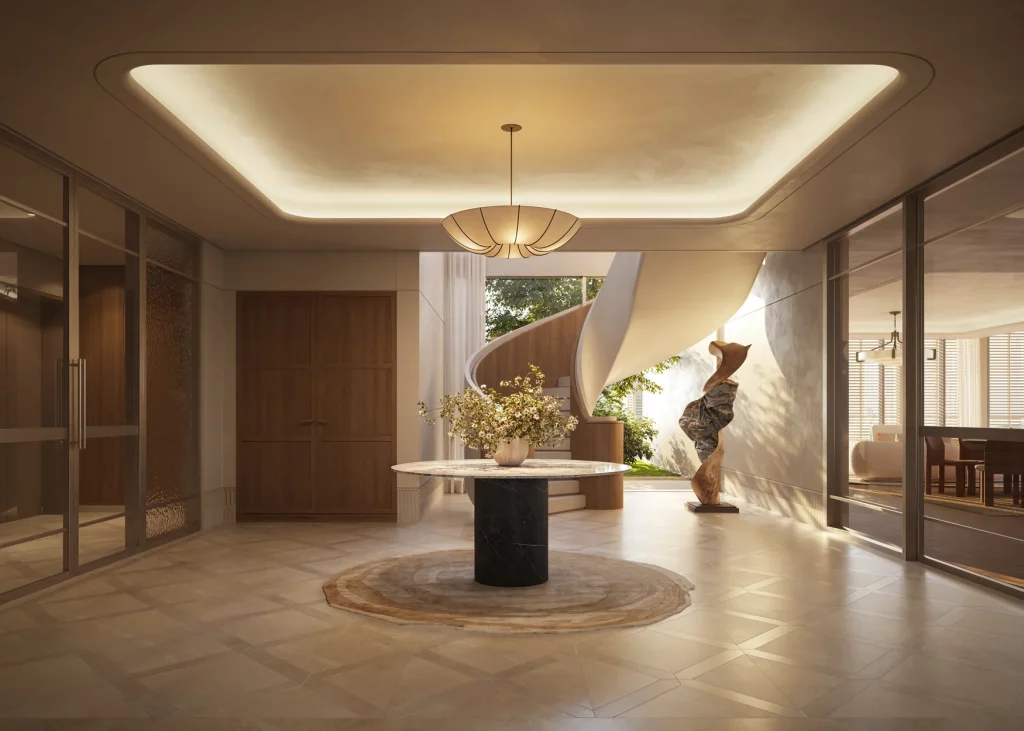
Artist’s rendering of the grand hall at Capella Residences Brisbane. (Photo courtesy of Capella Hotel Group)
Privatised lobbies, parking that arrives into the lobby rather than a basement: these are becoming familiar on the east coast. The thing he is actually selling is less visible, and he describes it as a domestic scene rather than a specification. The head chef from Agnes, a well-known wood-fired bistro in Brisbane, cooking for family and friends downstairs; a suit collected, pressed and returned upstairs while it happens; none of it requiring a phone call. “In a lot of ways, that’s actually giving you the luxury of time back—time with the ones you value most.”
Brisbane grows up
Underneath the project is a wager on the city, and Laffey is precise about which number matters. Queensland’s capital programme runs to $119.2 billion over four years; anticipating the Olympics in 2032, the Games venue programme is at a mere $7.1 billion. “It’s not even 10 per cent of what’s actually going on.” The Games, in other words, are the marketing for a build that was happening regardless.
The rest of his case is the composition of who is arriving. Buyers with dual citizenships, drawn by business and staying for the lifestyle; a city now reachable non-stop from around 40 international destinations; the largest health and research precinct in the state; the country’s first utility-scale quantum computer under construction an hour north. “There’s a level of maturity and sophistication that comes with apartment living, and equally the services one would expect.”
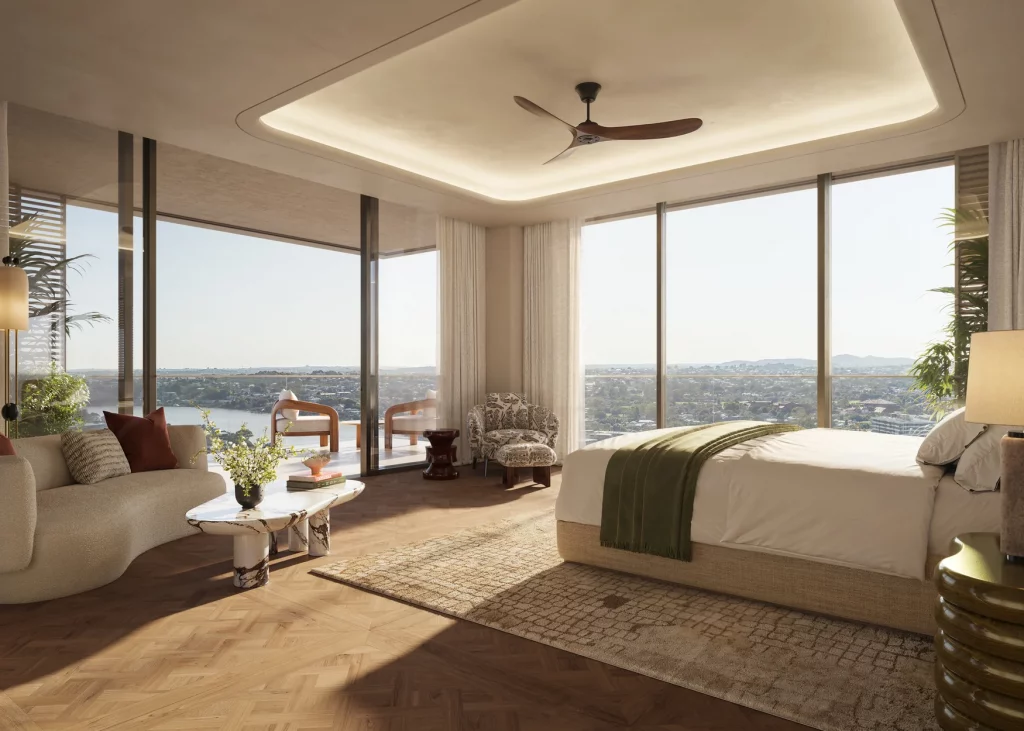
Artist’s rendering of a primary bedroom in a Capella Residences Brisbane unit. (Photo courtesy of Capella Hotel Group)
What he is still working out is how much of that service can be automated without hollowing it out—the cost of staffing being, on his reading, the real reason branded residences have been slow to take in Australia. “Even talking to Evan [Kwee, vice-chairman] at Capella, one of the biggest things is ensuring the standard of service is maintained and those personal touches are still there.” He is watching the technology closely and trusting it selectively: a Chinese manufacturer showed a drone-carrying vehicle in Melbourne the week before we spoke, and he expects that category to arrive faster than the industry is ready for.
The tell is the helipad. Early on, Verso looked at putting one on the marina, and found it would consume the marina. The marina won. Everything about the project is that kind of trade—a modular capability held back for other sites; a drone future deferred in favour of six berths someone can use in 2029. What Verso is importing from Singapore is not really a brand. It is a labour model, and the assumption underneath it is that somebody will always be downstairs to press the suit. Whether that assumption survives Australian wages for the next 180 years is the one thing the renders cannot answer.
Read next:
- The rise of the Sunshine Coast: What Noosa’s increasingly desirable property market means for ultra-prime buyers
- The report: Budapest’s luxury property market, where lifestyle and investment converge
Australia luxury real estate for sale.
In brief: Capella Residences Brisbane
Capella Residences Brisbane is a 27-storey branded residence developed by Verso Projects around the restored, heritage-listed Shafston House. Brisbane’s first branded residence of any kind, and Capella’s third worldwide after Seoul and Bangkok. Display opens late 2026 and completion is 2029.
The destination: Brisbane’s case rests on a build that predates the 2032 Summer Olympics. Queensland’s capital programme is $119.2 billion over four years, of which the Games Venue Infrastructure Program is $7.1 billion, covering 17 new and upgraded venues including a 63,000-seat stadium at Victoria Park; the Commonwealth is separately committing $12.4 billion to state transport projects.
Brisbane Airport now flies non-stop to about 80 destinations across some 27 countries. The Herston Health Precinct—20 hectares, more than 13,000 staff, anchored by Queensland’s largest hospital—is among Australia’s largest integrated health precincts, and PsiQuantum’s utility-scale quantum computer, backed by A$940 million of Commonwealth and state money, is under construction at Moreton Bay with an end-2027 target.
Investor insight: Foreign buyers of new Australian dwellings require FIRB approval, and Queensland charges additional foreign acquirer duty of 8 per cent on top of transfer duty.
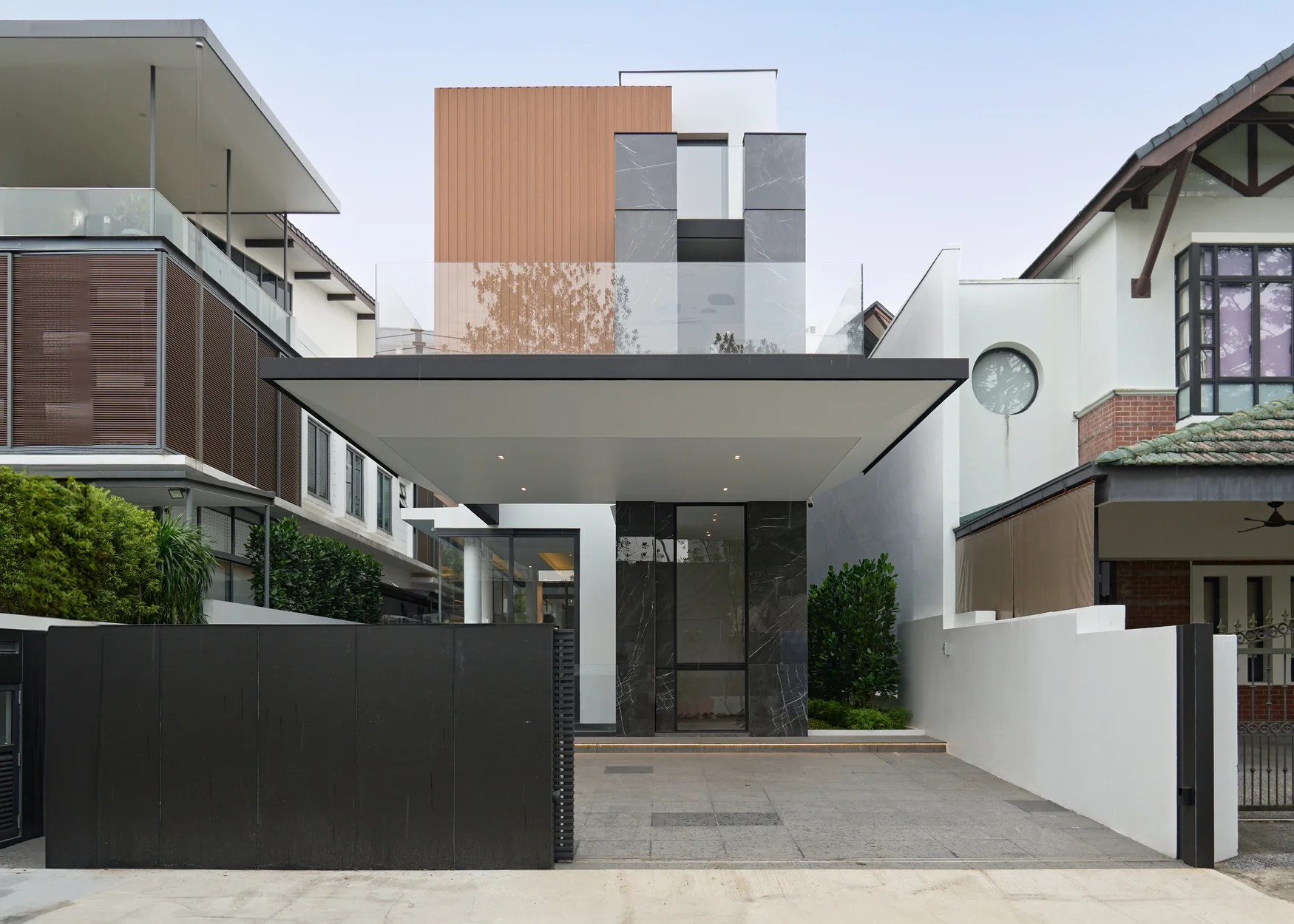
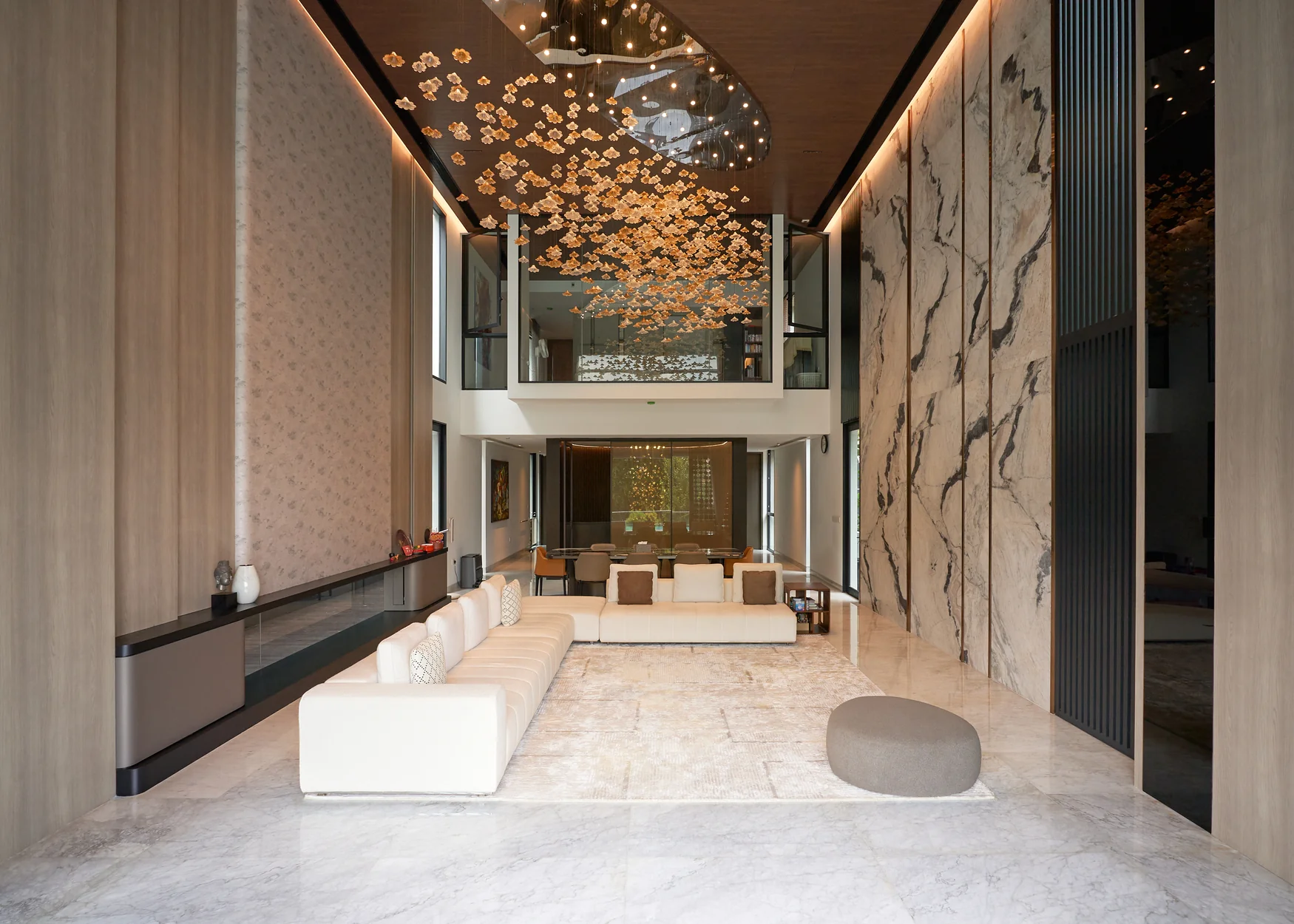
8+1 bed | 10,200 sqft area 19,500,000 SGD
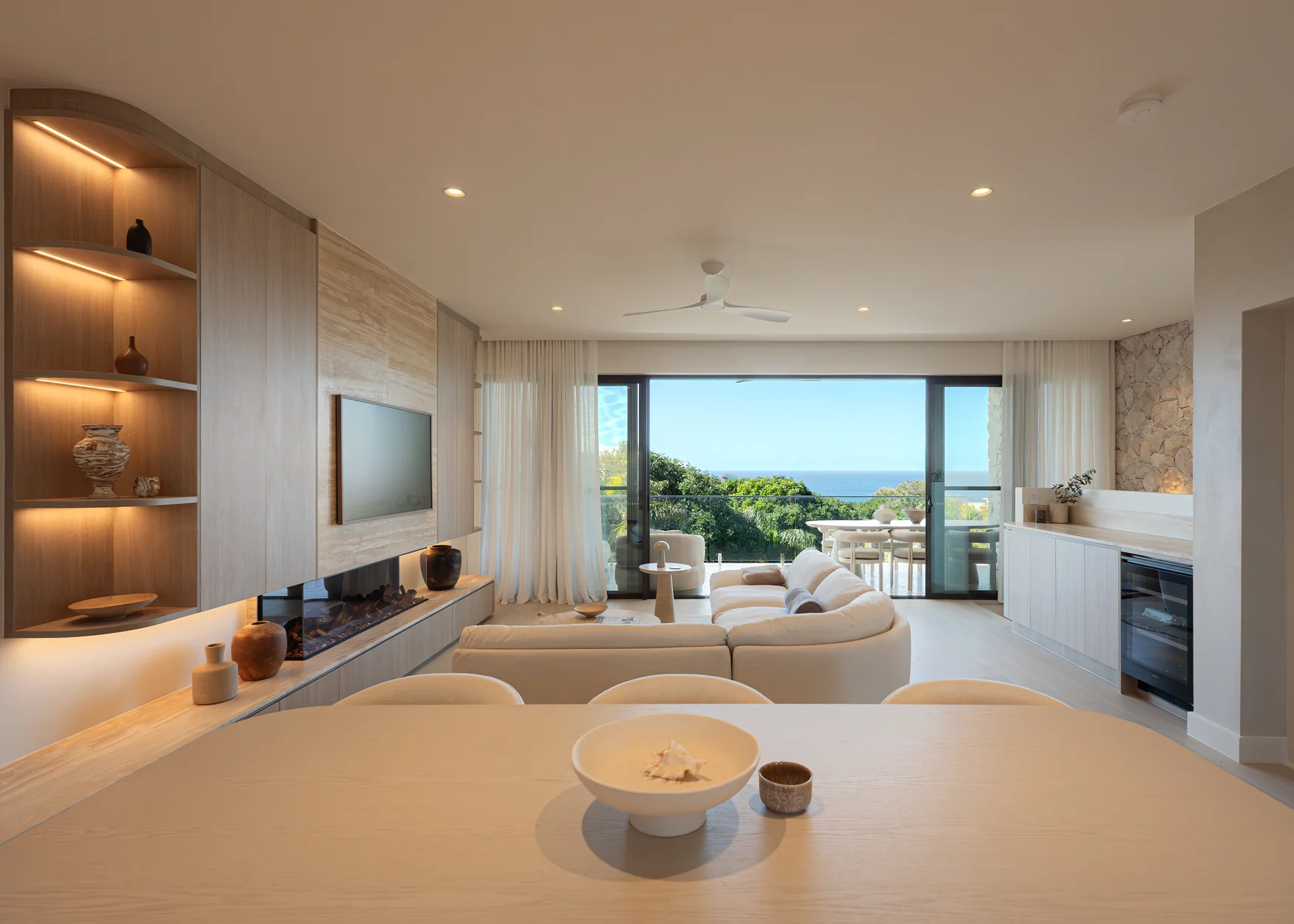
5 bed 19,380,000 SGD
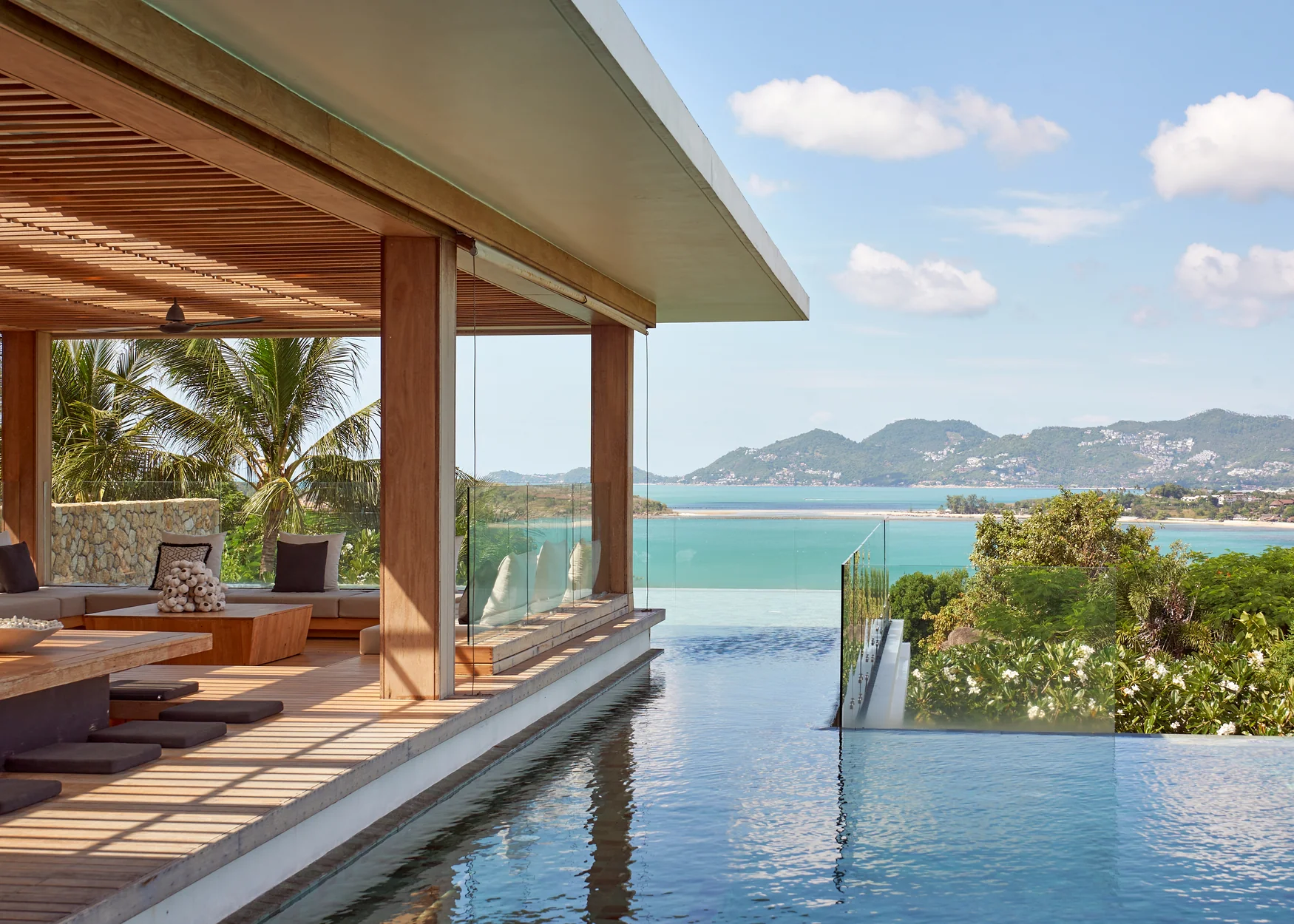
4 bed | 4,208 sqft area POA
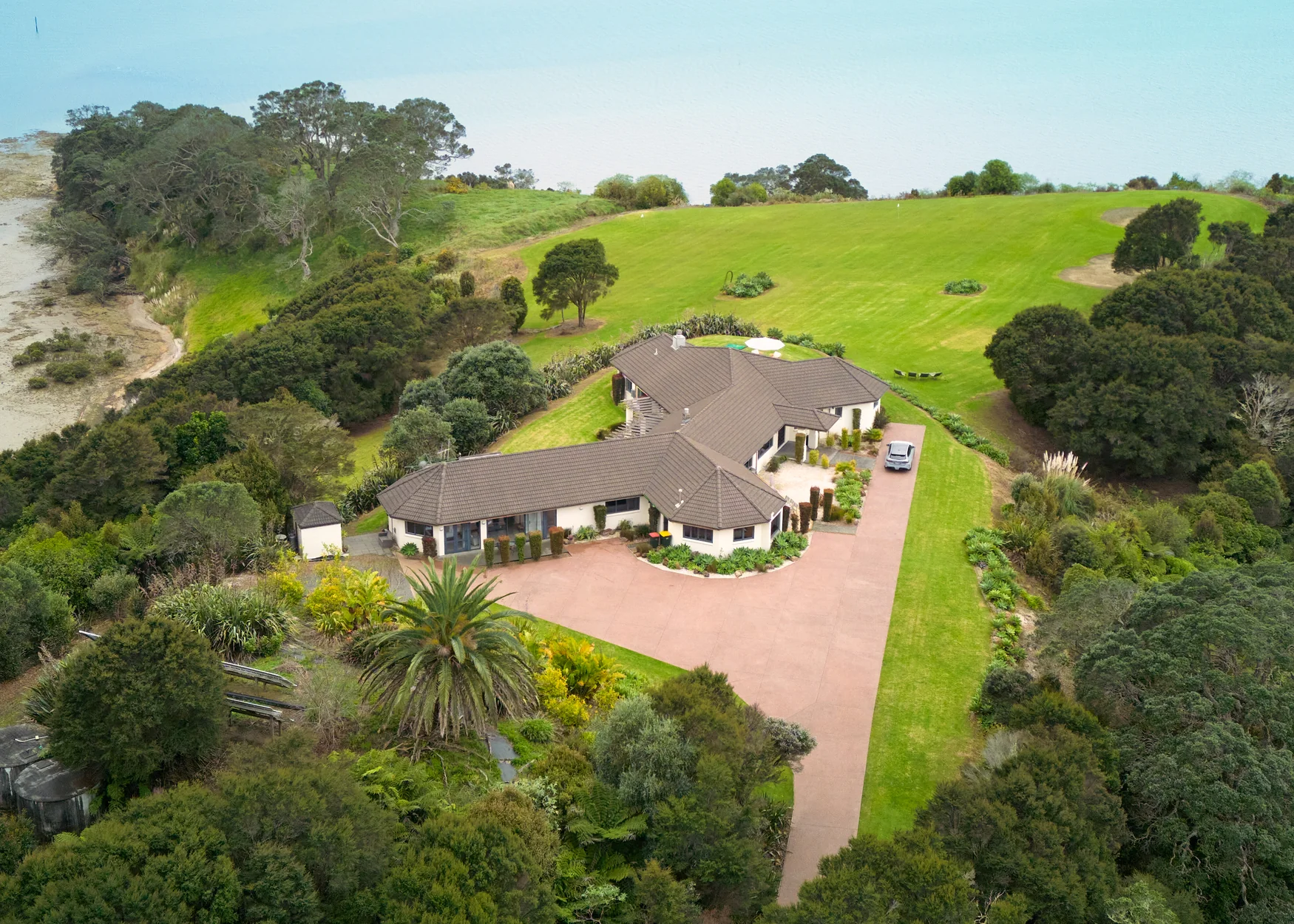
3-8 bed | 699,654 - 784,080 sqft area POA
6 bed POA