The interview: Ulysse Nardin’s Jean-Christophe Sabatier on the Freak’s “epic” story and the role of watches to cultivate community
Interview by Hamish McDougall
Photography by Kevin Khng
It’s been a quarter-century since Ulysse Nardin first disrupted the conventions of haute horlogerie with the Freak, which notably did away with the dial, hands and crown, and used the movement itself to display time.
The maison once again pushes the boundaries of mechanical watchmaking with the Super Freak, unveiled at Watches and Wonders 2026. Back in Geneva, Boulevard chatted with the maison’s chief product officer, Jean-Christophe Sabatier, about this latest tour de force, which he describes as the culmination of 25 years of experimentation, risk-taking and technical accumulation.
The conversation also expands beyond mechanics into the changing culture around collecting. Sabatier speaks candidly about the new generation of enthusiasts who are younger, more informed and less motivated by status than by substance, as well as how this shift is reshaping the relationship between brands and collectors.
In an increasingly digital world, he argues, the appeal of the mechanical watch lies precisely in its tactility, permanence and emotional resonance—calling for a return to the “real” things.
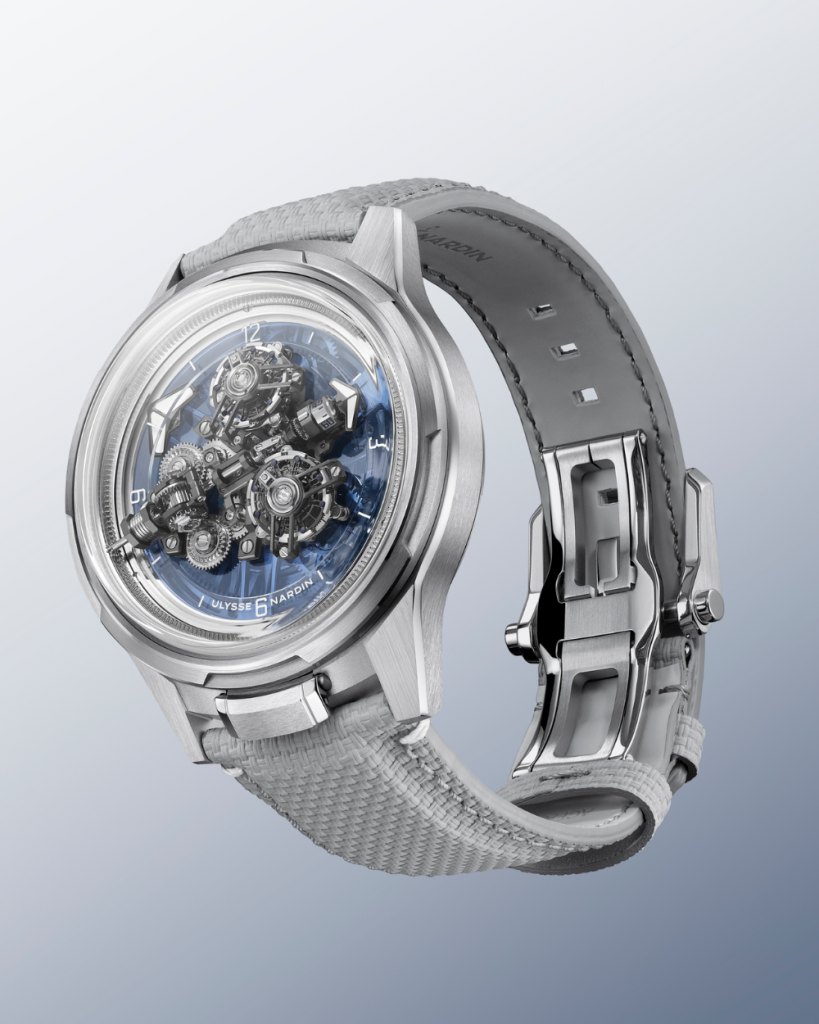
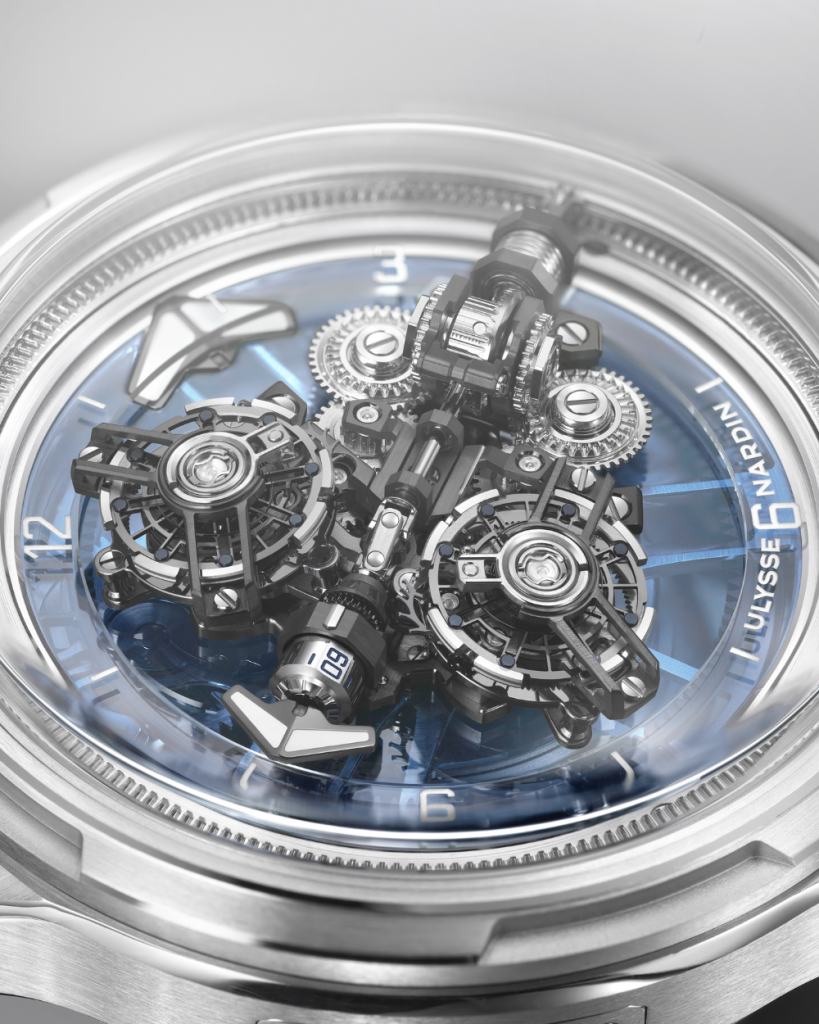
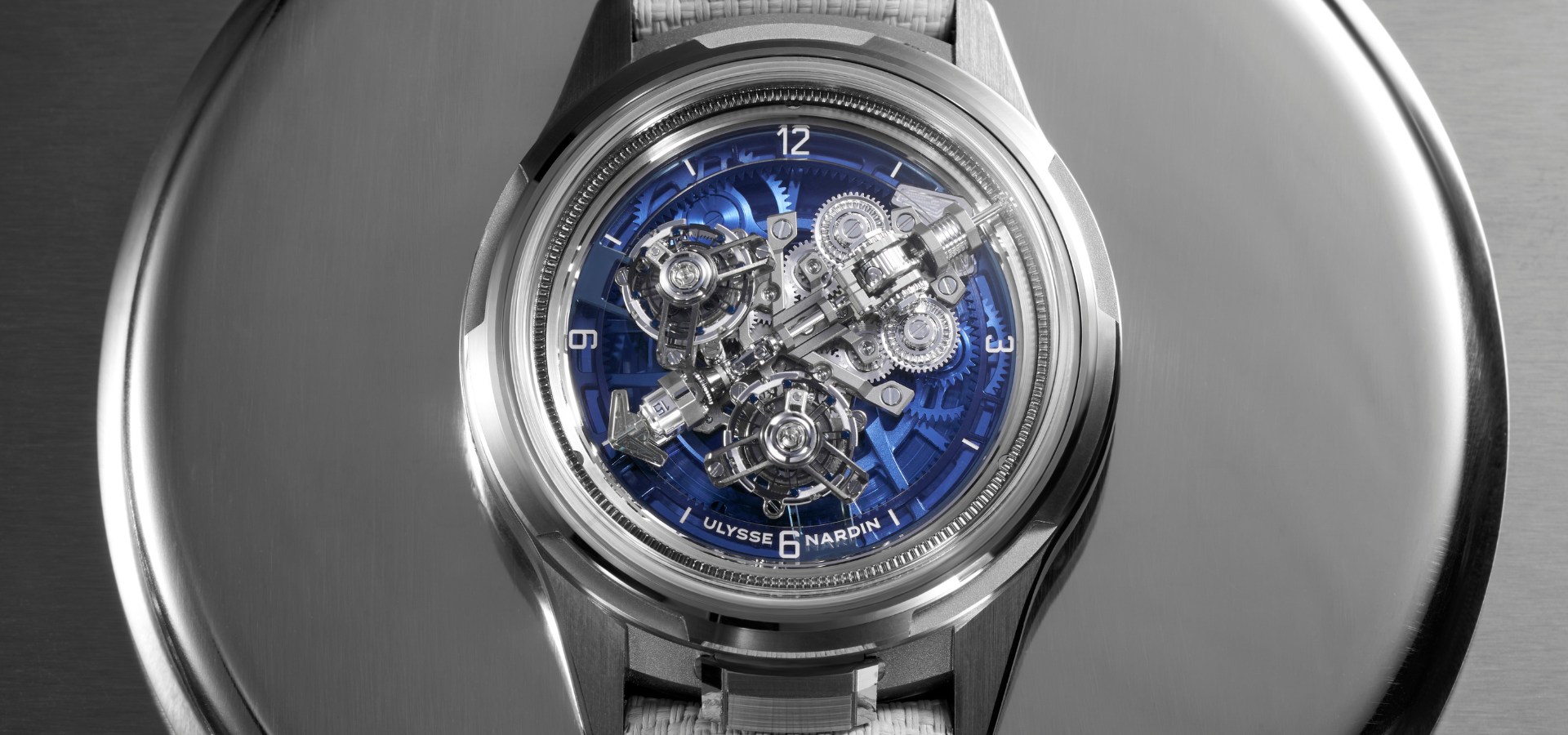
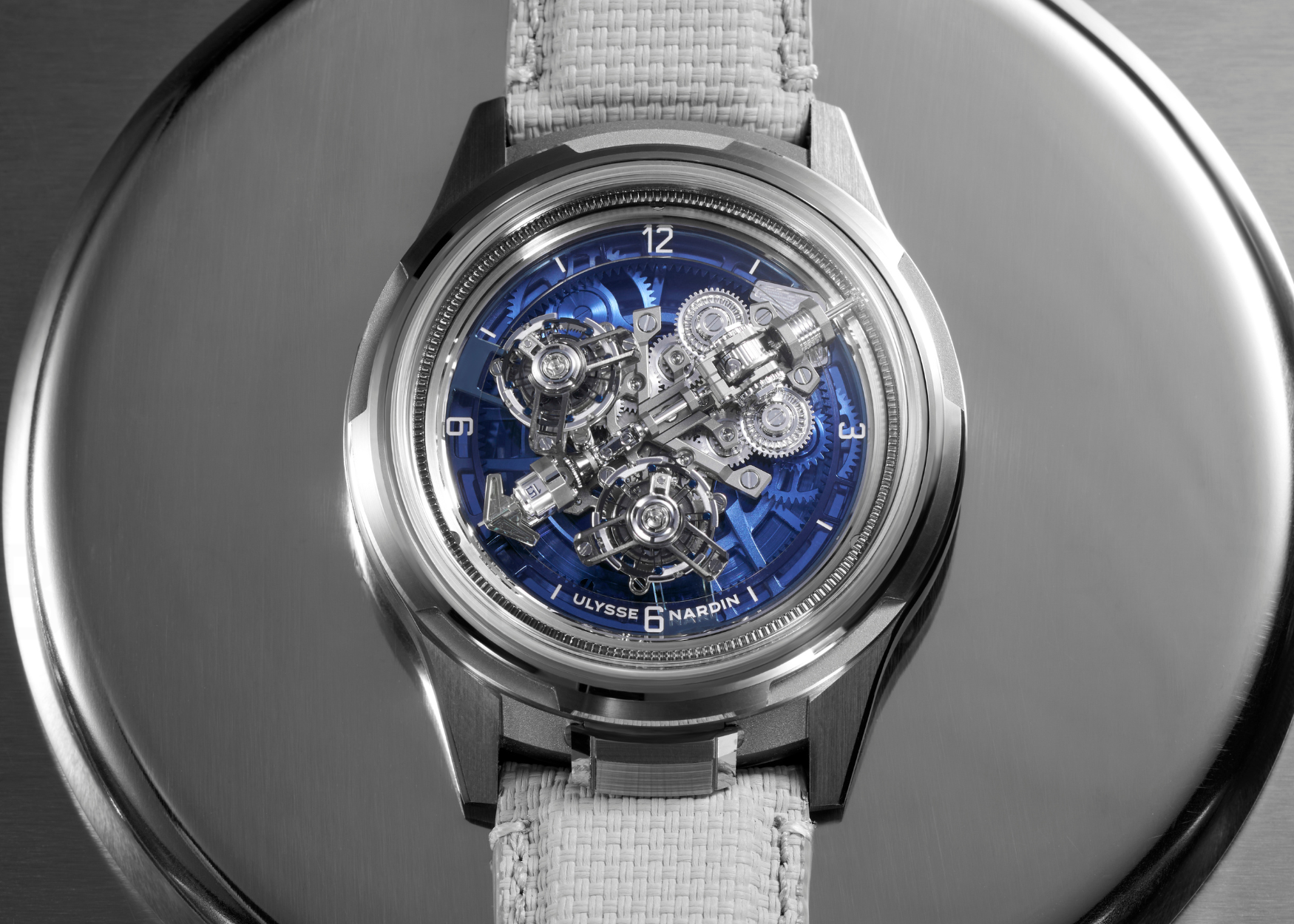
At the heart of the display are twin flying tourbillons, rotating in opposite directions (Images from Ulysse Nardin). Top: The Super Freak captured at Watches and Wonders 2026 by Kevin Khng.
Boulevard: Tell me about the journey of the Freak and Super Freak: how did it come about? When you’re climbing a mountain, you can maybe see the summit. Could you see the summit of the Super Freak even at the beginning?
Jean-Christophe Sabatier: It would not be an exaggeration to call the story of the Freak an epic story. It’s difficult for younger people to imagine how the industry was 25 years ago. At that time, the watch industry was just coming out of a period when it was on the verge of dying. Everybody was trying to remember and recover know‑how that had been lost.
What makes the Freak epic is that, from the very beginning, it was totally futuristic and ahead of its time. The people who created the concept understood that, if you want to avoid a second crisis like the quartz crisis, you have to reinvent yourself entirely. They found a way to completely disrupt the traditional notion of telling time. With the Freak, the movement rotates on itself, and the case becomes part of the calibre, because it acts as a wheel. It’s a completely different way to think about and architect the product.
When it was presented, it inspired creators who have been at the forefront of watchmaking for the last 25 years. It appeared around the same era as other major independents were emerging. The Freak opened the door to a new, contemporary expression of watchmaking and was deeply linked to technical innovation. It had the first silicon escapement. Over the journey of the Freak, we developed 17 calibres. In each calibre, you have new patents, new technologies and new materials.
“The Super Freak represents four years of development for the calibre, but in reality, it’s 25 years of accumulated know‑how.”
At each step of development, we created new principles without necessarily knowing what we would do with them. For example, we created the Grinder, a patented winding system designed to be twice as efficient as a traditional oscillating weight. It first appeared in a concept Freak in 2017. At the time, what was the purpose? Of course, it was more efficient to wind, but a traditional oscillating weight is already efficient, so you don’t immediately see where it will lead.
Then, in 2022, we launched the Freak S with two oscillators. That watch would not have been possible without the Grinder.
And now we are launching the Super Freak. In the Super Freak, you have the Grinder system, but also all the work we’ve done on reducing weight, on materials and on silicon technologies. The Super Freak carries eight patents, some of them created in previous generations, without us necessarily knowing they would end up in this watch. For me, that’s why it’s an epic history.
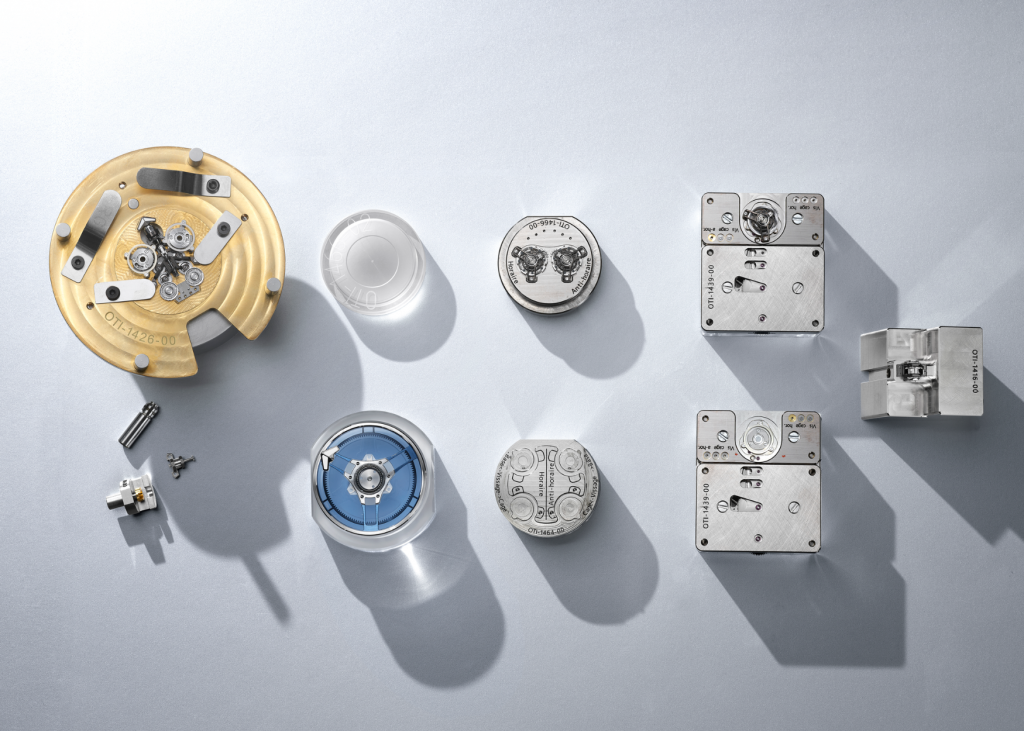
Of the watch’s 511 components, 327 make up the upper part of the calibre, which weighs a total of 3.5 grams only (Image from Ulysse Nardin).
Blvd: How many of those patents pre‑existed the concept, and how many did you have to come up with in order to enable the Super Freak?
Sabatier: Seven of the patents in the Super Freak are pre‑existing, and one is new. The Super Freak is a technical tour de force and a world premiere. It’s the first double tourbillon that is automatically wound, which requires a lot of power and therefore a lot of efficiency.
Also, it’s not a classic seconds indication. You have a rotating seconds indication through a gimbal principle that we have patented. It’s inspired by the automotive industry. We used this gimbal to show the seconds because we thought it was a new way to indicate time, in the same spirit as the original Freak. And in the coming years, I know we will use that gimbal principle to drive other types of innovation.
The Super Freak represents four years of development for the calibre, but in reality, it’s 25 years of accumulated know‑how. Each year is like taking another step on a staircase. Last year, for instance, we presented the Diver Air, a diving watch that is the lightest ever made, weighing 45 grams. We did a lot of R&D and used many titanium components in the case and movement to reach that weight. Some of the learnings from the Diver were carried over into the Super Freak.
“We work in an industry that moves slowly, but if you want real improvements, you have to dig. You have to improve constantly and work on yourself.”
If you look at the upper part of the Super Freak’s calibre, you’ll find 327 components just in that area. The total weight of those 327 components is 3.5 grams, because we created a titanium chassis made of 17 components to hold more than 300 parts. That learning came directly from the Diver.
This shows how we move step by step, slowly, with small improvements every year. When I say “epic,” that’s what I mean. We work in an industry that moves slowly, but if you want real improvements, you have to dig. You have to improve constantly and work on yourself. The Freak is a very good example of that.
Blvd: What do you think today’s collectors are looking for? What are they expecting from watch brands, and why are they still building collections?
Sabatier: I’ve been working in this industry for 20 years now, and the market has changed dramatically. There is more passion for watches, and the field has become a way to connect people. Collectors know more and more because of social media, clubs and what I call the “horizontality” of the market. End consumers now know almost as much as I know about my own products.
In response, we open the doors of the manufacture—this was not done in the past. The industry used to be very secret, a bit conservative, a bit arrogant. Now that’s no longer the case.
This creates more horizontality and less verticality. It’s become a kind of network, and we’re all part of it: collectors, journalists, retailers, brands, partners. In that sense, the business side of watchmaking has evolved a lot, and the way we display products has evolved with it.
We want to explain in detail the deep meaning of what we’re doing—what is really inside [the watch]. It’s like showing what’s inside the engine of the car, so to speak. The idea of this “lab” approach is not just, “Look at this product, it’s beautiful”. That’s not enough anymore. You need to show the integrity of your technical choices when you present a novelty.
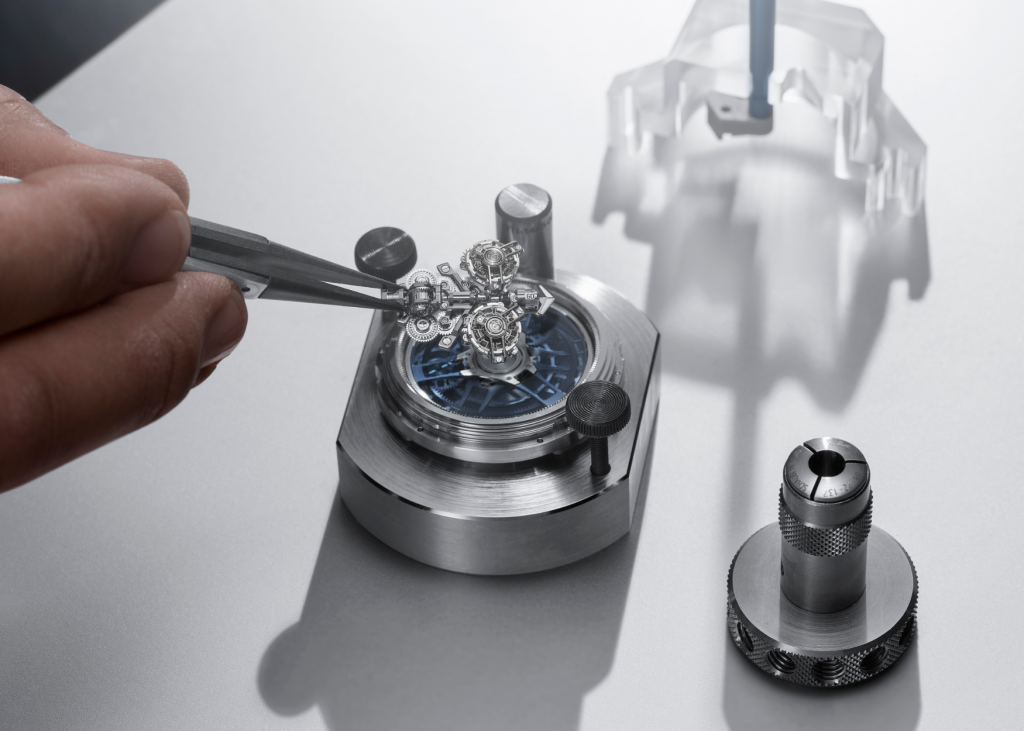
The Super Freak requires around 60 hours of manual assembly by a single grandes complications watchmaker (Image from Ulysse Nardin).
Blvd: And in terms of the collectors themselves, are you seeing changes? You’ve said they’re more educated and self‑educated. How are they changing, and how are they changing you?
Sabatier: One thing is sure: I’m getting older, and they’re getting younger and younger. I would say the covid crisis was a turning point. During that period, many young people took the time to study and really dig into fields that interested them, including watches. That raised the overall level of interest and knowledge.
There’s also a generational shift. Young people like vintage objects; they tend to wear timepieces that come from their fathers. They’re told the stories behind those watches, they listen, they want to understand more, and they become passionate. Even smartwatches have played a role, because they get people used to wearing something on the wrist. Then they start looking for something more durable, with more “content”, whether that’s technical content or storytelling. They’re very interested in that.
Information spreads incredibly fast now. When you release news today, it’s everywhere almost immediately. That creates a strong level of resonance. It’s about community: the more you are at the centre of the community, the more stimulation you get.
“I can easily imagine a future where people are in electric cars that drive themselves, but still wear a mechanical watch on the wrist.”
Blvd: We’re seeing in other areas, like the auto industry, a move away from digitalisation. You have analogue controls and displays in cars like Pagani and Porsche, maybe partly as a reaction against highly digital EVs, but also to bring tactility back, to reconnect people with the machine. Do you think watches will benefit from a similar move away from screens and digital connectedness, toward something tactile that speaks to people?
Sabatier: I think so. On that side, I’m more conservative. I believe that the watch remains a talisman, a jewel, an object you “appropriate” in a very personal way. I can easily imagine a future where people are in electric cars that drive themselves, but still wear a mechanical watch on the wrist.
The watch belongs to another sphere of your personality. The watch you wear is your own story, your own history. It reflects your family and your own taste. That’s how I see it.
Blvd: And the job of watches—is it changing? There was a time when they were very “bling,” very much about display and ego. Do you see that shifting? What role does the watch serve for the collector now?
Sabatier: I think there is definitely a shift. The industry is becoming more and more professional. There is less distance between the different actors. I think the word “passion” is much more important than it was in the past, and the word “status” is less important. We’re not in such a status‑driven society anymore.
In that context, it’s important to come back to the “real” things. There are fewer objects made purely for showing off. It’s more about defining yourself and wearing something that brings you pleasure and expresses who you are to your colleagues and peers. It’s less about arrogance.
Blvd: Lastly, what are you still learning in the world of watchmaking?
Sabatier: I’m learning every day. At the beginning of my career, I worked in the automotive industry, and there are big similarities with watchmaking. Both are very complex worlds, with thousands of small companies and specialists. Developing a timepiece is a very complex project that involves teamwork, many suppliers and a very intricate network.
The level of expertise is extremely high. When you think about a single watch, and then you consider how many operations are necessary to produce every one of its components, it’s almost impossible to calculate. My dream would be to be able to define exactly how many operations are needed to produce the Super Freak. It’s probably thousands of operations. That’s the beauty of this very complex world.
Go further with the 2026 edition of Watches and Wonders in Geneva.
Read next:
8+1 bed | 10,200 sqft area 19,500,000 SGD
5 bed 19,380,000 SGD
4 bed | 4,208 sqft area POA
3-8 bed | 699,654 - 784,080 sqft area POA
6 bed POA