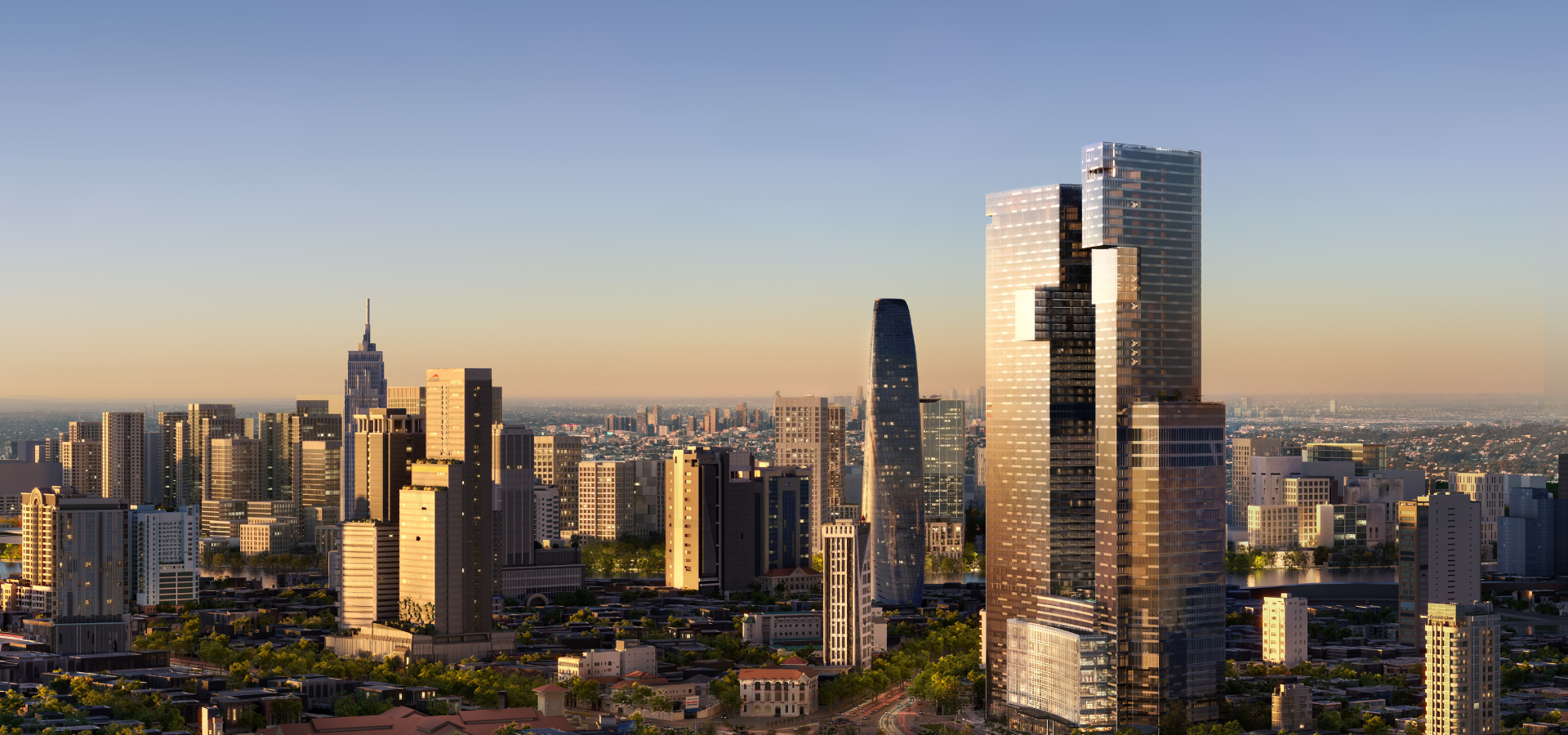
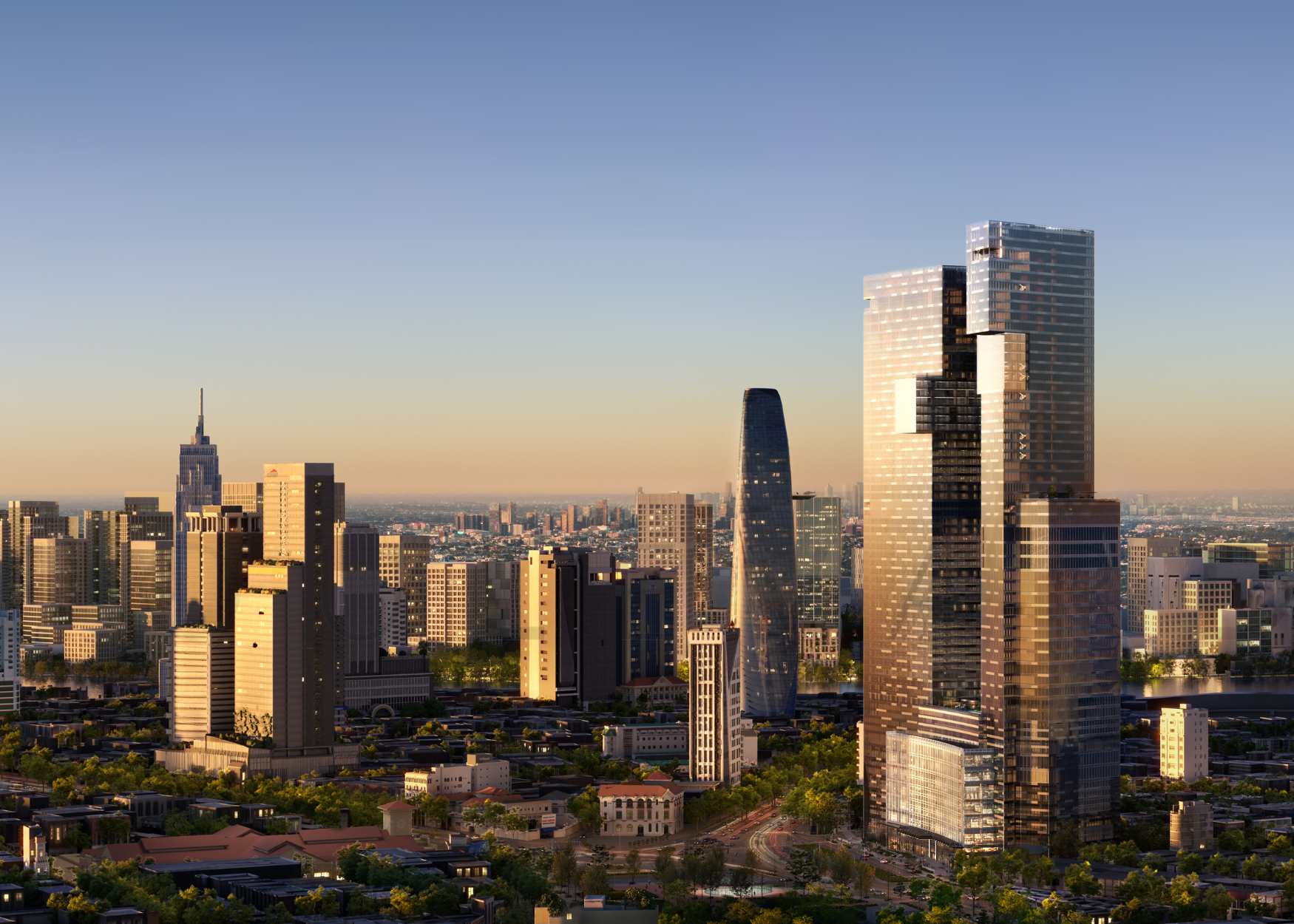
Insights into Vietnam’s growth as a global luxury destination and the soon-to-rise One Central Saigon, from Masterise Group’s Minh Phuong Nguyen
Interview by Mac Fabella
There are moments in a city’s history when location, timing and ambition converge in a way that changes the landscape permanently. For Ho Chi Minh City, the rise of One Central Saigon may well be that moment—a landmark mixed-use destination positioned directly opposite Ben Thanh Market, connected directly to Ben Thanh Central Metro Station via an underground link, anchored by The Ritz-Carlton, Saigon and The Ritz-Carlton Residences, Saigon and conceived at a time when Vietnam is commanding genuine attention from global capital.
The project is the work of Masterise Homes, a member of Masterise Group, a prominent real estate developer renowned for pioneering branded residences in Vietnam, and it arrives as the country posts record foreign direct investment figures and welcomes nearly 21.2 million international visitors a year. But the numbers, compelling as they are, only tell part of the story. What One Central Saigon represents is something more considered: a deliberate attempt to build a destination with cultural memory and global standing—not merely another luxury tower, but a defining icon of Vietnam on the rise, a place shaped by Vietnamese identity and benchmarked against the world’s great urban addresses.
Boulevard spoke to Minh Phuong Nguyen, managing director of the southern region at Masterise Group, to discuss why this location matters, what today’s affluent residents are really seeking, and what it means to bring The Ritz-Carlton to the heart of Ho Chi Minh City.
Boulevard: What is the vision behind One Central Saigon?
Minh Phuong Nguyen: One Central Saigon aims to contribute to Ho Chi Minh City’s next chapter by creating a global destination where luxury living, hospitality, business, retail and culture come together within one integrated ecosystem.
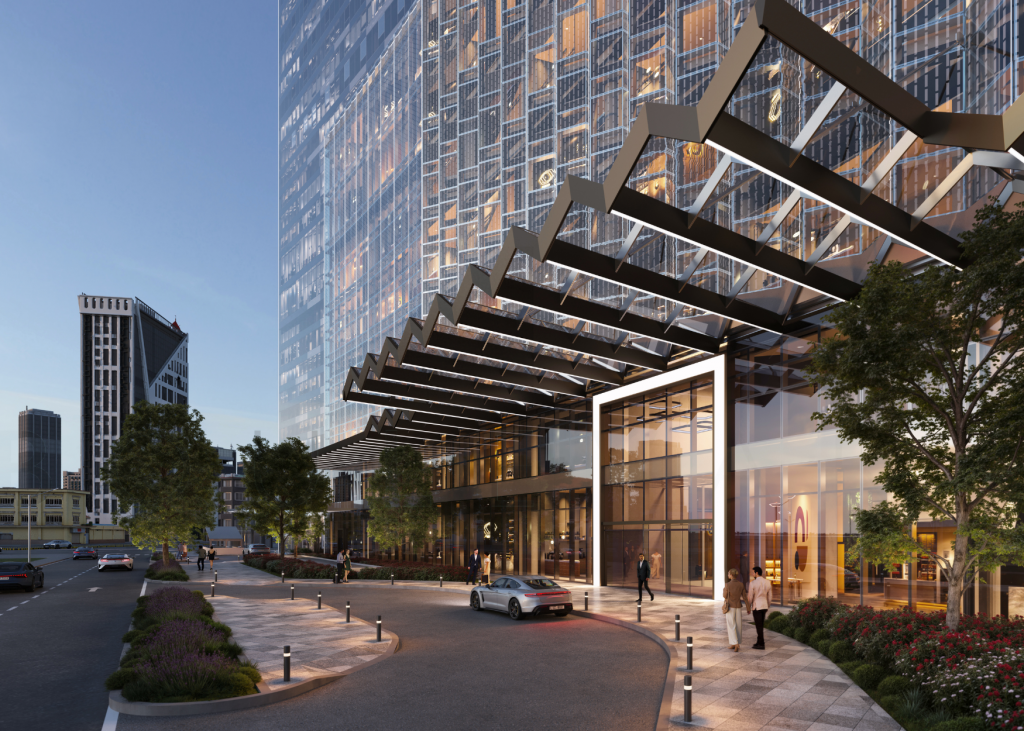
Artist’s renderings of the One Central Saigon driveway and facade (top), featuring twin towers rising above a massive retail podium. (Photos courtesy of Masterise Group)
The Ben Thanh location is especially meaningful because it gives the project a strong sense of place—connecting One Central Saigon to an area deeply associated with commerce, gathering, community life and the memory of old Saigon.
The project is also designed to reflect Vietnamese identity, including architectural inspiration drawn from the “Twin Dragons Playing With a Pearl” motif. This allows the development to combine global standards with local symbolism, rather than treating luxury as something imported. Global audiences are not looking for identical cities—they are drawn to places with clear identity, culture and memory.
For Ho Chi Minh City, projects of this scale can help contribute to shift international perception—from a fast-growing city to a fully realised global urban destination.
Blvd: Why do you believe this is such a pivotal time for Vietnam in the context of global investment?
Nguyen: Vietnam is entering a pivotal moment where economic momentum, infrastructure expansion and global perception are aligning simultaneously. Over the past decade, Vietnam has shown a period of sustained economic growth, with official data showing real GDP growth of 8.02 per cent in 2025, up from 7.09 per cent in 2024. Realised foreign direct investment also reached a record of US$27.62 billion in 2025, reinforcing the country’s growing appeal to international capital.
What makes this moment particularly significant is that Vietnam is no longer viewed only as a manufacturing destination—it is increasingly seen as a market for lifestyle, hospitality, culture and long-term urban investment. As global brands and international capital look toward Southeast Asia, Vietnam offers something increasingly rare: strong economic fundamentals combined with youthful energy, cultural depth and major urban transformation.
This is where landmark developments earn their weight—not just driving economic growth, but shaping how Vietnam is perceived globally for decades to come. One Central Saigon is built to carry that role: a landmark mixed-use destination that reflects Vietnam’s rising global relevance.
Blvd: One Central Saigon sits directly opposite Ben Thanh Market, one of Ho Chi Minh City’s most historic and recognisable landmarks. Can you tell us why this location matters strategically, and what is special about the area?
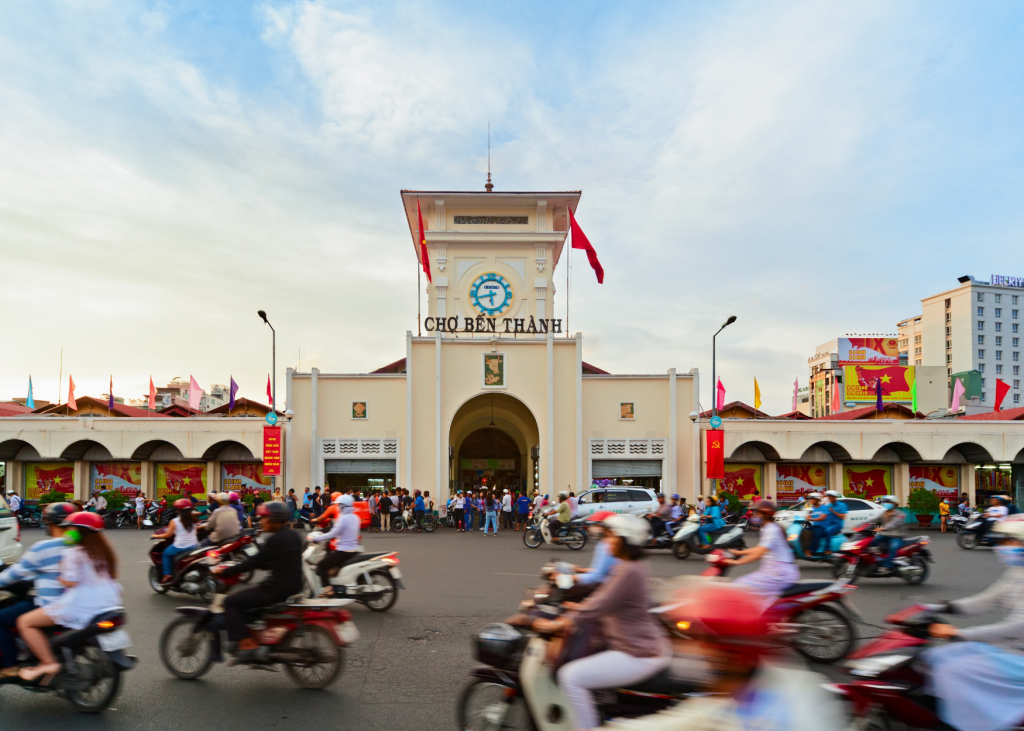
A snapshot of Ben Thanh Market, located opposite One Central Saigon. (Photo courtesy of Masterise Group)
Nguyen: The Ben Thanh area carries extraordinary historic gravity. For more than a century, Ben Thanh Market has remained one of Ho Chi Minh City’s defining landmarks—deeply associated with commerce, gathering, movement and the memory of old Saigon.
One Central Saigon occupies one of the city’s most strategic and non-renewable urban locations, with direct access to Ben Thanh Central Metro Station via an underground link. This level of accessibility creates long-term strategic value—connecting residents, visitors, businesses, retail and hospitality flows within one of the most active urban districts in Vietnam.
This rare combination of heritage, accessibility, international visibility and daily urban energy creates a level of relevance and connection that cannot be replicated in isolated developments.
Blvd: Vietnam welcomed nearly 21.2 million international visitors in 2025. How are you seeing perceptions of Vietnam change among investors of global capital, as well as luxury hospitality brands and travellers?
Nguyen: Vietnam’s strong tourism growth is reinforcing investor confidence and accelerating its emergence as one of Asia’s most compelling luxury hospitality destinations. Beyond the visitor numbers, investors are responding to the country’s long-term potential—driven by natural beauty, improving infrastructure, stronger connectivity and growing demand for high-quality lifestyle experiences.
Ho Chi Minh City alone welcomed 8.6 million international visitors in 2025, up 40 per cent year-on-
year, reinforcing its position as one of Southeast Asia’s fastest-rising urban destinations and a gateway for global business, lifestyle and luxury hospitality. We are also seeing destinations such as Hanoi and Da Nang evolve into sophisticated luxury and branded residential markets. Increasingly, Vietnam’s appeal lies not just in luxury itself, but in experiences rooted in authenticity, culture and a strong sense of place—qualities that resonate deeply with today’s global travellers and investors alike.
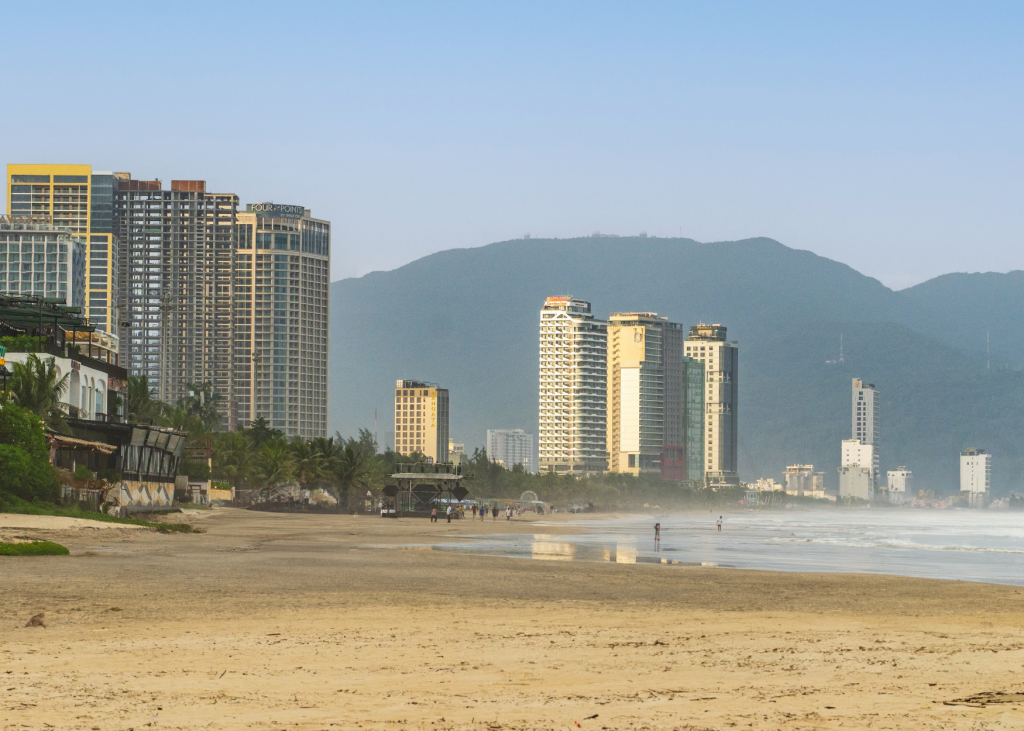
Da Nang, Vietnam. (Photo by Jin Cheng Wong)
A new generation of Vietnamese consumers is also reshaping the market — globally connected, internationally minded and increasingly seeking luxury experiences defined by meaning, service, wellness, identity and prime location.
At the same time, major infrastructure developments, including the Metro network and continued urban regeneration around the historic city core, are transforming how people live, move and experience Ho Chi Minh City. This creates the ideal environment for a project like One Central Saigon—a globally benchmarked mixed-use destination that combines residences, hospitality, retail, business and culture within one integrated ecosystem.
In many ways, One Central Saigon reflects the evolution of Vietnam itself: a country moving confidently from emerging growth story to globally relevant lifestyle and investment destination.
Blvd: How have tourist expectations and preferences changed over the last five years, especially among ultra-high-net-worth travellers?
Nguyen: It seems that the global affluent class is gradually moving away from overt displays of luxury and instead seeking something more discreet—privacy, personalisation and the feeling of living authentically.
One Central Saigon responds to this evolving mindset by bringing together branded residences,
hospitality, retail, dining and business within a globally benchmarked mixed-use destination.
Within its residential and hospitality components, the emphasis is on refinement,
intuitive service and a more considered daily experience.
Today’s affluent Vietnamese consumers are no longer seeking extravagance for its own sake. They are seeking quality, belonging and experiences that genuinely feel worthy of their time and lifestyle. That is precisely the type of environment we aim to create through One Central Saigon.
Blvd: Why do you think mixed-use developments and branded residences resonate so strongly with today’s affluent consumer?
Nguyen: Affluent consumers today are looking for places that feel integrated into the rhythm and identity of the city, rather than separated from it. These developments also reflect identity and personal positioning. Residents are not simply purchasing a home—they are choosing a destination, a community and a way of living associated with global standards and cultural relevance.
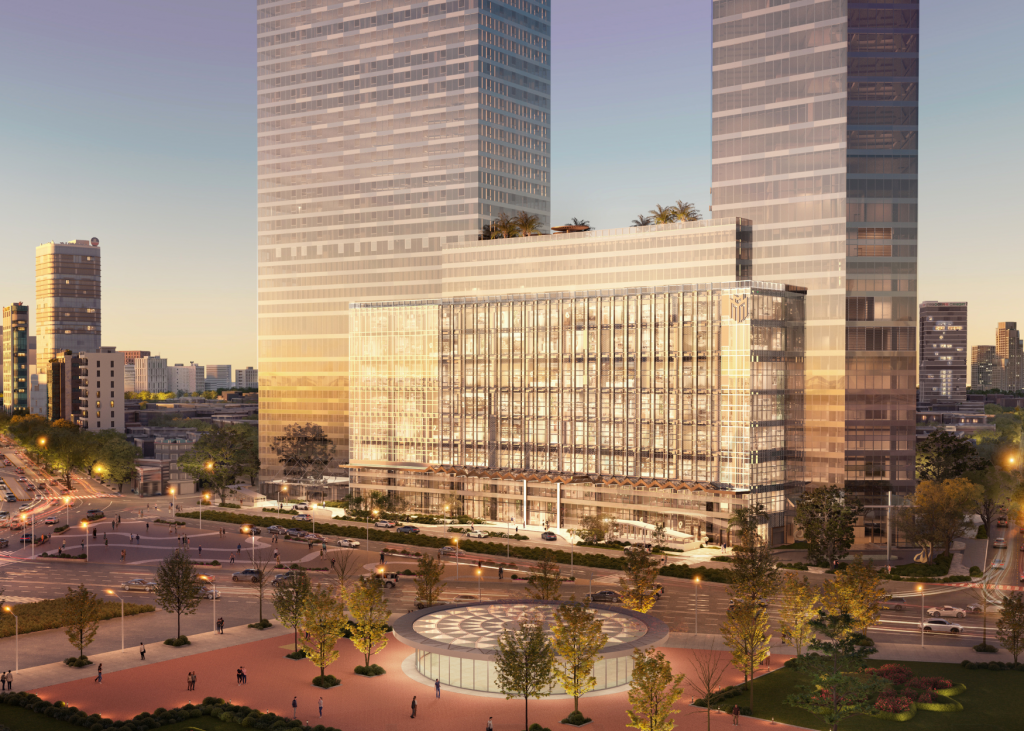
Artist’s rendering: The retail podium features multiple basement levels with direct underground
connection to Ben Thanh Metro Station. (Photo courtesy of Masterise Group)
At One Central Saigon, the combination of branded residences within a mixed-use destination
at a strategic non-renewable location, connected to major transportation infrastructure and the historic urban core, creates a level of long-term value that extends beyond convenience.
Blvd: Why was The Ritz-Carlton the right partner for this development?
Nguyen: The Ritz-Carlton represents one of the world’s most established luxury hospitality brands, with more than a century of heritage and a reputation built on timeless service excellence. Globally, there are only a limited number of Ritz-Carlton Residences, making the brand highly selective in the destinations and partners it chooses. In Asia, the presence remains exceptionally rare.
For One Central Saigon, the partnership was meaningful because both sides share a long-term vision centred around quality, legacy and creating destinations that endure across generations. The Ritz-Carlton’s legendary philosophy—”Ladies and Gentlemen serving Ladies and Gentlemen”—reflects a deeply personalised approach to hospitality where service is quiet, intuitive, refined and human.
The partnership also reinforces the ambition of One Central Saigon to position itself not only as a landmark development for Vietnam, but as a globally recognised urban destination.
Blvd: What are you still learning about the world of luxury today?
Nguyen: Luxury today is becoming quieter, more personal and more emotionally driven than before. There is a growing shift away from visible extravagance toward experiences that feel thoughtful, discreet and deeply individual.
What affluent residents and travellers increasingly value is not simply access, but a sense of meaning, privacy, belonging and emotional connection to a place. People are also becoming far more selective with their time. They want environments that reduce friction, anticipate needs naturally and allow them to feel both connected and protected at the same time.
One of the most important lessons is that true luxury cannot feel generic. Global consumers are increasingly drawn to destinations with a clear identity, strong cultural memory and a genuine sense of place—which is precisely why One Central Saigon’s location opposite Ben Thanh Market carries such significance.
Read next:
8+1 bed | 10,200 sqft area 19,500,000 SGD
5 bed 19,380,000 SGD
4 bed | 4,208 sqft area POA
3-8 bed | 699,654 - 784,080 sqft area POA
6 bed POA