The report: Marc Townsend on Vietnam’s ultra-prime residential market beyond Ho Chi Minh City
by Hamish McDougall
Photography by Jin Cheng Wong
Interview by Annie Asistio
Marc Townsend, Senior Advisor at Arcadia Consulting, shares his insights into the evolving property market in Vietnam, with UHNW clients increasingly looking beyond Ho Chi Minh City to emerging destinations such as Danang, Phu Quoc, and Hanoi. He highlights how foreign buyers are balancing lifestyle and investment considerations, and explores what today’s UHNW buyers are seeking in branded residences, holiday homes, and prime developments. Townsend also discusses Vietnam’s market shifts over the past two decades and the opportunities and challenges for ultra-prime property in the coming years.
This is part of a series of interviews for our holiday homes feature—go further with the Holiday Market.
Vietnam’s property market has both widened and deepened significantly over the past two decades. When I arrived in 2005, 20 years ago, Ho Chi Minh City was at the top of the market, and Singaporean and Malaysian developers were the main players, with one or two Vietnamese groups. Now in 2025, there are at least 95 listed Vietnamese developers. Singaporean developers CapitaLand Group and Mapletree Investments are still there, but the reality is that most condo development is now done by local players. The projects are much larger; instead of 100 units at a time, they can be 500, 1,000 or more.
In terms of quality, this growth has also translated into improvements across the board, with better facilities and amenities, higher specifications, improved layouts, and longer-lasting materials that keep buildings from showing their age for at least ten years.
Price points have gone up, as they have across Asia. But another major shift is that people no longer only talk about Ho Chi Minh City; they also talk about Danang, Phu Quoc, Cam Ranh, and Hanoi.
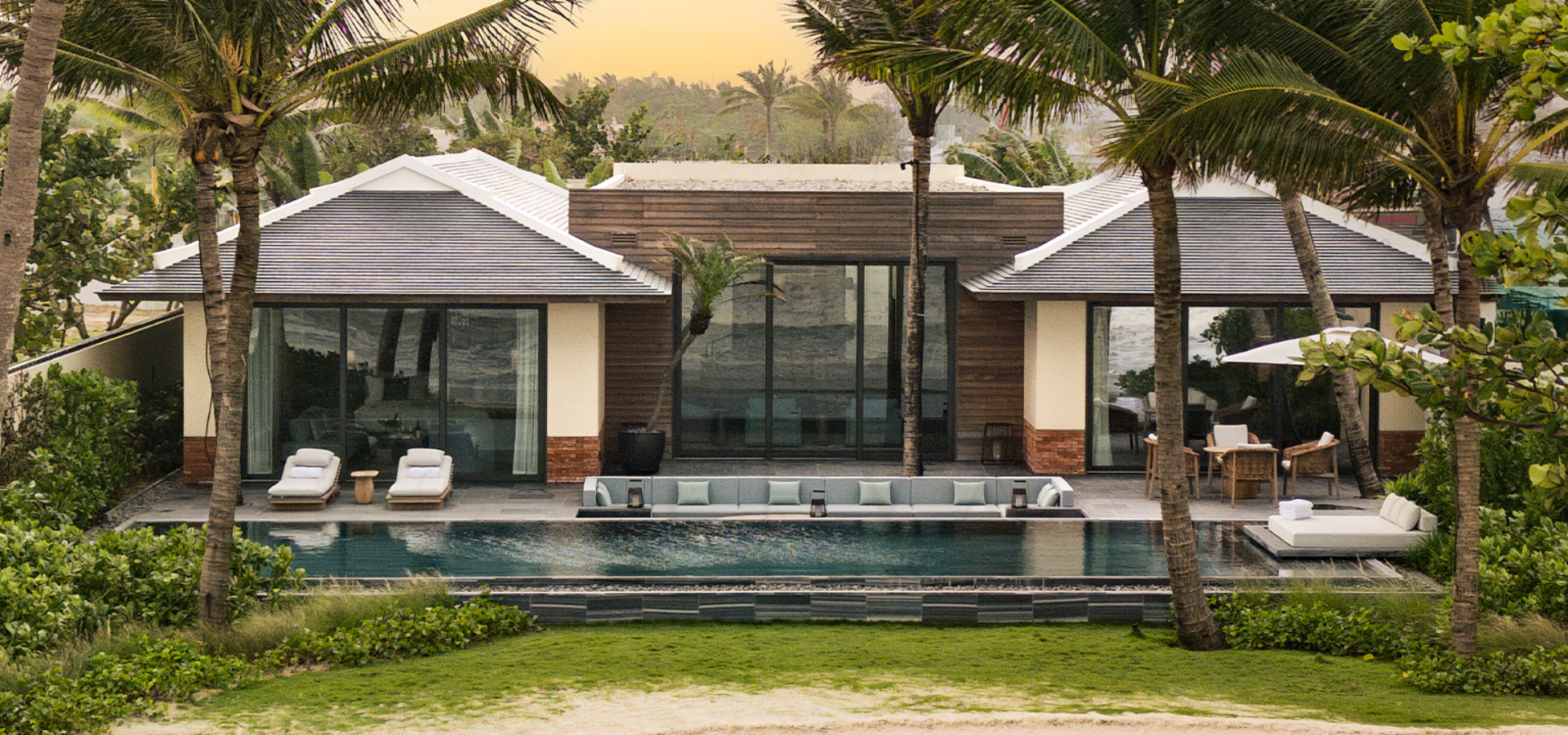
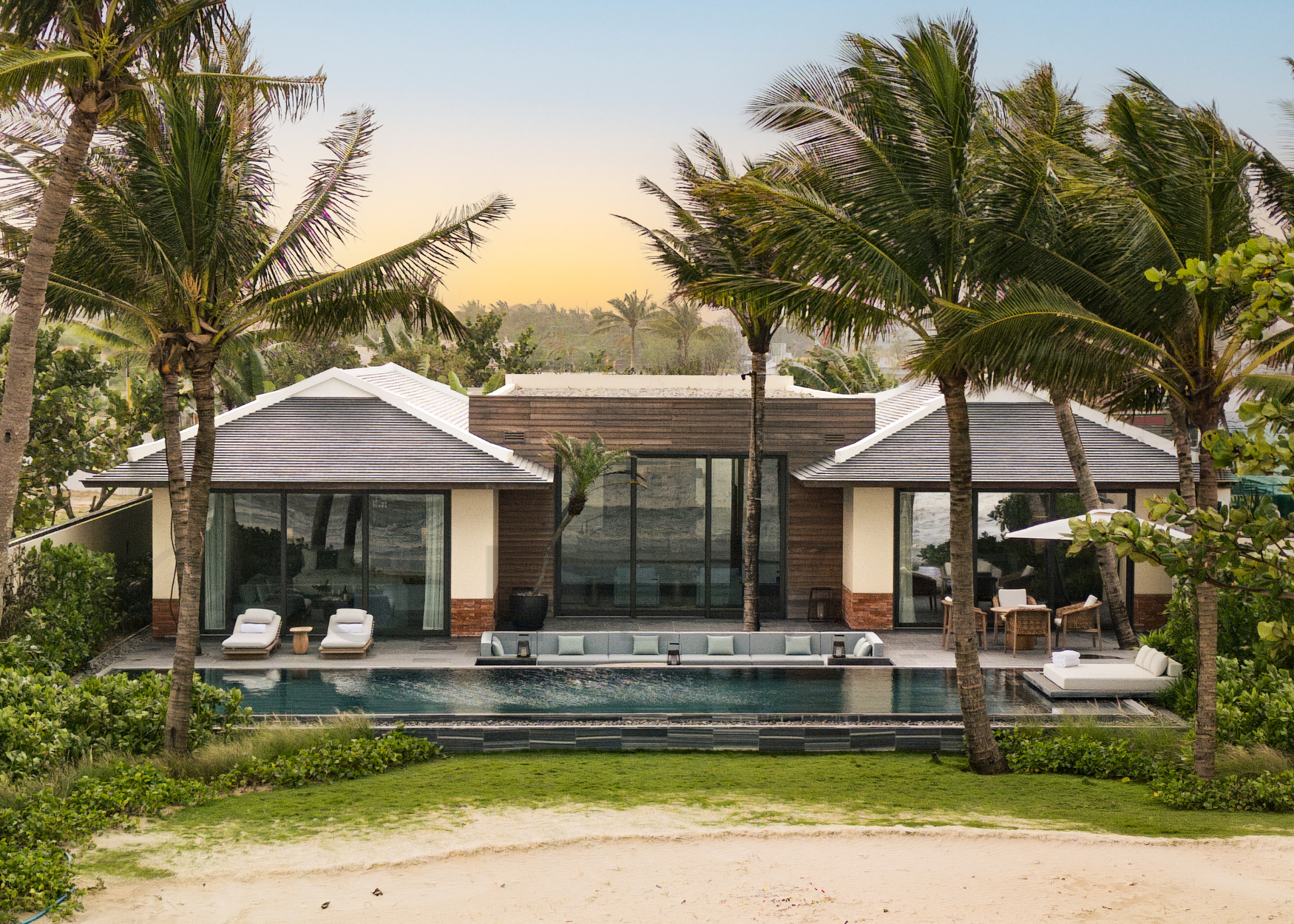
The Residences at Mandarin Oriental in Danang, Vietnam, features an exclusive collection of 3- to 4-bedroom luxury villas, spanning from 9,866 sqft to 12,744 sqft.
For international buyers, this means you can look at where infrastructure is coming online and where development is taking shape around ring roads, transportation hubs, or airports, such as the new terminal in Ho Chi Minh City and the future Long Thanh airport. Hanoi also has multiple ring roads and two metro lines, so it’s no longer a one-horse town.
In that sense, Vietnam is widening and deepening, with foreigners now living in both the north and the south. That gives you additional rental income potential and access to a broader market of buyers or long-stay tenants from different backgrounds who want a well-designed project near infrastructure such as schools and hospitals.
You can now find different types of properties in both Hanoi and Ho Chi Minh City, and they can offer strong rental income. The entire process, from buying and selling to paperwork, has become far more transparent. Buying property in Vietnam is now one of the easiest parts of the experience because it is no longer a challenge to find options. There is a wide range of supply, from existing projects to under-construction developments to future builds. All the offerings you’ve seen in Thailand and Singapore over the last 20 years are now available in Vietnam.
The shifting dynamics of Vietnam’s property market
Most people want to buy off the plan. The developer needs all the paperwork done, so that you’ve got the proper ownership certificate in place to sell. There is a growing market for resale and, obviously, in developed economies, it is the main market alongside the primary market. The primary market is strong, but in Vietnam, it is still the other way around, partly because you get better terms and conditions and banks look at it favourably. There is also a lot less paperwork to be done, either by the developer or the seller.
But in some ways, you’ve got to be a little discerning and ask questions like, “Who are you buying it from?” “Has all the paperwork been completed?” “Do they have all the receipts, all the documentation?” If they have, then it’s easy; otherwise, it becomes a nightmare. You have to run around town to get various documents signed, and then nobody, of course, wants to pay their tax or stamp duty. But as long as you’ve got a ready and willing seller that has their act together, then it will be fine.
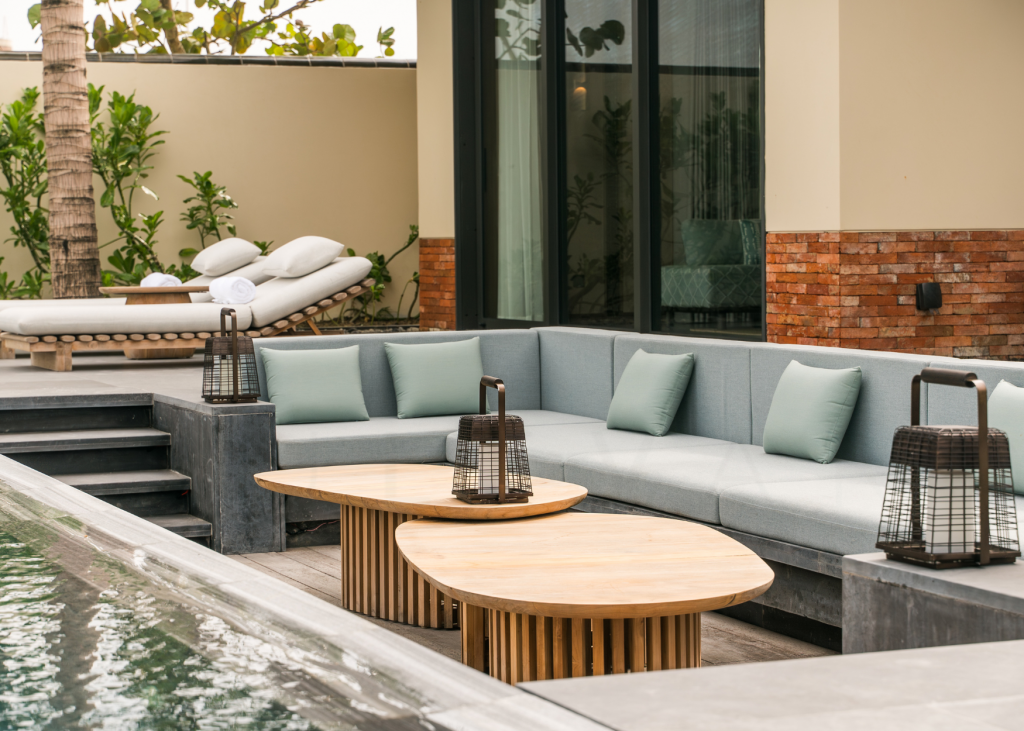
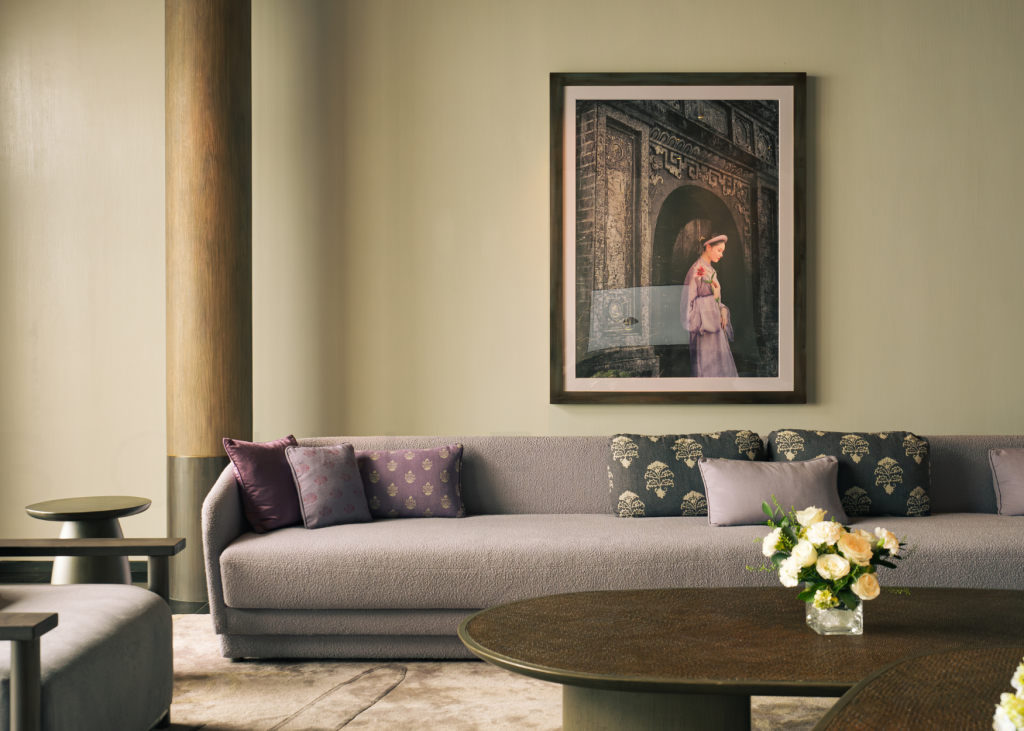
The villa’s architecture and interiors combine signature oriental charm with contemporary luxury and meticulous design, and includes resort-style amenities, such as Mandarin Oriental’s curated spa and wellness programmes.
Foreign investor demand at the prime end of the market spans both lifestyle and investment motivations, and it really depends on the buyer. They changed the rules for foreigners in 2016. There was a rush of Koreans, Taiwanese, and Japanese who wanted to buy and had already been living there as long-term expats. They wanted to take advantage of the change that meant they could own the property they lived in or wanted to live in.
Another group were Singaporean repeat investors. In the past, a budget of around S$200,000 to S$300,000 could comfortably secure a roughly 100-square-metre apartment from established developers such as CapitaLand or Keppel Corporation. Today, however, prices have risen significantly. Buyers typically need to commit a larger budget, or adjust their expectations by opting for smaller units, such as one-bedroom or one-plus-study layouts instead of the two-bedroom apartments that were previously attainable at similar price points.
About eight and a half years ago, the whole story changed again with Mr Trump, and the manufacturing sector became the lead driver of real estate growth. Nobody used to mention “sexy” and industrial parks or manufacturing in the same sentence. Suddenly the whole story became China-plus-one, which had been brewing for about ten years but accelerated dramatically from 2018. That brought another wave of manufacturers setting up, realising it was considerably cheaper to buy in Vietnam than in Seoul, Tokyo, Singapore, or even Bangkok. Through that time, developers went overseas and started selling offshore. Then covid came along, and everything ground to a halt. With borders reopening, attention has increasingly shifted towards branded residences and multifunctional homes in Vietnam.
Branded residences and lifestyle appeal
Branded residences are performing well because their booking systems bring in guests reliably. It is too simple to categorise buyers into just two types, but international visitors from cities such as Seoul or Singapore tend to favour internationally managed properties, which helps maintain strong occupancies, even though performance can be seasonal in some regions.
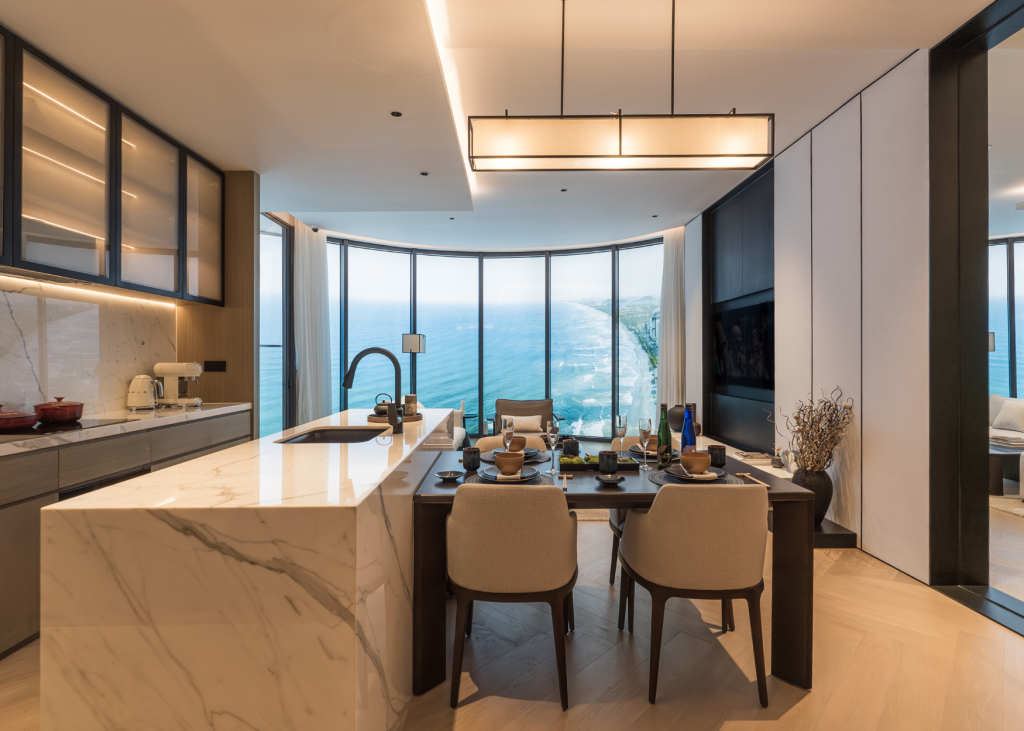
The beachfront condos by Nobu Residences in Danang, Vietnam is the first Nobu branded residences in Southeast Asia, offering a collection of 264 vacation apartments.
For first-time travellers, branded residences or international operators usually capture the business. They charge higher rates but still maintain strong occupancy. Vietnam remains highly attractive for international operators and investors. While some are looking at Japan or Hong Kong, Vietnam consistently ranks among the top three destinations in Asia, particularly within Southeast Asia.
Even for beach properties, there are buyers willing to pay a premium for branded operators such as Mandarin Oriental. Local developers have historically relied on strong domestic demand, which means they have not yet needed to broaden or deepen their offerings significantly.
The rise of multifunctional holiday homes in Vietnam
Vietnam is emerging as a compelling market for holiday homes, particularly in Danang, where buyers are willing to pay millions for premium villas, including developments like the Mandarin Oriental. The appeal isn’t the classic tropical beach—it’s a base for a distinctive coastal escape.
While Vietnam’s coastline lacks the widespread white sand of the Philippines or Thailand, it offers unique experiences along Danang, Hoi An, and Nha Trang—fishermen, boats, rocky beaches, abundant seafood, and vibrant local culture. Sunsets may not be Bali-perfect, but for buyers prioritising an authentic holiday-home experience, Vietnam delivers.
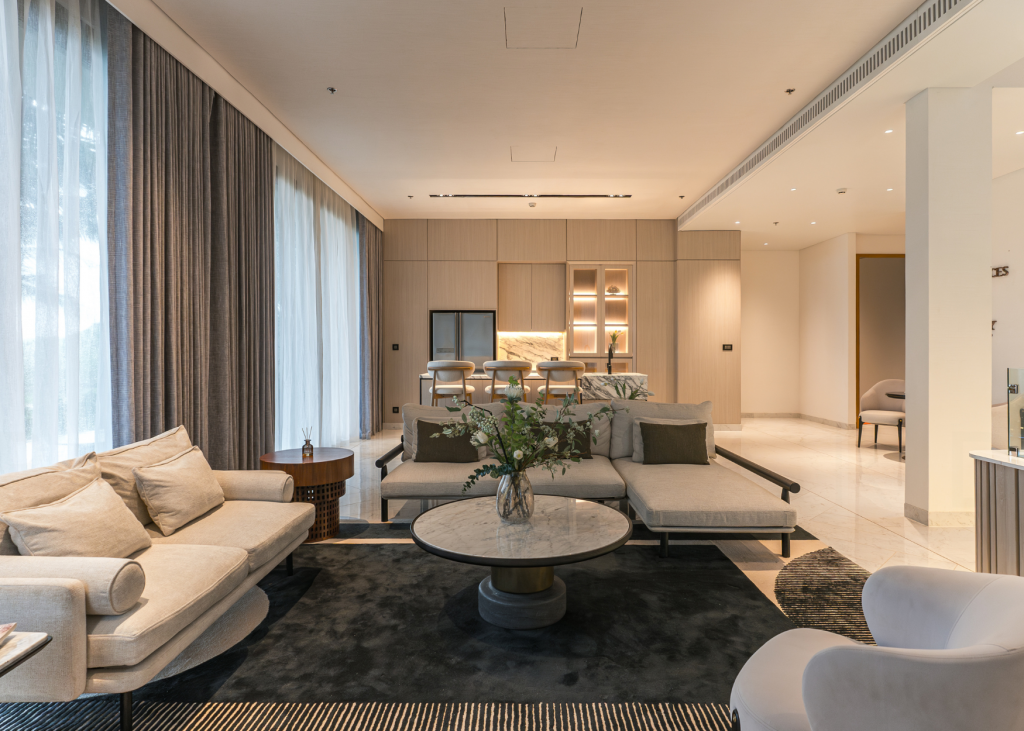
The Residences at Arbora, Danang features 63 luxury villas, with access to world-class amenities by Marriott International.
The market is new and growing. Backpacker business Mad Monkey notes that among younger travellers, Vietnam is a top destination. Demand is high, but quality properties are scarce, presenting both opportunity and challenge for holiday-home buyers seeking something different from Phuket or Bangkok.
These buyers want more than relaxation—they seek fitness centres, better dining, and active, engaging experiences. Operators are responding, and interest spans young travellers as well as Russian, Indian, Chinese, and older Western buyers, all looking to secure a holiday home in Vietnam.
Read next:
5 bed POA
Belmont Road, D10 5 bed 43,800,000 SGD
3-4 bed | 2,702 - 8,923 area POA
4+1 bed 20,000,000 USD
4 bed POA