The interview: Gulf Craft CEO Erwin Bamps on global ambitions and the human side of boating
by Karishma Tulsidas
Photography by Jin Cheng Wong
Having first joined Gulf Craft in 2002, Erwin Bamps helped steer the UAE-based shipbuilder through a formative period when the idea of exporting luxury yachts from the Middle East was still met with scepticism across Europe. More than two decades later, he returns to the company at a markedly different moment—one where Dubai itself has become a globally recognised luxury brand, and Gulf Craft stands among the world’s most established yacht builders.
Today, the Gulf Craft Group manufactures vessels under four core brands—Majesty, Nomad, Oryx and Silvercat—running the gamut from superyachts to day boats, monohulls, catamarans, sports cruisers and more. Marking what’s next for the pioneering Emirati brand: a recent partnership with Asia Yachting, announced at the Singapore Yachting Festival 2026, points to broader strategy to expand its footprint across Southeast Asia.
But, for Bamps, the story is about more than growth and scale. In conversation with Boulevard, the Belgian-born executive reflects on adaptability, uncertainty and the changing meaning of luxury across cultures and generations. Drawing from early experiences working in Japan and pioneering shipbuilding operations in the Maldives, he speaks candidly about leadership in today’s increasingly volatile global climate.
At the heart of the discussion is a deeply personal belief in the transformative power of life on the water. From Europe to Southeast Asia, Bamps has spent decades observing how boating is interpreted differently around the world: as freedom, family time, escape or self-expression. As Gulf Craft enters its next phase of global expansion, he shares why the company’s mission remains unchanged—not simply to build yachts, but to bring more people closer to the sea.
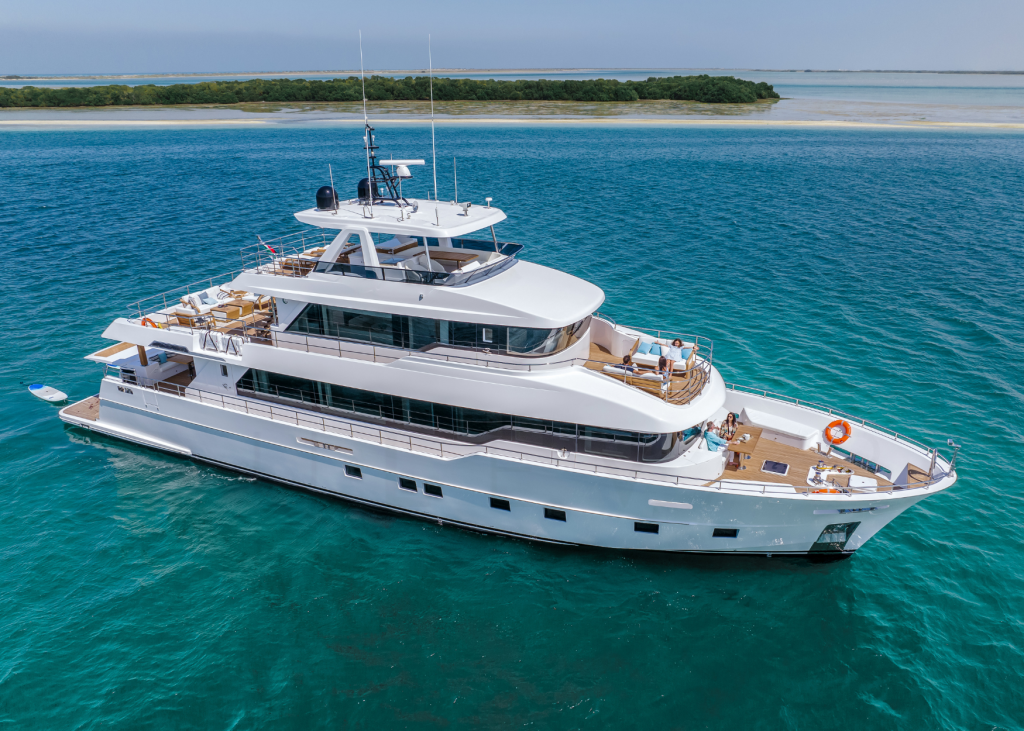
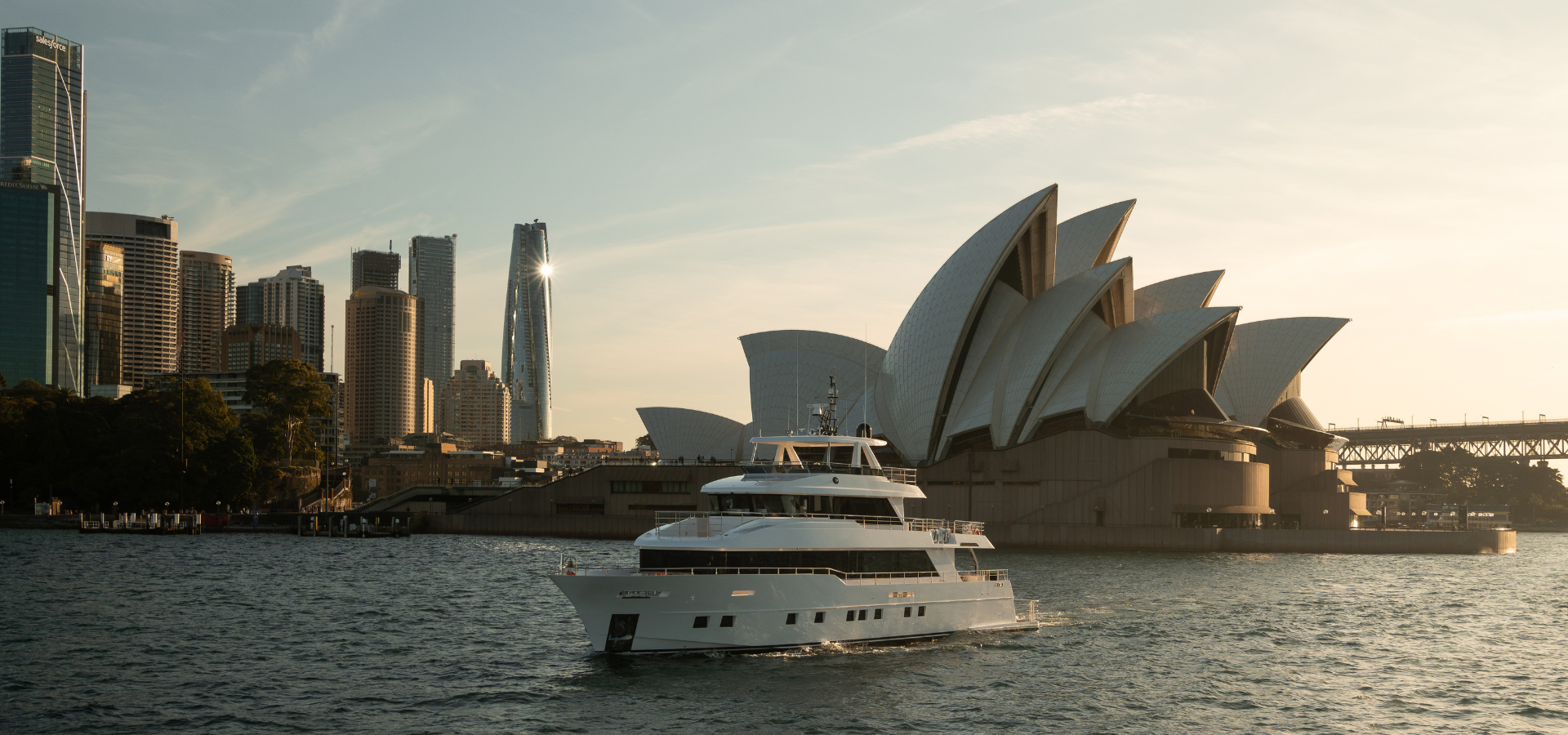
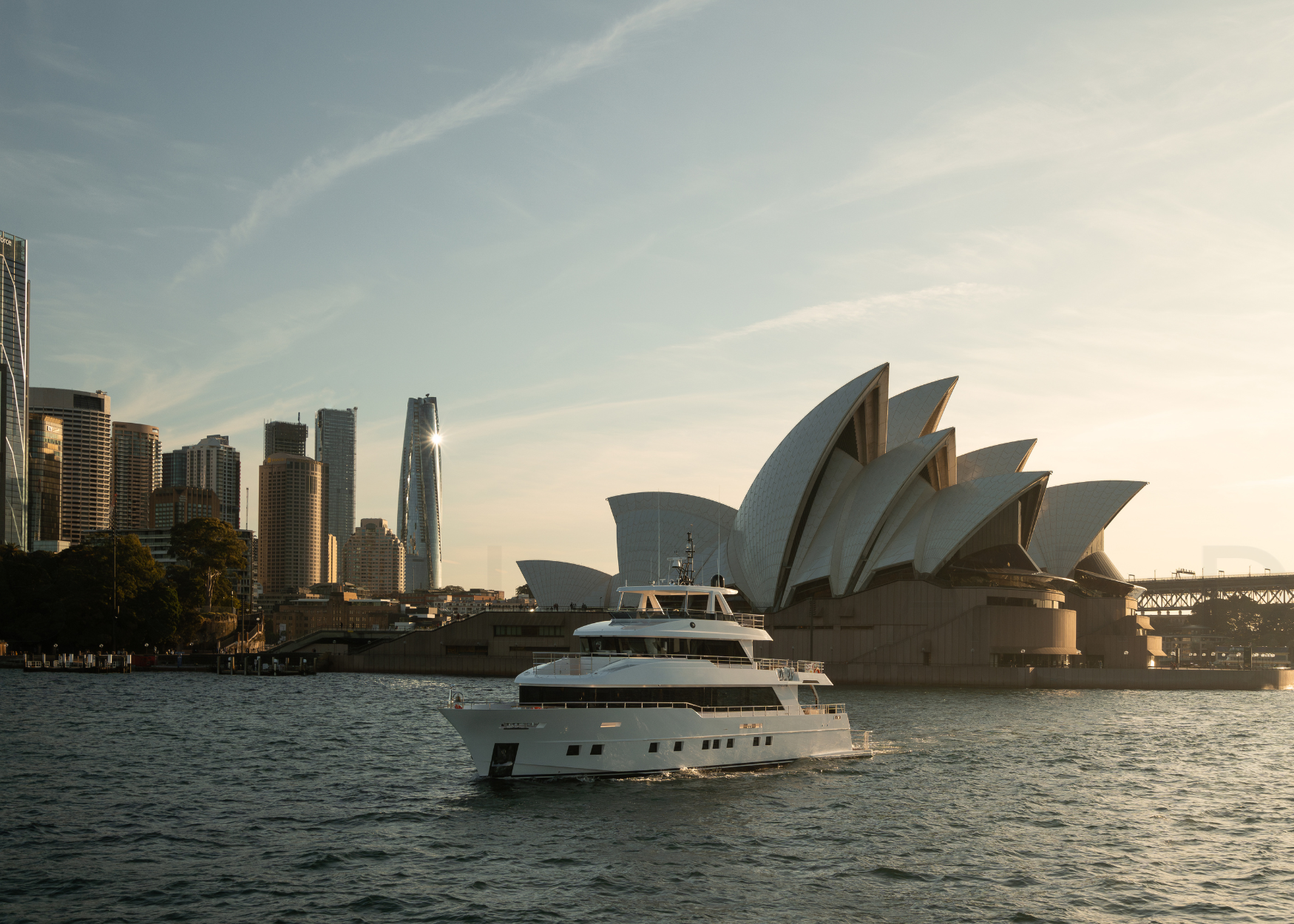
The Nomad 101 features three deck levels with outdoor platforms for relaxing under the sun and amid peace and quiet. Top: Established in 1982, Gulf Craft has grown into a world-leading builder of superyachts, catamarans and more.
Boulevard: What philosophy drives you in such a market when you know that uncertainty is the only certainty? How do you think about the long term, and how does that guide your business decisions?
Erwin Bamps: On the day I graduated from university, I had a one-way ticket to Japan in my pocket to work for Omron. When I landed, I quickly realised that, if you wanted to live there, you had better speak Japanese, because very few people spoke English. My first assignment wasn’t in Tokyo but in Okayama, a countryside town, so it was Japanese only and I had to learn fast.
That necessity to adapt gave me a philosophy in life: if you are able to adapt and evolve quickly, you get to enjoy opportunities that others miss because they leave too early.
When I joined Gulf Craft in 2002, one of the first projects I became involved in was establishing the only foreign-owned shipyard in the Maldives. At the time, the Maldives was seen as a picture-perfect holiday paradise, not a manufacturing destination. You couldn’t imagine building there or even bringing workers in. How do you set up a factory, a manufacturing plant, on a white sand beach lined with palm trees? And yet today, we have built and delivered more than 2,000 boats there in the Maldives. We probably have the best view of any shipyard in the world. Pioneering comes with risk, but it also creates opportunities in places others are unwilling to go.
“Luxury, today, is the ability to switch off your phone, to not be connected.”
Today’s connected world has given us more uncertainty than ever before. It’s loud, noisy and full of strong opinions. But it’s also full of opportunity. The key is having confidence, or at least surrounding yourself with people who believe in one common vision and are willing to make the jump together.
Luckily, we have that culture at Gulf Craft. We are driven by a visionary chairman and founder [Mohammed Hussein Alshaali]. There are not many shipyards in the world with 44 years of building in the Middle East. Simply by remaining in the market, we have built tremendous credibility. And over time, we have been able to create a long-term vision that serves our clients, drives product evolution, and ultimately supports what we are inviting people to enjoy: boating and life on the water.
Blvd: And how would you describe this long-term vision that ties into all the brands under Gulf Craft?
Bamps: Today, we’re still driven by the same chairman to whom I’m very proud to report for so many years. The vision has remained the same from the outset. He went into boating because he loved the engineering and creativity that comes with it—and the idea of creating design in the Middle East that could be exported to the world.
One of the first things he said to me when he asked me to join him in 2002 was that people don’t see the Middle East as a place where luxury is created. They see it as a place where luxury is consumed. And so he wanted to provide a counterpoint. He was deeply proud of the workmanship, engineering, design and creativity being produced in the UAE. You can see that reflected in Dubai today, which has become a brand, not just a place to live or work.
And then there was his passion for the sea, because you have to have that if you are in this business. He used to say that so many people, even today, have never experienced what it is to be on the water. People are still afraid because they saw Jaws 30 years ago or they are worried about seasickness. But for him, it was always a mission to bring people to the water, to let them see that 70 per cent of the planet is covered by it and that it is full of experiences to discover. So bringing people to the waterfront, and helping them understand what it adds to their quality of life, is still our mission.
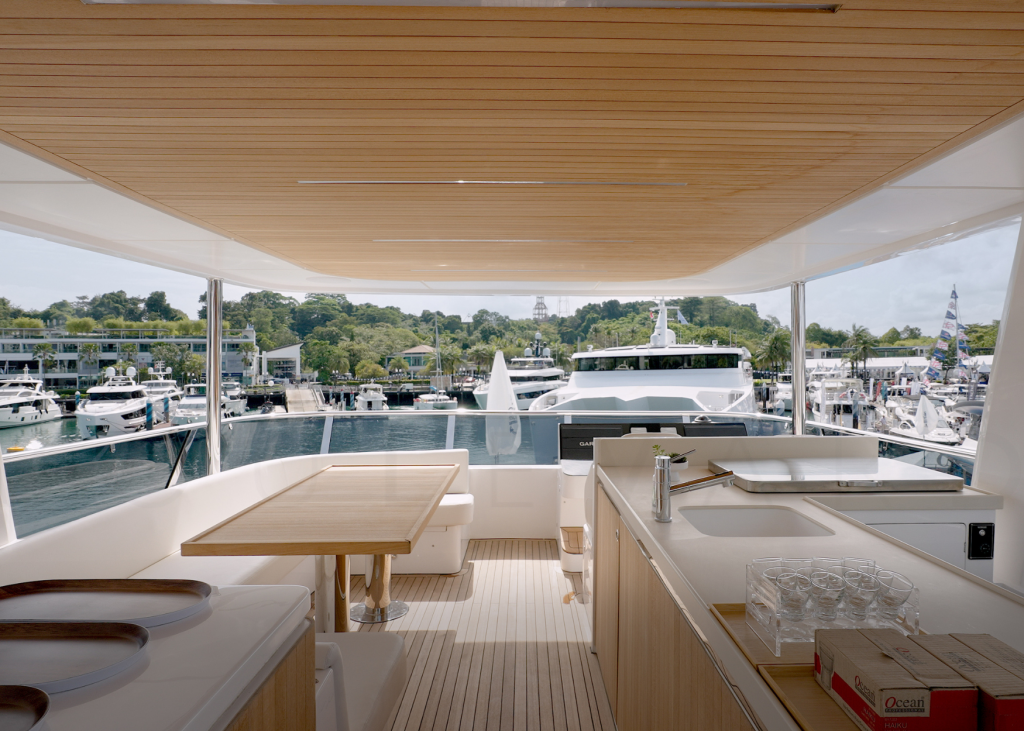
On board the Nomad 101 at the Singapore Yachting Festival 2026.
Quality of life, for me, means I can switch off my mobile and have family time. I remember taking my kids on the boat when they were smaller, and the first thing we said was, “put your iPads down, they’re not coming with us.” Those few hours on the boat were better than an entire week of being with them but not really with them—when they were at school, distracted or busy.
Now my son is in the business, designing boats. He has a technical streak from my side and the creativity of his mother, and a real passion for the water. My daughter also loves everything connected to the waterfront. By now, they have learned to appreciate not just the fish and the water, but also how being at sea can be meditative.
It’s that off time we need. There’s the horizon, the openness, the silence. Whether you’re out there in the mangroves of Vietnam or Thailand, or even at sea in France, you just sit there. You don’t need to speak much. You can let everything go. We have started to live in an ever-faster rolling world in which you are forced to make decisions, have opinions, react instantly, and almost everything around you screams for attention. On the water, there is no such noise.
Blvd: Is that something that you’re seeing with your clients as well? That, for them, boating is increasingly becoming less of a status symbol and more about the experience?
Bamps: I believe one of the biggest things that people are starting to discover is that it’s okay to take time off. That it’s necessary to take time off either with friends, with family or even alone, in order to come back and be even more productive.
Luxury, today, is the ability to switch off your phone, to not be connected. When I was talking to a multimillionaire here at the yacht show a couple of years ago, he said, “So, what do you do with this?” I said, “You don’t have to do anything, that’s the beauty of it. You can come on board and have no plan.”
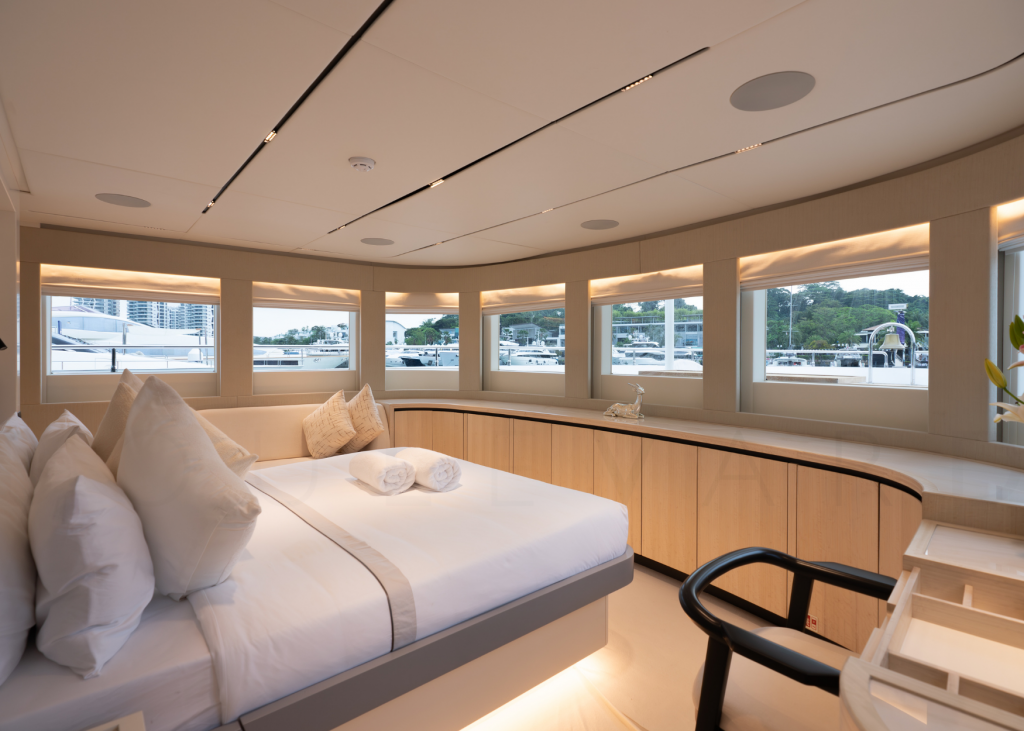
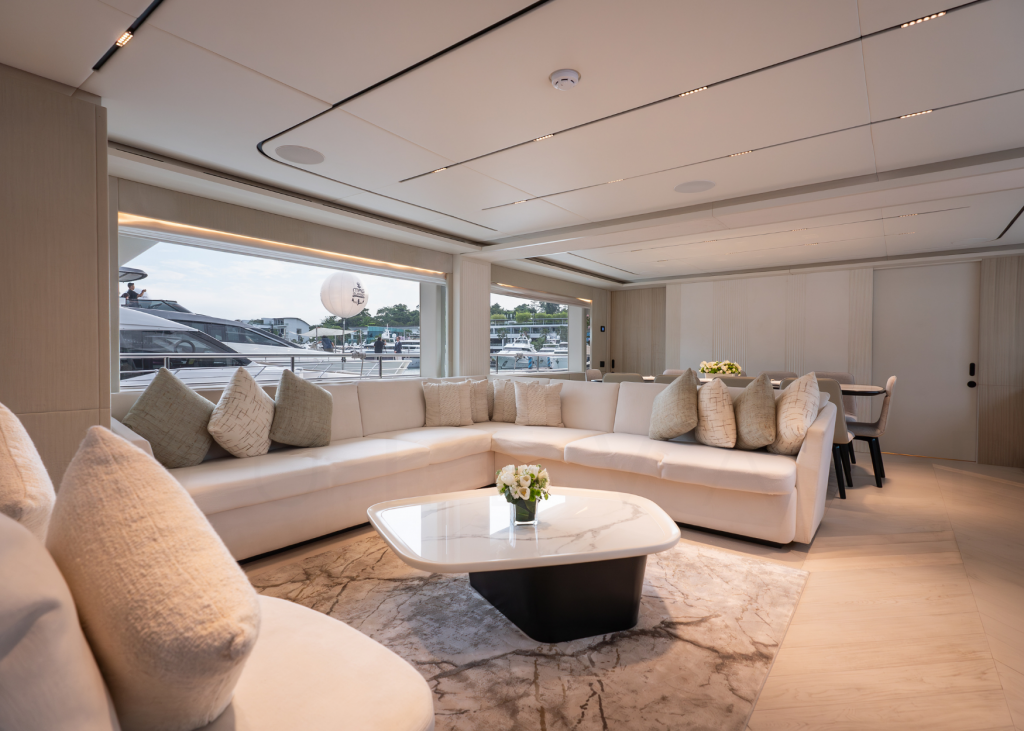
The Nomad 101 provides accommodation for ten guests in five cabins, as well as generous internal living space for gathering and entertaining.
The other thing that we are discovering very strongly in Asia is the same that we’ve seen in the Middle East for a long time, which is that people have seen the boat as an extension not only of private life, but also of corporate life. People have started discovering the boat as an alternative way to not only invite friends and family, but corporate connections and clients. It can also be an incentive for office staff, or the place to hold a board meeting. You can have somebody cook a meal onboard, and set off on a cruise with the Dubai skyline as a backdrop.
It truly brings people together. People see it as an extension of their private residence or the office. And so, what we sell is far more than a ship; we sell real estate.
We know that what people are looking for as luxury today, and even more so five years from now, is privacy and comfort—the ability to breathe, some elbow space, openness. You could be inside the yacht but you don’t feel like you’re inside because of the wide windows; you see all around you. Then it comes down to the details: the sound of the air conditioning, how soft a door is closed, how the view is maximised, and the flow by which the guests and crew operate onboard is separate.
Blvd: What differentiates Gulf Craft in this space?
Bamps: The company aims to promote the lifestyle, first and foremost. It’s why we’ve been building 30-foot boats for over 40 years. But we have also expanded our product range upward to build superyachts, because we have seen the clientele growing and they’ve asked us to build bigger. They’re spending more time on the water, they’re staying overnight more, and they want more space for their families to come along.
We’ve seen that a lot of people, globally, respond to what we do because we also bring a different take to boating. We wanted to bring this high level of service and hospitality that is unique to the Middle East, the kind you expect at a five-star hotel in Dubai. So, when clients come to see us, they expect to see the chairman or myself. If someone comes in for a 37-footer, I will try to see if, in between meetings, I can go and shake his hand. We talk, and then when we meet up at another show, he brings a friend.
It’s a personalised experience. That’s luxury; it’s all about the personal touch. It’s like going to a hotel where the staff recognise you, where they serve you a drink and say, “I know you like this one”. We build those relationships.
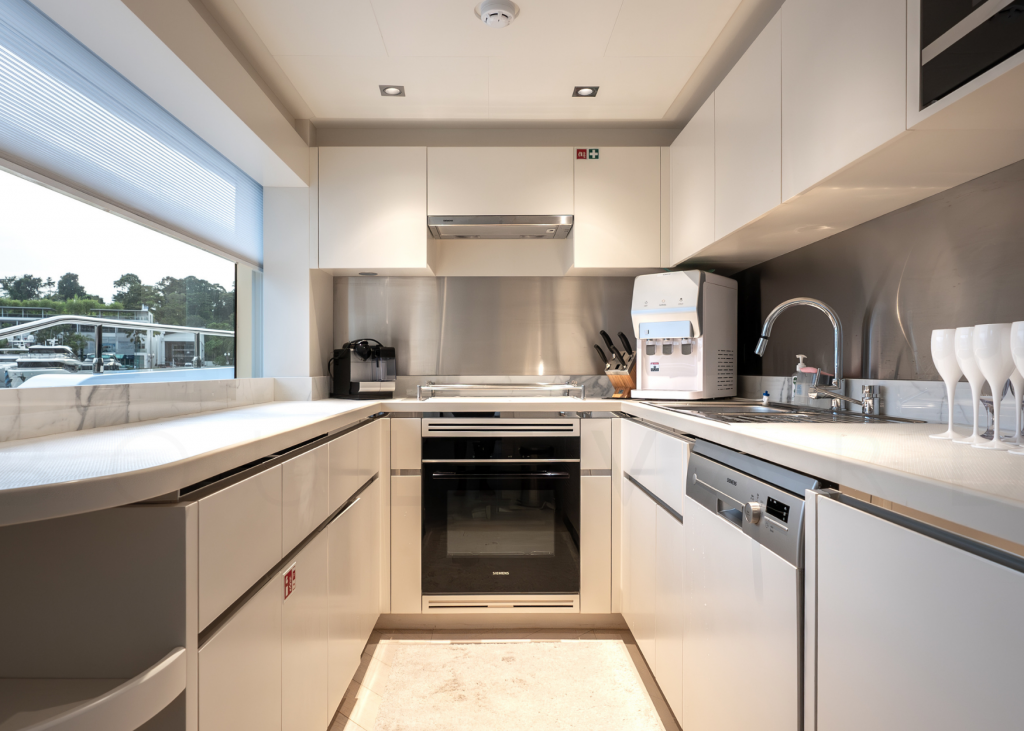
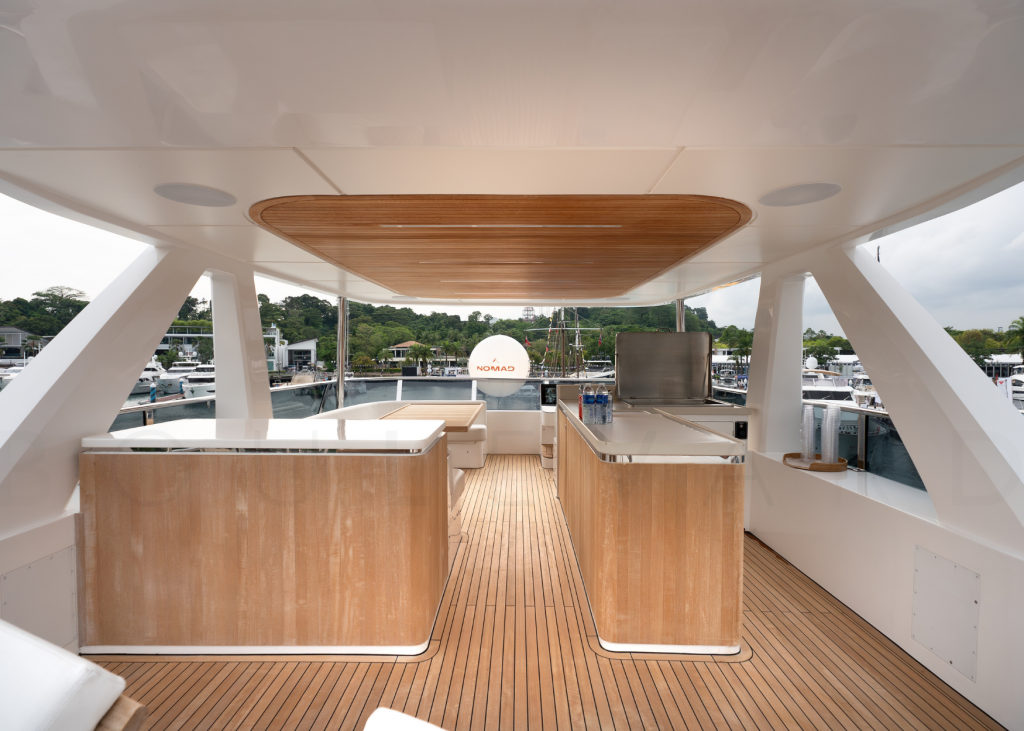
The Nomad 101’s kitchen (left) and flybridge (right) are designed to support longer, more relaxed living at sea.
Of course, we have also built our own heritage by being in the market with the same ownership since inception and by steadily delivering products.
So when we were discussing my return to the same seat last year, it was clear this would be a different challenge. It’s no longer about pioneering, nor developing. The exercise now is about scaling it to another level and accelerating that growth. We just appointed a dealer [Asia Yachting] in Hong Kong. Derani Yachts has been appointed in Thailand for about a month now. We appointed Viet Yacht two months ago in Vietnam, and there’s more to come. We are talking to people in Taiwan and elsewhere because I know these are the partnerships that will help us solidify these objectives for the near future.
For me, this is a second opportunity to contribute to Gulf Craft’s growth, but with a very different mindset. And it’s beautiful to be able to build on something that you planted.
Blvd: Lastly, what are you still learning about the world of luxury and the world of yachting today?
Bamps: Luxury, today, is all about the quality of life and the experiences you fill it with. It’s not materialistic.
I see people looking at boating through so many different lenses. I’m reminded of one time when I was talking to people in Vietnam about boating, and one man raised his hand and said, “Why would you go out on the water? That’s for fishermen, because they have to catch fish, or for transporting goods and people to the other side.” They didn’t see the sea as something that brings fun, but rather fear or work.
In the Middle East, a Saudi gentleman once said to me, “You know, in Saudi we have so many social restrictions, and we impose many of them on ourselves.” Because of belief systems and social expectations, you have to follow a certain pattern or fit a mould. “But on a boat,” he told me, “freedom starts at the shoreline.” You can breathe. On a boat, people are in shorts, barefoot, and everybody is the same rank. It’s the most democratising way to sit together.
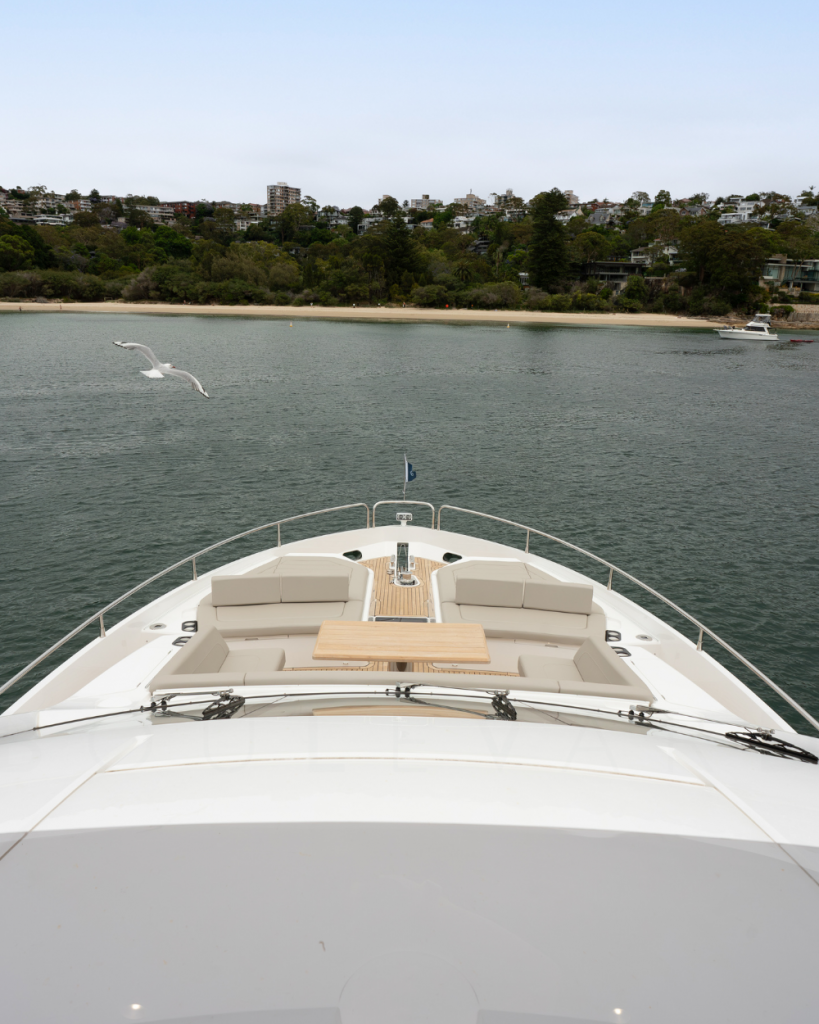
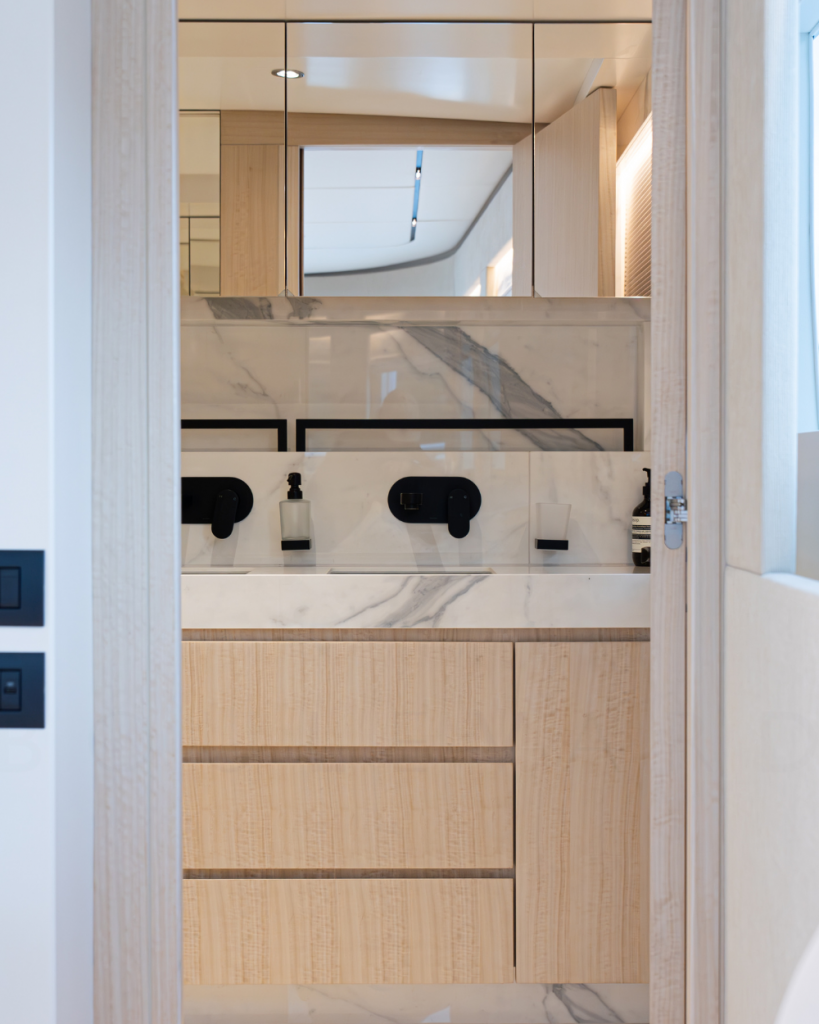
Gulf Craft’s attention to detail shapes every part of the onboard experience, from ample outdoor spaces to interior finishes.
So it’s always surprising to see how people perceive boating. In Dubai, it’s an extension of both corporate culture and domestic life. In France, it’s a holiday. And then you look at the United States, where boating is almost seen the same way as having a bicycle or a car; a young man can drive a boat before he’s even old enough to get a driver’s license for a car.
Not everybody approaches marinas with the same expectations or objectives. And it’s always interesting to me to see how the next generation, and the new markets we are entering—whether it’s Malaysia, which is still relatively new to yachting and boating, or Indonesia, which is still emerging in that space—will define boating for themselves.
So we are constantly trying to adapt to what people will expect from boating tomorrow, and how it can help them enjoy the quality of life they are seeking.
Read next:
8+1 bed | 10,200 sqft area 19,500,000 SGD
5 bed 19,380,000 SGD
4 bed | 4,208 sqft area POA
3-8 bed | 699,654 - 784,080 sqft area POA
6 bed POA