The interview: Baxter CEO Paolo Bestetti on his philosophy of eschewing safe spaces in favour of emotion, sensuality, and pleasure
by Hamish McDougall
Photography by Jin Cheng Wong
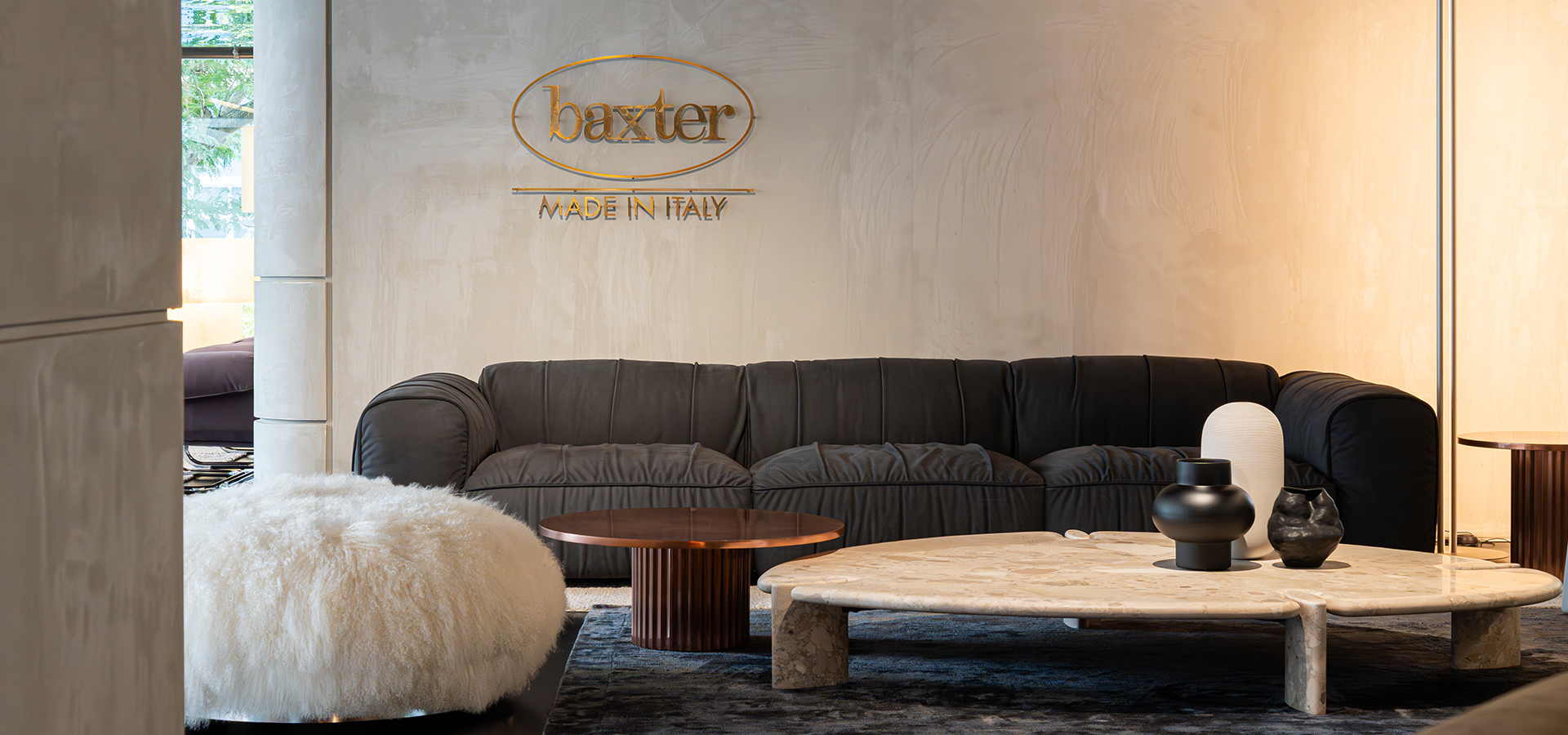
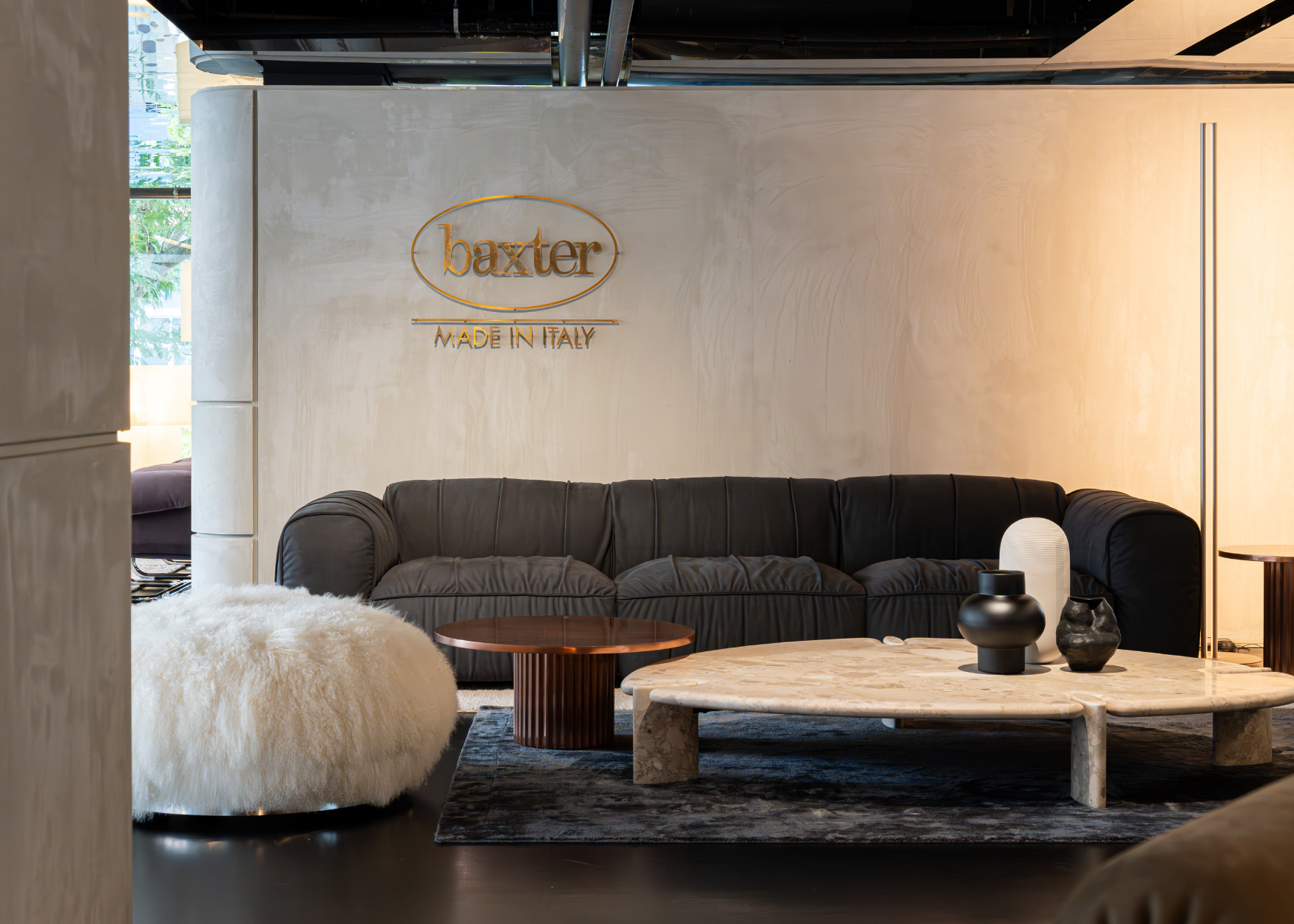
Enveloping, textural, sumptuously plush but nevertheless poised and structural, Baxter’s “Chicago” sofa exudes the contemporary, sensuous chic for which the Italian maison is adored. It also presents a truly shocking contrast to the brand’s earliest forays into furniture.
“The early collections were very classic—thick leather, brown tones, and a refined, almost English aesthetic,” says co-founder and CEO Paolo Bestetti, who set up the brand in 1990 in Brianza, Italy. “That is why we chose the name ‘Baxter’. But after ten years, I realised I was no longer in love with the collection. It was performing very well in terms of revenue, but it was not what I had in mind, and it was not in my DNA. I decided to transform Baxter from a classic brand into a more contemporary design company.”
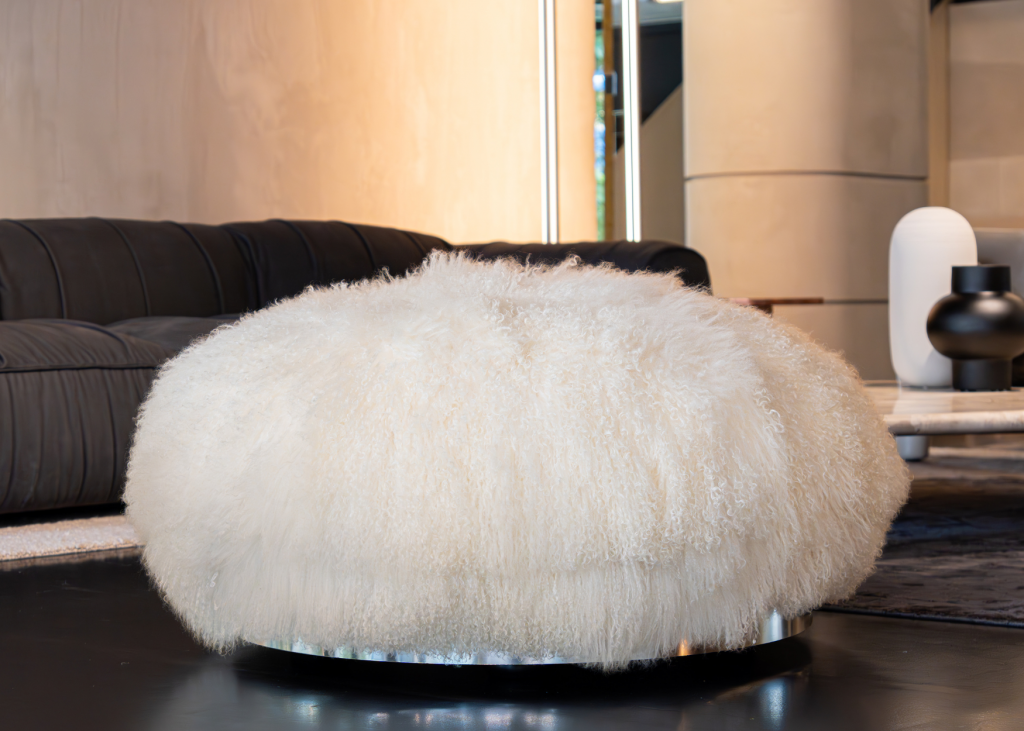
“Aura G” pouf in White Mongolia by Hannes Peer. Top: “Chicago” sofa in Baxter leather by Paola Navone.
Reposing on the “Chicago” in the midst of Baxter icons—the beloved, shaggy “Nepal” pouf; a sprawling, sculptural “Isamu” stone coffee table; the “Nuvola” pendants slash art pieces basking the showroom in a warm, animal glow—it’s hard to understand how radical, how risky the decision was to completely upend the business.
“In the beginning, we sold nothing for the first two years. Absolutely nothing,” says Bestetti. “We had to completely rethink how we presented the brand to new clients, and to reposition the company in an entirely different world. But in the third year, everything began to take off.”
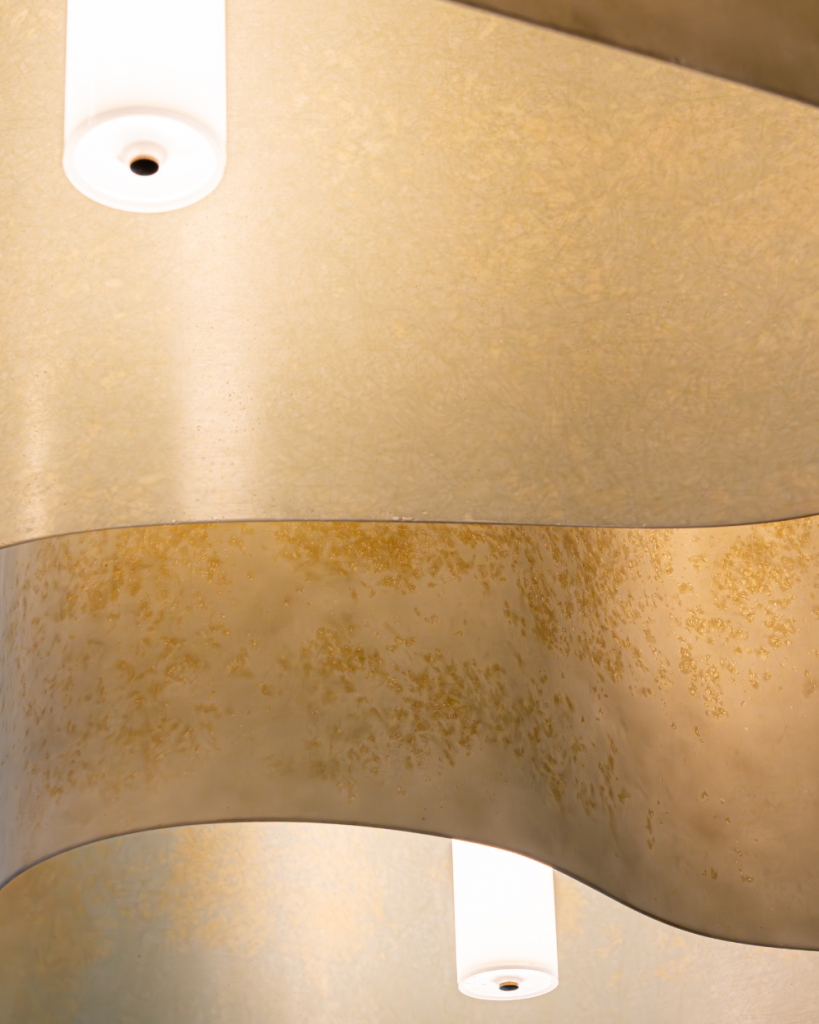
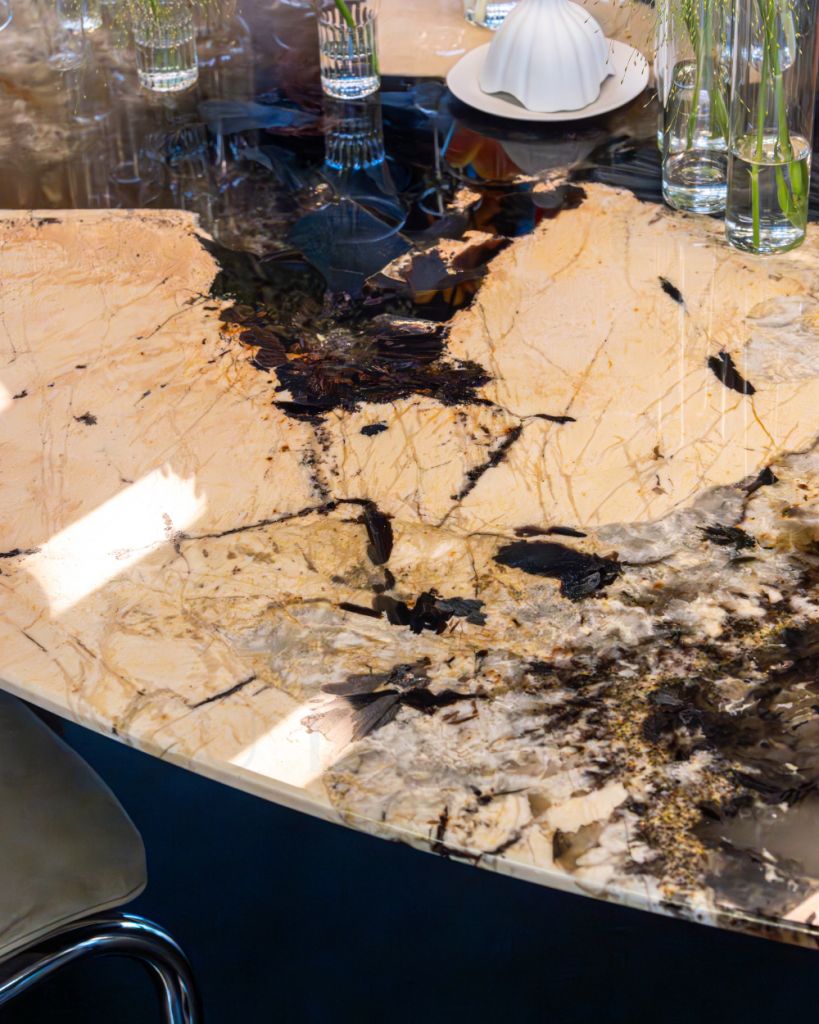
Left: “Nuvola” pendant lamp, by Draga & Aurel. Right: “Lagos” table in Patagonia granite, by Baxter.
While the aesthetic—and the corresponding clientele—were completely overhauled, the founding principle of the business remained: “At the beginning, it was really a research project focused on ancient methods of dyeing leather,” says Bestetti. “We wanted to build a brand around a special leather collection, starting from the material itself.”
That research, and the artisanry that ultimately developed out of it, remains at the core of Baxter’s DNA: the dyeing techniques, the finishes, the savoir-faire.
But what had previously found expression in stuffy Chesterfields and stiff Bergères, now inspired a new approach to design and lifestyle. But the young design firm couldn’t completely re-invent itself alone.
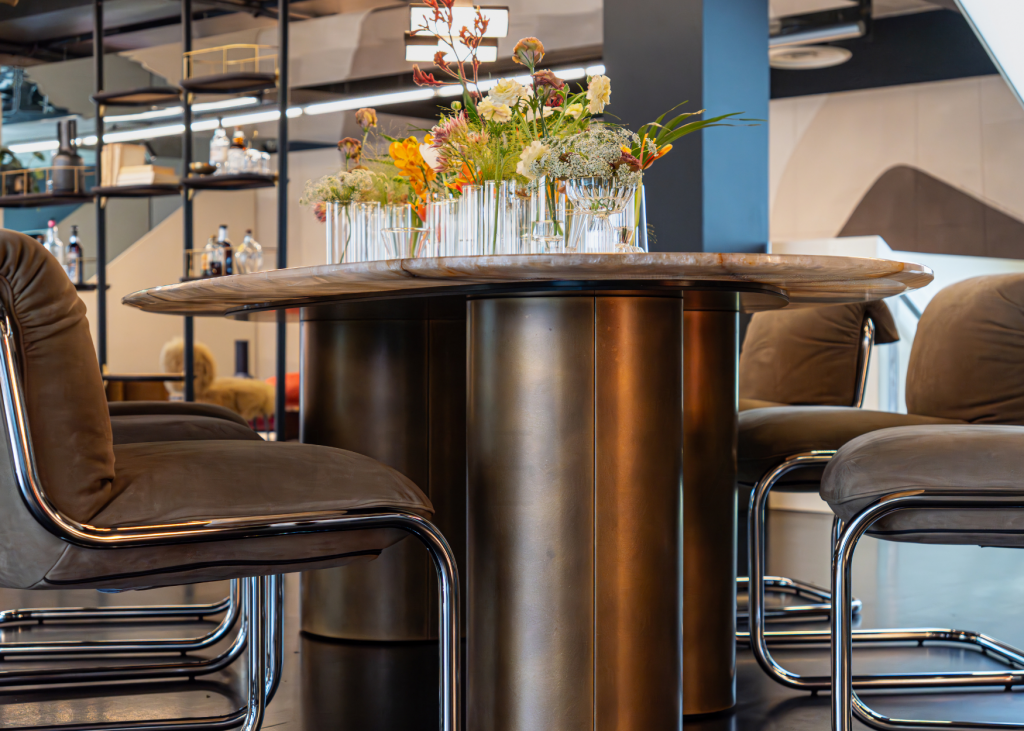
“Lagos” table in Patagonia granite, by Baxter; “So Far” chairs in leather-covered cushions and tubular metal structure, by Studiopepe.
“Before Baxter’s contemporary shift in the late 1990s, I contacted [architect/designer] Paola Navone,” says Bestetti. “I was—and still am—in love with her work, because the way she designs is very close to my own thinking. She starts from the material, and the design follows from there.
“I still remember what Paola said to me when we first met: she told me she did not like our products and would not buy them, but she recognised the quality of what we were doing. She believed in the craftsmanship, the people and the process behind the company. She felt that the savoir-faire was there, and that it simply needed a new direction. Together, we spent three years developing what became the first Baxter contemporary collection. Paola gave Baxter a completely new sensibility.”
Navone’s new direction, and Baxter’s ensuing renown, sprang from this exploration of the possibilities of leather, with design evolving out of materiality, artisanry, and even imperfection.
At the time, leatherworking was largely a matter of industrial uniformity and polish, burnishing out imperfections and achieving rich, structured, even shapely, but not entirely comfortable and rarely easeful seating. This would all change at Baxter.
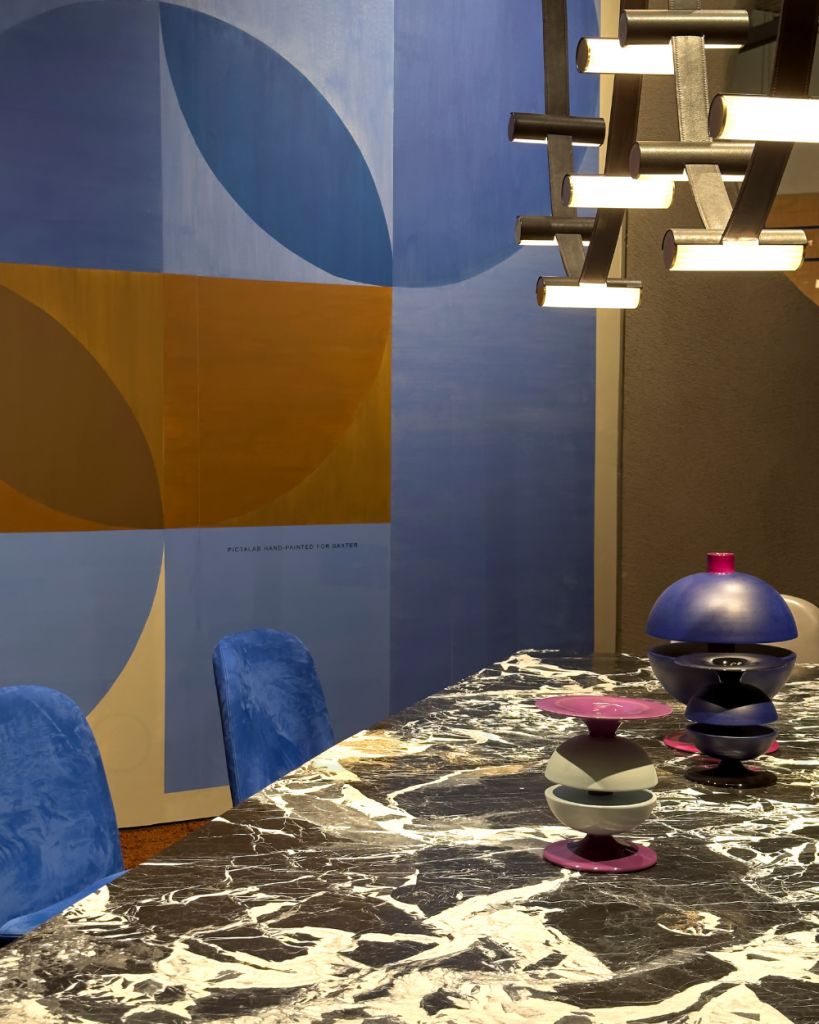
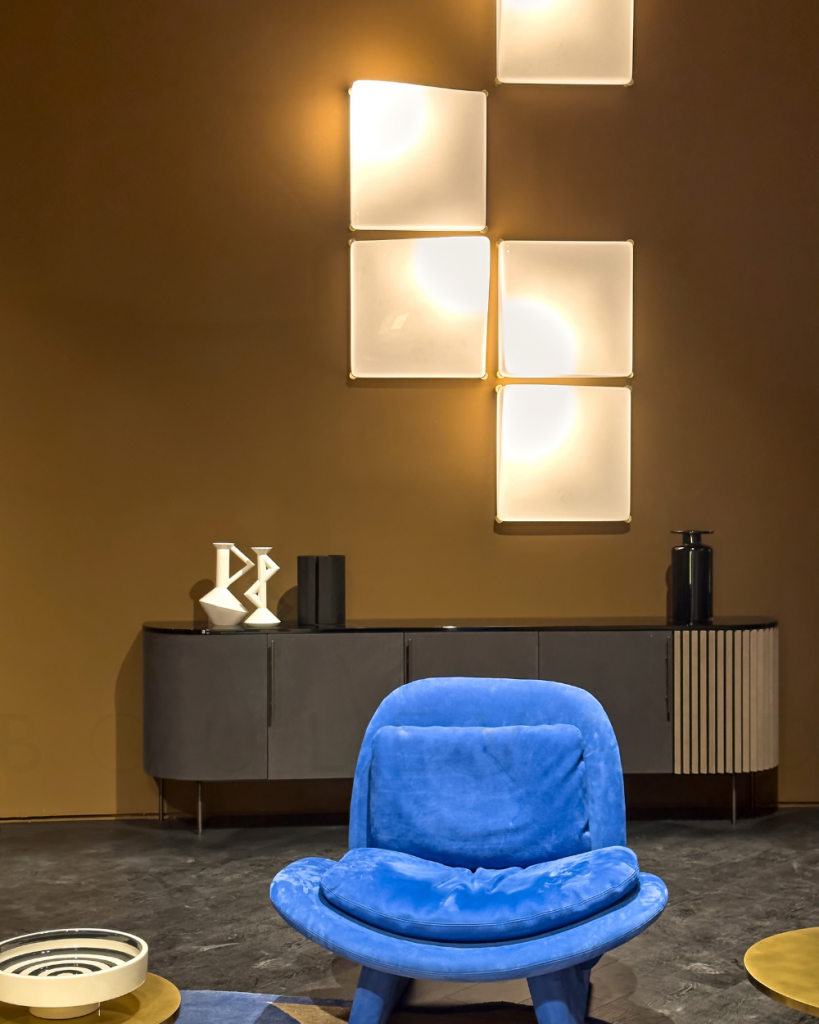
“Kate” dining table (left) and “Elli” armchair (right), both by Christophe Delcourt.
“We introduced a new type of leather, much softer, and started thinking about products not only in terms of aesthetics, but in terms of sensuality, pleasure and comfort,” says Bestetti.
It was a revolutionary approach that spawned a series of iconic sofas, from the oversized geometries of “Budapest” to the cheeky reinvention of the Chesterfield in “Chester Moon”. But it extended equally to stone, fabric, ceramics, even fibreglass.
“We like raw materials and their imperfections, because they make each object unique. This applies to leather as much as to metal or marble,” says Bestetti. “I do not like materials that are overly protected or made too uniform. I like to see the grain of the leather and even its small defects, because they show that it is natural.”
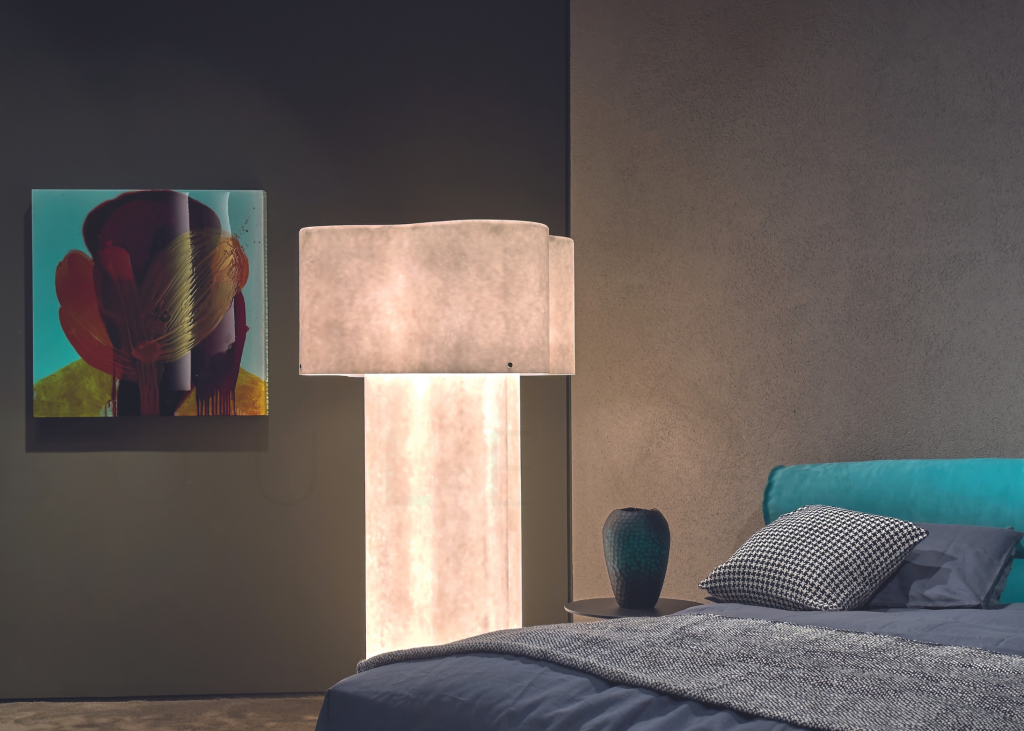
“Nuvola” floor lamp, by Draga & Aurel; “Miami Soft” bed in leather, by Paola Navone.
For a brand with a history of high-risk decisions, pushing design beyond the established, economic norm isn’t just about entrepreneurialism, it’s an aesthetic.
“I have always believed in staying just outside the comfort zone. When you design something, it is easy to say, ‘This is the market; this is the safe space.’ I want to step slightly beyond it and invite people to experience something different,” says Bestetti. “When you move outside your comfort zone, you discover a different kind of pleasure, something unexpected. The goal is to create emotion for the client. If something feels too easy or obvious, we don’t do it. We prefer to stay one step away from what is comfortable—and to see what happens.”
Read next:
5 bed POA

Belmont Road, D10 5 bed 43,800,000 SGD
3-4 bed | 2,702 - 8,923 area POA
4+1 bed 20,000,000 USD
4 bed POA