
The interview: Blancpain Female Fifty Fathoms Award winner Jialing Cai on her marine-life fascinations and the significance of being a woman in blackwater photography
by Annie Asistio
Photography by Jin Cheng Wong
Growing up, Chinese marine biologist and blackwater photographer Jialing Cai never really had that natural curiosity with the deep ocean. After all, she was raised in Chongqing, China, a city better known for its skyscrapers and futuristic developments than its proximity to the sea. But who would’ve thought that a city girl like Cai would fall in love with the open ocean, just from learning about the Diel Vertical Migration (DVM) during an introductory lecture in marine biology?
The DVM is the daily, synchronised movements of aquatic organisms, such as zooplankton and small fishes, between the ocean’s surface and its deeper water columns to feed at night. Come daylight, these organisms descend once again into the depths to avoid predators. This behaviour captivated Cai and eventually led her to blackwater photography, where she captures the delicate beauty of these creatures against a dark, inky backdrop.
While these creatures may seem alien to many, Cai explains that they are everywhere in the open ocean and quite literally, right at our fingertips—people simply never think to look for them. That is why the Oceanographic magazine and Blancpain’s introduction of the Female Fifty Fathoms Award in 2021 was so significant. This award created a meaningful platform for women in ocean exploration and underwater photography, enabling talents like Cai to bring these hidden ecosystems out in the public. The award not only recognises artistic and scientific excellence, but it also amplifies the stories behind these delicate marine environments, giving researchers the visibility and support needed to continue their work.
In 2023, Cai was named Ocean Photographer of the Year, and now, in 2025, she has been recognised with the Female Fifty Fathoms Award for her remarkable blackwater portfolio.
In an exclusive interview with Boulevard during the premiere of Blancpain’s Ocean Photography of the Year exhibition in the Australian National Maritime Museum, Cai shared how her journey began, what it means to be honoured with the Blancpain Female Fifty Fathoms Award, and what lies ahead for her as a marine biologist.

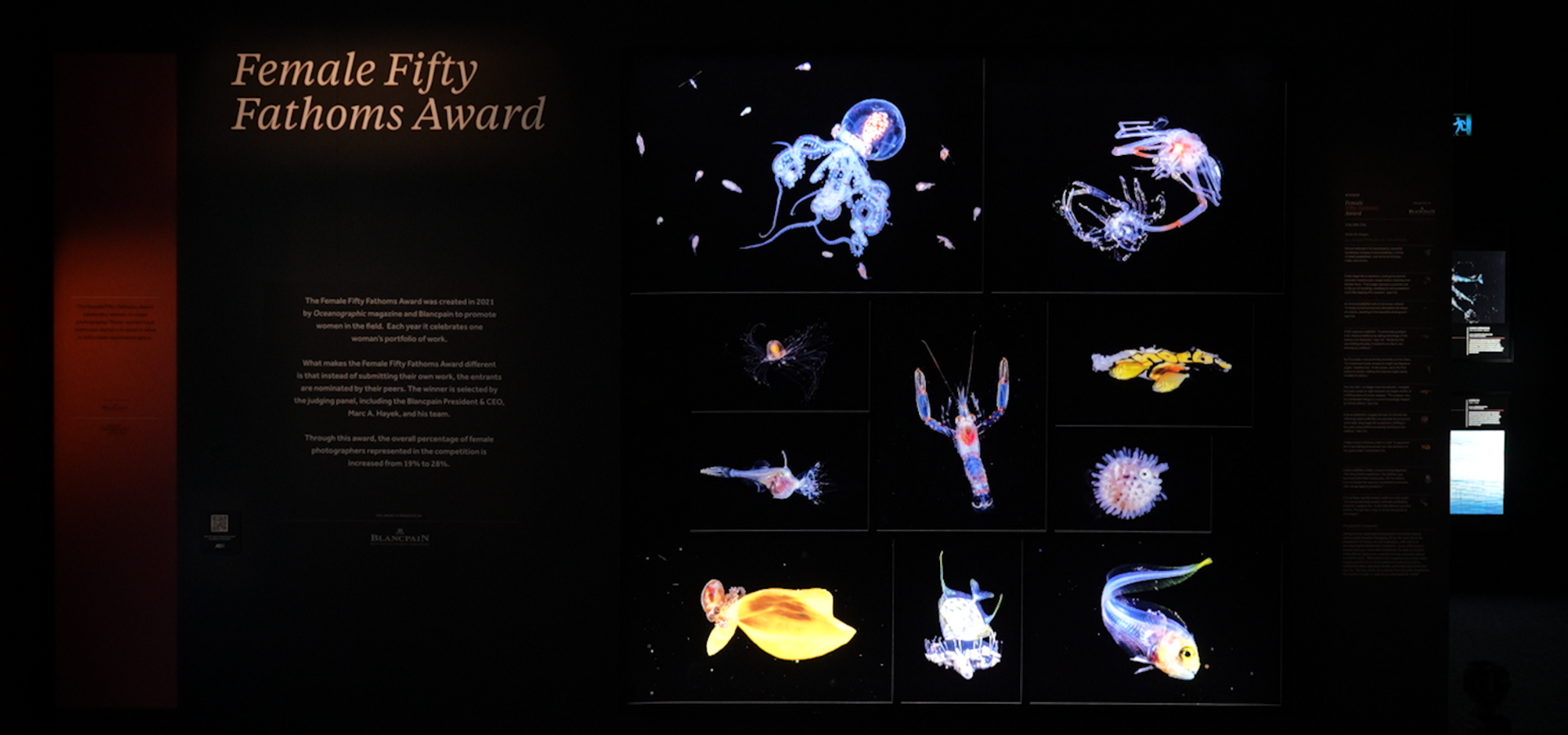
Jialing Cai, Chinese marine biologist, blackwater photographer, and Blancpain Female Fifty Fathoms Award 2025 winner. Top: Cai’s blackwater photography portfolio presented at Blancpain’s Ocean Photography of the Year exhibition in the Australian National Maritime Museum.
Boulevard: What first drew you beneath the waves and how did you discover your focus on planktonic ecosystems?
Jialing Cai: When I first learned about the DVM, I felt like this is the most beautiful theory that I’ve ever heard because it tells you that you do not have to become a billionaire—like James Cameron, who built his own submersible to build to visit the deep sea—or that you do not even have to become an established deep sea biologist at the age of 50 or 60 to use a research facility to visit the deep sea. You can, just as a mortal human being, throw yourself out into the open ocean at night and the deep sea would come to you. I feel like it’s fascinating. So I decided to test out the hypothesis with my own eyes, and that’s where it all started. After that, I just researched how to become a diver through training and how to start photography, then combined these two elements. The first time I seriously picked up my camera was the moment when I wanted to become a photographer to capture these animals.
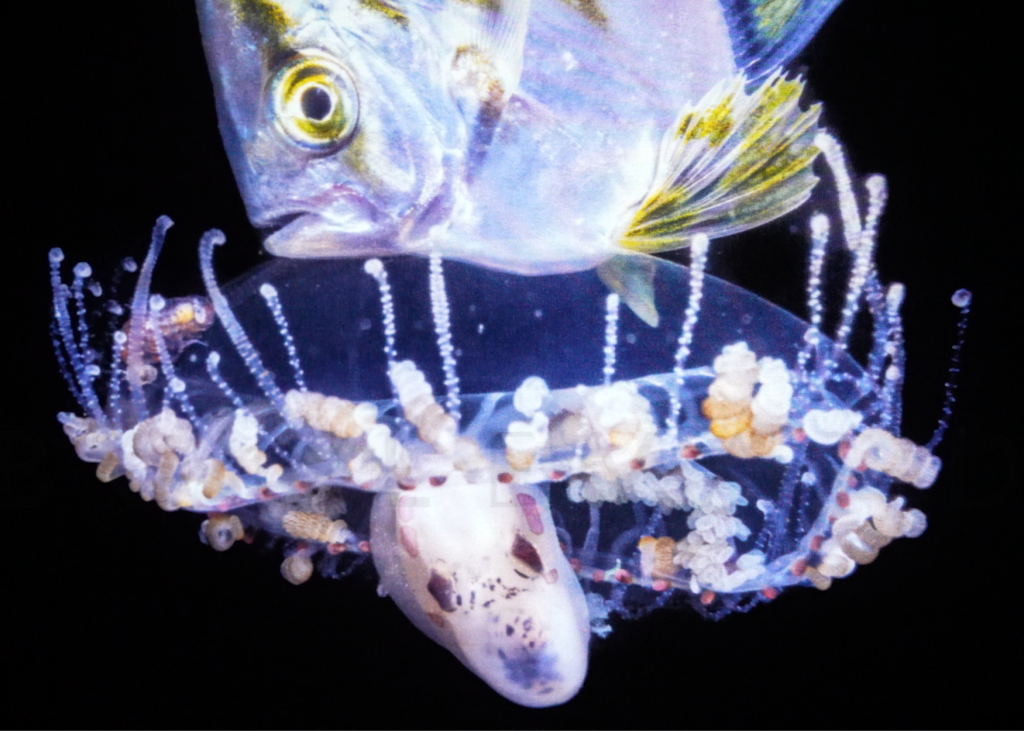
Cai’s image of a certain fish species taking refuge on a jellyfish, while it ingests a baby octopus. Shot in Anilao, Philippines.
Blvd: You won the Female Fifty Fathoms Award for 2025, what does this recognition mean to you personally and for your work?
Cai: Back in 2023, I won the overall winner of this competition based on a single image of a paper nautilus that’s hitchhiking on a stick. But this time, this award was given to me based on my overall portfolio and the extended impact of these photos in science communication, and it emphasises my female voice in this industry. I think it means a lot, not just to myself, but because, first, it represents one of the countless possibilities that women can embrace. Probably a lot of people haven’t even heard about a blackwater photographer before, but now they see my work and this could be one of the professions they can pursue.
Second, I feel like it is not just presented to myself. It is also giving credit to all the outstanding women that helped me along the way. As a beginning underwater photographer, this is a non-traditional job and I did not have a stable income, so I regularly needed assistance from others. Luckily, there are many women from different fields—for example, women in national TV, directors, film producers, and private sponsors—who are very willing to help me, give me exposure, and get me into projects. Without them, I wouldn’t be here.
So by receiving this award, my work is recognised, and I’m also gradually reaching a position where I will have the resources and the power to help all the aspiring young women out there to smash that.
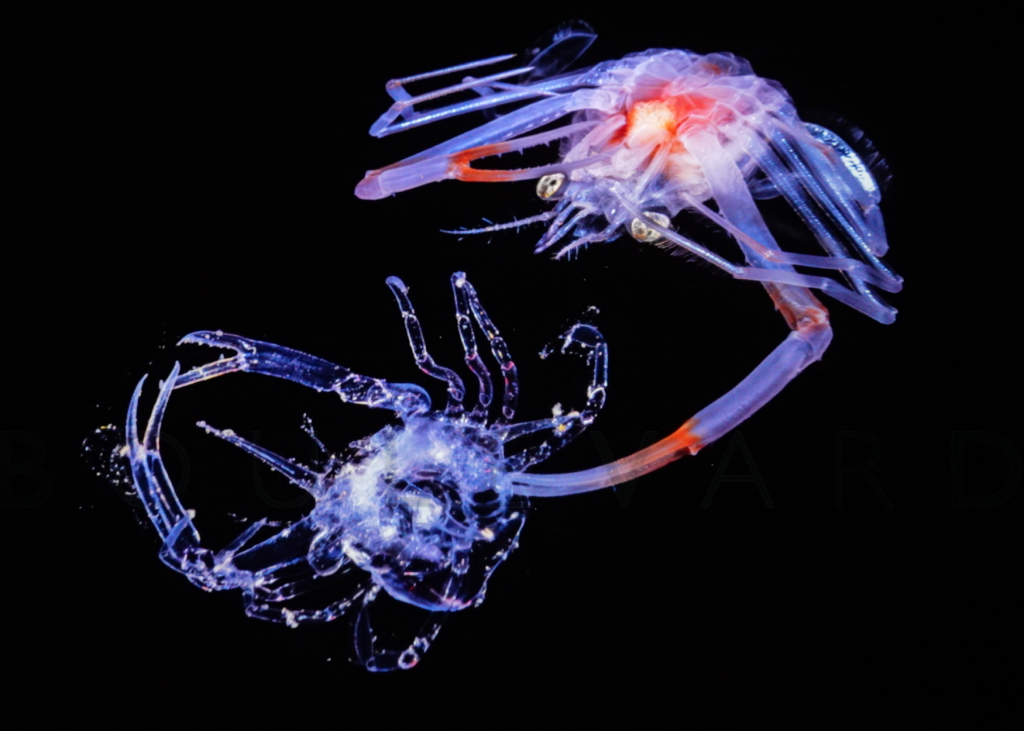
Cai’s image of a juvenile crab in the act of molting, shedding its old exoskeleton. Shot in Anilao, Philippines.
Blvd: How do you combine artistic expression and scientific precision in your photography? Can you describe your creative process?
Cai: From the scientific aspect, it simply comes from the animals themselves. Blackwater photography is more about finding species or behaviours that have never been documented before, because the trend only started very recently.
Artistically, I cannot take much credit for my images, because the creatures already look like that. I do not like to do a lot of post-processing, but I would say my personal preference in composing the images is to leave a little bit of floating particles around. That’s because that is the real habitat. The planktonic world is not completely black or empty. It’s big planktonic animals, small planktonic animals, and floating particles all existing in harmony. So in my images, I try to showcase these background elements too. Blackwater is not actually black—that’s just my own artistic choice in how I want to present this world.
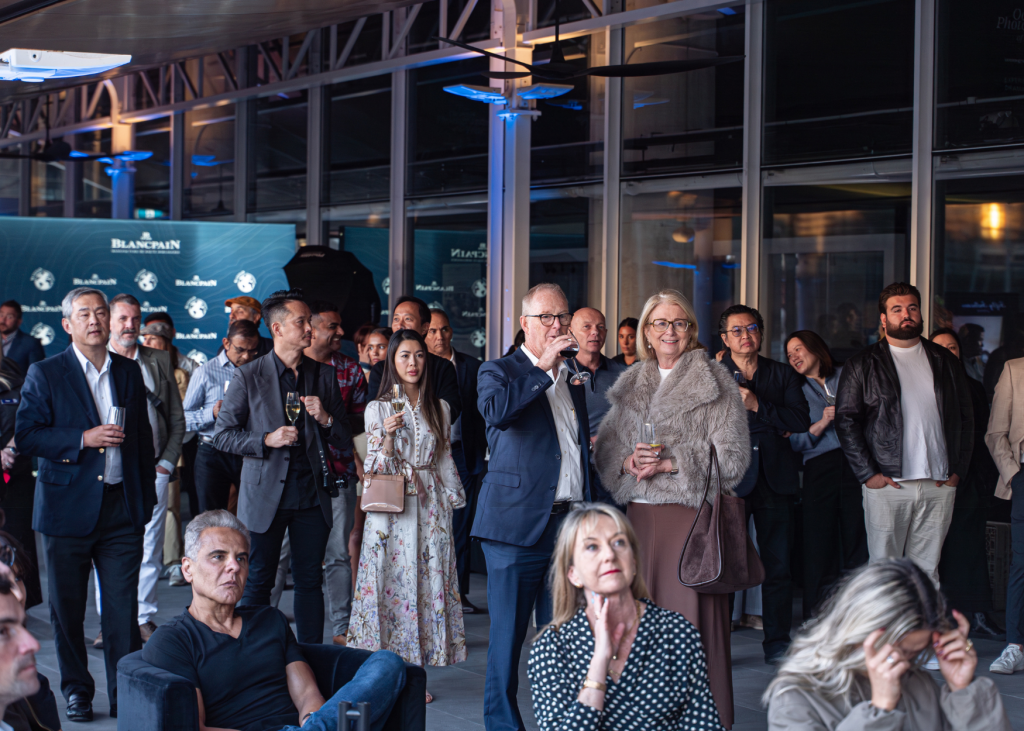
The premier of Blancpain’s Ocean Photography of the Year exhibition in the Australian National Maritime Museum.
Blvd: How does your work resonate with Blancpain’s mission to protect and explore the underwater world?
Cai: Blancpain has been an ocean advocate for a very, very long time, and it encourages ocean exploration—discovering parts of the world that have never been documented or have been hidden from the public. The creatures I capture are plankton. They are actually everywhere in the open ocean, but people often think they look so alien that you must go very deep to find them. No—they’re just right there. We simply never bothered to look for them.
I captured all these images within 30 metres in tropical waters, so they’re actually relatively accessible. They’ve always been there—we just haven’t presented them to the public. So I think that aligns with Blancpain’s mission to reveal the hidden world.
The second thing is that the creatures I photograph, the plankton, are mostly the baby stages of many marine animals we already know—for example, the crabs you see in seafood markets or restaurants, or the shells you find in the intertidal zone. Most of them begin as drifting larvae. So even if we think we know these animals, we actually don’t know their mysterious childhood. That’s another fascinating aspect of blackwater photography—you get to find the missing pieces of the puzzle in their development. So again, that echoes Blancpain’s mission to reveal the hidden world of marine life.
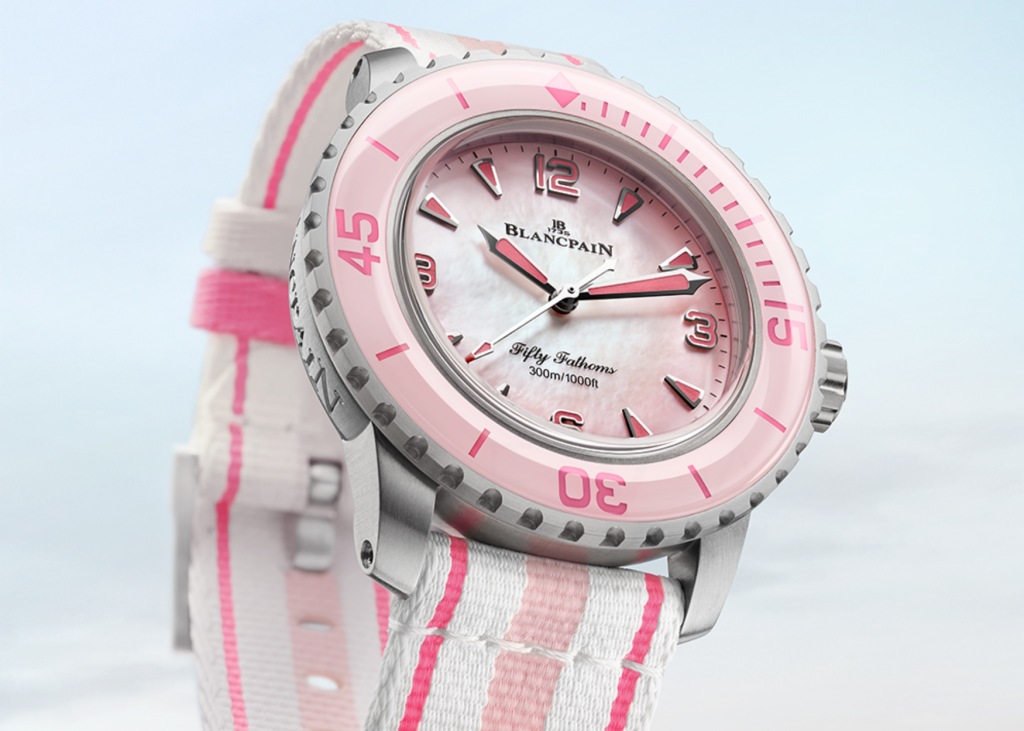
Blancpain Female Fifty Fathoms 38mm in pink.
Blvd: What do you think it means for a luxury watchmaker like Blancpain to celebrate female voices in ocean exploration?
Cai: It gives underrepresented voices in underwater photography much more power and exposure, especially for other aspiring women out there.
The ocean doesn’t care who you are—it’s about how you approach it. Ocean exploration is such a complex goal that requires different perspectives and a more comprehensive view. The female perspective represents half of the whole voice, so it’s very important for us to be part of this mission.
Blvd: Having achieved this major recognition in 2025, what are your next ambitions or dreams for your work? What are you still learning about photography?
Cai: All the images I’ve captured so far were taken in the surface layer of the ocean, within the recreational diving range – about 30 metres in tropical waters. It’s not a particularly challenging place to visit. But recently, I’ve started to feel like I’m reaching a bottleneck, or a ceiling, in my work because I’ve been visiting the same locations over the years.
There are still so many things out there waiting to be discovered, probably just a little beyond 30 metres, or just beyond tropical waters. I haven’t been there yet because I lack the necessary diving skills and equipment. The next step for me is to go colder and deeper to explore different plankton communities.
Read next:
5 bed POA
Belmont Road, D10 5 bed 43,800,000 SGD
3-4 bed | 2,702 - 8,923 area POA
4+1 bed 20,000,000 USD
4 bed POA