How non-round case shapes came to define the world’s most iconic watches
by Karishma Tulsidas
Photography by Kevin Khng
A watch case isn’t just a canvas for creativity. It’s a signature. From across a room, before you’ve clocked the logo or the dial, the case shape already tells you something. And the outlines that tend to say the most are rarely circular, which makes it strange that round has become the default at all.
Exact numbers are elusive, but estimates suggest that more than 80 per cent of watches produced annually are circular. On a purely practical level, that makes sense. A brief dig through horological archives offers several explanations: movements, with their interlocking gears and tightly coiled spring, have traditionally been round by nature, for reasons that require a far deeper understanding of physics than I possess. “The round shape is considered the ‘original shape’ in watchmaking, reflecting the 24-hour civil day,” explains Christian Selmoni, style and heritage director at Vacheron Constantin. “It was then logical to create a watchmaking movement that could repeat this daily sequence (typically 2 x 12 hours) and display it on a dial.”
Then there is the small matter of the First World War, when soldiers simply soldered lugs onto existing round pocket watches and strapped them to their wrists so their hands were free for more pressing concerns on the battlefield.
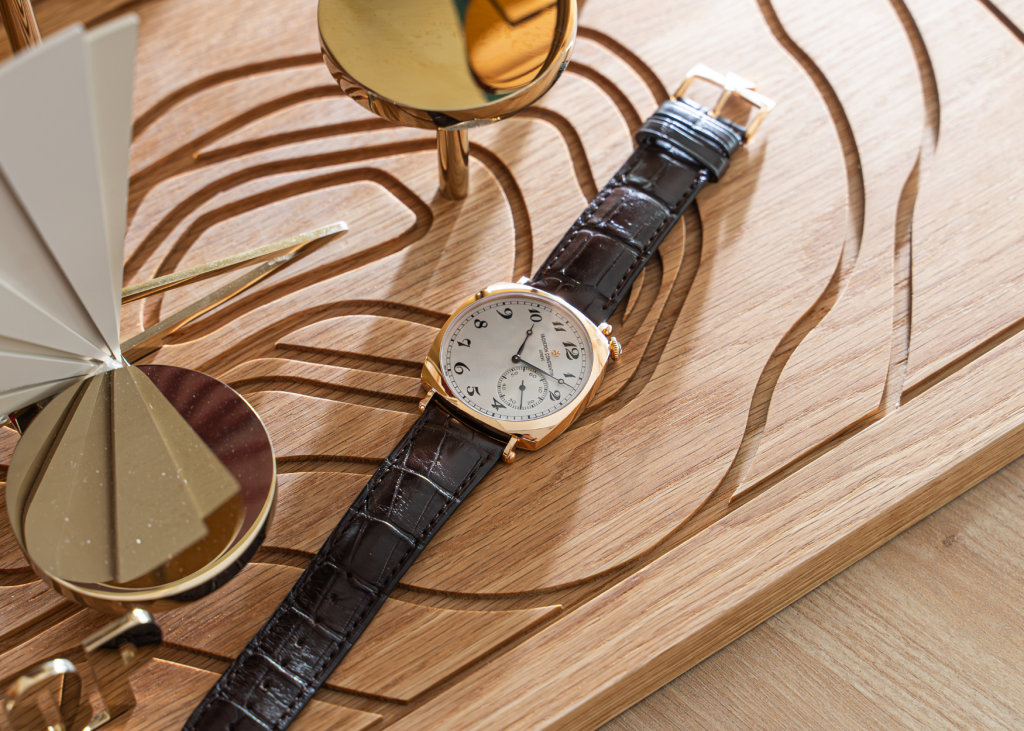
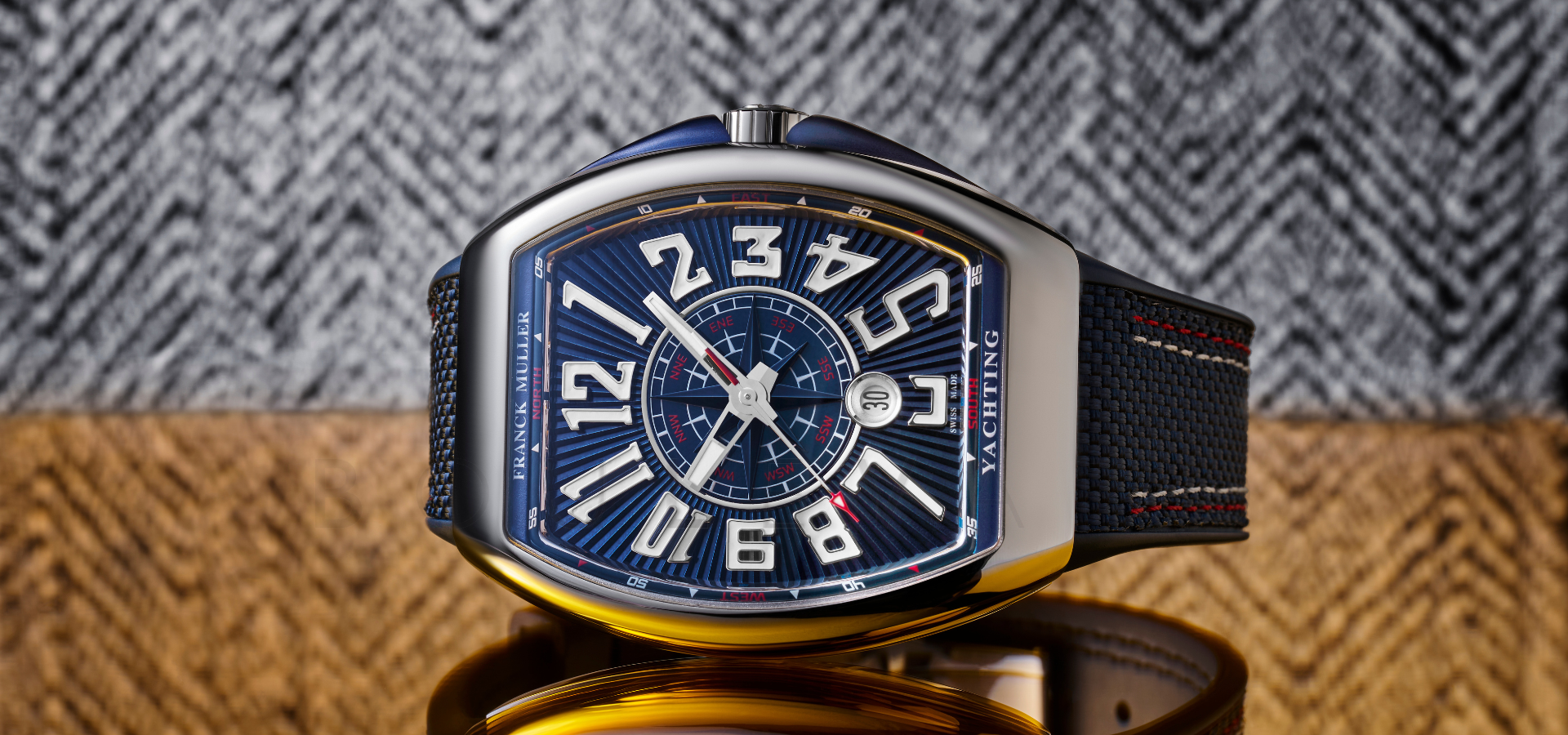
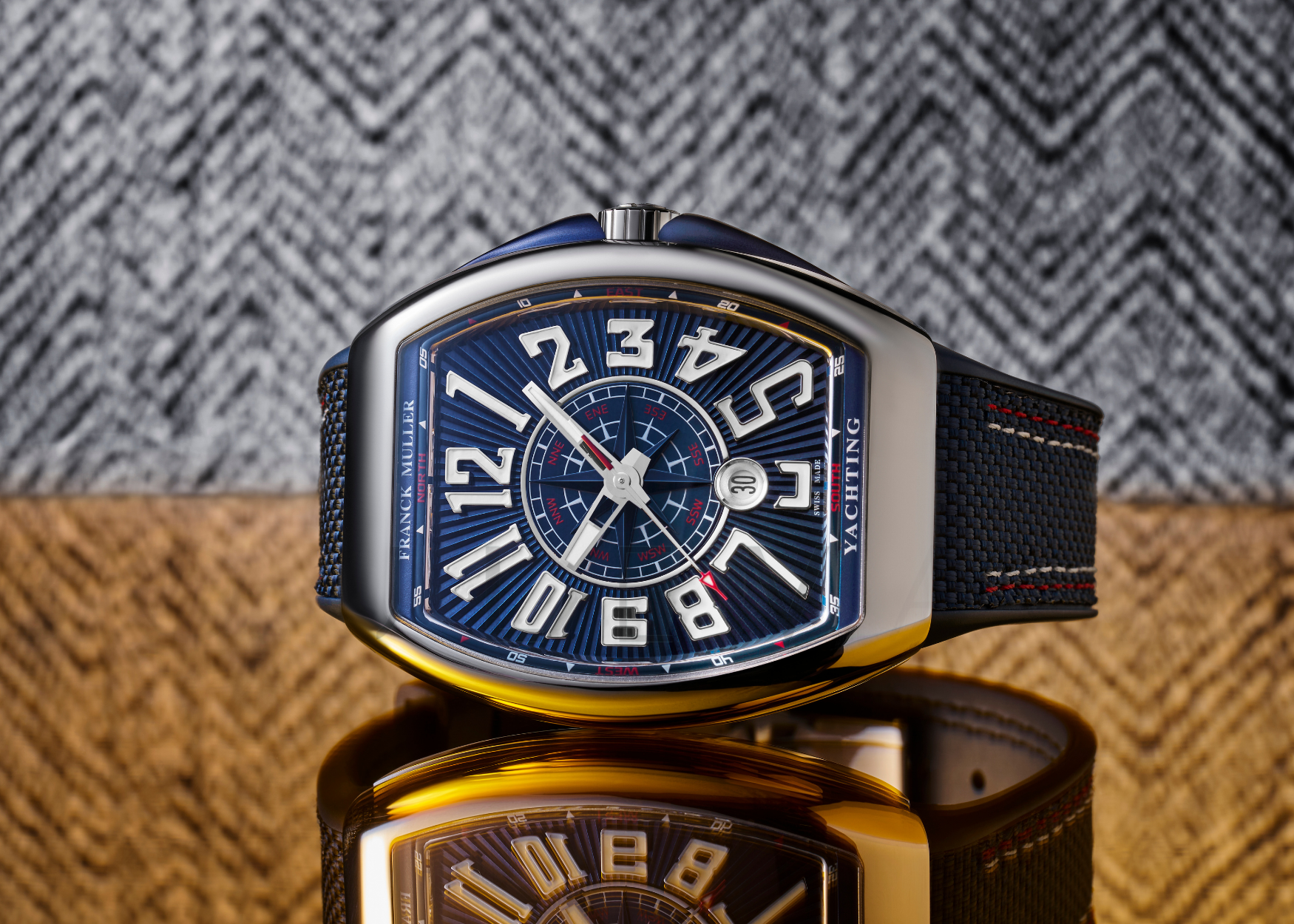
American 21 in pink gold, by Vacheron Constantin. Top: Vanguard Yachting V45 SC DTZ, by Franck Muller.
Round, in other words, was efficient. But watchmaking, by its very nature, has always straddled the line between efficient and whimsical.
Interestingly, what is widely regarded as the first purpose-built men’s wristwatch, the Cartier Santos of 1904, was not round at all. Created for aviator Alberto Santos-Dumont, who wanted to read the time mid-flight without reaching into his pocket, it arrived in a square case with exposed screws and sharp geometry. It appears obvious to us now, so familiar that it barely registers as radical, but at the time it represented a deliberate departure from convention.
“Shaped watches gained increasing popularity with the advent of wristwatches during the 1910s and 1920s. As timekeepers were no longer hidden in a pocket but prominently displayed on the wrists, watchmakers could express their creativity and innovate by designing new shapes and aesthetics,” says Selmoni.
In 1912, Vacheron Constantin introduced its first tonneau-shaped wristwatch, adopting a barrel form that balanced curvature with structure. The maison would go on to explore shaped cases during the 1910s and 1920s, producing asymmetrical and cushion-shaped references that remain objects of fascination for collectors today. Adds Selmoni, “During this period for instance, a gentleman wearing a shaped wristwatch could clearly differentiate himself from others, which is why such watches were adopted by ‘dandies’.”
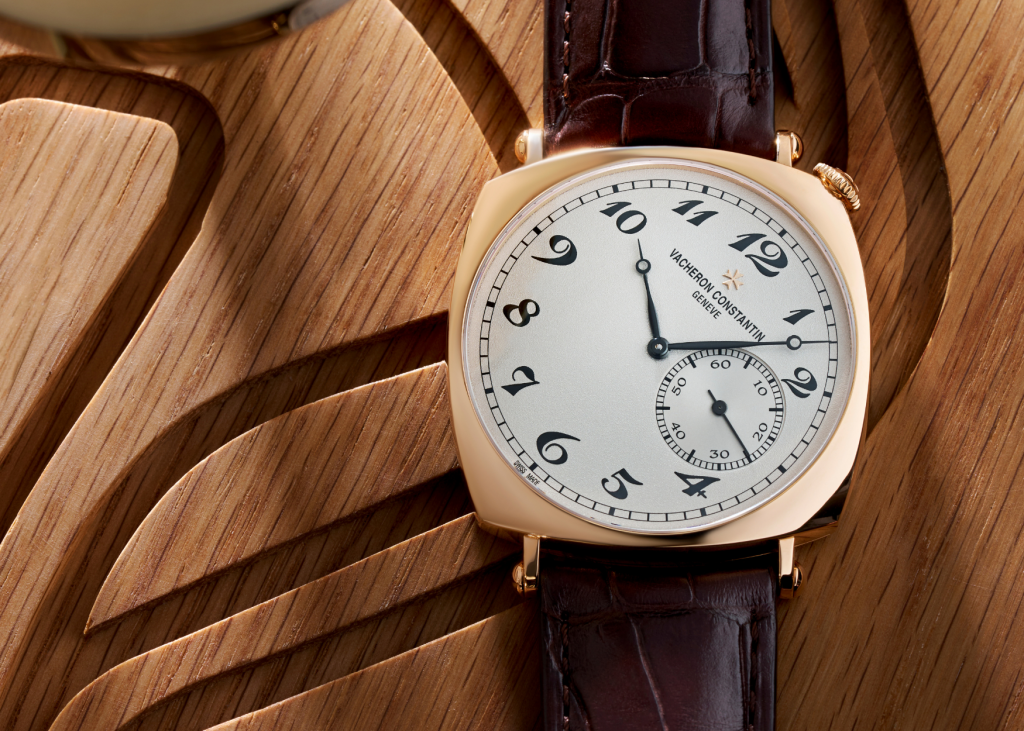
Referencing to an American-only model from the 1920s (hence the name), Vacheron Constantin’s American 21 features a cushion case and slanted dial.
Among the most enduring is the American 1921, originally created for the US market at the height of the Roaring Twenties. Its diagonally rotated dial was not an aesthetic gimmick but a functional adjustment, allowing drivers to read the time without removing their hands from the steering wheel. It suggests that shape, for Vacheron Constantin at the time, wasn’t an afterthought; the brand considered deeply how the watch was meant to be used.
It is telling that more than a century later, both the Cartier Santos and Vacheron Constantin’s early shaped pieces continue to be commercially viable and aesthetically desirable. “It is quite remarkable that almost all the watch shapes we know and see today are inherited from those early decades of the 20th century,” says Selmoni.
“Shaped watches gained increasing popularity with the advent of wristwatches during the 1910s and 1920s… watchmakers could express their creativity and innovate by designing new shapes and aesthetics,” says Selmoni.
While it is easy to understand why round watches have endured through shifting trends, social change and technological upheaval, the continued appetite for non-round cases speaks to something deeper: a desire for distinction.
A shaped watch tends to command a longer gaze. There is a moment of recalibration before recognition, and then often instant identification. It is easier to guess the brand without seeing the logo. Think of the Cartier Tank, or the octagonal bezel of the Audemars Piguet Royal Oak or the porthole-inspired Patek Philippe Nautilus. In Richard Mille’s portfolio, its tonneau cases far outnumber its round cases. In these instances, silhouette precedes branding.
The evolution of watch shapes
To trace the evolution of watch shapes is, in many ways, to trace broader cultural shifts. The years following the First World War were particularly fertile ground for experimentation. The 1920s, shaped by Art Deco and known in France as “Les Années Folles,” marked a period in which established hierarchies were unsettled and design languages were rewritten. Skyscrapers redefined city skylines, cinema reshaped narrative, aviation was taking off, and industrial materials entered domestic life. Wristwatches, still relatively new objects, were reflective of these times.
Prominent watch journalist Nick Foulkes has described the transitional period between the introduction of the wristwatch in the 1920s and its dominance in Swiss production by the early 1930s as a handover phase in which “all sorts of weird and wonderful case shapes showed up.” These designs were not arbitrary; they rejected the traditional norms of pocket watches and the conventions they represented. If this was a new way of telling time, it required a new visual language.
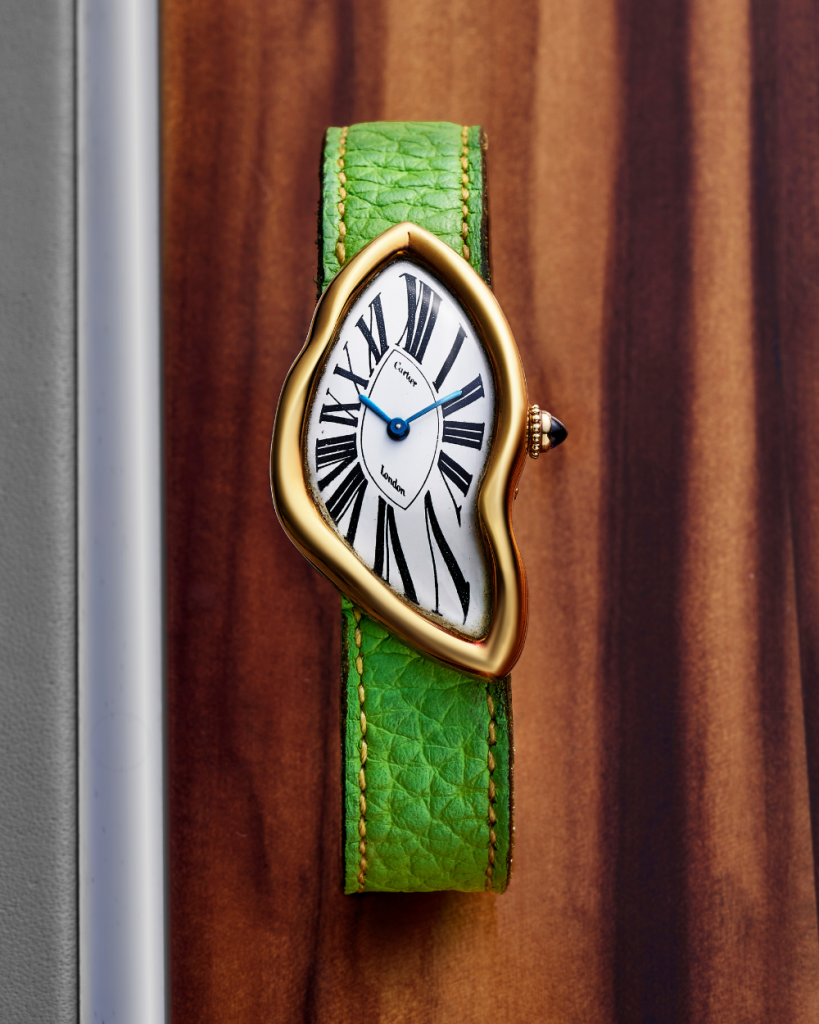
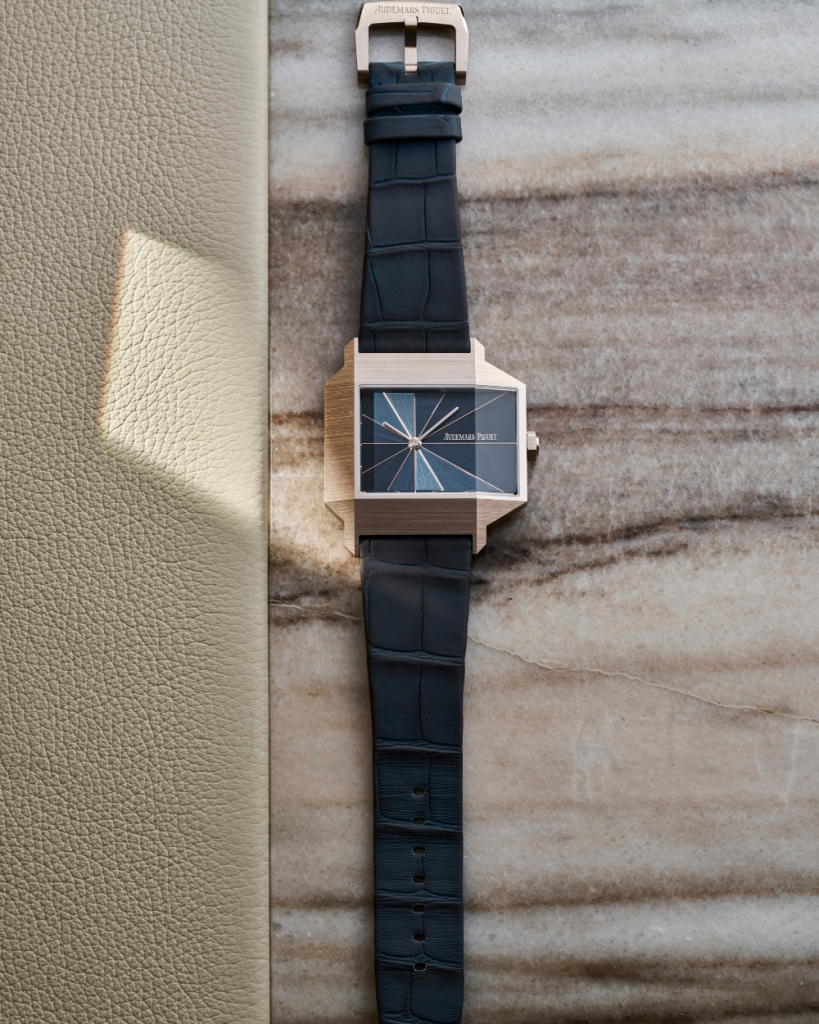
Left: 1987 Crash, by Cartier, made in London. Right: [Re]Master 02 in sand gold, by Audemars Piguet, inspired by a 1961 piece.
Cartier was central to that language. During the 1910s and 1920s, the maison produced an extraordinary range of shaped cases—the Tortue, the Baignoire, and the many iterations of the Tank, including the Louis Cartier, Chinoise, Obus, Basculante and Asymétrique. These were not exercises in novelty for novelty’s sake. Cartier approached watchmaking through the lens of jewellery, which meant its horological creations were not constrained by traditional ideas of what a watch case should look like. They were conceived as objects of adornment as much as instruments of timekeeping, and that freedom yielded silhouettes that have proven remarkably durable.
A second wave of shaped experimentation followed the Second World War, this time led by an unlikely protagonist: Patek Philippe. In 1955, then CEO Henri Stern hired a 25-year-old designer named Gilbert Albert to inject youthful energy into the maison’s jewelled watches. Albert’s influence quickly extended across the broader collection, and his asymmetrical creations—with names such as Ricochet, Flying Saucer, Asymétrie and Futuriste—challenged Patek’s reputation for classical restraint. Asymmetrical and counter-intuitive, he twisted geometric shapes into odd forms, elongating one lug here, a bezel there. Patek Philippe won numerous awards during the eight years that Albert worked with them, and visitors would queue up at Basel, the pre-eminent watch fair of that era, to view these timepieces in person.
“It is quite remarkable that almost all the watch shapes we know and see today are inherited from those early decades of the 20th century,” says Selmoni.
At a time when architecture was being reimagined, and the US and Russia were in an arms race to space, his designs mirrored a broader cultural fascination with futurism and abstraction. They were bold, but not chaotic or cluttered; they were sculptural, but imbued with a deep respect for traditional horological codes as well as Patek Philippe’s own legacy.
Collectors have since come to appreciate just how radical those pieces were. Auction results for Albert-designed references routinely exceed estimates, underscoring how far ahead of their time they were. It helps, too, that few references remain in circulation.
Which brings us back to the present. In a world where mechanical watches are no longer essential, the timepiece on our wrist does heavy lifting in revealing who we are and what we stand for. When something stops becoming utilitarian, how far can we push the envelope?
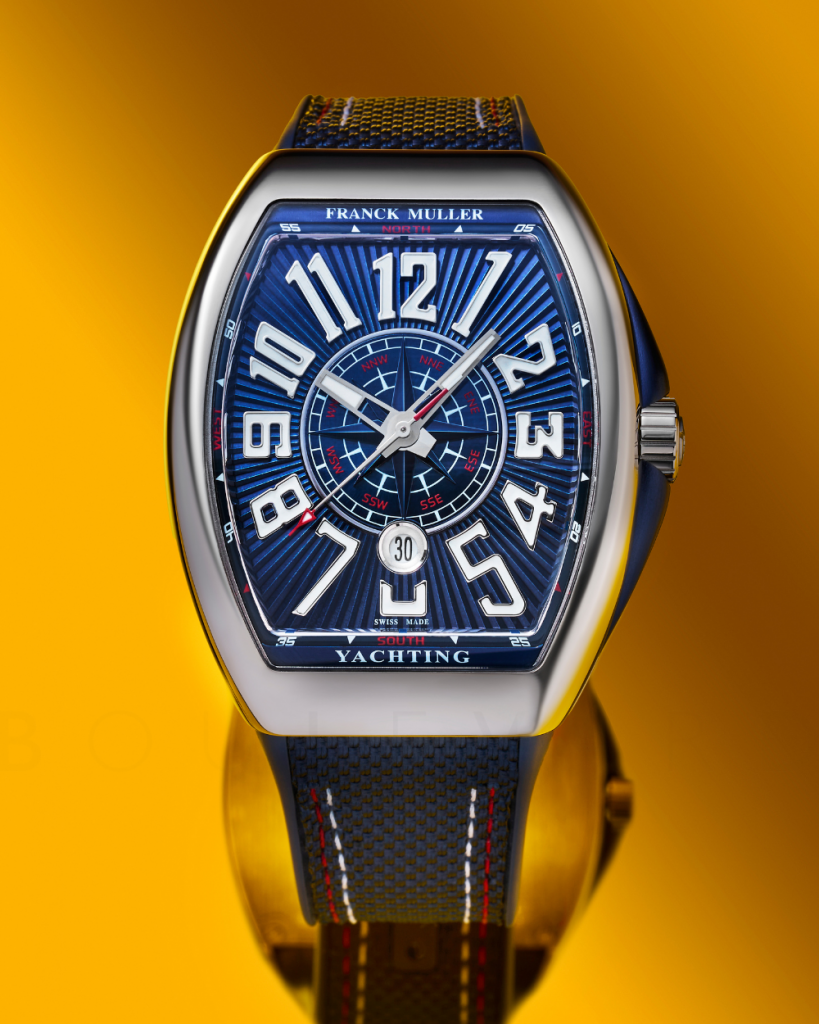
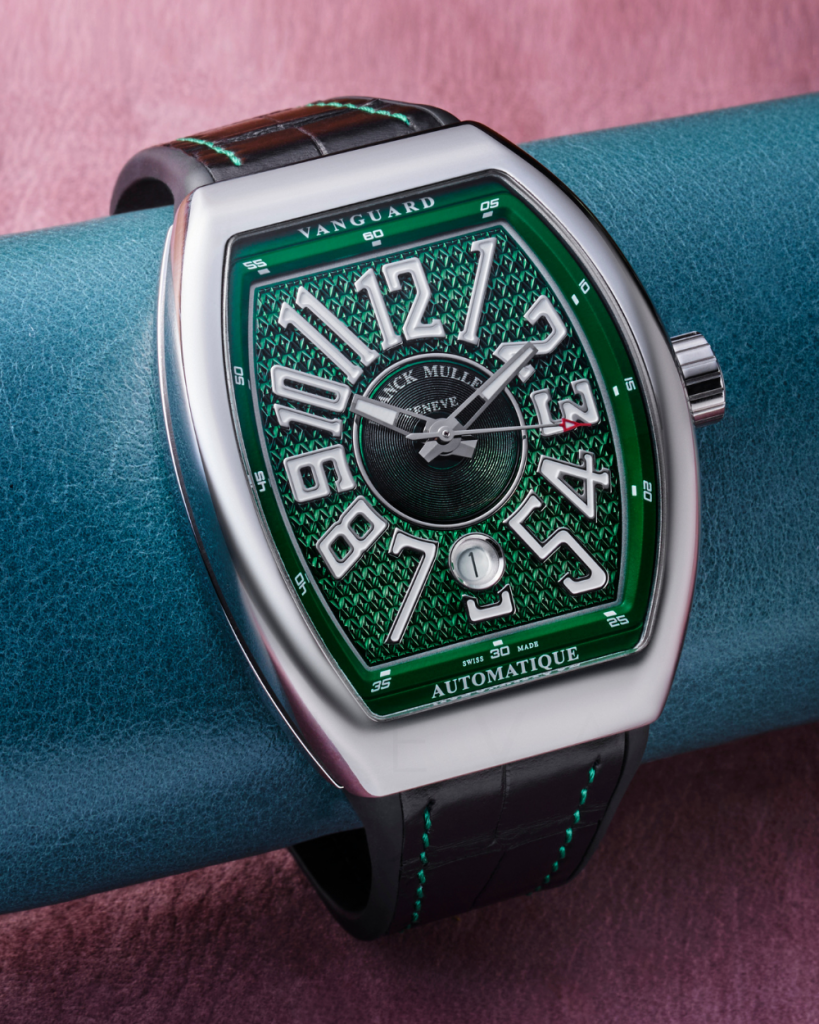
The Vanguard Yachting V45 SC DTZ (left) and the Vanguard Automatique MVT 2536-SCDT (right), both by Franck Muller, features the iconic Cintrée Curvex case shape.
In the 1990s, during the period when the watchmaking industry was navigating an existential crisis following the quartz revolution, Franck Muller arrived like a bulldozer: instead of leveraging tradition, it built its identity around the Cintrée Curvex, a dramatically curved tonneau case that made round watches feel almost incidental within its own catalogue. His “rebellion” perhaps marked a parallel track in watchmaking: innovating outside the confines of a traditional round case, which meant also reworking movements to fit these odd shapes. The challenge therein lay not just in recalibrating existing CNC machines designed to make traditional shapes, but also in re-imagining movement design, and dial legibility.
“Today, considering existing manufacturing techniques and technologies, shaped watches are no longer significantly more complex than round ones,” explains Selmoni. “That said, shaped watches often require more care in terms of water protection, finishing and polishing compared to round ones. Designing a shaped watch is more demanding, as proportions must be carefully thought out to maintain a balanced design and proper ergonomics. This is particularly true for rectangular watches, given the challenge of varying wrist widths.”
It would not be an overstatement to say that Franck Muller inspired a wave of out-of-box thinkers: Richard Mille’s tonneau silhouette has become so synonymous with the brand that the shape itself reads like a logo. Urwerk produces cases that resemble spacecraft more than wristwatches, abandoning traditional dials in favour of satellite displays.
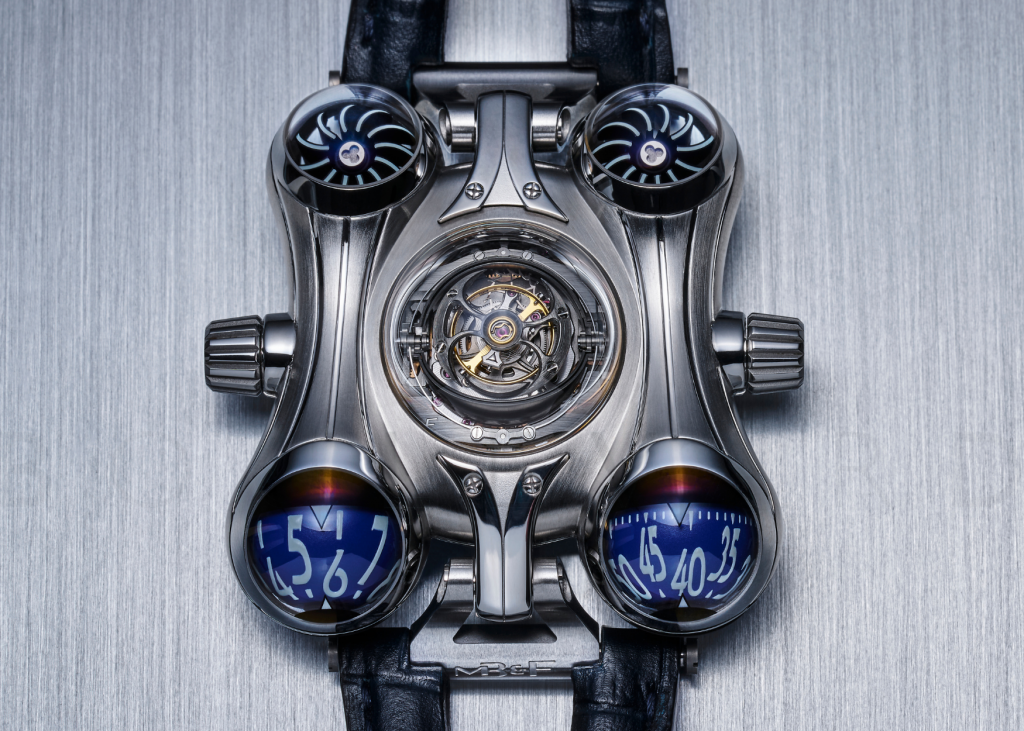
Horological Machine No. 6, by MB&F, with a design that echoes Max Büsser’s boyhood imagination.
Funnily, I wouldn’t be surprised if I learnt that Max Busser, founder of MB&F and a contemporary of Urwerk, had Albert at the back of his mind when he founded his company. His tagline, “a creative adult is a child who survived”, is palpable in the timepieces that have come out of his lab. Watches that look more like frogs, spaceships, cars appeal to the iconoclast in the collector without bastardising horology’s technical norms.
Even traditional maisons are not immune. When Patek Philippe launched the square Cubitus in 2024, CEO Thierry Stern openly acknowledged that he had long wanted to create a square watch, noting that more than 80 per cent of watches are round. The implication was simple: stepping outside the circle remains a deliberate move, and one that can easily polarise collectors.
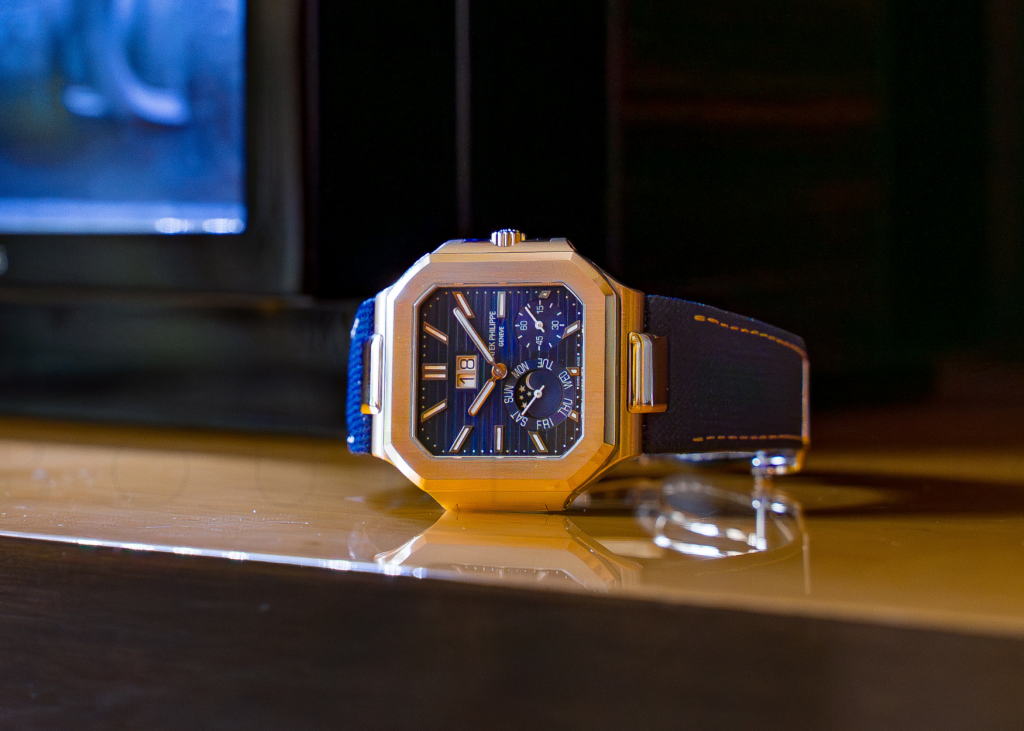
The Cubitus, by Patek Philippe, features a square-shaped case.
More than a century after soldiers first strapped pocket watches to their wrists, the round case has become almost archetypal—like a Rorschach test for the word “watch”. It is the default shape we picture instinctively.
And yet, shaped watches remain crucial to horology’s history. They reflect cultural mood as much as technical ambition—because fitting a movement into anything other than a circle is not a given. It requires the same creative energy as the design itself.
Read next:

5 bed POA

Belmont Road, D10 5 bed 43,800,000 SGD

3-4 bed | 2,702 - 8,923 area POA

4+1 bed 20,000,000 USD

4 bed POA