What’s in a cut? We dissect whether a gemstone cut can impact its investment value
by Karishma Tulsidas
Photography by Kevin Khng
Shot on location at the Mosscape showroom in Singapore.
Countless column inches have been dedicated to Taylor Swift and Travis Kelce’s engagement, but for jewellery connoisseurs, the real story is the rock on her finger. Eschewing the usual brilliant-cut diamond, the pop star chose a vintage-inspired, old-mine-cut diamond weighing an estimated seven to 10 carats. As with most things Taylor touches, her ring has sparked a broader interest in vintage cuts.
Cristel Tan, international jewellery specialist at Phillips, says that this fascination has been quietly building for the past five years.
“There are quite a few modern designers who’ve started using old cuts, often repurposed from antique necklaces,” she notes. “10 years ago, if I showed an old cut to a client, they might say, ‘Why can I see right through the stone? Why can I see the culet in the middle?’ Now, because round brilliants are a dime a dozen, when you show them something different, they find it interesting.”
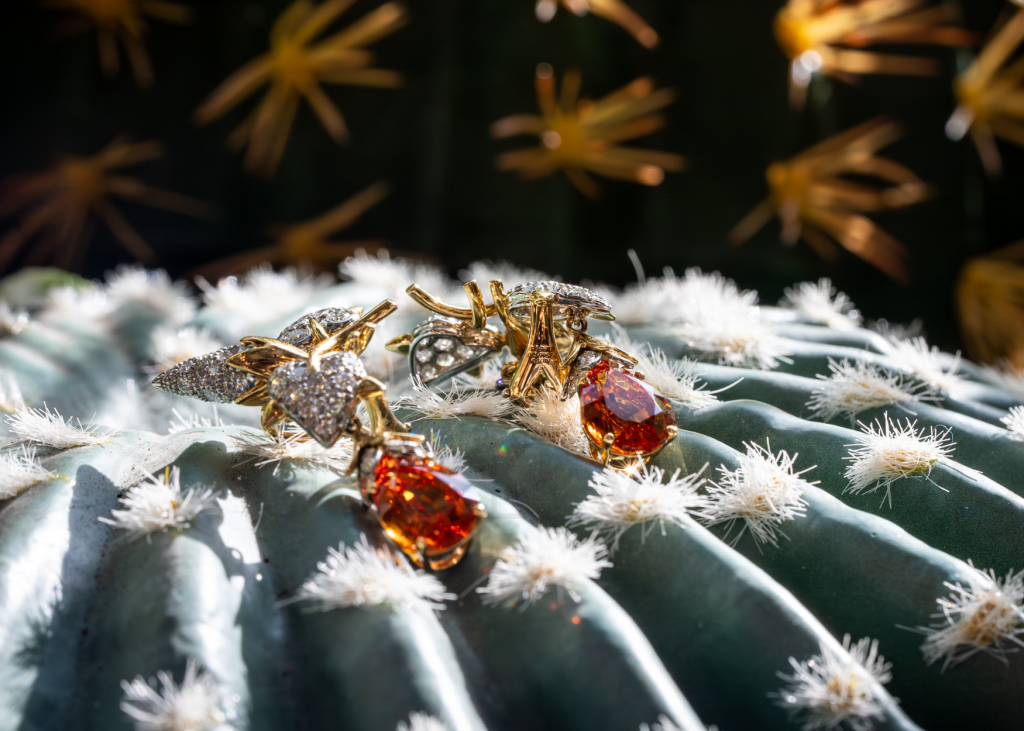
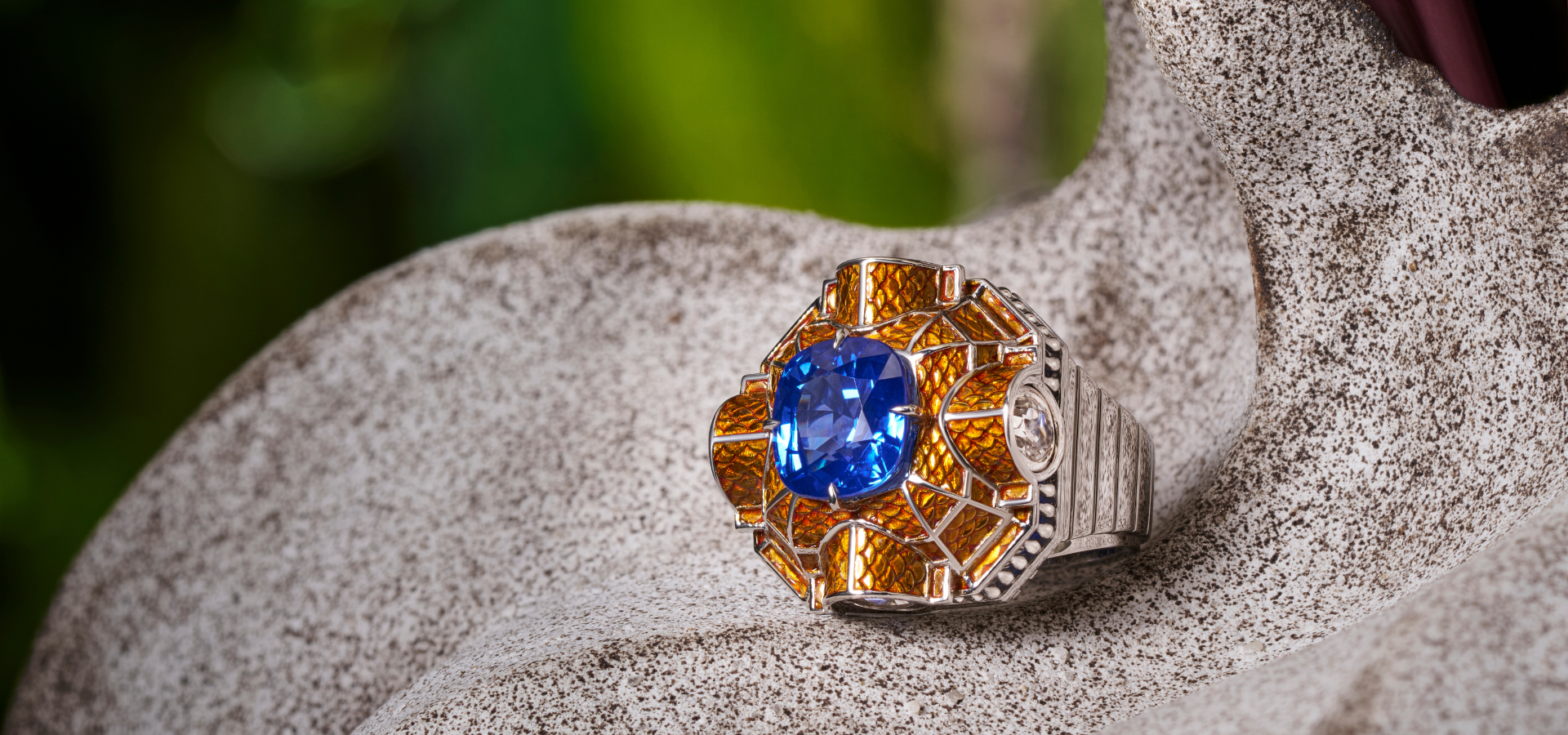
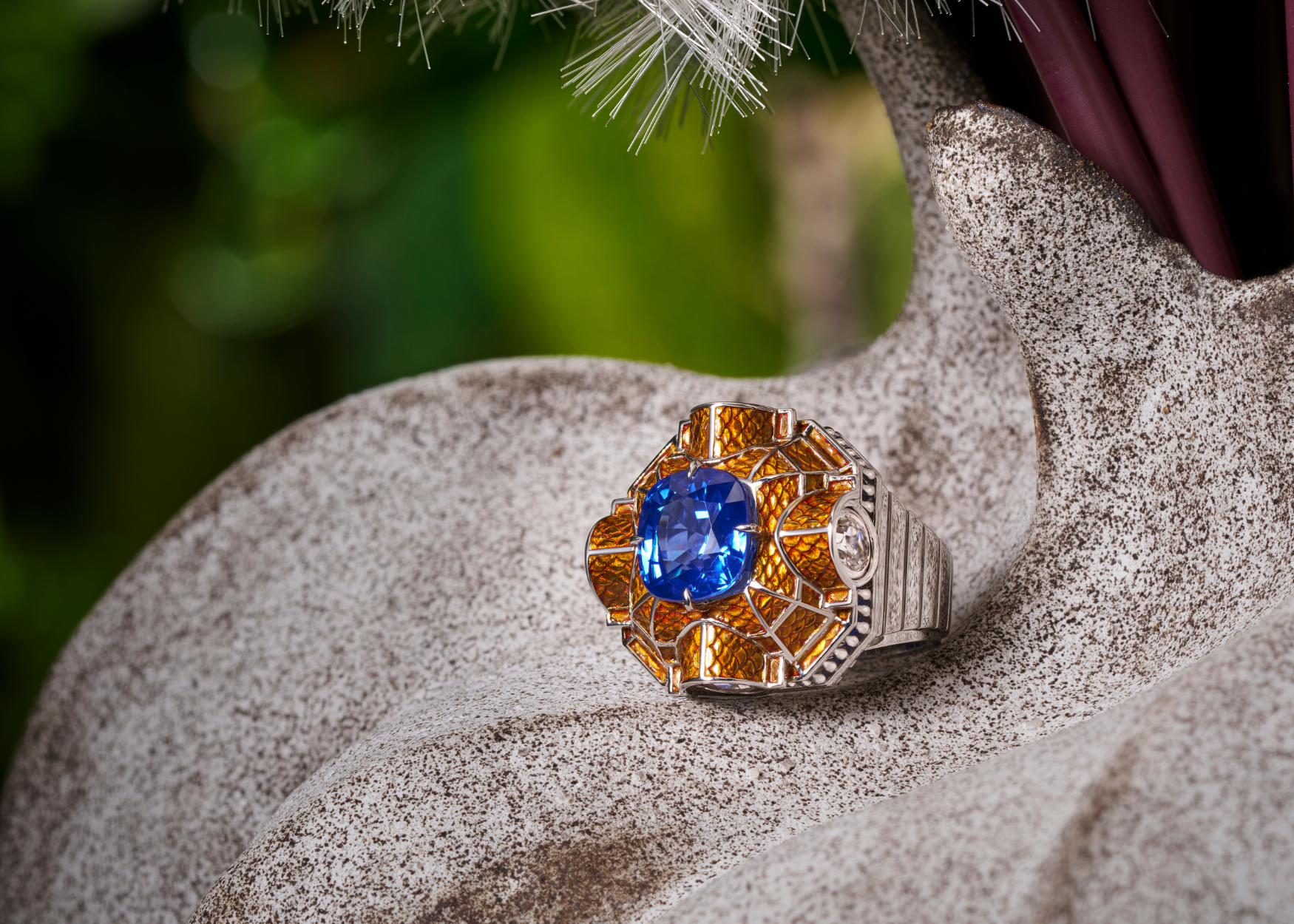
Schlumberger earrings in gold set with diamonds and pear-shaped spessartine, by Tiffany & Co; Cactus garden, by Mosscape. Top: “Isadora” ring set with oval-cut white sapphires and one 6.5-carat cushion-cut sapphire, by Chaumet; “Cloud Mane” vase, by Atelier V&A.
Nikhil Aurora, director of Singapore-based Aurora Fine Jewels, agrees. “This focus is driven primarily by the desire for a piece that does not look mass-produced, and a preference for the softer, more romantic fire these cuts provide.”
What adds to the allure is the fact that vintage stones were cut entirely by hand. “For me, they have more character,” says Tan. “When you come across an old mine cut, it feels refreshing—the way the light hits the stone, the refraction, and the fact that, back then, cutters were often working by daylight, physically holding the stone and checking the refraction as they cut. You’re looking at each stone almost as a small piece of history.”
Underlying this resurgence is a cultural shift: where modern cuts chase perfection, old cuts celebrate personality. In a world shaped by algorithms and optimisation, the tiny quirks and irregularities of an old mine cut feel human, intentional, and alive. For many new collectors—especially among Gen Z—imperfection has become the new hallmark of luxury.
That’s not to say that modern cuts are not desirable. Vintage-cut diamonds tend to be a little warmer in tone, with a softer glow, while modern cuts (especially in diamonds) are more fiery, with brighter, stronger colours.
When the stone calls the shot
Ultimately, however, it is the stone that determines the cut, and not the other way round. In the same way that Michelangelo imagined David within a block of marble, a cutter knows how best to extract fire, spread, colour and tone from a piece of rough.
“The silhouette is never a random choice; it’s dictated by the personality of the stone itself,” says Aurora. “Some gems—like a fine sapphire with strong colour saturation—ask for the disciplined, linear beauty of an emerald cut. Others, like a vibrant fancy-coloured gem, may only reveal their true potential in a more unique, free-flowing, experimental silhouette. We’re always pushing beyond the conventional, ensuring that each piece truly gets its own identity and soul.”
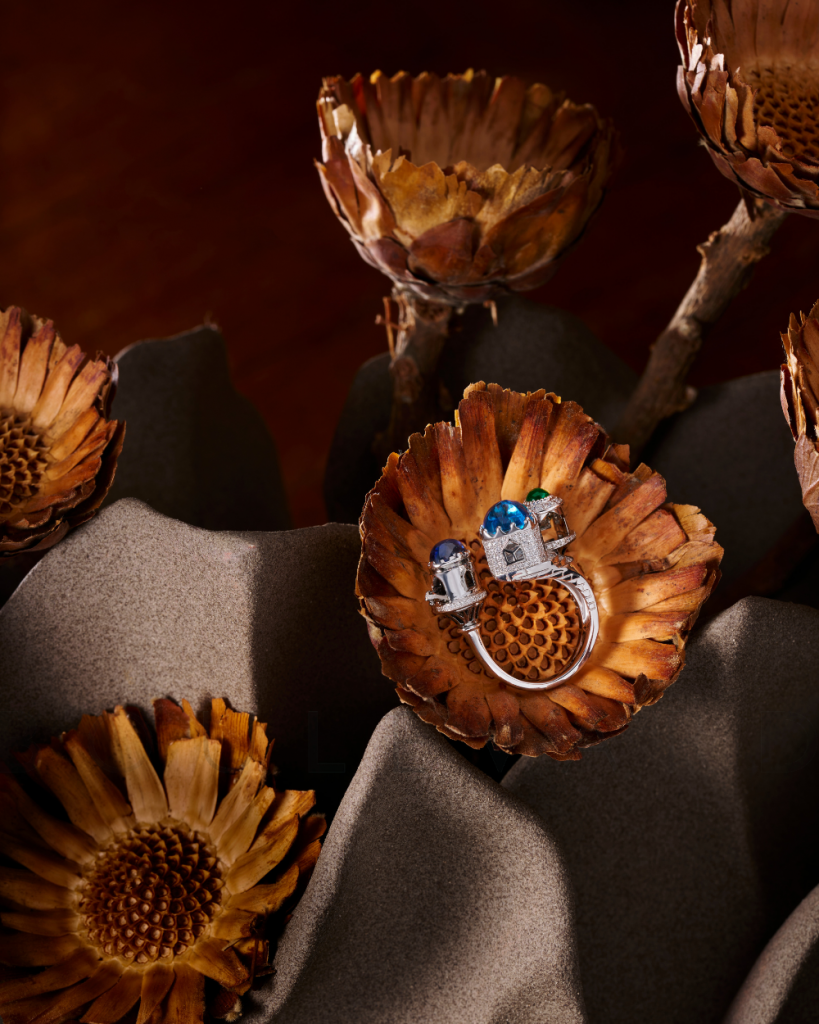
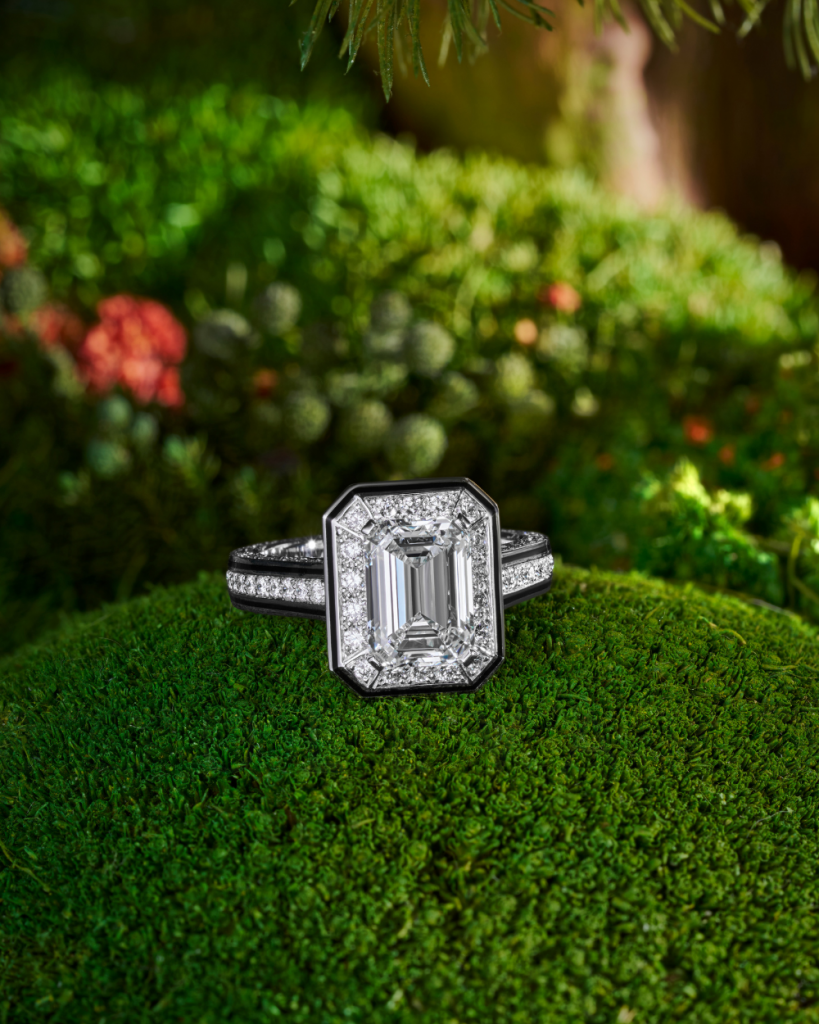
Left: “One Thousand and One Tales Magical Kingdom” ring, by Simone Jewels; “VandA collection Wooden Florals,” by Ateliar V&A. Right: “Vendôme Liseré” ring set with diamonds and black lacquer, by Boucheron; sculptural root tree, by Mosscape.
The approach also differs between diamonds and coloured stones. “For diamonds, cut contributes to character and charm—you’re buying how the stone behaves in light, as much as the material itself. For coloured stones, colour often dictates the cut,” says Tan.
Given that coloured stones often have inclusions, they are often cut into a cabochon. “The cabochon preserves weight while maintaining colour,” explains Tan. “If you were to facet a stone that has an inclusion running through it, you might end up with half the carat weight and a less impressive stone. With a cabochon, you can maintain both the size and the saturation, so you still retain value through carat weight.”
Opals and moonstones, in particular, benefit from a cabochon cut, says Aurora, adding that it enhances “depth and optical phenomena”.
He notes that another cut seeing strong traction now is the briolette. “Briolettes show us how jewellery can move with light, not just reflect it.” Aurora’s latest collection features briolettes in multiple colours, and he reveals that they’re quickly selling out.
When value lies in the cut
When evaluating a stone, most collectors look first at colour, clarity and provenance—an emerald from Colombia’s Muzo mine will probably outperform a similar emerald from Madagascar, for instance. But I was surprised to learn that cut, too, plays a part.
“Brilliants are generally more expensive—especially coloured diamonds in round brilliants—because there’s more wastage involved in cutting a round,” Tan explains. “It’s a higher-risk cut. On the Rapaport list, you’ll see separate pricing for round brilliants versus ‘fancy shapes’, which covers everything else—pear, oval, emerald and so on.”
Is there a hierarchy within fancy shapes? Would an oval-shaped diamond be more valuable than a pear-shaped one, assuming all else is equal, I ask? Not formally, she says—but the eye still rules.
“On the price list, no—they’re grouped. But visually, you’d still examine the stone. For ovals and pears, you have to look at the bow tie—that darker area across the centre created by the way the stone is cut. That doesn’t show up on the certificate, so you need to see the diamond.”
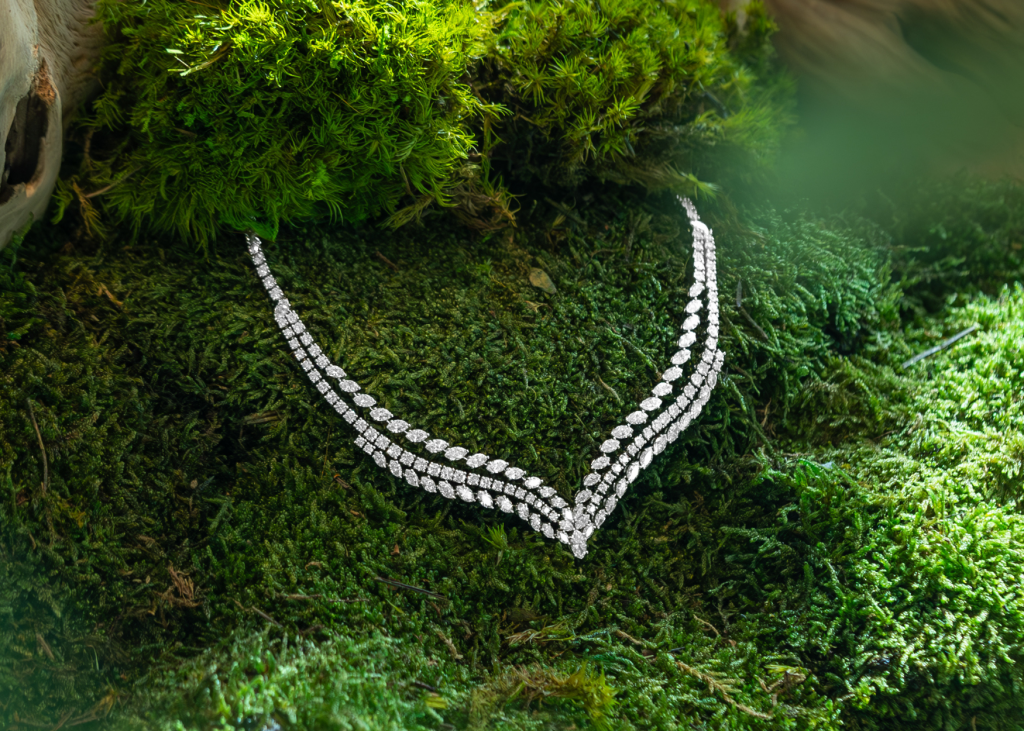
Necklace in platinum set with diamonds, by Harry Winston; Preserved moss, by Mosscape.
Tan also points out the importance of avoiding stones that are “on the dot”—a 1.00 or 5.00 carat stone. Polishing over time can easily drop it below the magic number, taking its value with it. A little leeway goes a long way.
Aurora points out another constraint that most people don’t fully appreciate: waste. He explains, “To truly unlock the life, brilliance, and unique characteristics inside a gem, you often have to sacrifice a surprising amount of the rough material.”
New signatures for a new age
In the wider story of machine and man, the next frontier lies with brands that create their own cuts. Louis Vuitton has its Monogram-cut diamonds; Chaumet has its Bee My Love cut. There is also a small but growing circle of specialist cutters who can create bespoke shapes at the right price. These tend to be used in fine jewellery rather than high jewellery, but they’re quietly pushing the boundaries of design.
“It’s partly a marketing angle—another way for brands to differentiate themselves. It’s a way to create a distinctive product and extend the brand’s design language,” says Phillips’ Tan. “They’re also using more alternative-coloured stones—spinels, tanzanites, spessartites—which are more available in larger sizes, so there’s more freedom to experiment. If you’re working with, say, a Burmese ruby, there’s only so much you can do because the material is limited and extremely costly.”
In a sense, cuts have become the new monograms, a way for maisons to create ownable IP within a category where the raw material itself is universal. A diamond may be the preserve of nature, but the cut is the brand’s fingerprint.
Are these stones coming to auction? “Not yet,” says Tan. “They may eventually, but it’s still quite new. So far it’s more visible in fine jewellery rather than high jewellery—I suspect they’re still testing the market. There’s a risk involved in using a very high-value stone for an experimental cut. At that size, you’re really buying the design rather than the stone’s investability.”
Read next:

5 bed POA
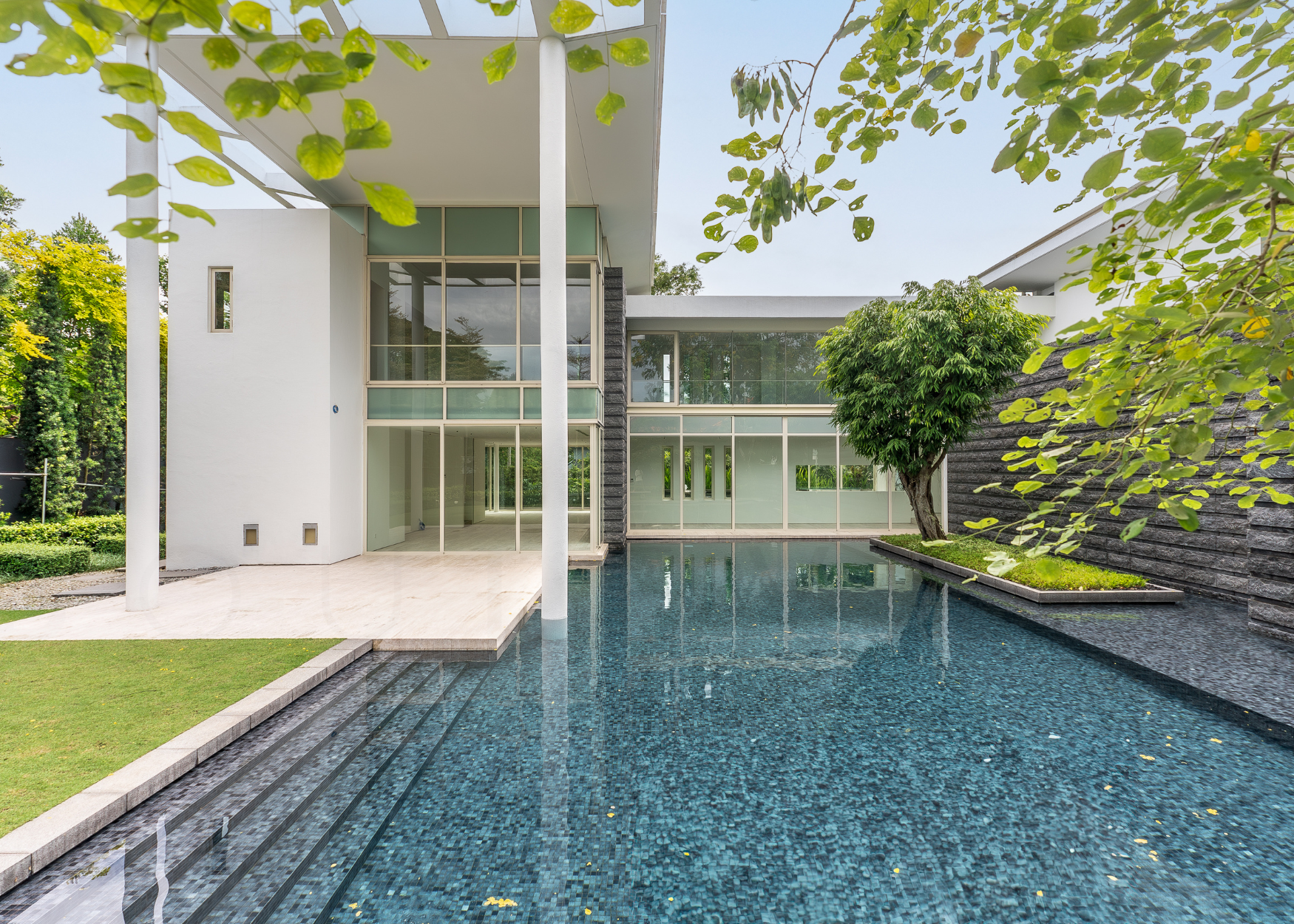
Belmont Road, D10 5 bed 43,800,000 SGD

3-4 bed | 2,702 - 8,923 area POA
4+1 bed 20,000,000 USD

4 bed POA