Liquid assets: Diving into the deep ocean of collecting natural and cultured pearls
by Karishma Tulsidas
Photography by Kevin Khng
With thanks to Louis XIII and the Art de la Table collection.
In Pliny the Elder’s Natural History, he recounts a wager between Marc Antony and Cleopatra. She bet that she could host the most lavish supper ever held. Her winning dish? A large natural pearl dropped into strong vinegar, dissolved, and drunk by the Egyptian queen.
Whether the story is apocryphal is beside the point. What it tells us is that natural pearls were among the most prized gemstones twenty centuries ago—and, if anything, they are even more elusive today.
Pearls are accidents of nature, formed by molluscs. For most of human history, only natural pearls existed and there was only one way to obtain them: divers plunging into the deep sea in search of oysters that might—might—contain something precious. Not only is it a dangerous activity, but the odds are sobering as well. Of every ten thousand wild oysters, perhaps one produces a pearl at all. Of those, only a handful ever reach gem quality.
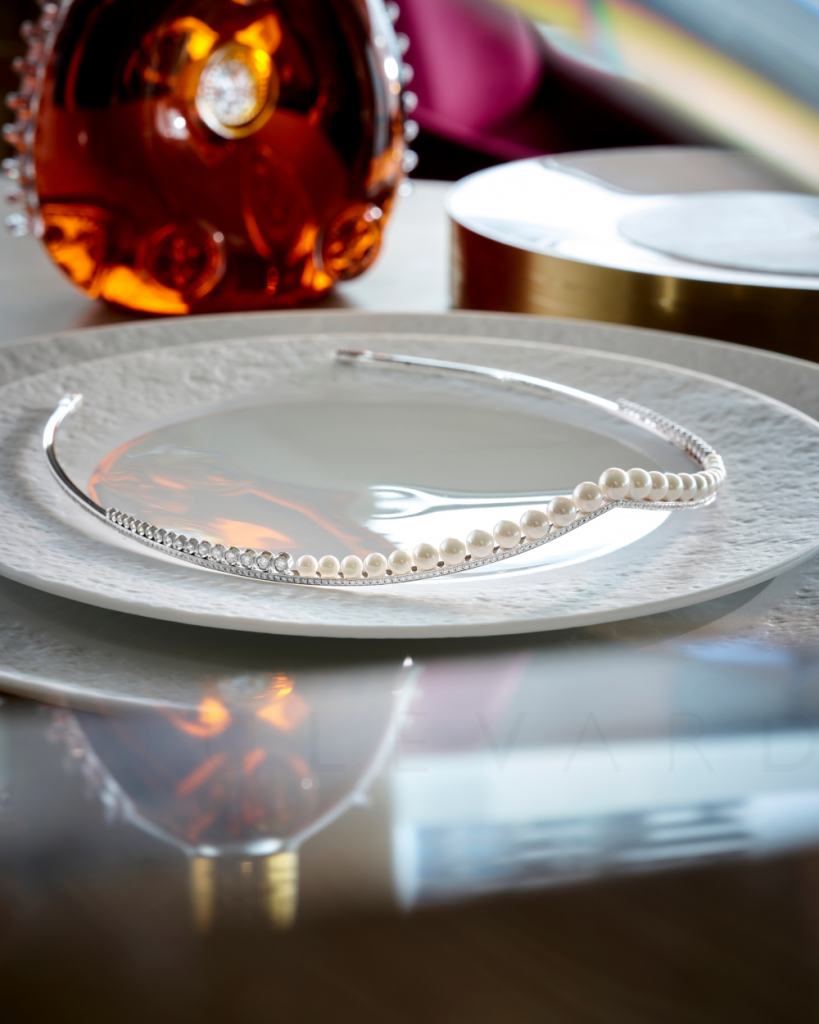
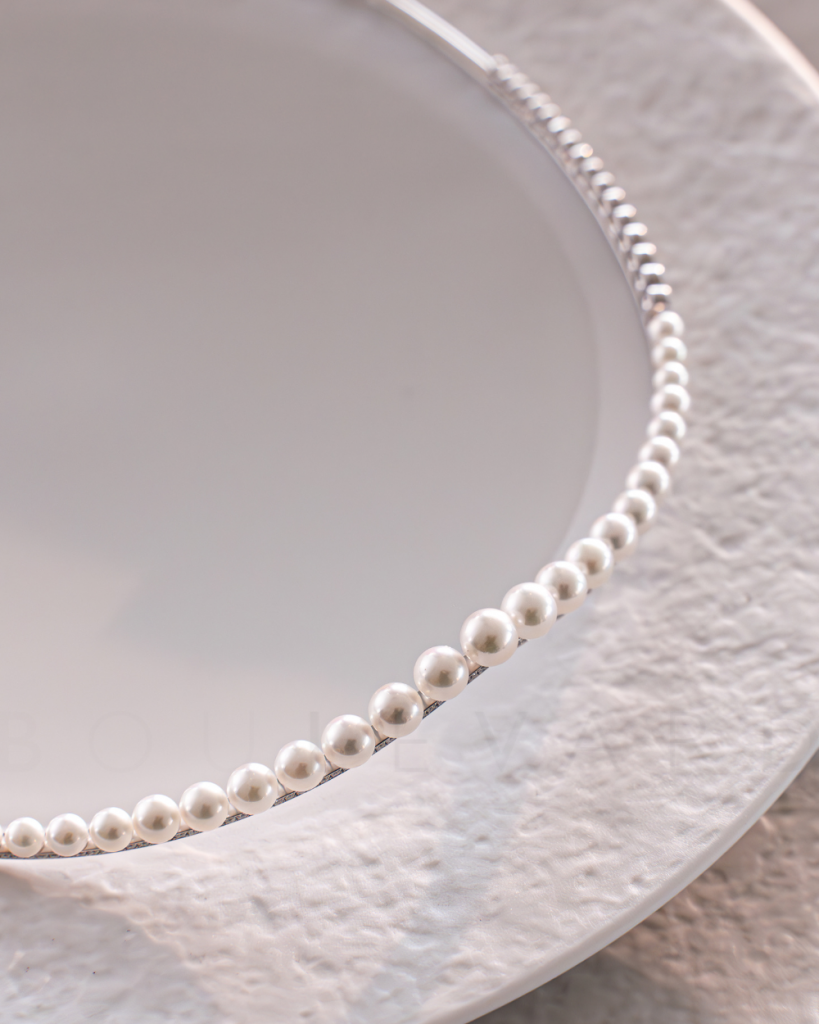
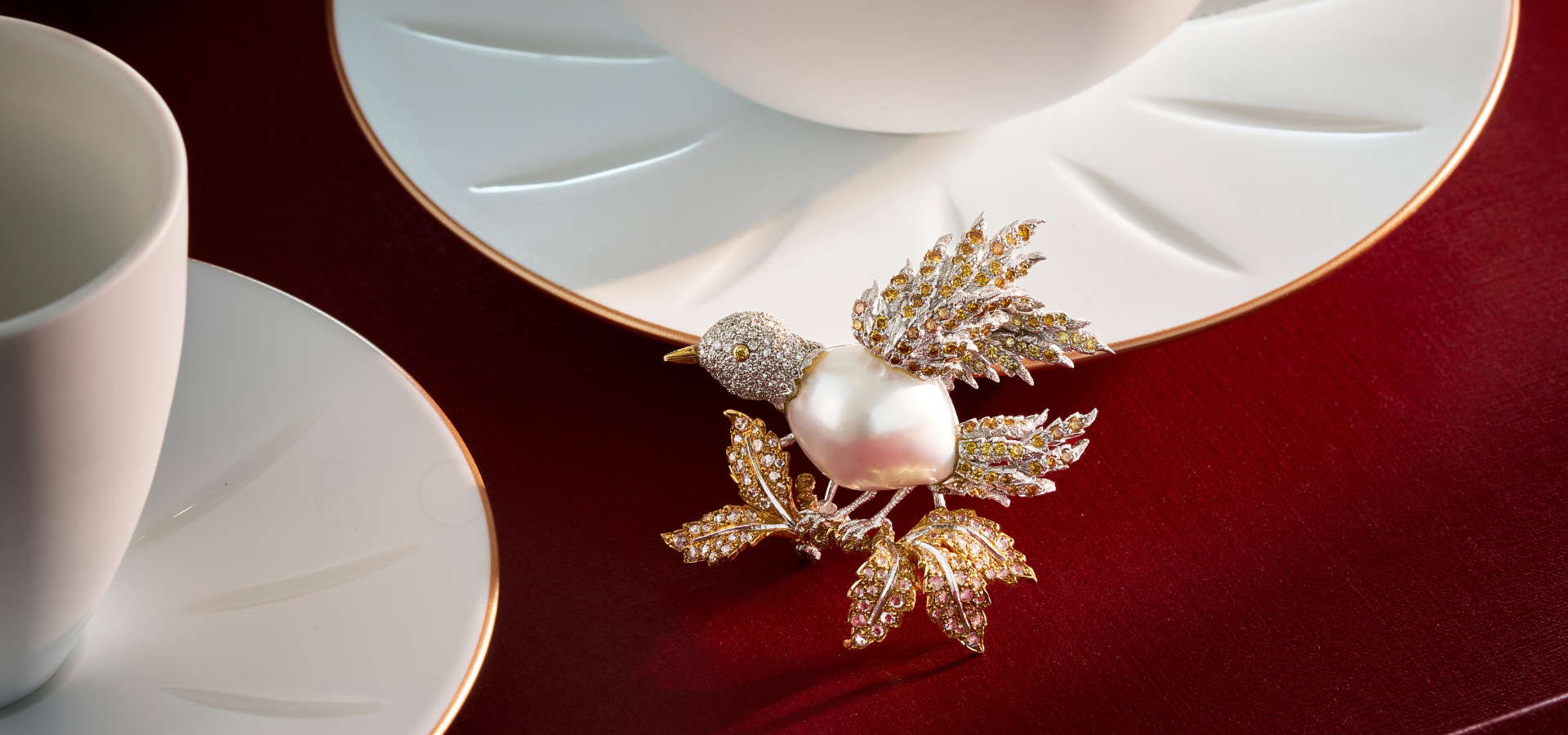
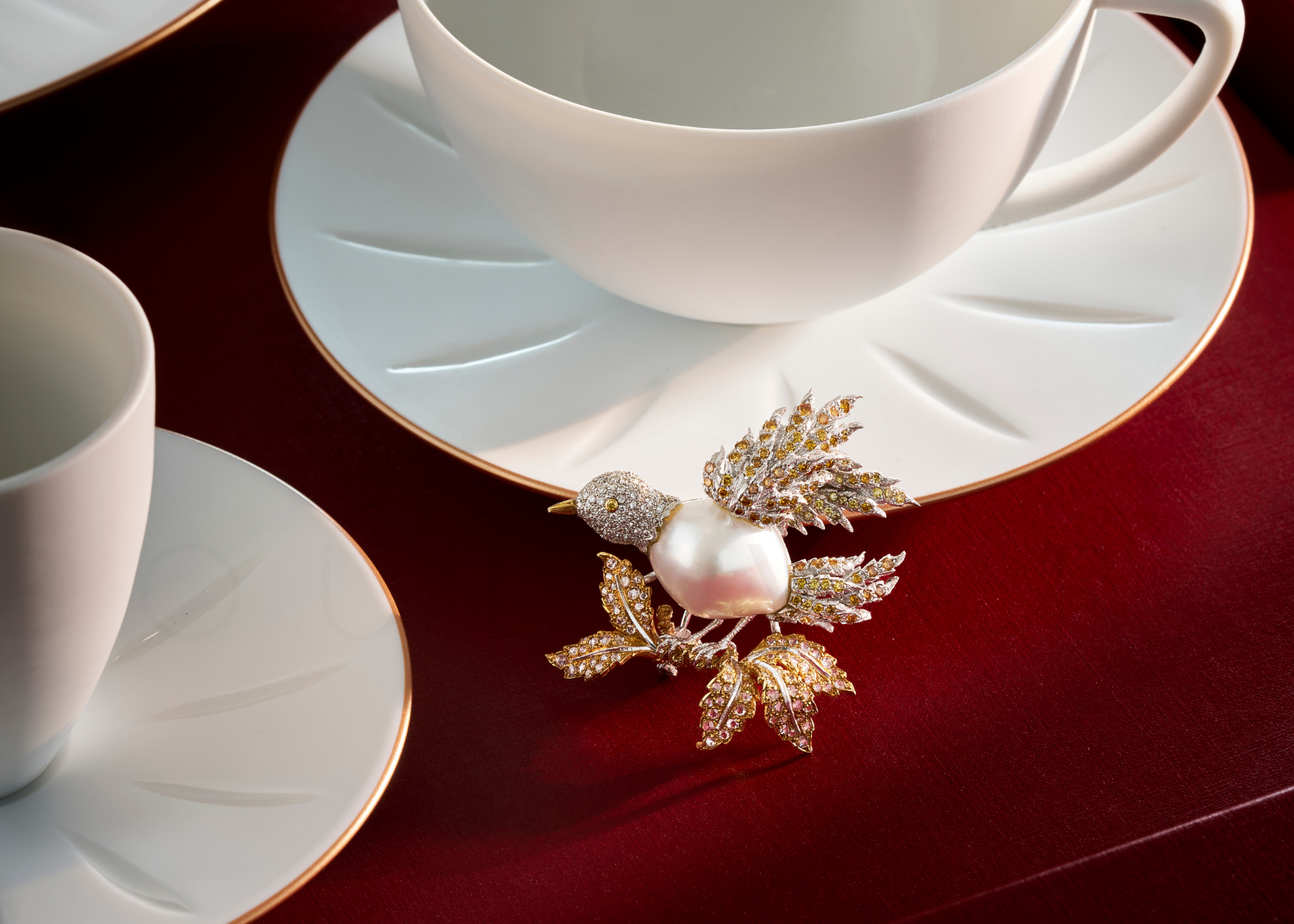
“Joséphine Aigrette” hair ornament in white gold, set with cultured pearls and diamonds, by Chaumet; “Soil is our Soul” dinner plate, by J.L. Coquet for Louis XIII. Top: Brooch set with 28.22 carat Baroque pearl, fancy and white diamonds, by Buccellati; “Light of time” dessert plate and teacup, by J.L. Coquet for Louis XIII.
Everything changed in the 1920s when the Japanese—being the Japanese—revolutionised the industry with cultured pearls. The process involves inserting an irritant into the mollusc so that it builds nacre around it, eventually forming a pearl. It sounds simple, but it transformed pearls from rare accidents of nature into something that could be cultivated with relative predictability.
Natural pearls remain extraordinarily rare today. Free-diving for natural pearls survives mainly in the Arabian Gulf, particularly in Bahrain, which remains the main modern centre for natural pearls. Divers continue to collect oysters in the Gulf, though in very small numbers. As one Bahraini pearl trading family put it, divers still bring in natural pearls regularly—but nobody knows what any dive will yield.
“In practice, when a serious collector comes to me looking for a natural pearl of genuine consequence, I am not browsing inventory. I am waiting for estate material to surface,” says Jessline Tan, a GIA-certified private buyer for gemstone collectors and founder of Gemelle. Estate material refers to pre-owned jewellery that often surfaces on auction or private sales.
Tan points to the Marie Antoinette 18th-century pearl and diamond pendant, which sold for over CHF 36 million in 2018—eighteen times its estimate.
“I have had clients ask whether that result was a one-off,” she says. “My answer is always the same: it was not. It was the market correctly pricing something that can never appear again. Historic provenance of that calibre does not get cheaper over time.”
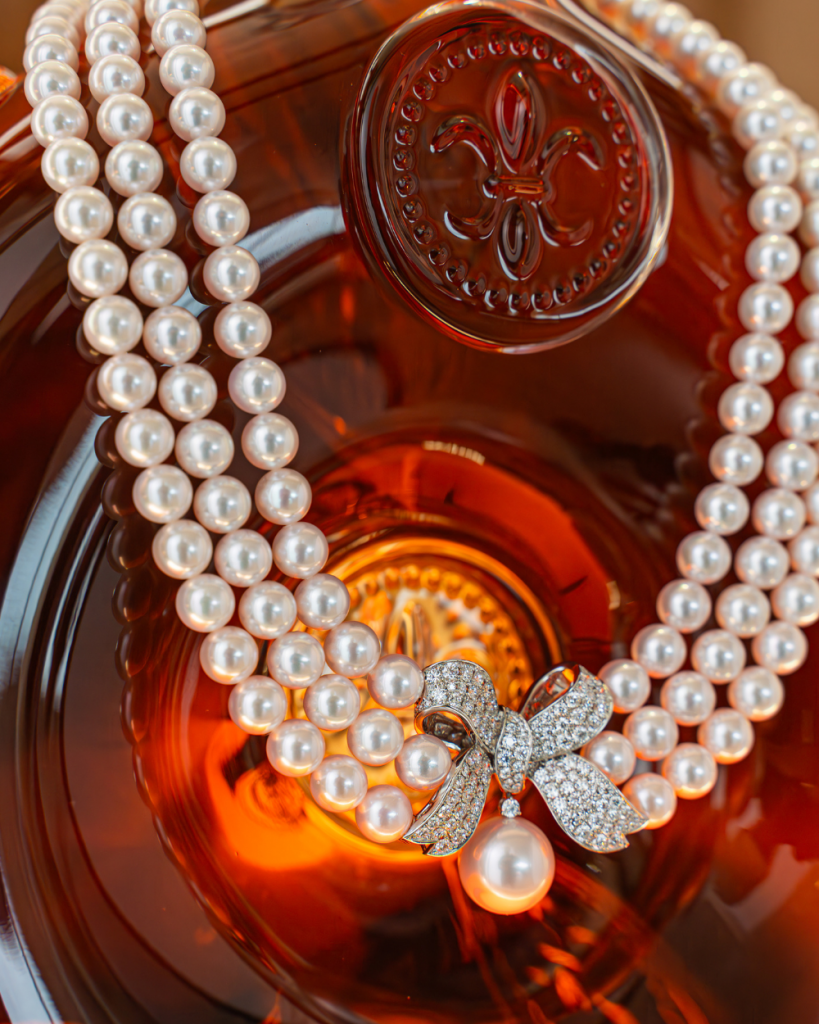
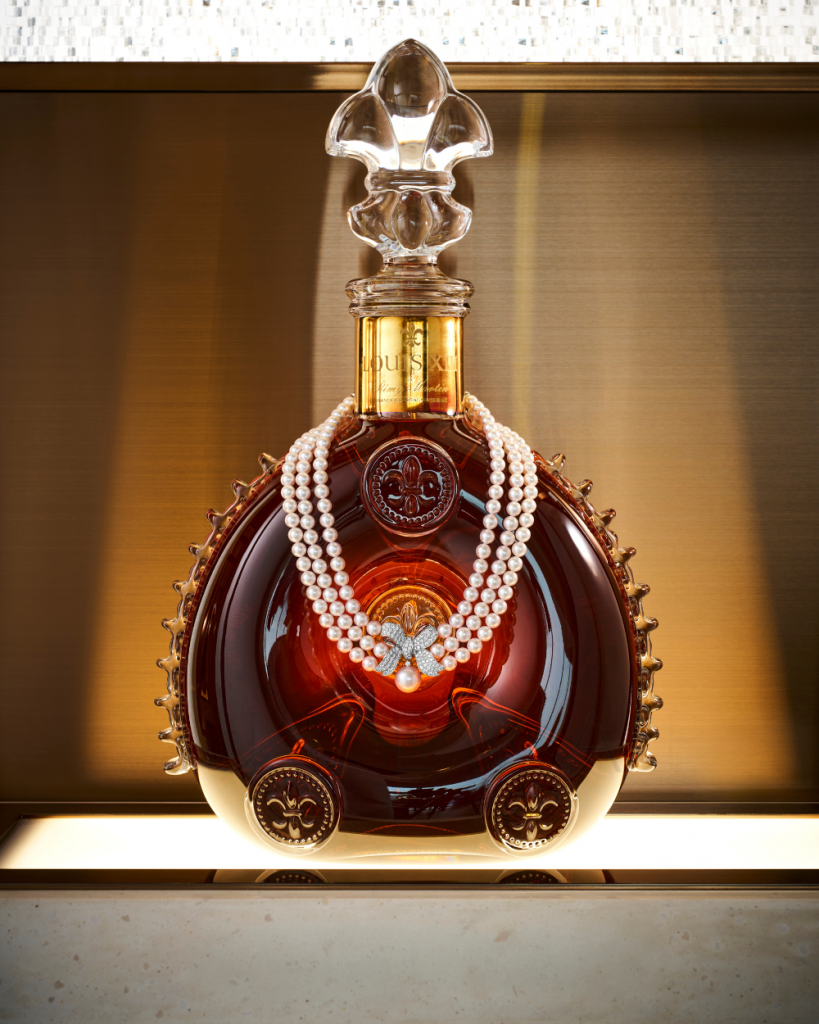
“The Bows” necklace in white gold, set with a white South Sea cultured pearl, Akoya cultured pearls, and diamonds, by Mikimoto; Louis XIII Time Collection: The Original 1874.
Auction data reinforces the point. Throughout 2024, natural pearl pieces routinely achieved two to ten times their pre-sale estimates at Sotheby’s, Christie’s and Bonhams.
“The supply of natural pearls will not increase,” Tan says. “The estate market is the only source.”
Which means collectors cannot approach pearls the way they might approach other categories.
“Natural pearls are not something you build a position in slowly,” she explains. “The estate market surfaces what it surfaces, when it decides to. The collectors who understand that are not waiting for the perfect moment. They know the perfect moment is whenever something exceptional appears.”
At the very top end of the market, she adds, pearl prices rarely drift upward gradually. “They move in leaps.”
Rarity and desirability
And as we have learnt over the years in this column: rarity = desirability = investability.
Tan explains: “At the very top of the market sits the natural saltwater pearl. Not cultured, not farmed, not the result of any human intervention whatsoever. The distinction between a natural pearl and a cultured one is not a matter of grade or preference. It is a fundamental difference in rarity, value and long-term collectability.”
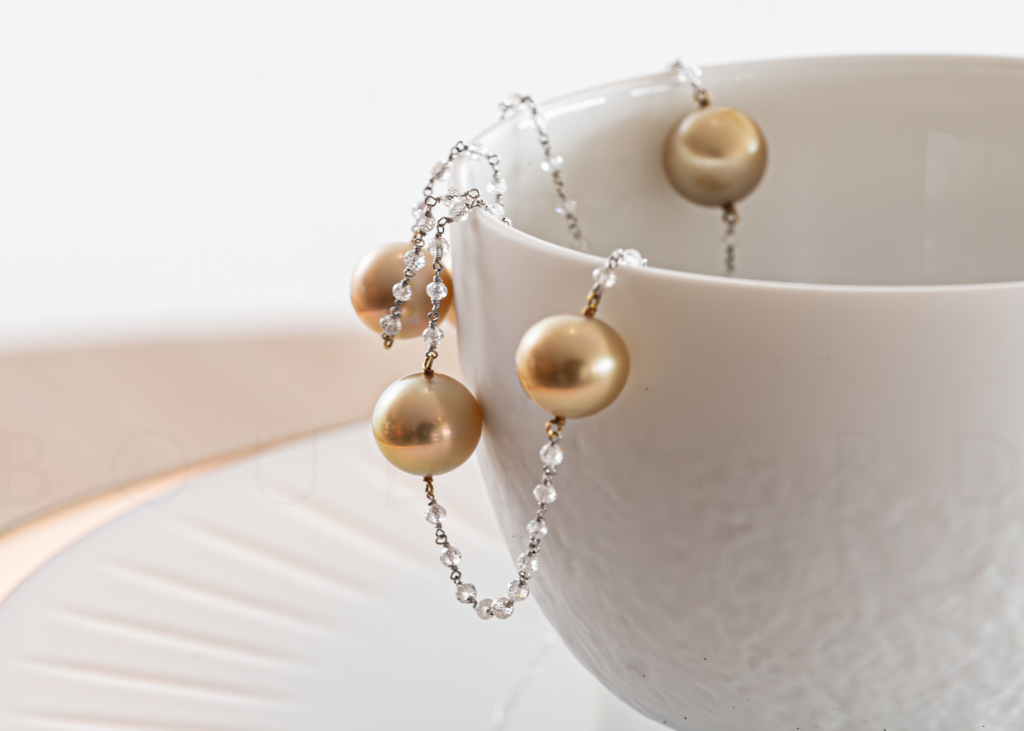
High jewellery sautoir with golden cultured pearls and diamonds, by Chopard; “Light of time” dessert plate and teacup, by J.L. Coquet for Louis XIII.
She mentions four categories that are the most sought-after: natural pearls of historic provenance, exceptional natural South Sea pearls, the finest untreated Akoya pearl strands, and the elusive conch and melo melo pearls.
A cultural inflection point
That’s not to say that cultured pearls are less precious or investment-worthy.
Explains Tan, “Cultured pearls occupy a much wider spectrum than most collectors realise. At the commercial end, the category is vast and largely undifferentiated. At the very top, it narrows considerably. There are four varieties I focus on when advising clients at the finest level: Australian South Sea pearls, Golden South Sea pearls, Japanese Akoya pearls and Tahitian pearls.”
These are rarer, more delicate, and far more vulnerable to environmental change.
Tan notes that Japanese Akoya pearls present a particularly urgent situation and are dwindling in numbers.
“At peak production in 1967, Japan harvested 138 tonnes. In 2023 that figure had fallen to 13.2 tonnes, the lowest since government records began in 1956.”
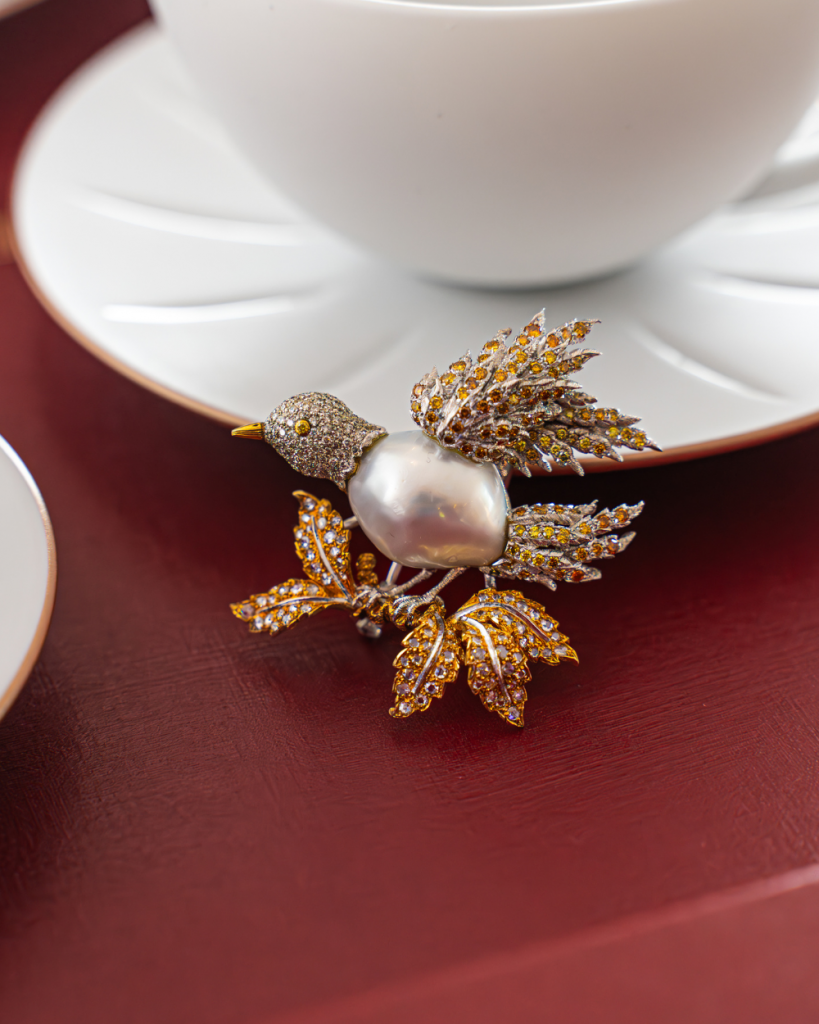
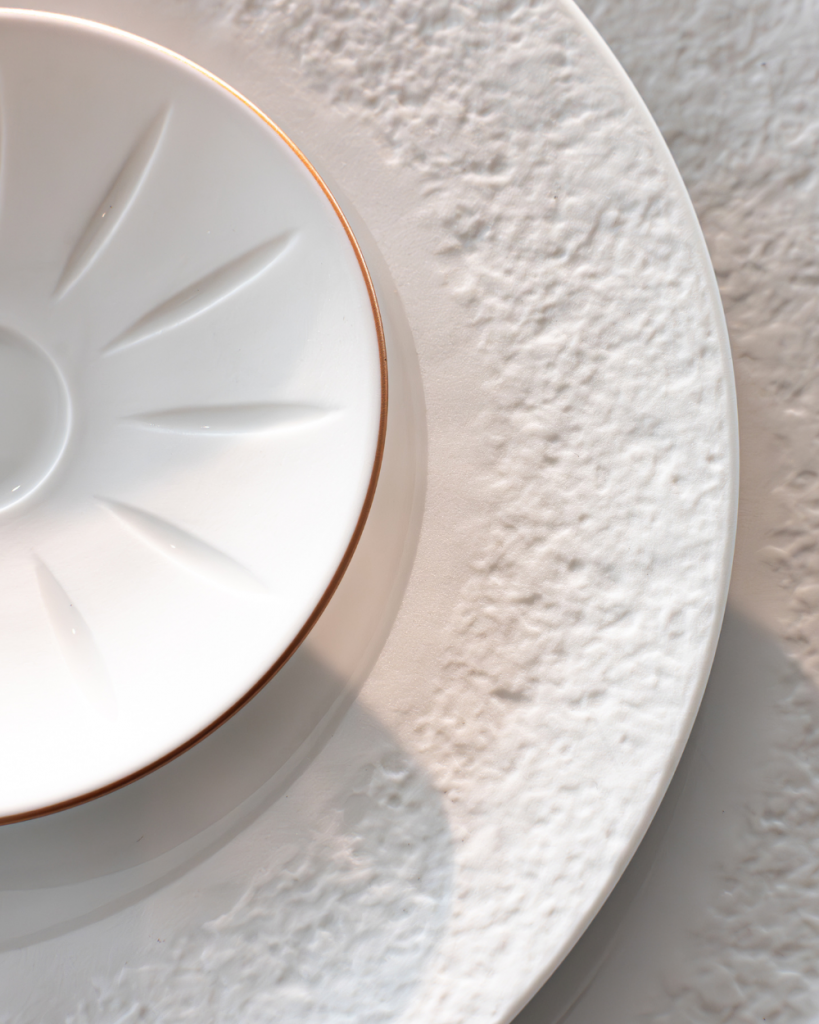
Left: Brooch set with 28.22 carat Baroque pearl, fancy and white diamonds, by Buccellati. Right: “Light of time” dessert plate and “Soil is our Soul” dinner plate, by J.L. Coquet for Louis XIII.
The number of pearl farming businesses has declined by 77 per cent over the past thirty years, with climate change accelerating the problem. Warmer waters have left juvenile oysters vulnerable to a new strain of birnavirus that has devastated farms.
Moreover, the farmers who remain are ageing—and when a farm closes today, it rarely reopens.
Akoya pearl prices more than tripled between 2023 and 2024. A correction followed in 2025, but prices have not returned to pre-surge levels. The underlying supply problem that caused the spike has not been resolved.
“I spoke with a Japanese pearl trader at a trade fair in 2024,” Tan says. “He told me that what he used to fill a tray with, he can now barely fill a small pouch. He was not being dramatic. He was describing his season.”
“I can’t make more of this”
Tan says she has seen increasing demand for natural pearls from family offices and UHNW private clients across the region who are beginning to consider pearls within alternative asset portfolios. “The framework is the same one applied to any serious investment: scarcity, verifiable provenance, portability and irreplaceability.”
A natural pearl fulfils each of these criteria. “It’s the outcome of a biological process inside a living organism, in a specific body of water, at a specific moment in time.
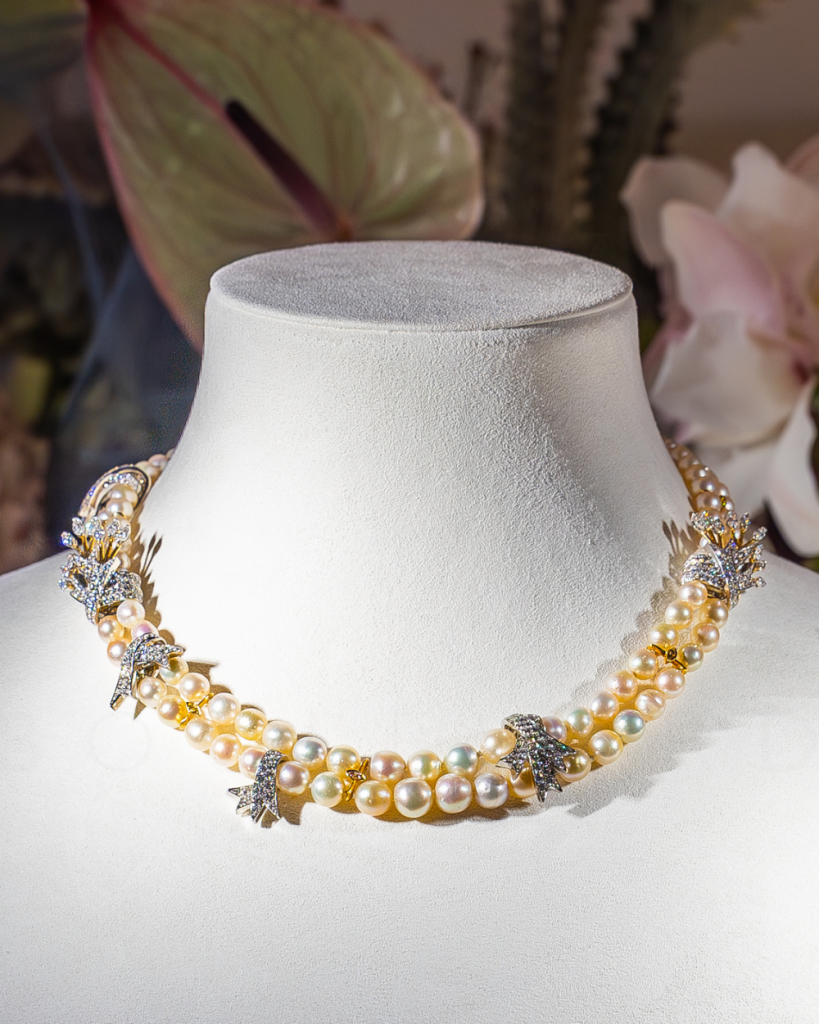
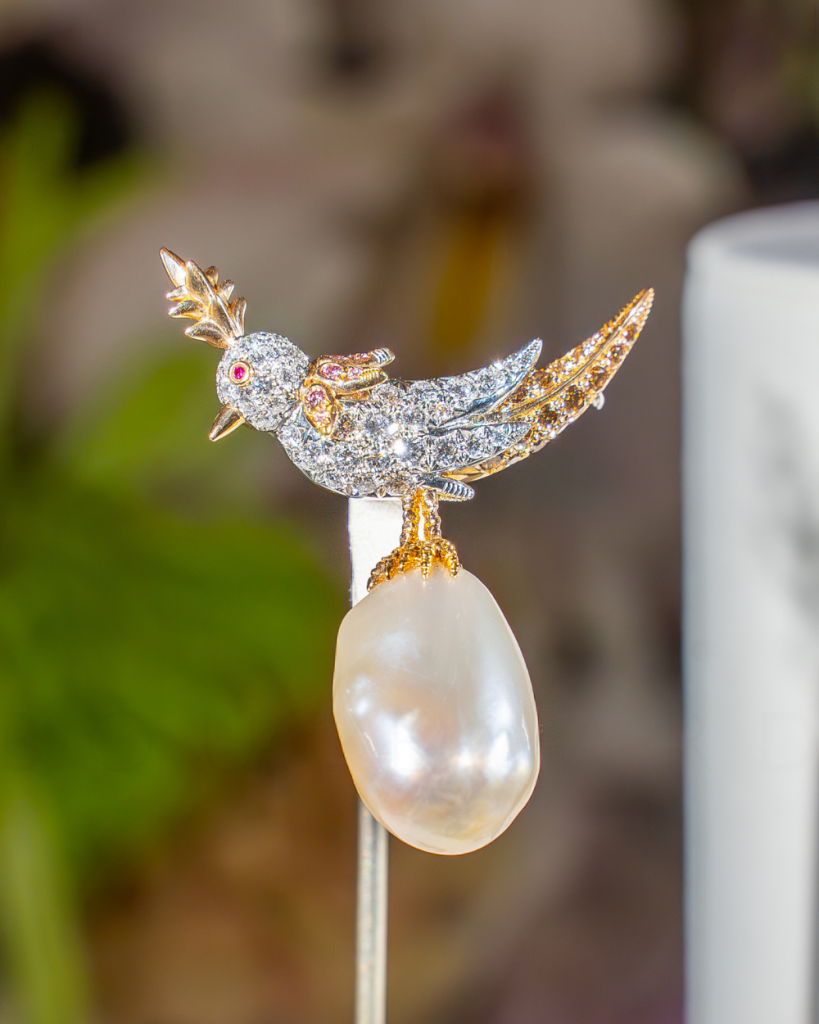
Left: “Bird on a Pearl” necklace with near-round natural saltwater white cream pearls totalling over 316 carats. Right: “Bird on a Pearl” brooch with a button natural saltwater white pearl weighing over 29 carats. Both by Tiffany & Co., presented during an exhibition in Singapore featuring the largest private collection of natural pearls from Hussein Al Fardan, a consummate connoisseur and passionate advocate of Persian Gulf pearls.
“When that ecosystem is disrupted—through climate change, through ocean acidification—that moment disappears permanently. It cannot be recreated.
“A family office principal from China said it better than I ever could. He was looking at a strand of pre-20th century natural pearls with documented provenance. He said: ‘Everything I own, someone can make more of. Except this.’”
He bought it.
Read next:
5 bed POA
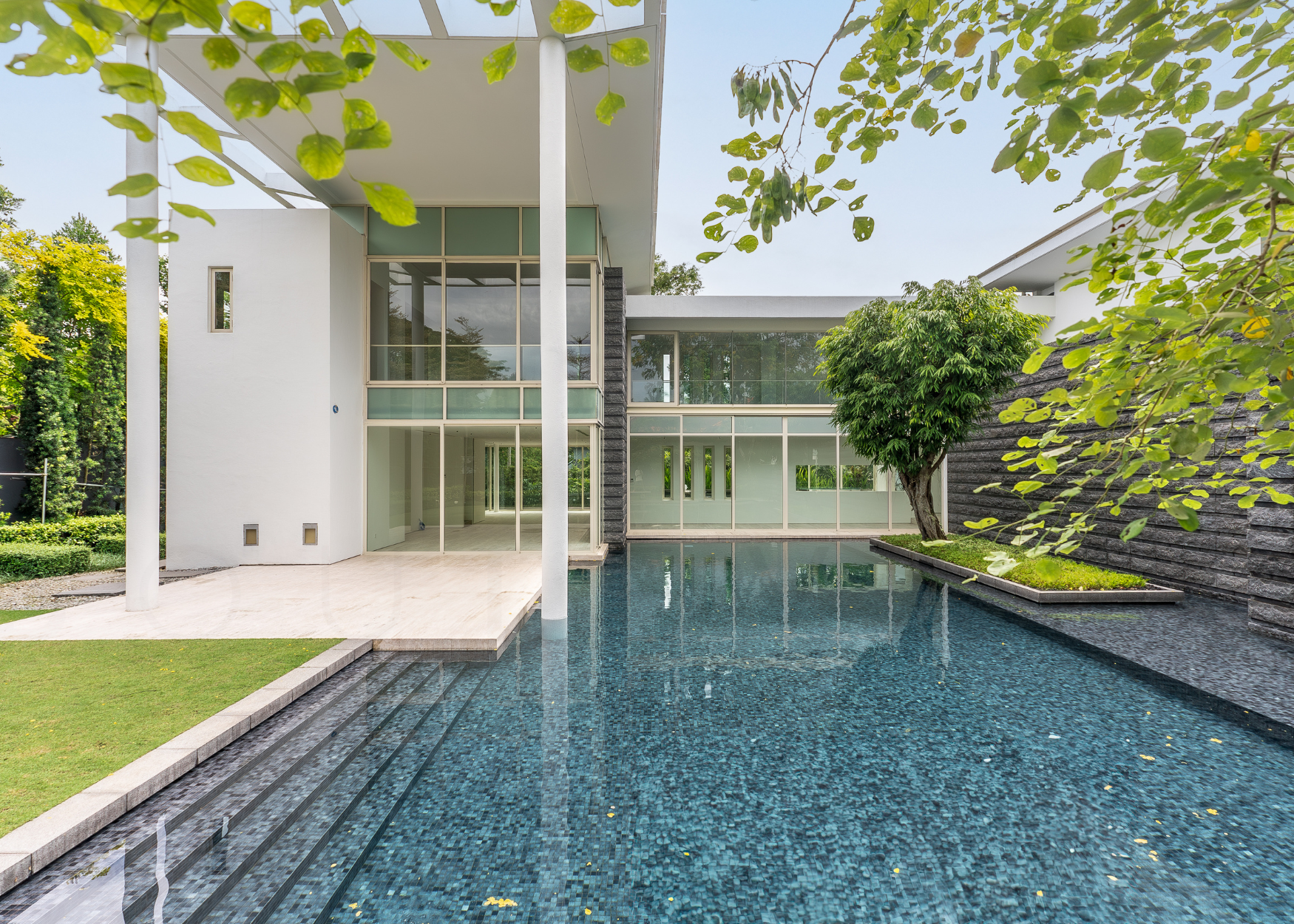
Belmont Road, D10 5 bed 43,800,000 SGD
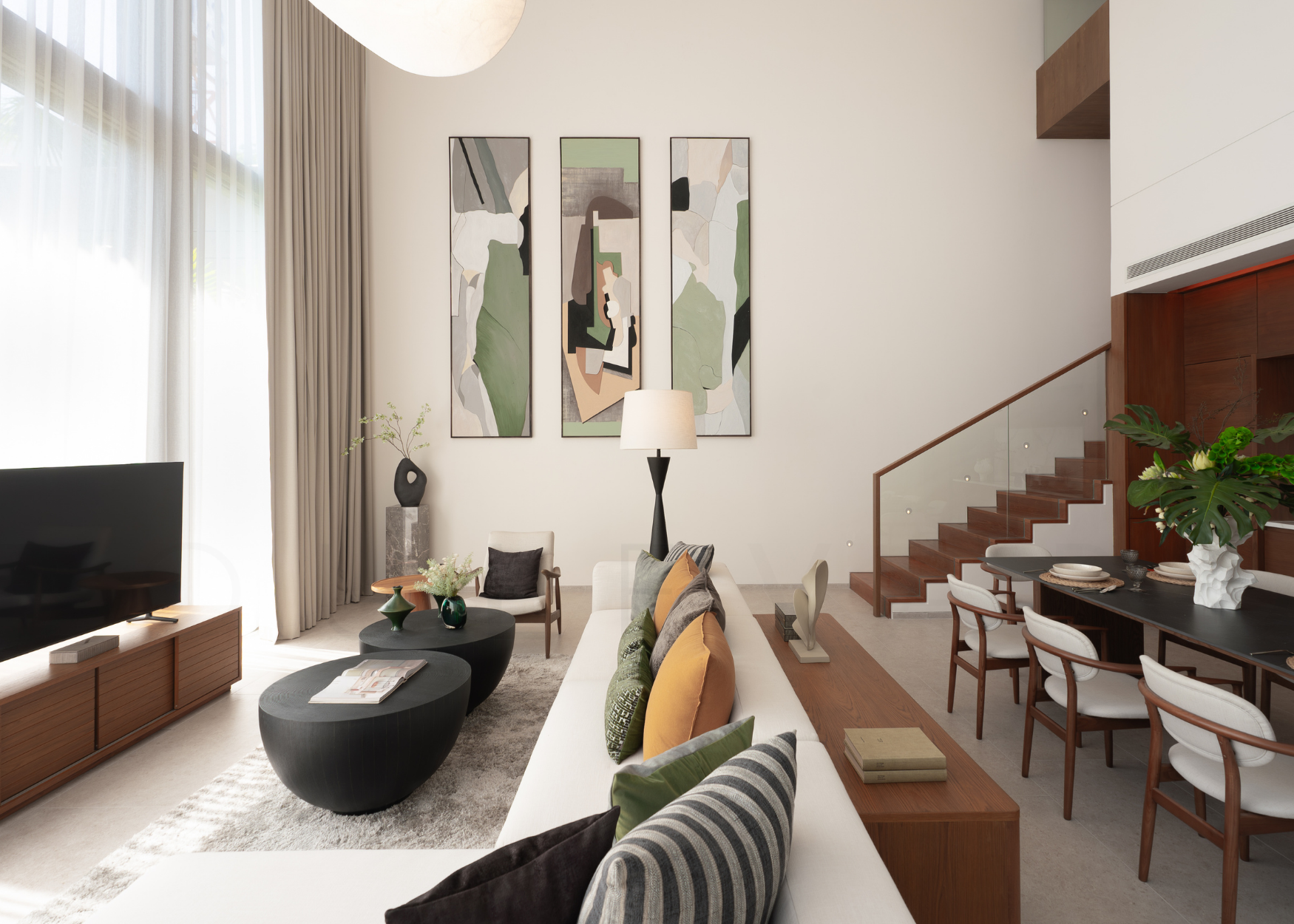
3-4 bed | 2,702 - 8,923 area POA
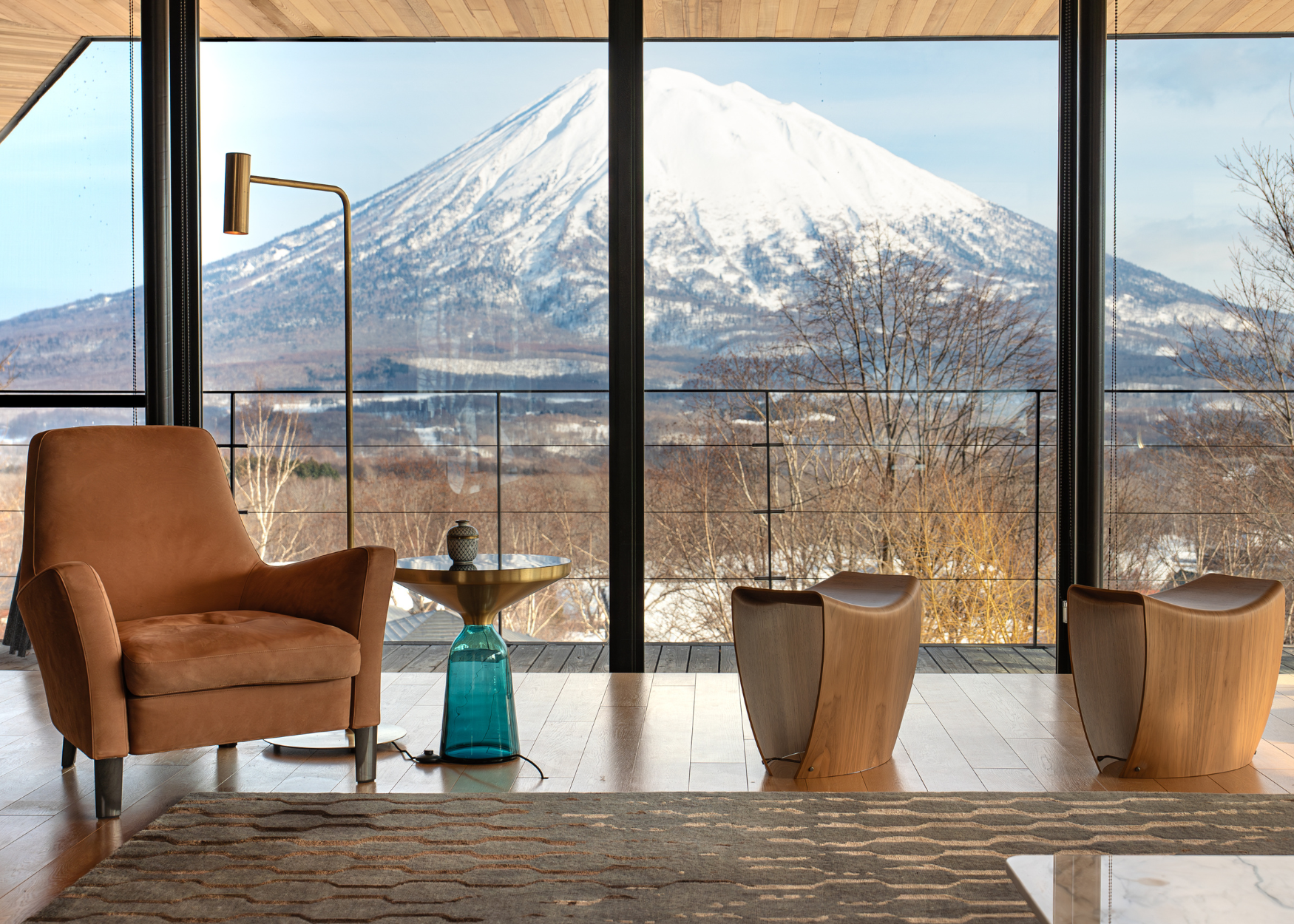
4+1 bed 20,000,000 USD
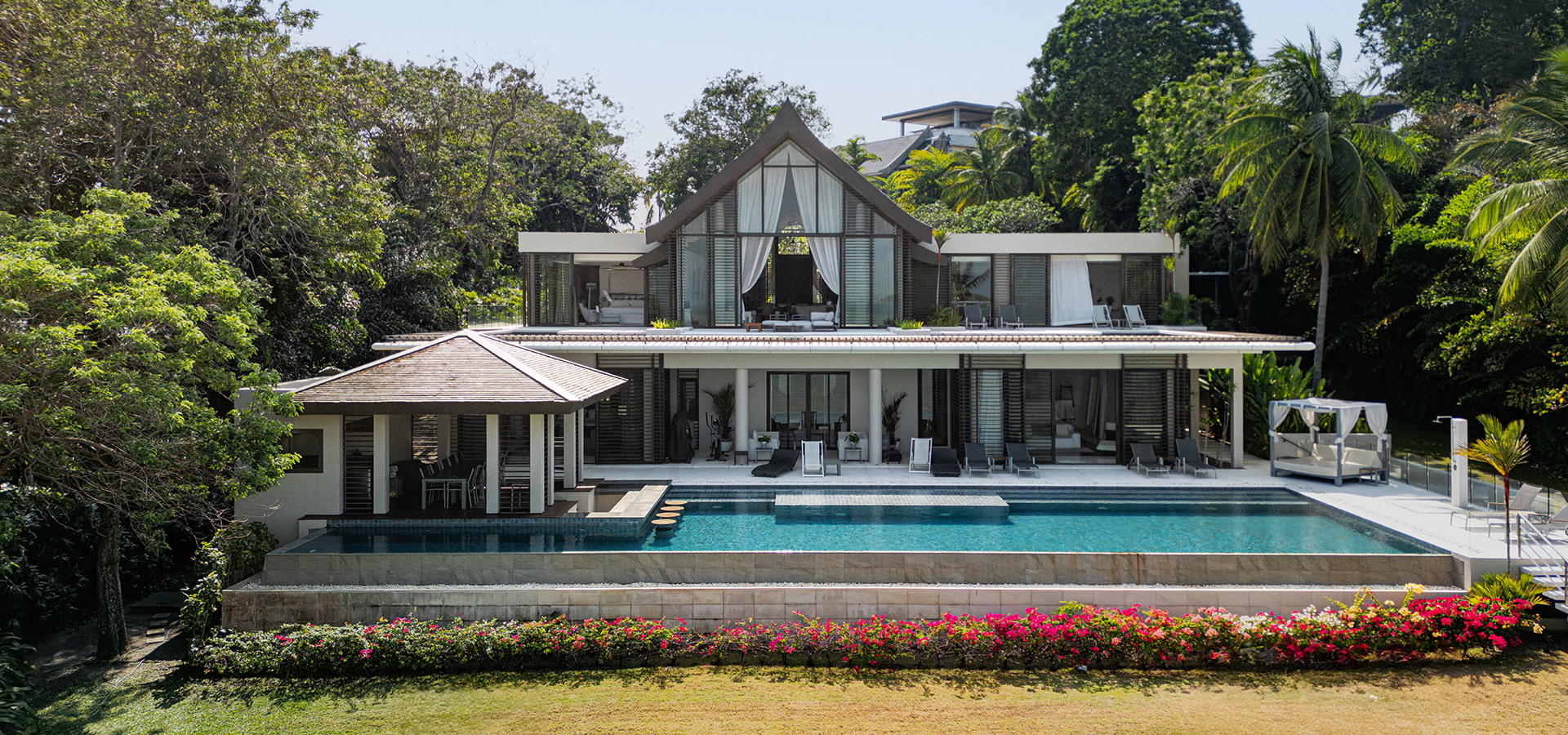
4 bed POA