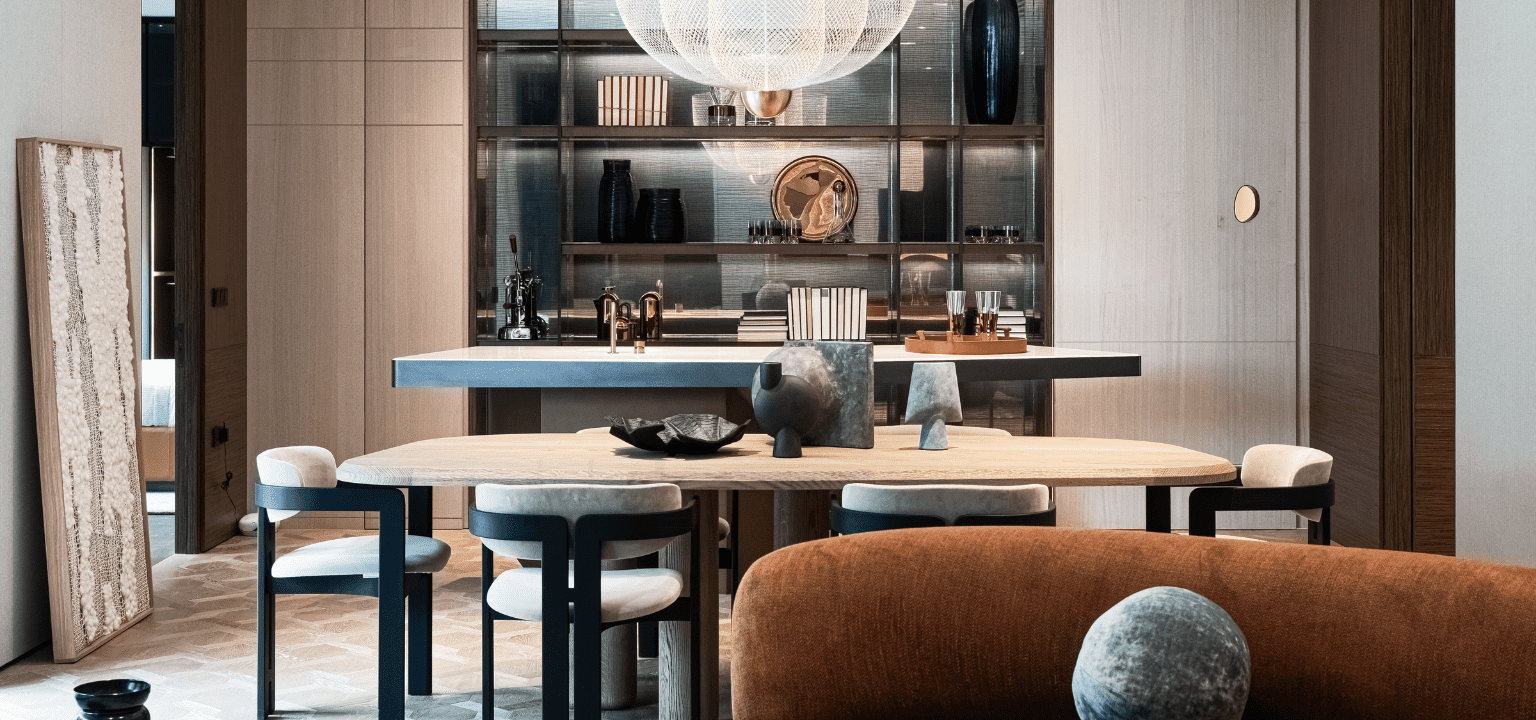
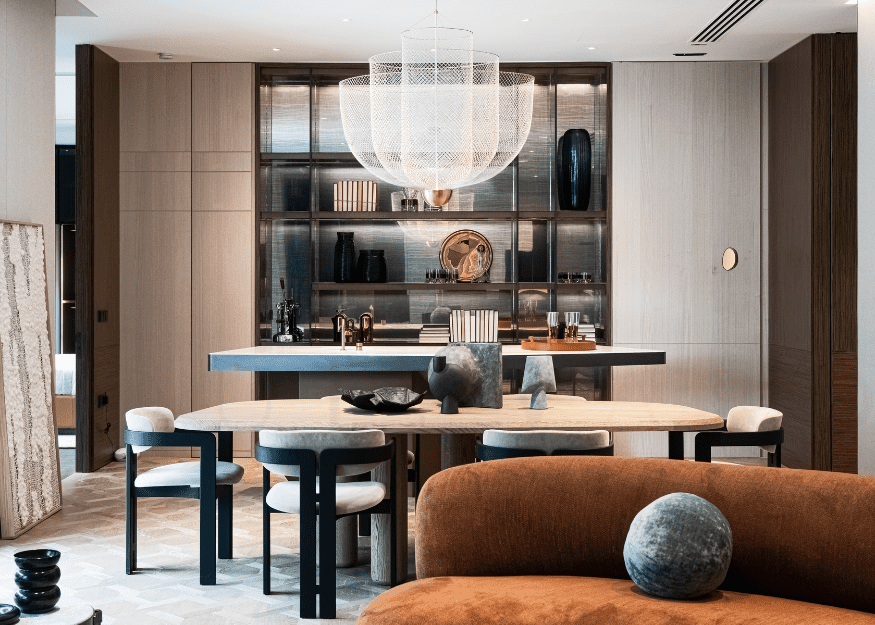
The interview: Yabu Pushelberg’s Glenn Pushelberg on the bleeding, prestige edge of interiors
by Hamish McDougall
Photography by Jin Cheng Wong
“At the ultimate luxury level, people want spaces that feel less ‘designed’ and more ‘distilled’,” muses Glenn Pushelberg, the co-founder of iconic design firm Yabu Pushelberg and one half of duo George Yabu—they founded the company in 1980.
Yabu Pushelberg’s four-decade portfolio spans landmark hospitality and residential projects worldwide, from Raffles Sentosa Singapore to ultra-prime private residences across Asia, Europe and North America, including the MeyerHouse in Singapore and Savyavasa in South Jakarta. Known for crafting interiors that privilege emotional resonance over visual spectacle, the firm’s approach centres on carefully orchestrating space, materiality and cultural context to create environments that feel intuitive, enduring and deeply connected to place.
Rather than pursuing trend-driven statements or highly stylised moments, Pushelberg emphasises the importance of cohesion and lived experience, arguing that the most successful interiors emerge when every element works together to shape how people feel within a space.
In this exclusive interview with Boulevard, he discusses the evolving definition of luxury, the growing creative opportunities within residential design, and why the future of high-end interiors lies in refinement, authenticity and a deeper understanding of human experience.
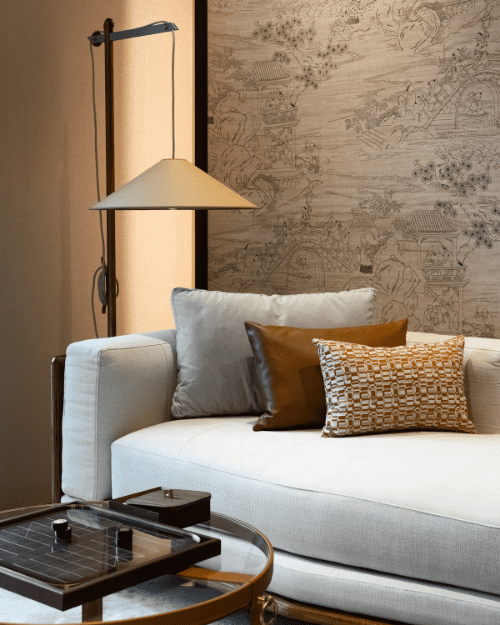
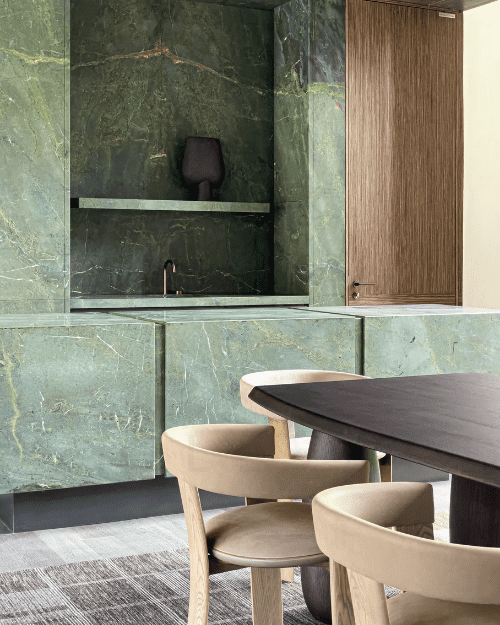
The MeyerHouse in Singapore features bespoke furniture and exquisite finishes, including a built-in bar with luxe onyx (top), marble countertops (right), Axor fittings, and a freestanding Maison Apaiser tub.
Boulevard: How do you define Yabu Pushelberg’s approach to design?
Glenn Pushelberg: I think our best work comes when we can bring all the elements of an interior together to create an emotional experience for the user. It’s not about one simple or bombastic idea, but about how all the parts combine to make someone feel serene, inspired, sensual, or whatever the intended emotion may be. That’s when the best interiors are made, and I think we achieve that most of the time.
Blvd: Does that approach change when you move from one region to another, for example from the US to Europe, then to Asia? Are the expectations different, and how do you balance these influences?
Pushelberg: Every place has its cultural differences, but there’s a lot of commonality. Everyone is looking to experience spaces that they can connect with emotionally, and I think that’s fairly universal. People may not necessarily choose us for that reason, but it’s the result we aim for, and I believe you can achieve that anywhere.
A lot of design today focuses on Instagrammable moments, which is fine, but it’s often fleeting. To create lasting interiors with a sense of modernity, you want people to feel they want to return to enjoy the space. That’s what we aim for in our work.
For example, when we work in a place like Bali, which has rich culture, history and iconography, it can be easy for projects to start looking the same. The challenge is making each project have its own voice and personality, so it feels like it belongs there, rather than just appropriating what exists. Abstracting elements, reinterpreting them, and creating something new that still feels right—that’s really the key.
I do think inspiration can be found everywhere—from a flower, from history, from colour stories. For example, when I was in Japan, we were talking about the use of colour. There are Japanese colours, Chinese colours, Korean colours—each with stories that feel right for their place. That’s one simple example of understanding a place more fully.
If you’re working in Europe, whether on a residential or hotel project, you consider what a mansion means, what symmetry conveys, and how to create progressive spaces based on historical references.
In contrast, traditional Japanese homes follow a very different approach—asymmetry, surprises, shadows—with entirely different spatial principles.
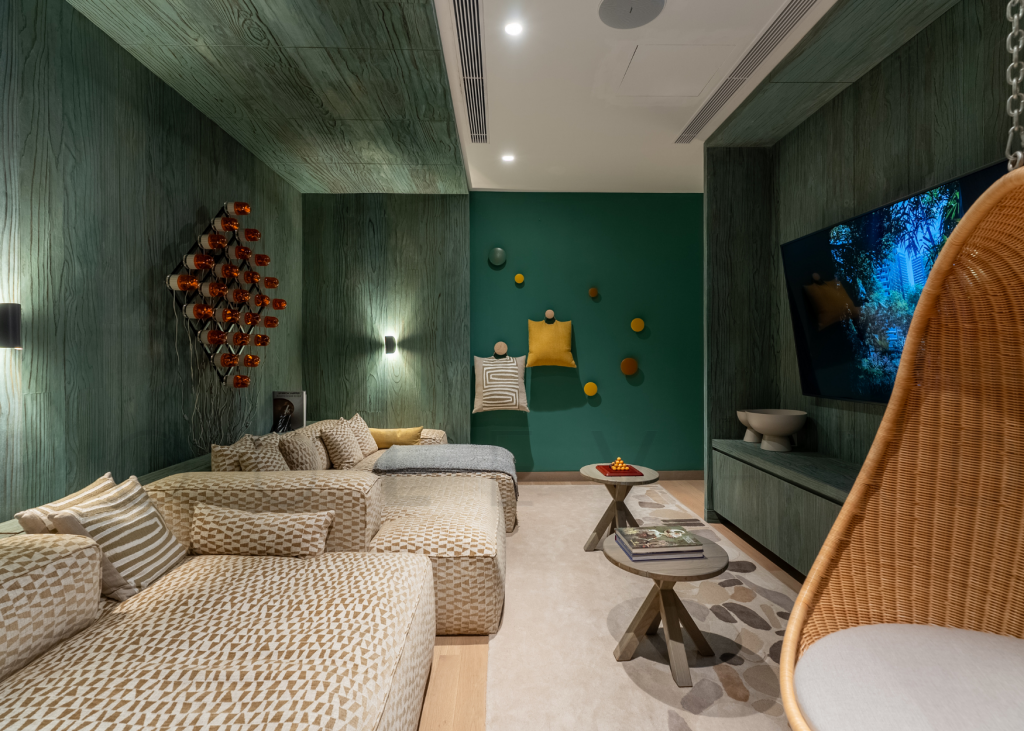
Savyavasa, a designer condo in South Jakarta, Indonesia, features a luxuriously appointed entertainment room.
There are more opportunities to do creative work in residential design in Asia than in America. In some markets, there’s a kind of formula, often controlled by marketing teams—which can feel a bit restrictive. Last year, for example, we completed a residential project in Tokyo where we were able to manipulate the spaces and create strong art moments around a clear concept.
We also have a project in Shanghai where we’re exploring the relationship between nature and human presence, drawing on the area’s history. The architectural concept for the interiors is strong, then it breaks down into softer, more residential spaces as you move through it. Residential design can sometimes feel easy—if you make a beautiful interior, that’s considered enough. But when you experiment with shapes, forms, and concepts based on what you’re trying to achieve, you create a stronger project.
We’re finding that clients in China, Japan, and elsewhere are willing to take that journey with us, which is really exciting. We don’t want to design another generic show flat. That’s not our goal.
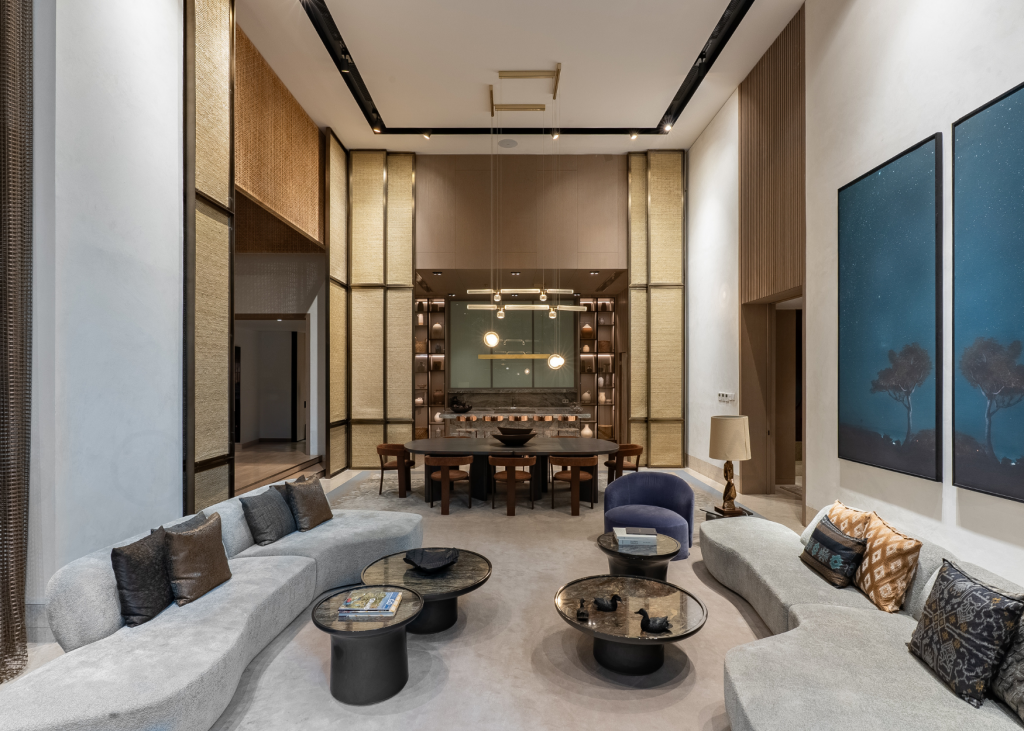
The Savyavasa living and dining area features high ceilings and imported marble flooring.
In some cases, the design also benefits the client commercially. For instance, by introducing a strong design brand in Japan, a residential project sold for USD$200 million instead of the anticipated USD$50 million—the most expensive apartment in that market.
It’s often easier to demonstrate the commercial value of hotel design, but I truly believe that strong, meaningful residential design also adds significant upside for owners, and that’s the story we tell. In doing so, our role is to understand these ideas deeply and translate them into our work rather than simply appropriating them.
Blvd: Do you take a different approach to hospitality projects compared with residential or commercial projects, or is it all the same?
Pushelberg: There are slight differences. When designing a hotel, you generally plan for order and repetition. For example, if you’re designing 200 bedrooms, there has to be consistency.
In a residence, on the other hand, you don’t want matching lamps, tables and so on—you want individuality.
You can achieve style in both hotels and residences, but the approach is slightly different because people pick up on subtle cues, often subconsciously, about whether a space feels like an extension of how they want to live or temporarily experience life.
Take Raffles Sentosa Singapore, for example. Our goal was to understand the essence of the Raffles brand, make it contemporary while respecting its heritage and DNA, and adapt it for a relaxed, beachside experience.
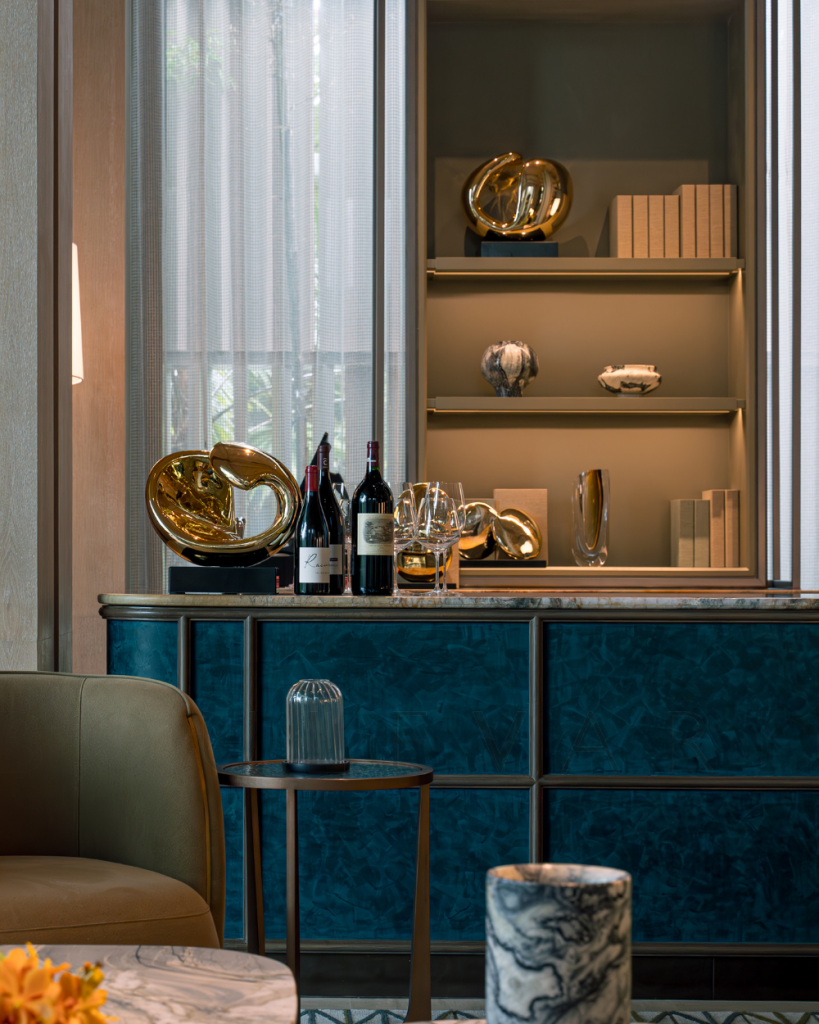
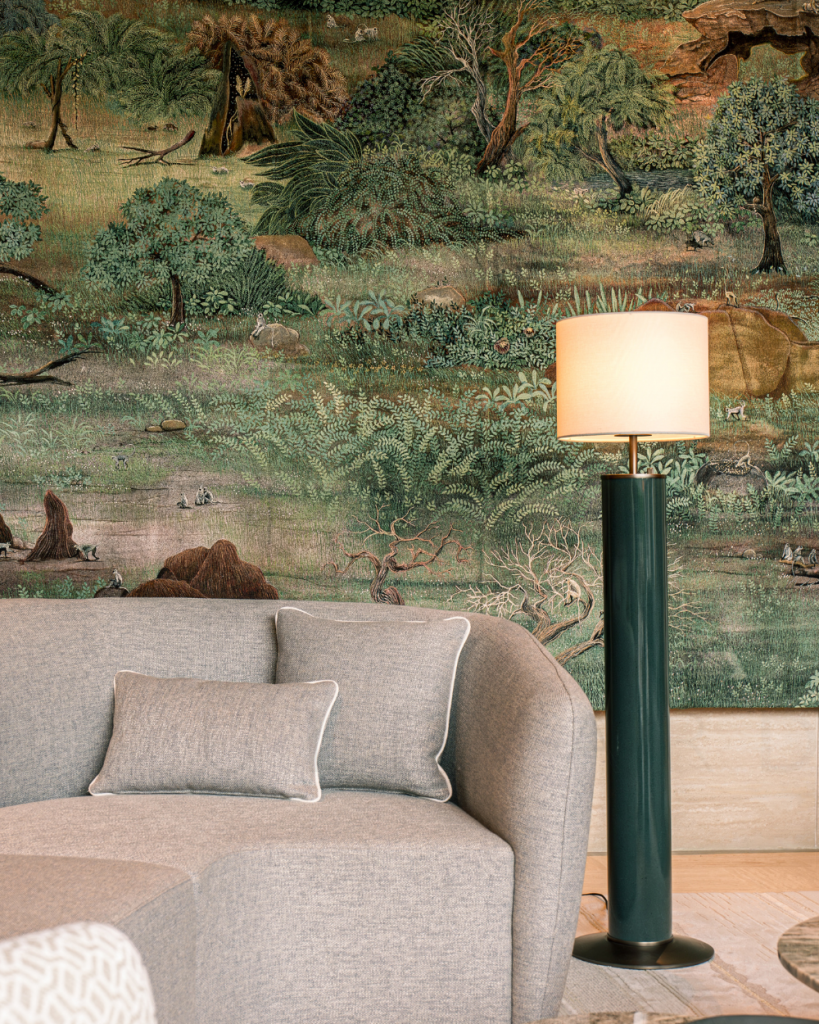
The Raffles Sentosa is Singapore’s first villa-only resort, featuring 62 villas with local flora and fauna-inspired interiors.
Initially, when we started the project, we considered making it a purely contemporary resort, but it felt too generic. Raffles Sentosa is about layers—colours, patterns, and a sense of history. The original house has large, symmetrical public spaces, while the resort can be more asymmetrical, encouraging guests to slow down and enjoy the environment.
Every decision, from planning to landscaping, is designed to make the space feel right for the place, the brand and the people.
Blvd: Is there anything about luxury design today that surprises you?
Pushelberg: There’s so much wealth at the top, and the concept of luxury is constantly evolving—it’s not static. We start thinking about what people want next in luxury.
Everyone has explored the bathroom experience to the extreme, so now the focus is shifting to the bedroom experience at the super high end. Bedrooms in luxury homes or hotels are places to relax, work or reconnect, so they’re becoming increasingly important.
Traditionally, separating the living and dining areas from the bedroom has been considered standard luxury. But if you take the same space—say, a 100 sqm—and make the bedroom extravagant, with a connected sofa, full bar and an elevated dressing area, it opens up interesting possibilities.
I also think that at the ultimate luxury level, people want spaces that feel less “designed” and more distilled.
For a project in Antiparos, Greece, I initially presented typical beach property ideas, but they didn’t resonate. I realised the better approach was to focus on the basics—like the beds and general layout—and then let the furnishing and decoration evolve naturally.
For someone who has everything, it’s about giving them space, opportunity and a sensitivity to how furniture and elements are combined.
There are many undiscovered ways forward at this level of practice, and that’s what makes it exciting.
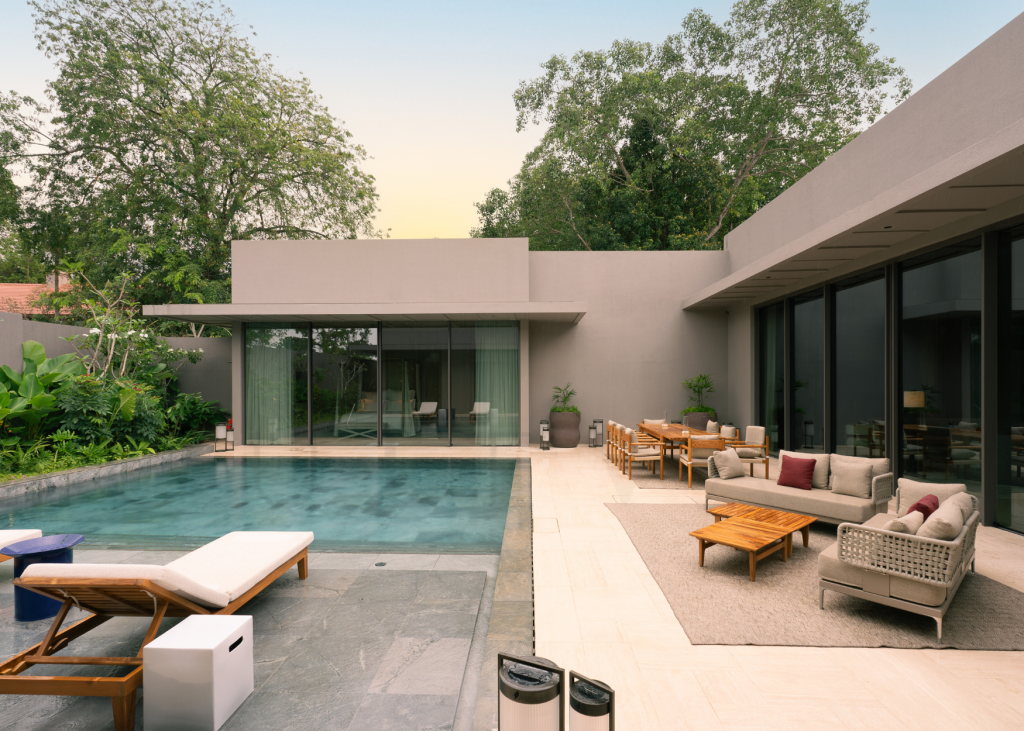
Each villa in Raffles Sentosa has its own outdoor terrace and private pool.
Blvd: For people who have everything, how do you approach the design? And what do clients truly value these days in luxury design? In such a crowded marketplace, how do you create differentiation and establish your own brand?
Pushelberg: People who have seen and experienced everything on earth want privacy, space, intimacy. They want everything to work easily, but they want less in a much more refined and thoughtful way. That, to me, is the goal going forward.
I was talking to someone who creates down duvets from Icelandic ducks—the fur is incredibly soft and light—and he suggested making a hotel concept around this. We spent a couple of days brainstorming the ultimate bedroom experience: making the bed the most extravagant thing, thinking about pillows, dressing gowns, pyjamas, eye masks—creating a bedroom experience that you actually live in.
For example, in traditional Japanese inns, everything happens in one room: the mamasan sets up the tatami mat room, you have tea, you leave, you come back for dinner, you take a bath, and prepare for bed. You can draw clues from these old experiences and reinvent them for modern luxury.
The goal is to create new and interesting ways for wealthy people to have experiences they haven’t thought about, while also giving them choices: stay in the room, go out or connect with nature.
Even small details matter like what plants are appropriate for the experience in Paris versus the countryside of Japan. Maybe a yuzu tree and giving guests a little box of yuzu lemons when they leave. All of that ties together, and it’s all interesting.
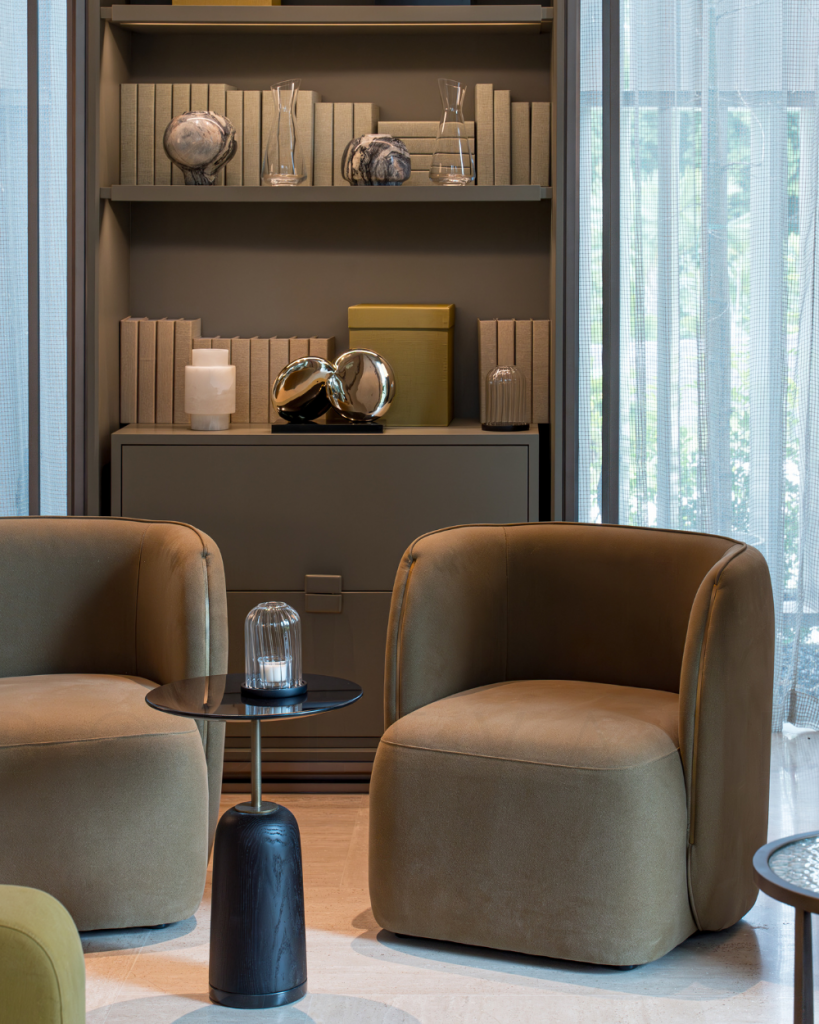
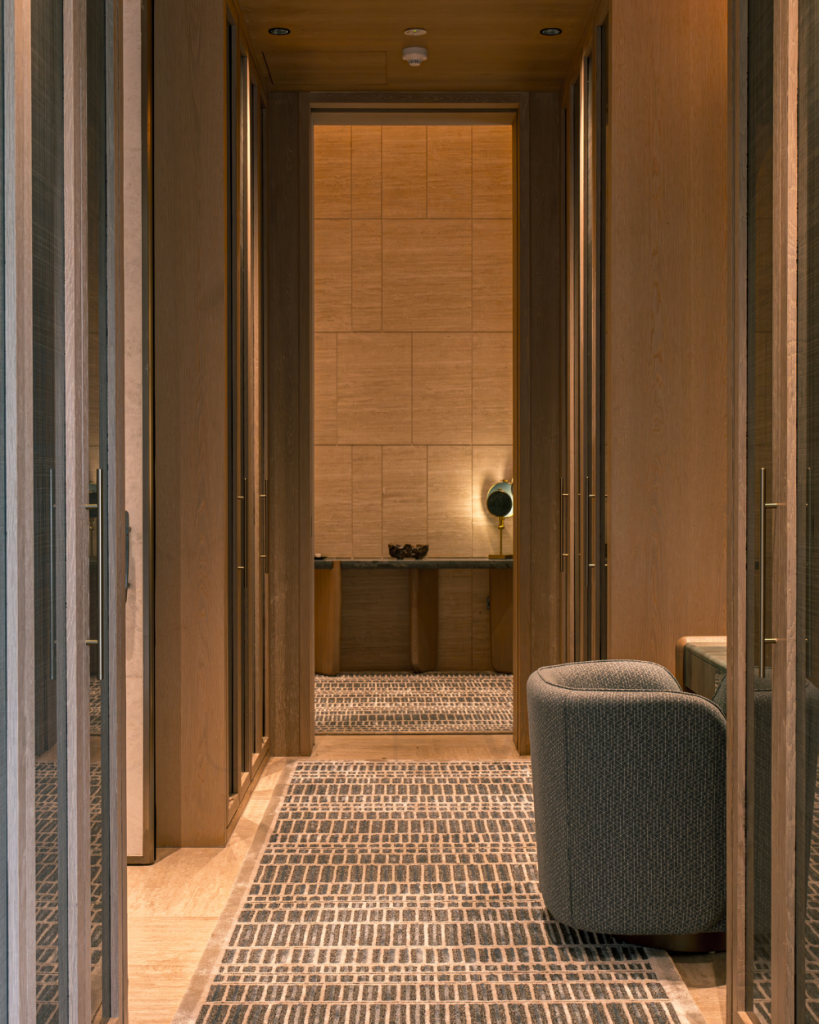
Raffles Sentosa’s interiors feature a neutral colour palette, complemented by original artworks commissioned from local island artists.
Blvd: Over the decades, design seems to have evolved from style or appropriated identity into lifestyle, desire, wellness, and longevity. With that in mind, what have been some of the most creatively challenging projects you’ve worked on?
Pushelberg: I think we do focus a lot on product work as well. We have a team of 12 who collaborate with major companies like Molteni&C, Poliform and others.
For example, we were presenting an idea to Maria Porro, from Porro, for a chair based on shapes and forms. She said it was refreshing because so much furniture design—and interiors—is driven by styling trends.
“Hotdog–shaped sofas are happening, so let’s design one,” she said, but there’s no exploration or context behind it.
The same applies to interiors: there’s a lot of design everywhere, and many people are just following trends and styles. To go beyond that, you have to think more deeply.
Blvd: You also mentioned your team and product design. How has the dynamic at Yabu Pushelberg evolved since 1980?
Pushelberg: We’re about 100 people now—at one point we were up to 150. We have two studios in New York and Toronto, and two people in Milan. Over time, we’ve gradually become a bit smaller, learning about different design disciplines and how to orchestrate them. We have interior designers, architects, product designers, lighting designers and textile designers—all working together to make our projects holistically stronger and more cohesive.
Our goal is to keep improving ourselves and what we do. We think of our team more as an orchestra than a symphony—something we actively orchestrate. It’s much more satisfying and interesting that way. At this point in our careers, we’re focused on exploring new typologies, learning, and finding talented people to strengthen our group.
We’re interested in designing hotels, reinventing worn-out brands that need revitalisation, or creating entirely new brands. We’re exploring new typologies—five to 10 retreat projects in Africa, museum galleries, even airports, which are often artless spaces despite the attention paid to travel. That’s our future, and we’re steadily working toward it.
Blvd: What are you still learning in the space of design?
Pushelberg: There’s always so much to learn. Especially when we work in parts of the world we haven’t explored before—understanding their history, or even their lack of history, is always fascinating. As I mentioned before, exploring new typologies keeps us curious and learning. The world is full of opportunities for fresh ideas, and our goal is to stay relevant and innovative. There’s inspiration everywhere, and there’s always more to discover.
Read next:
5 bed POA
Belmont Road, D10 5 bed 43,800,000 SGD
3-4 bed | 2,702 - 8,923 area POA
4+1 bed 20,000,000 USD
4 bed POA