These museum-worthy watches blur the line between art and horology
by Karishma Tulsidas
Photography by Kevin Khng
Artistry takes many forms in the hands of these watchmakers.
Shot on location at the Marquis showroom in Singapore.
The art of guilloche
Once written off as a doomed experiment, the Audemars Piguet Royal Oak stands as a testament to one watchmaker’s audacity in the midst of the quartz crisis—and to the underdog that ultimately rewrote the rules of luxury horology. Launched in 1972, it drew criticism for the fact that it was wrought in stainless steel, and that its octagonal bezel with exposed screws was a significant departure from luxury watch design of that generation. As we all know, the watch has since become an icon—and that’s not a word we use lightly.
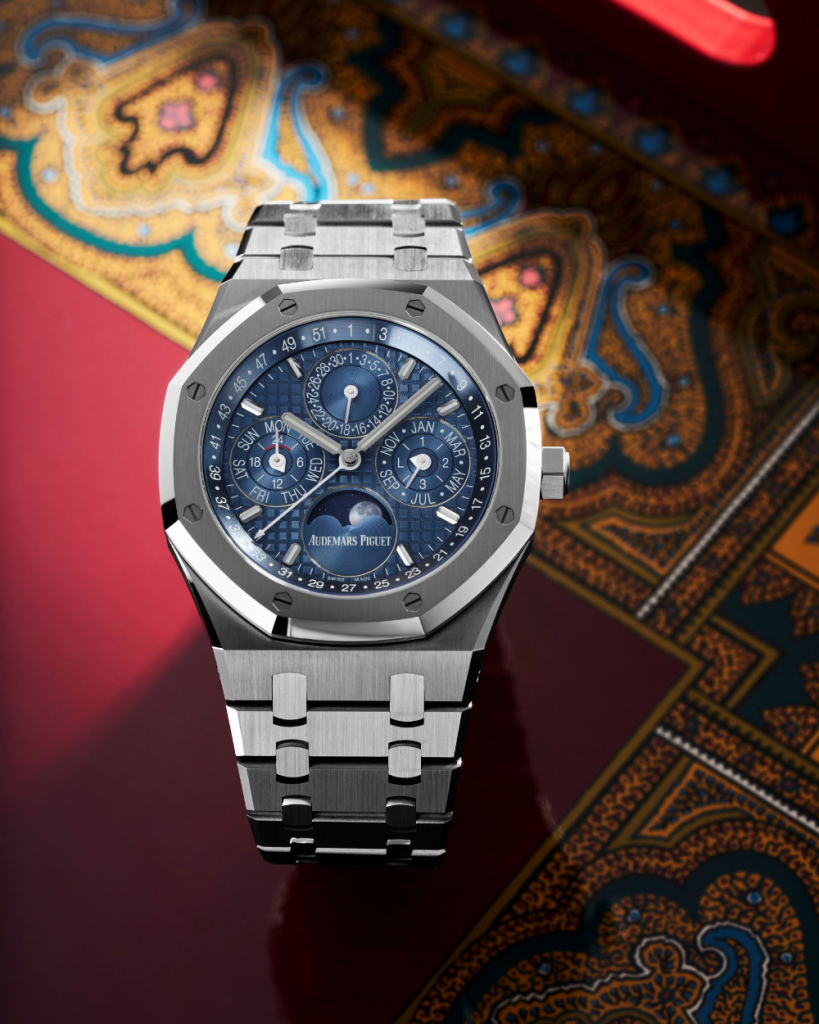
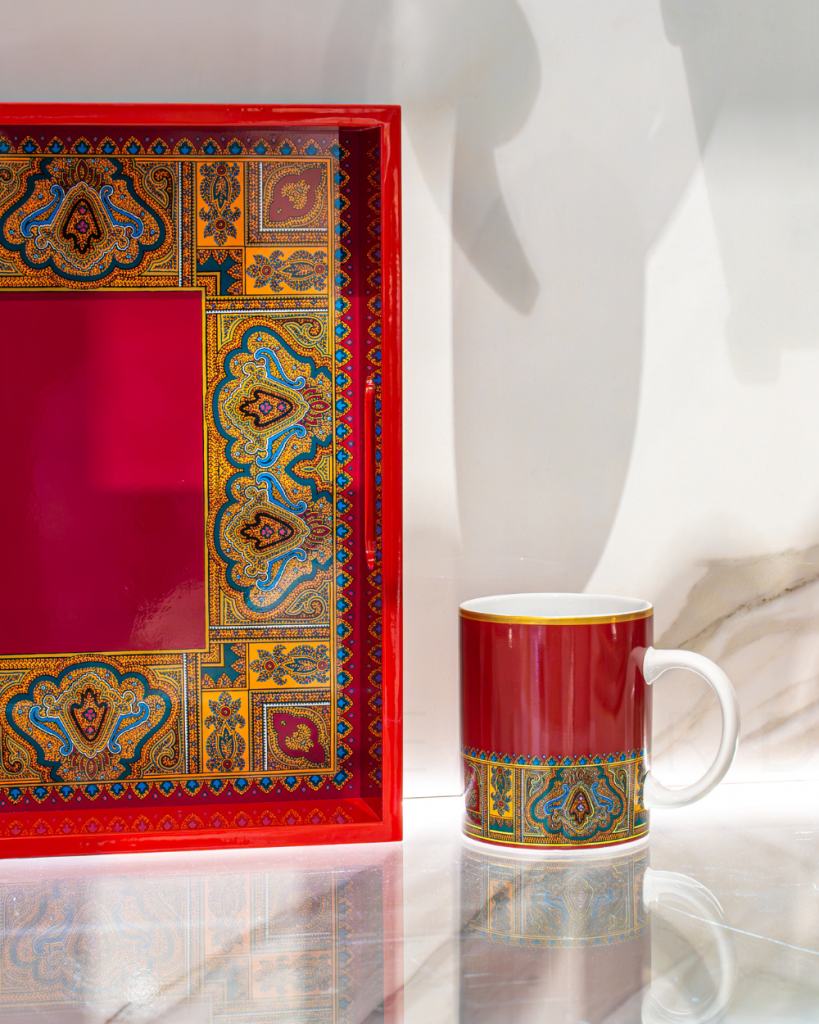
Left: Audemars Piguet “Royal Oak Perpetual Calendar” in stainless steel. Right: “Cachemire” tray by Etro Home Interiors. Top: Jacob & Co. “Fleurs de Jardin”; “Robin” cushion by Etro Home Interiors.
One of its most recognisable features is undoubtedly its tapisserie dial, which features an engraved grid of squares that plays with the illusions of light and depth. Standing at the intersection of machine- and hand-made, each dial takes about 20 to 50 minutes to craft, using age-old guilloché machines that the brand acquired from the U.S. and Canada in 2012. The artisan needs to be fastidious, skilled and experienced, as one small mistake can ruin the entire dial. Here, on the Audemars Piguet Royal Perpetual Calendar, we see the signature Bleu Nuit tapisserie dial, which appeared in the original 1972 version. What’s also remarkable is the new, seminal calibre 7138, which is one of the most user-friendly and seamless perpetual calendars in the industry today.
The art of three-dimensionality
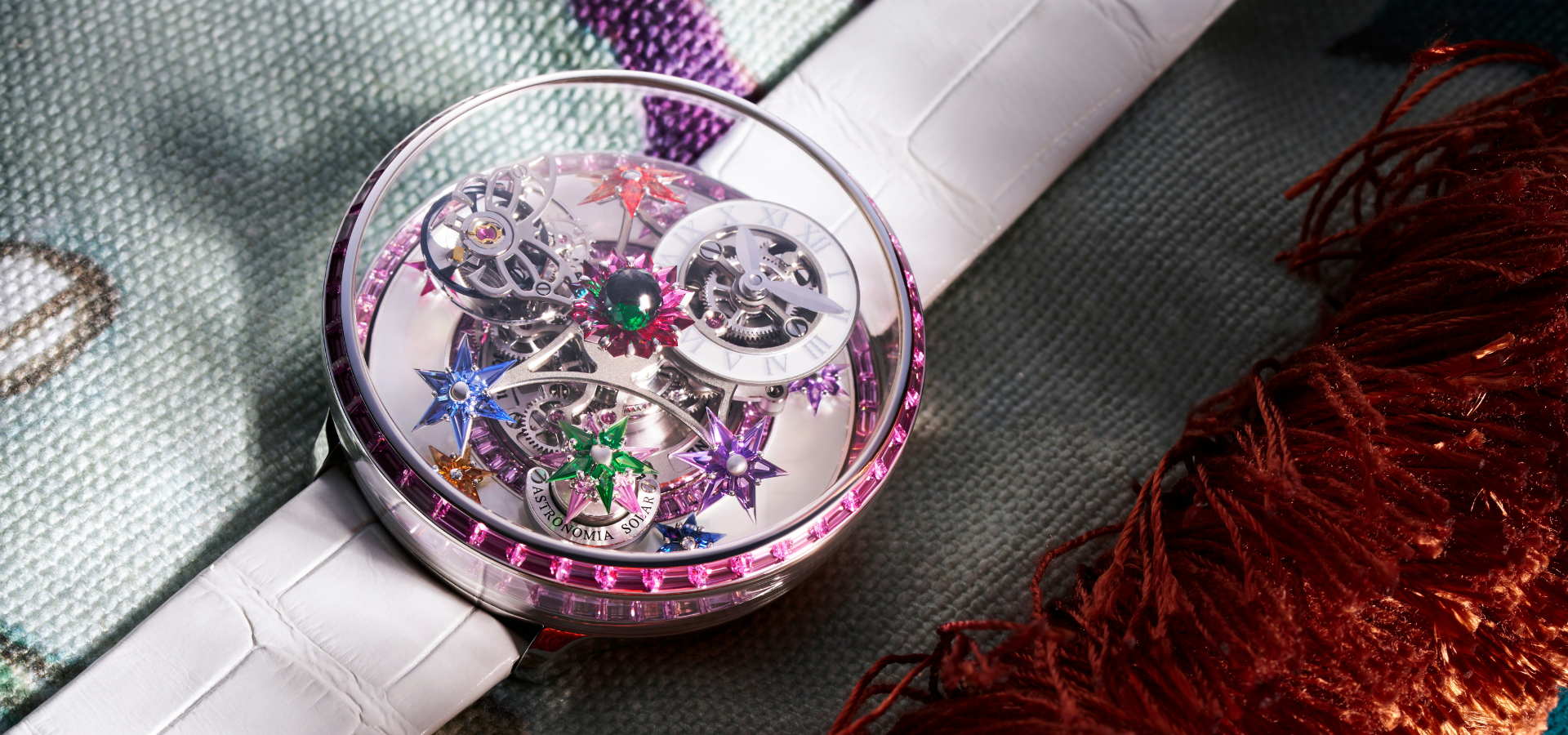
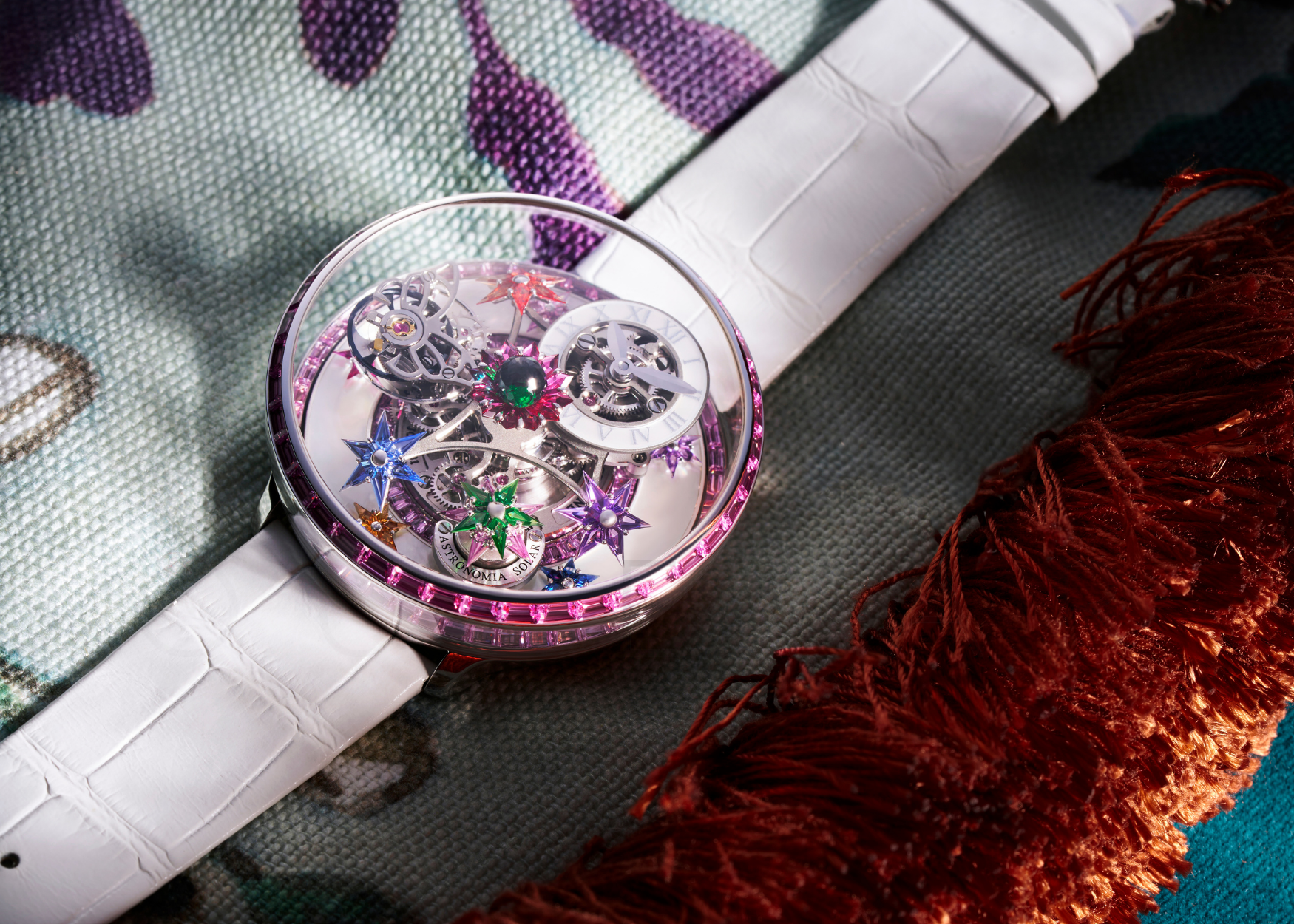
A garden blooms on the wrist with the Jacob & Co Fleurs de Jardin watch (top)—nay, sculpture. Based on the original Astronomia creation that was released in 2015, and which fundamentally reshaped the art of watchmaking, the Fleurs de Jardin similarly features a multi-dimensional display of mechanical wizardry, combined with some serious gem-setting skills.
The watch features a three-satellite movement that rotates around the dial: the first is a flying tourbillon, the second is the time display, and the third arm features a gemstone flower. Flowers blossom throughout the watch, crafted from multi-coloured sapphires, while the tourbillon carriage is shaped like a butterfly, making for a whimsical work of art.
The art of astronomy
Astronomical watches might be some of the most impractical complications out there, but boy, aren’t they gorgeous. Or perhaps, the sheer madness of bringing the heavens to the wrist is their very appeal. The Patek Philippe Celestial is one such timepiece, melding technical ingenuity with artistry and a dash of poetry. The Celestial series started its trajectory in 2002 with the Sky Moon Tourbillon ref. 5002, one of Patek Philippe’s most complicated creations.
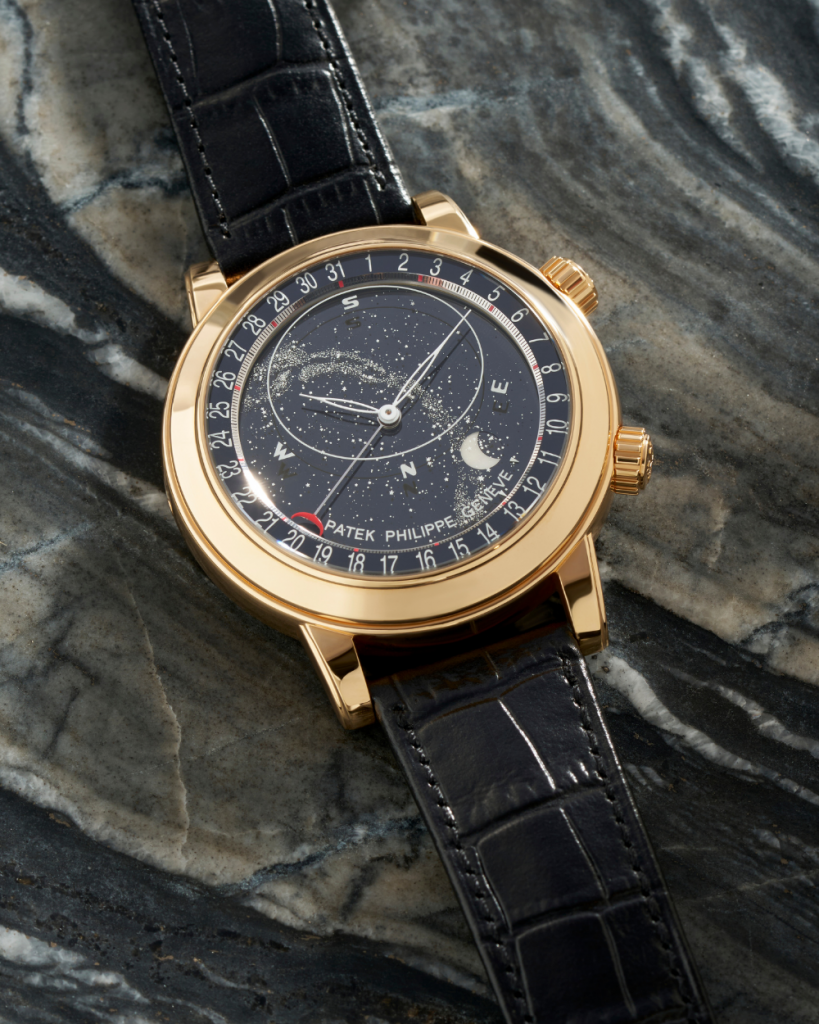
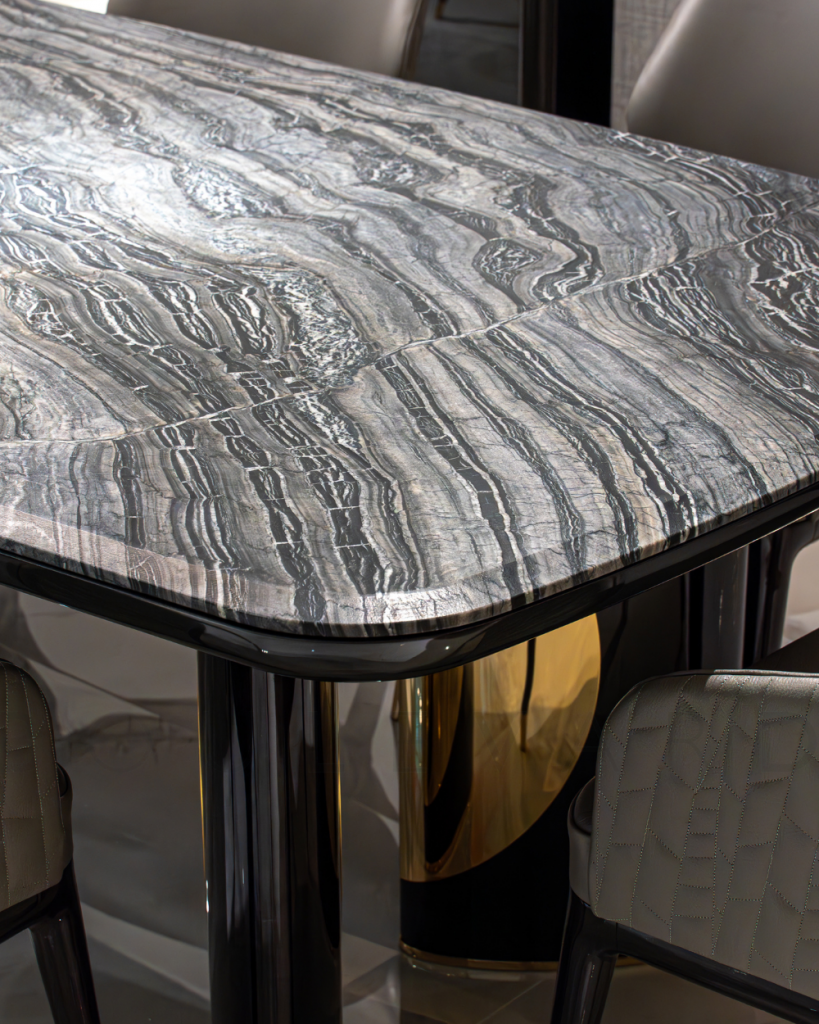
Left: Patek Philippe “Celestial” ref.6102R-001 in rose gold. Top: “Charisma” dining table by Giorgio Collection.
The Celestial is unbearingly captivating, with four layers of sapphire glass showcasing a star-lit sky: the first depicts the sky in a deep, shiny blue; the second echoes the phases and orbit of the moon; the third layer shows the stars and Sirius, the brightest star system; and the fourth, topmost layer locates the sky visible from Geneva—all moving at a real pace to replicate the actual movement of these celestial bodies. The self-winding timepiece comes in rose gold, and measures a hefty 44mm.
The art of jewellery setting
It’s no secret that most design decisions by luxury maisons today tend to be driven by market forces. But Cartier has bucked that trend with its Libre collection, where its designers are given carte blanche for their imaginations to run wild, untethered by restrictions or market demands. Here, absurd and audacious design codes are explored, all pushing the boundaries of Cartier’s creative lexicon.
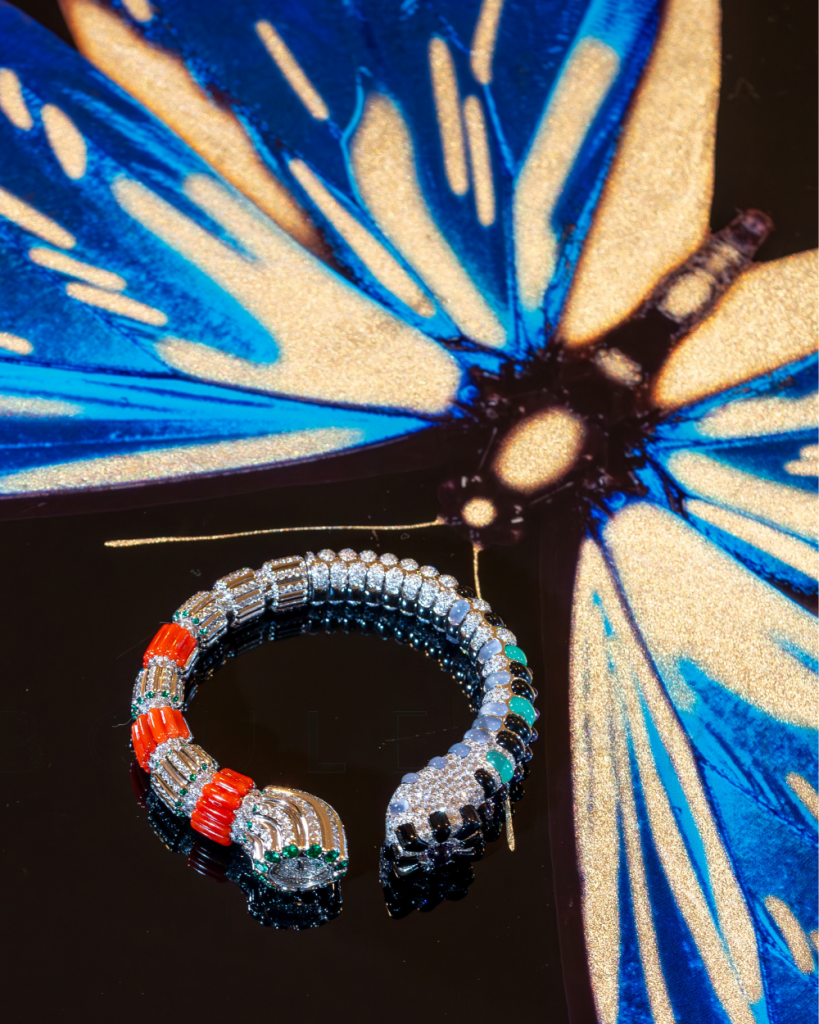
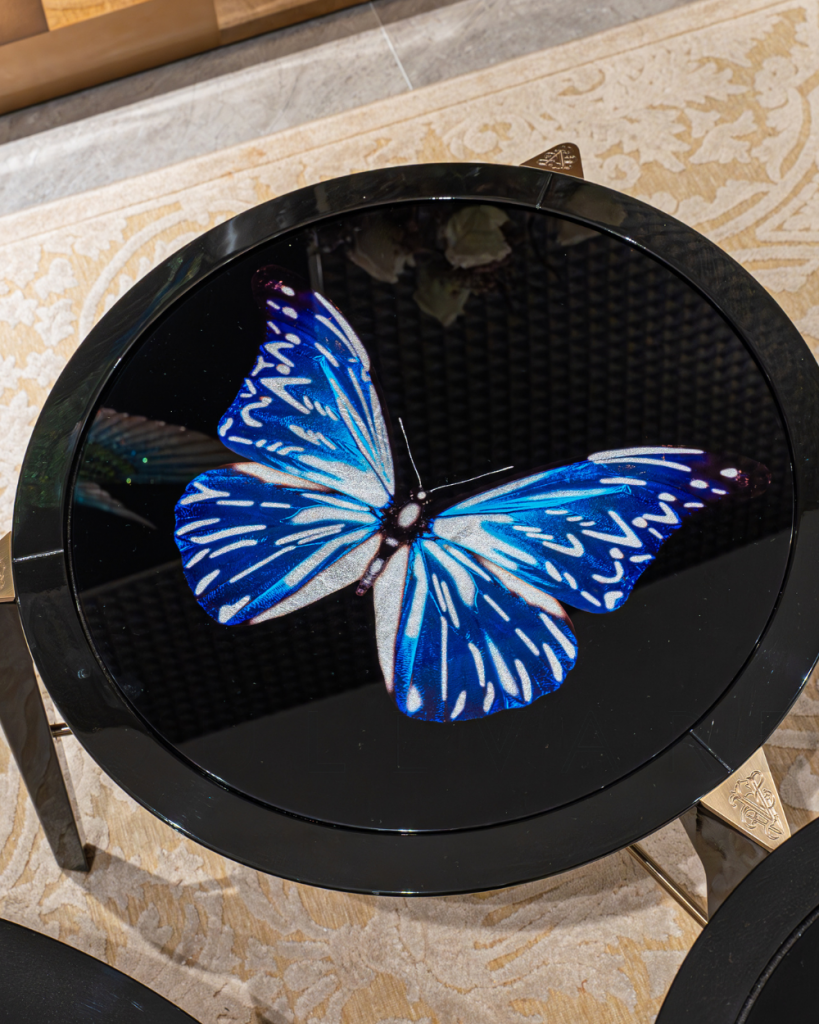
Left: Cartier Libre Tuttitutti High Jewellery watch. Right: “Breeze Butterfly” sidetable by Visionnaire.
Case in point, this Cartier Libre Tuttitutti high jewellery watch, wrought in white gold with diamonds, emeralds, amethysts, silver obsidian, coral, chrysoprase and chalcedony. Take a closer look, and you will notice that the design actually tips its hat to the maison’s spirit animal, the panther, with two abstract paw prints on the cuff. The artistry lies not just in its design, but also the gem-setting skills that the maison has mastered since its establishment 178 years ago.
The art of enamelling
Inspired by seawater motifs reserved solely for the use of imperial families of the Ming and Qing dynasties, Vacheron Constantin has released the Métiers d’Art Tribute to Traditional Symbols “Eternal Flow”. The Seawater, River, Cliff motif first appeared during the Ming Dynasty, symbolising how the steadfast emperor—represented by the cliff—stood tall, strong and resilient despite the crashing waves. Vacheron Constantin has rendered this powerful visual using the cloisonné enamelling technique, where golden wires are used to demarcate the separate enamelled sections.
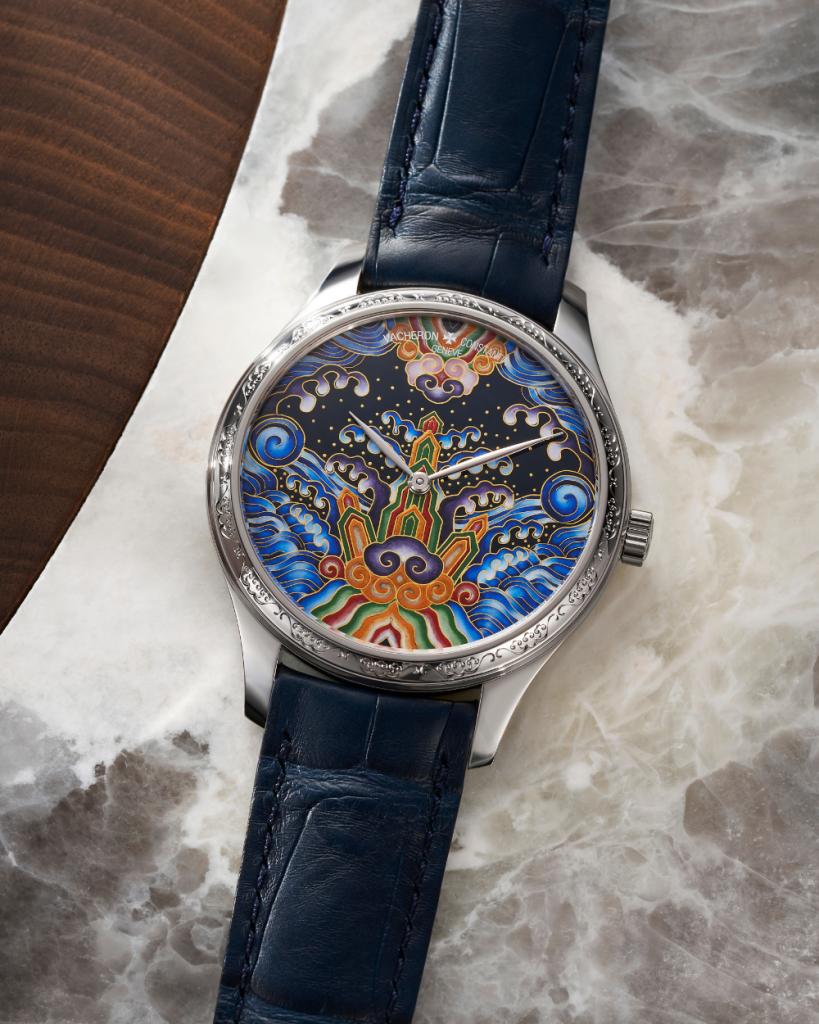
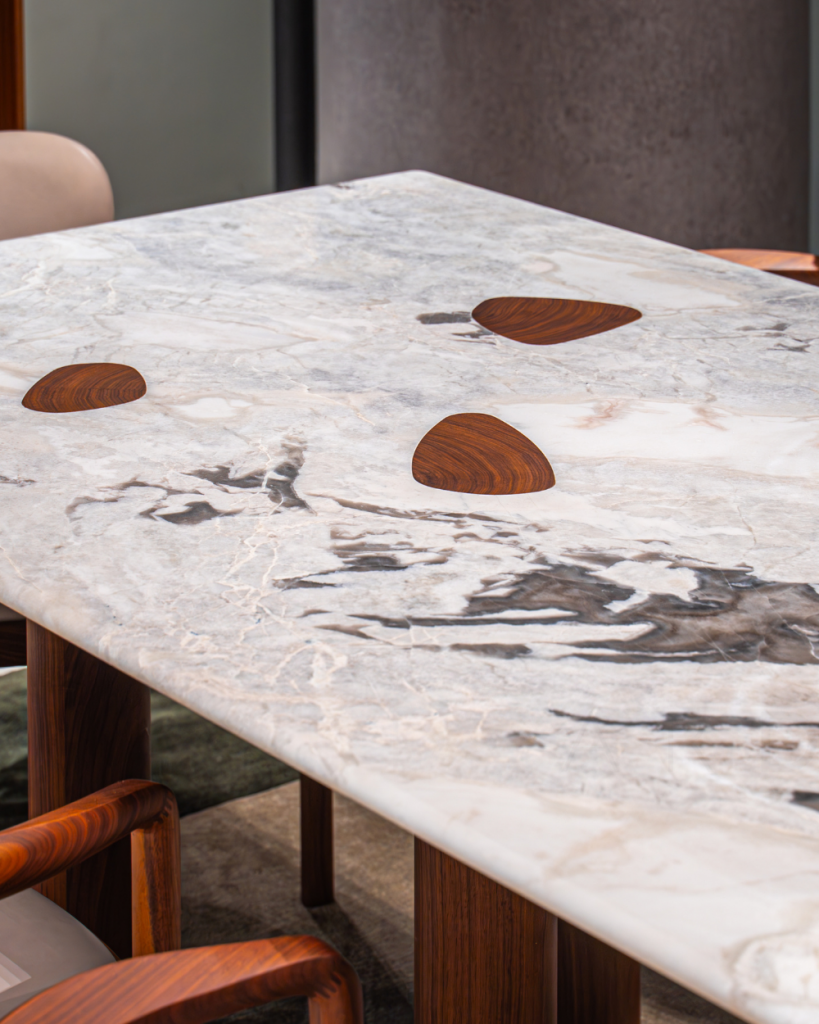
Left: Vacheron Constantin Métiers d’Art Tribute to Traditional Symbols “Eternal Flow” in rose gold. Right: “Oswood” dining table by Porada.
It takes the in-house enamelling artists 50 hours just to shape the motifs with 220 golden wires, while the enamelling itself takes 70 hours. The artistry continues on the bezel, which features a hand-engraved bat motif, a symbol of good fortune and blessings. Given the complexity, it’s no wonder that the watch is only available in a limited edition of 15 pieces for each iteration in white and rose gold.
Vacheron Constantin Métiers d’Art Tribute to Traditional Symbols “Eternal Flow” in rose gold; “Oswood” dining table by Porada.
The art of complication
When the Fabergé Lady Compliquée “Peacock” bagged the top prize in the 2015 High Mechanical category at the Grand Prix d’Horlogerie de Genève (GPHG)—known the Oscars of the Swiss watchmaking industry—it cemented the brand’s reputation in the horological world, forcing industry insiders to take notice of its irreverent and unusual approach to watchmaking.
Collaborating with Agenhor SA, one of the most talented movement makers in Geneva, Fabergé paid tribute to the Peacock Imperial Easter Egg from 1908, harking back to the era when Peter Carl Fabergé crafted intricate, bejewelled and unique eggs for the Russian tsars.
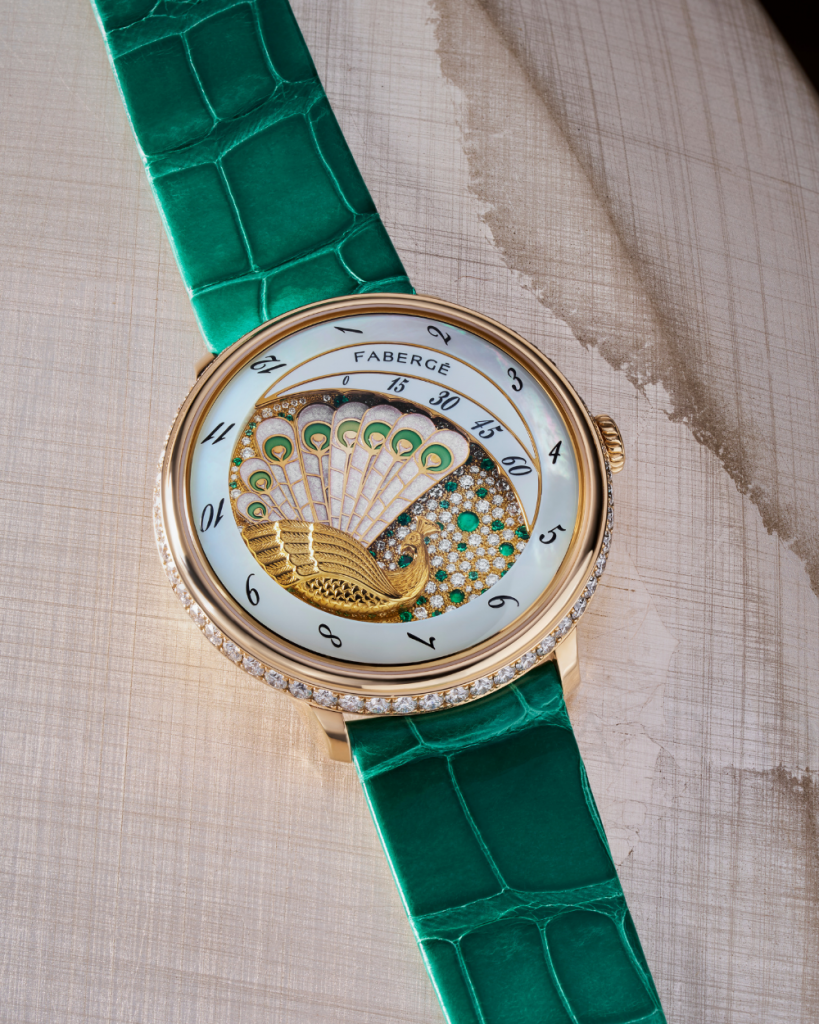
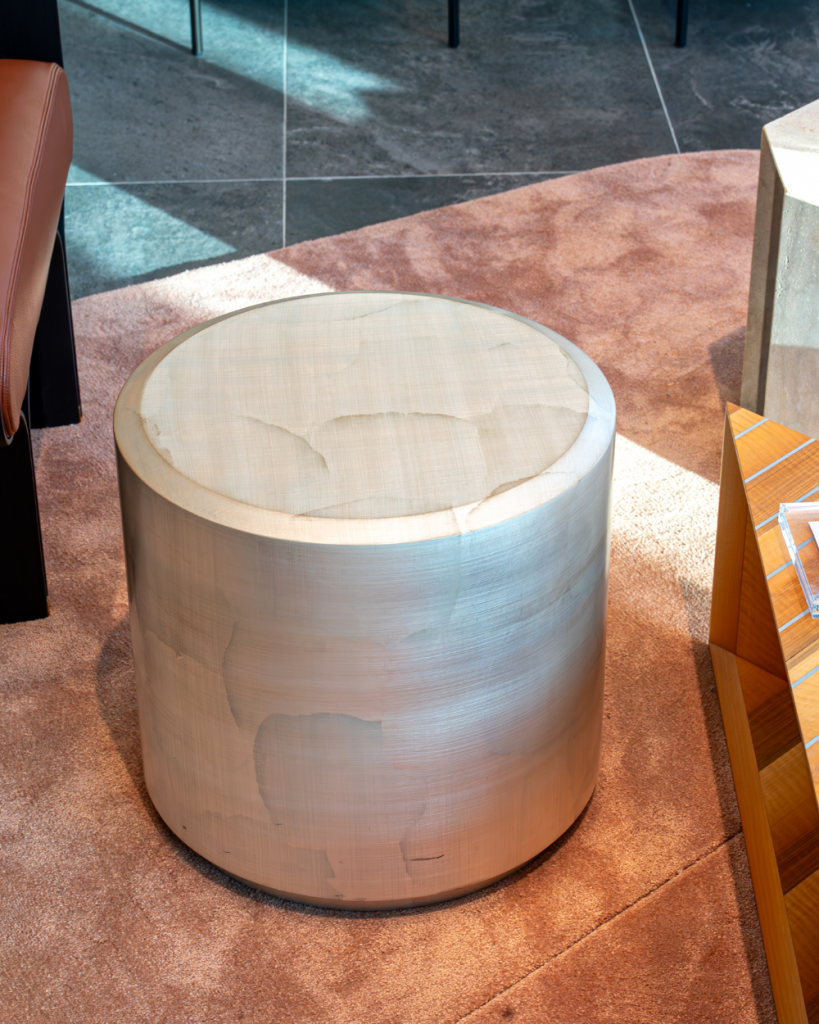
Left: Fabergé Lady Compliquée “Peacock” in rose gold. Right: “Gong” coffee table by Gallotti&Radice.
Here, the hand-engraved peacock reveals the time with its exquisitely rendered tail, with four feathers moving simultaneously at different speeds, making the endeavour even more complex. The dial also pays homage to Faberge’s jewellery-making heritage, featuring snow-set diamonds and tsavorites and mother-of-pearl elements on the feathers and peripheral disk.
The brand has recently undergone an ownership shift. Gemfields, which acquired the brand in 2012, has sold it to Russian tech investor Sergei Mosunov who is on a mission to buy back the famous imperial Fabergé eggs and restore the brand to its former glory. Whether or not he will continue exploring Fabergé’s horological endeavours remains to the seen, but the future certainly looks dazzling for the brand.
Read next:

5 bed POA
Belmont Road, D10 5 bed 43,800,000 SGD
3-4 bed | 2,702 - 8,923 area POA

4+1 bed 20,000,000 USD
4 bed POA