

The interview: Anya Evans on why investors should not ignore consumer brands in the beauty, lifestyle and fashion space
More than half of venture capital flows to sectors like tech, healthcare and fintech. Beauty, wellness, fashion and lifestyle collectively receive only around five per cent of funding; yet consumer remains a market of scale and cultural relevance. Case in point: Rhode Beauty, founded by Hailey Bieber, was sold in 2025 for US$1 billion. The global beauty industry is projected to grow at around five per cent annually, with Asia Pacific accounting for roughly one-third of the US$450–500 billion market.
Few understand this space better than Anya Evans, founder of Venture Muse Club. After starting her career in mainland China in 2015, she built an influencer marketing agency connecting Western brands with Chinese consumers, before moving into investing via a Hong Kong family office backing fashion and lifestyle brands. Today, based in Singapore, she advises on how consumer brands are built, scaled and exited.
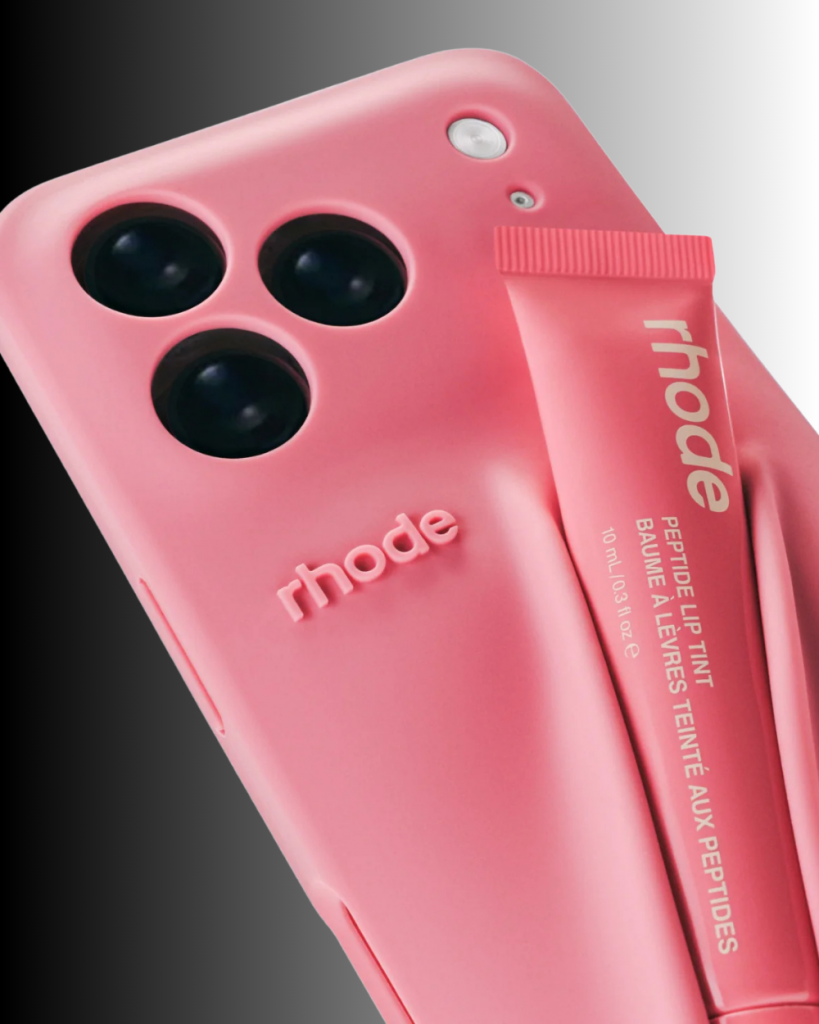

Rhode Beauty, a skincare and beauty brand founded by Hailey Bieber and sold in 2025 for US$1 billion. Top: Anya Evans, founder of Venture Muse Club.
Boulevard: Tell us about yourself.
Anya Evans: My background is in investing across fashion, beauty, lifestyle, premium and luxury. Professionally, I’ve worked at the intersection of marketing and consumer investment, which has shaped how I evaluate brands.
I started in a family office in the fashion retail space, where we looked for brands to back and potentially bring into mainland China. My role was to identify brands with strong cultural capital, compelling content strategies, and something beyond the typical fashion startup.
Later, on the venture capital side, the pace of decision-making was much faster. I focused on sourcing opportunities across fashion, beauty and lifestyle, and then working with companies post-investment to help move them from one valuation stage to the next within the fund’s time horizon.
In consumer—especially fashion and beauty—a holistic lens is critical because purchasing decisions are emotional. Financials are the initial filter: are margins solid, are operations sound? But once those fundamentals are in place, the question becomes: is there something special here? Is there potential for a significant exit? Would a strategic company like Estée Lauder, L’Oréal or LVMH be interested down the line? That “something special” is what I focus on.
“In consumer—especially fashion and beauty—a holistic lens is critical because purchasing decisions are emotional.”
Blvd: What is that special sauce? You mentioned cultural capital—most VCs look at founder and financials, but cultural capital adds nuance. Are these separate ideas, or connected?
Evans: They’re connected. Investing in fashion, beauty and lifestyle requires additional nuance because purchasing is emotion-driven. The two main components I look at are content and community. Cultural capital flows from those.
On content, we live in a digital world. Social media shapes desire, whether we’re conscious of it or not. When consumers shop, they’re subconsciously referencing what they’ve seen online—what’s trending, what feels aspirational, what feels relevant.
If a brand doesn’t have a strong content strategy or can’t tell its story authentically, it’s a non-starter—regardless of margins or patented formulas. I’ve seen brands with exceptional products fail because the founder was a scientist with no marketing instinct. Even if the product works brilliantly, you can’t cut through the noise without strong storytelling.
The second component is community. It’s an overused word, but I don’t look at follower count. I look at depth of engagement. How many customers genuinely love the brand? Are you top-of-mind? What do you know about them? Can you personalise communication? Is there two-way interaction?
“Investing in fashion, beauty and lifestyle requires additional nuance because purchasing is emotion-driven.”
These elements create resilience. In a slowdown, the brands that survive are those with loyal communities and consistent storytelling. You can measure this through recurring purchases, engagement rates and retention.
Cultural capital is the by-product. If your content is emotionally resonant—whether aspirational, heritage-driven, or locally rooted—and you’ve built a real community, you accumulate cultural capital. That, in turn, drives growth and long-term defensibility.
Blvd: So your criteria to invest in lifestyle brands are: margins and exit potential; content; community; product. Are these weighted equally?
Evans: It depends on the stage of the company. At an early stage, product, content and early community signals matter more. Profitability may not yet be there, but you’re looking at margins and foundations. At the growth stage, financial scrutiny increases. You examine sell-through rates, operating margins, contribution margins. Marketing spend should start translating into financial performance.
At a later stage—pre-IPO or acquisition—financials become dominant. Exit strategy matters more at that point. Early on, it’s more a yes-or-no filter: is this a sector with active acquirers? Has L’Oréal, Estée Lauder or Unilever been acquiring in this category?
Product remains critical, particularly in beauty. You need differentiation. White-labelled products relying purely on marketing are far harder to scale sustainably.
“At an early stage, product, content and early community signals matter more. Profitability may not yet be there, but you’re looking at margins and foundations.”
Blvd: It sounds like founders need to be exceptional at everything—social media, marketing, logistics, finance. Does that narrow the pool?
Evans: Consumer founders do need to be a Swiss army knife. But no founder can do everything well—usually they’re strong in one or two areas.
What matters is self-awareness. I’ve worked with an incredibly creative founder who won awards in her first year. But she didn’t understand margins or financial statements. Which was fine because she recognised the gap and brought in someone who does.
As an early-stage investor, you’re not looking for perfection. If everything is already figured out, you’re too late. You’re looking for potential, and a founder you can work with. Personality matters. Are they coachable? Do they understand their weaknesses? That determines whether you can build something together.


Maison 21G is a Singapore-born personalised fragrance brand, with Anya Evans helping drive its expansion beyond Singapore into global markets.
Blvd: We’ve been talking about recession fears. What is the state of the industry now?
Evans: It’s not all doom and gloom. Inflation is high and consumers are more conscious, but global consumer spending is still growing—just more slowly, around low single digits. We’re past the post-covid boom, so growth feels slower, but it’s not all collapse.
What has changed is expectations. Consumers expect faster delivery, high personalisation, and brands that understand them. Generic messaging doesn’t work anymore.
Brands that integrate technology and AI into personalised communication have an advantage. Customers now expect brands to know their purchase history, preferences and fit. That raises the bar.
“As an early-stage investor, you’re not looking for perfection. If everything is already figured out, you’re too late. You’re looking for potential”
I also see continued premiumisation, especially in Southeast Asia, where the middle class is growing and consumer spending is increasing faster than global averages.
Localisation is another trend. Consumers are fatigued by sameness. Premium customers increasingly seek brands that reflect local heritage or identity. That creates opportunity for regional brands.
Blvd: Most investment capital goes to tech and AI. What are misconceptions about consumer investing?
Evans: Tech attracts capital because growth trajectories can be faster and multiples higher. Consumer is more operationally complex: manufacturing, logistics, storage, expiry, inventory risk. It’s not easy, but it can be deeply rewarding.
For family offices, especially those thinking about intergenerational engagement, consumer investments can be compelling. Younger generations often relate more to fashion, beauty, hospitality and experience-led businesses.
A common misconception is that returns aren’t there. Returns exist—but on a different timeline.
You’re unlikely to see ten times in a year. However, failure rates can be lower if you choose well. In tech, perhaps three out of ten succeed; in consumer, seven out of ten may survive. Returns are steadier, though less explosive.
There are still billion-dollar exits—they just tend to trade at more sober multiples.
“Premium customers increasingly seek brands that reflect local heritage or identity. That creates opportunity for regional brands.”
Blvd: Why are returns lower in consumer businesses?
Evans: Because acquisition multiples are typically lower than in tech. Consumer valuations are more numbers-driven and less inflated. Revenue multiples tend to be under five in many cases, rather than the double-digit multiples sometimes seen in tech.
That doesn’t mean it’s a poor investment. It means valuations are more grounded. If you have visibility into potential acquirers—for example, relationships with L’Oréal, Estée Lauder or Unilever—you can position brands accordingly and make more informed bets.
Blvd: What’s one piece of advice you have for investors looking at consumer brands?
Evans: Start with industries you personally understand and consume. If you’re passionate about fashion, back emerging fashion brands. If you understand automotive, look at adjacent luxury car brands. Your consumer intuition becomes an advantage.
You also don’t need to start large. Begin with angel investments. Test the waters and build from there.
Blvd: What are some successful companies you’ve worked with?
Evans: Maison 21G stands out—a Singapore-based personalised fragrance brand. When we began working together, they were primarily in Singapore with limited international presence. Since then, they’ve expanded across Asia, including mainland China, Korea and the Middle East.
Fragrance is a difficult category to enter, so seeing that brand scale successfully has been particularly rewarding.
Read next:

5 bed POA

Belmont Road, D10 5 bed 43,800,000 SGD

3-4 bed | 2,702 - 8,923 area POA

4+1 bed 20,000,000 USD

4 bed POA