The interview: The engineer-at-heart who wants to put handbags in museums—and is charging upwards of $100,000 for the privilege
by Karishma Tulsidas
Photography by Jin Cheng Wong
Back in the early 2000s, an unknown upstart called Richard Mille burst onto the watchmaking scene, upending tradition and bringing never-before-seen, high-tech materials like ceramic and carbon fibre into the horological lexicon. Once regarded as staid and traditional, the watchmaking industry was never quite the same after.
On the other hand, for all their ubiquity, the luxury handbag industry has, for the most part, been remarkably resistant to reinvention. While high-end watches, cars, yachts and even pens have gone through a materials revolution, handbags have stayed stubbornly, almost defiantly, leather.
Abel Richard Bullock would like to change that. The founder of Abel Richard—a new luxury house that opened its first global flagship on Los Angeles’ Rodeo Drive in 2025, and a boutique in Marina Bay Sands, Singapore, at the beginning of 2026—is not a handbag person by background. The son of a scientist, he founded Surgenex, a biotech firm that specialises in placental tissue products, and is the co-owner of Montegrappa, the Italian pen manufacturer. The American has spent decades working with materials used in satellites, developing medical grafts from cadaveric tissue and making pens that reference Fabergé. Handbags, according to him, were simply the logical next frontier.
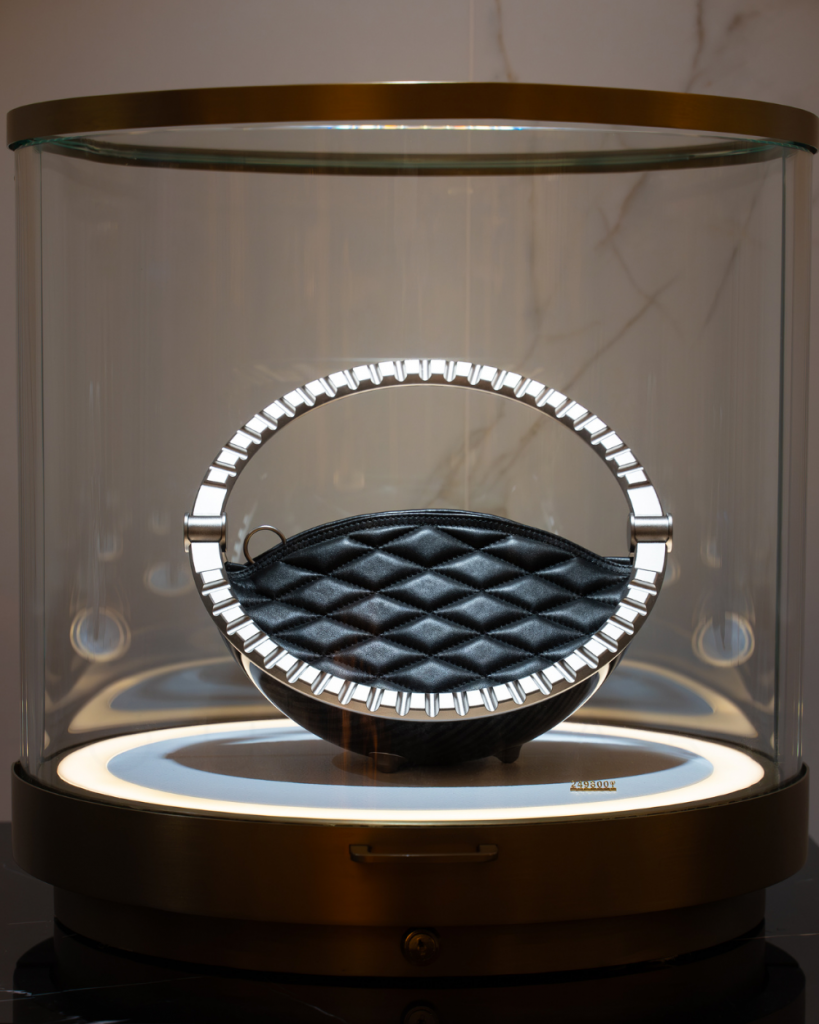
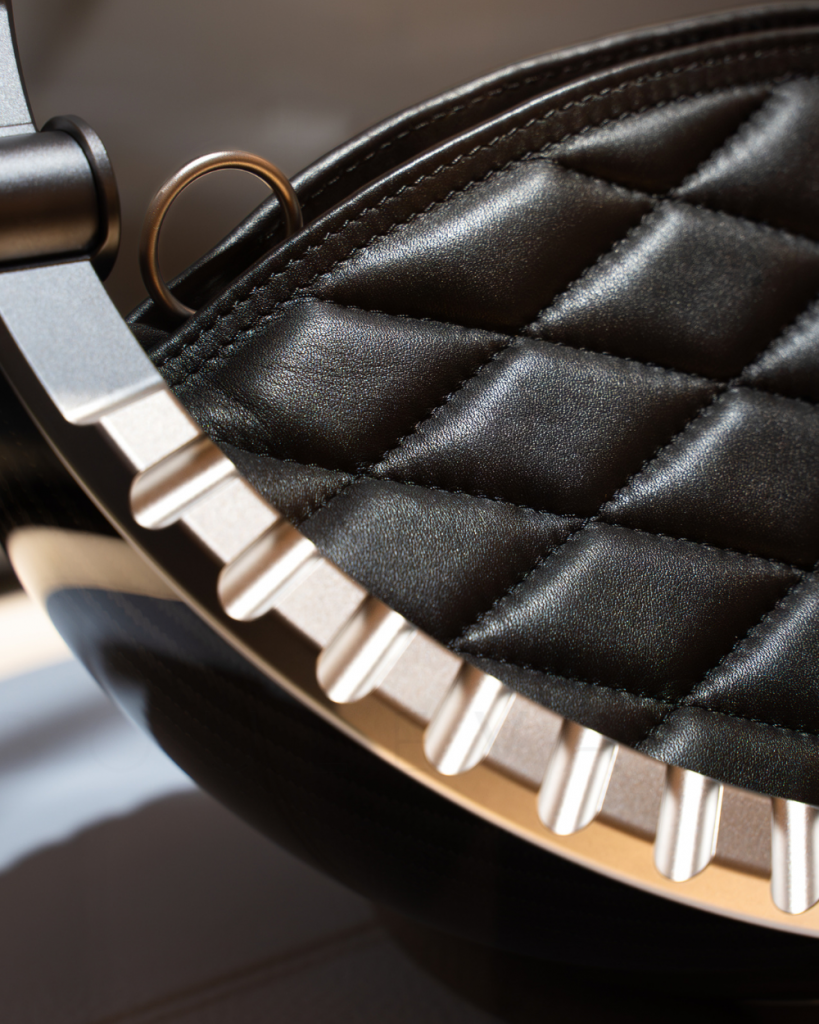
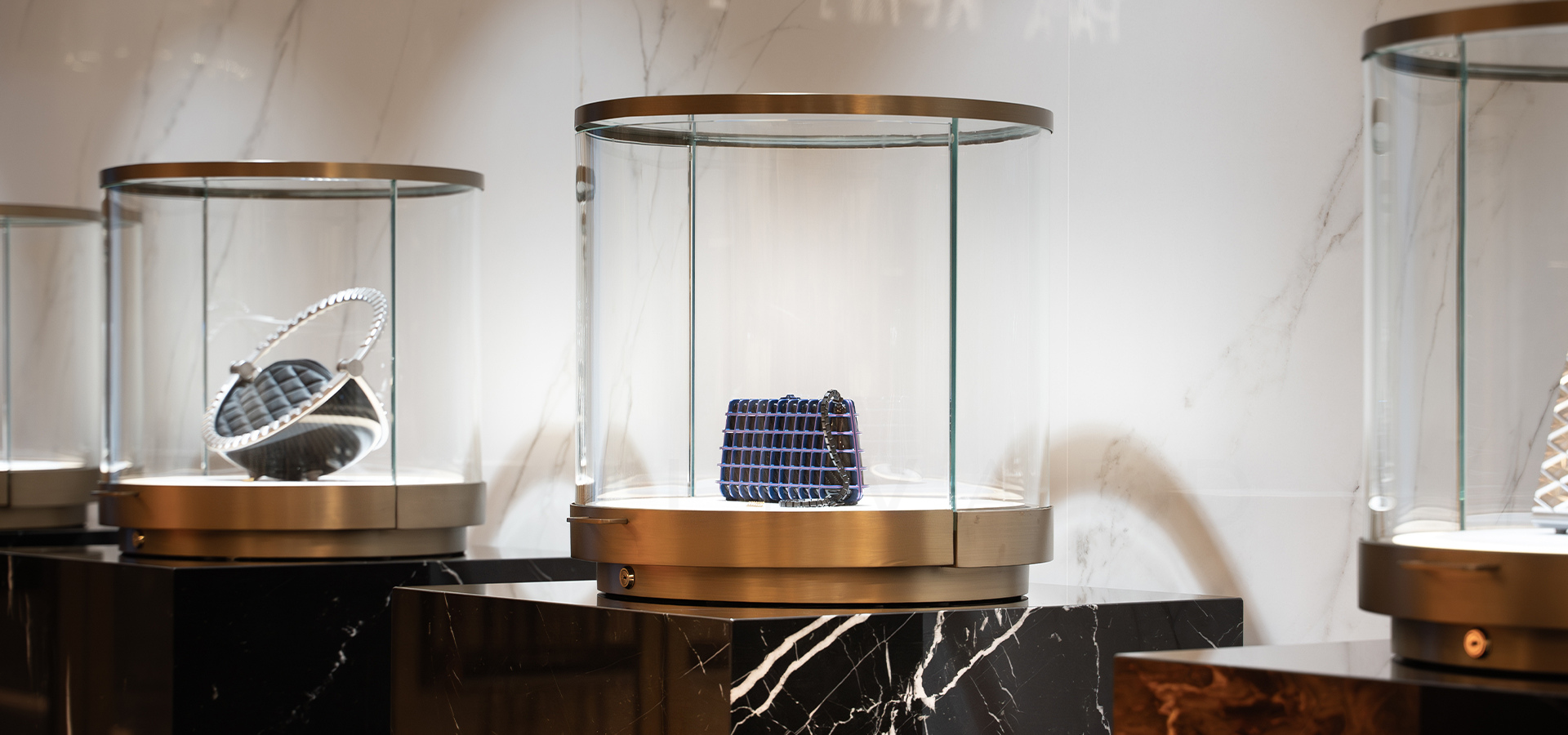
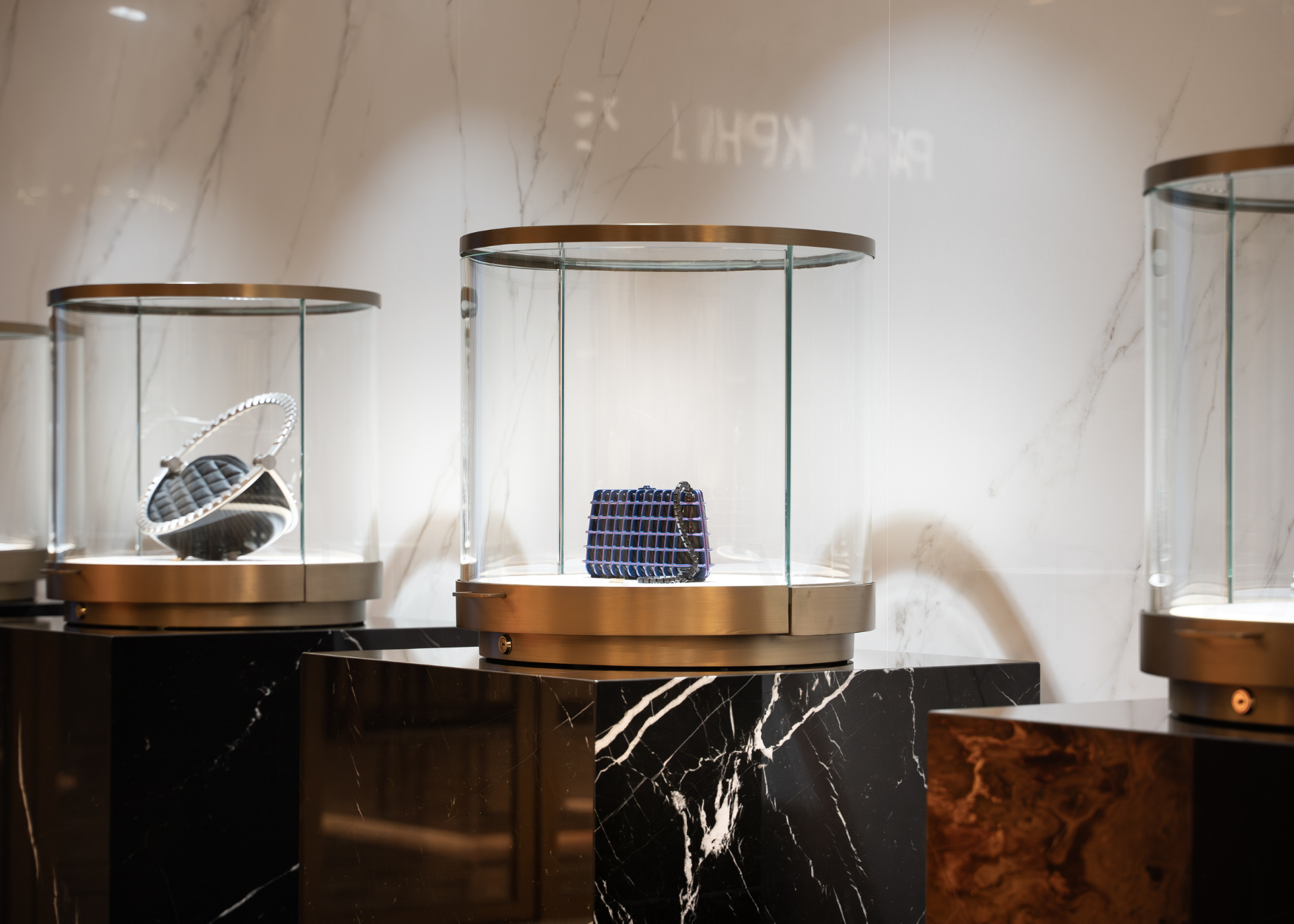
The ‘Chrono’ bag by Abel Richard was inspired by the codes of watchmaking. Top: Inside the Abel Richard boutique in Marina Bay Sands, Singapore.
He had the idea for Abel Richard more than 20 years ago: “I was surprised that there were only black and brown handbags back then. It was time for someone to add a twist to luxury handbags, because it’s always been leather or crocodile or exotic skins; no-one had really transformed the industry like we’d seen in high-end watches, cars, yachts. Handbags are more of a mass-produced type product.”
The price tags for an Abel Richard are eye-watering. The bags start at about US$100,000 and climb to $300,000—a level once defined by rarefied collectibles like the Himalayan skin Birkins. But while Abel Richard is first and foremost a handbag brand, it feels almost silly—blasphemous even—to compare it to other luxury leather brands.
His bags are made from aerospace-grade titanium, ceramic and other materials that have not before been used in the handbag space. The ‘Mosaic’ design alone contains more than 400 individually placed ceramic tiles, each positioned and turned by hand. One bag can take more than a thousand hours to produce. “Bag brands say that they take 20 hours to produce one bag. We sometimes take longer to produce just one component.”
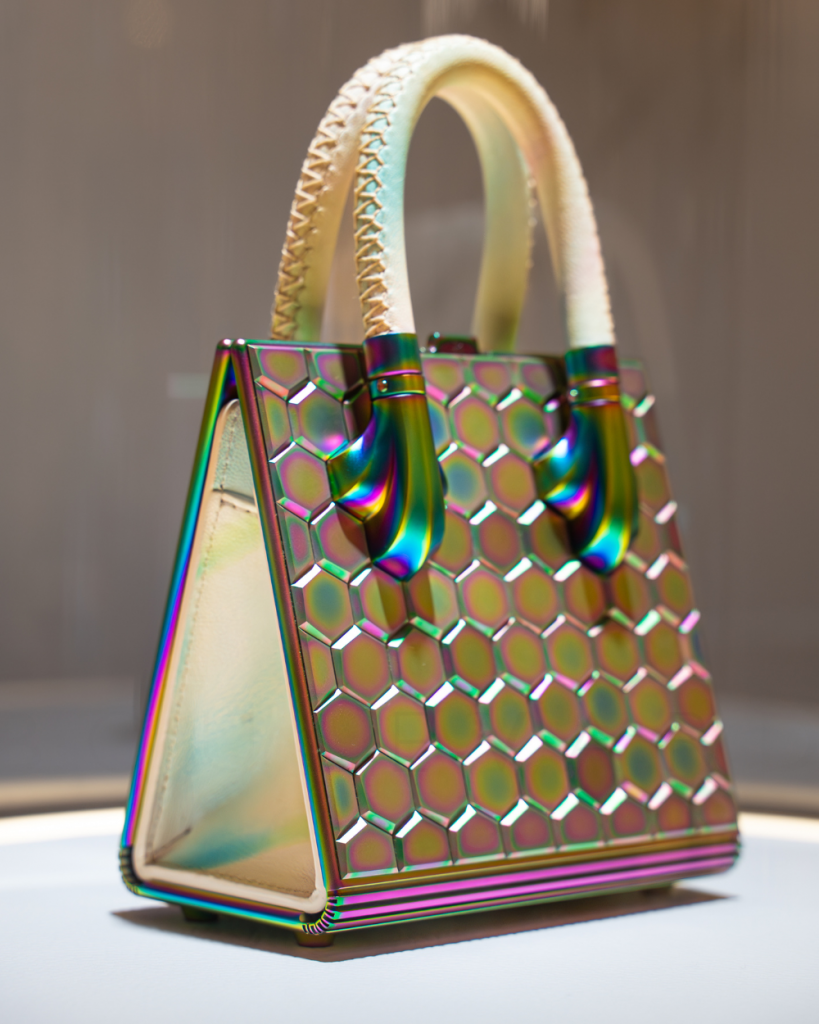
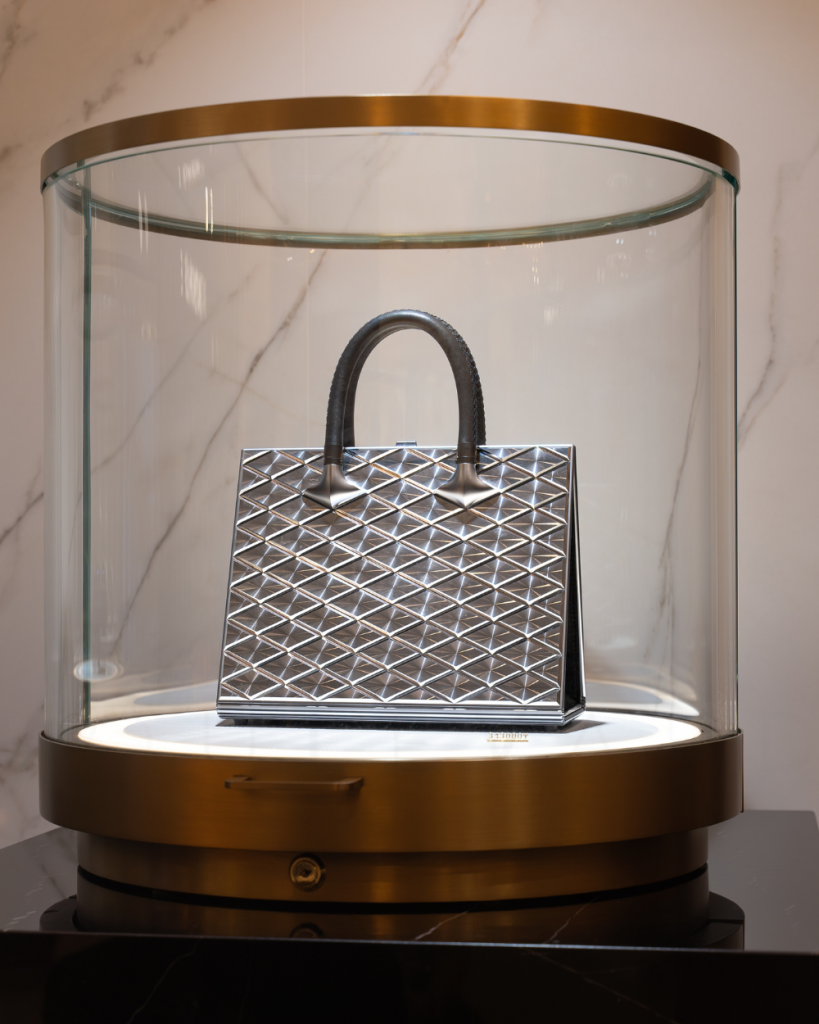
The ‘Mosaic’ handbag takes about 1,000 hours to craft.
While Abel Richard leveraged the expertise of the Montegrappa brand, which had already been working with titanium and carbon fibre, they had to source engineering experience from aerospace companies because they were manipulating materials that had never been used in bag-making before. They had assumed scaling to a bag’s flatter surface would be simpler than working around a pen’s circumference. They were wrong.
The manufacturing process is, by Bullock’s own admission, borderline irrational. A solid, unbroken block of titanium is machined into the frame of a bag—an engineering feat in itself. Hand finishing is involved at almost every stage: polishing each component individually, placing each tile, getting the tolerances right. “We thought it would be a lot easier than it was,” he explains.
“Looking back now, if someone told me they were going to do this, knowing what I know today, I’d tell them it was impossible.”
Production numbers are, accordingly, tiny—and genuinely so, not as a marketing device. “It’s not a false sense of limited supply like other brands,” he says. “We really cannot make that many.”
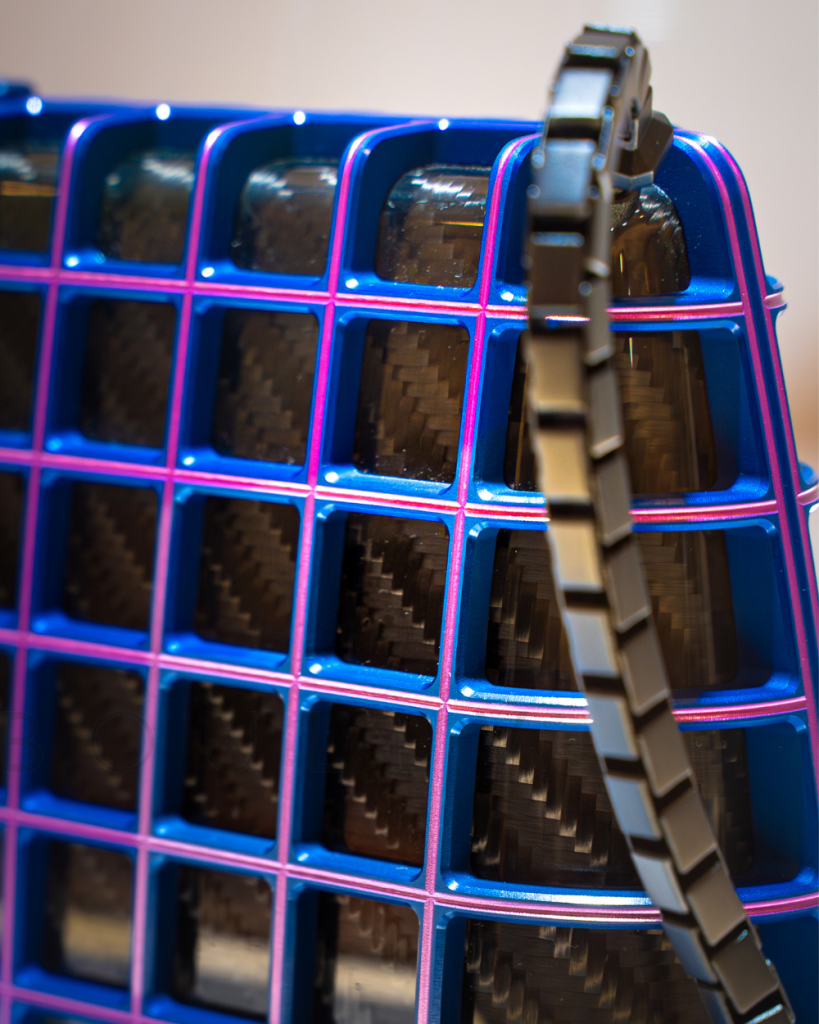
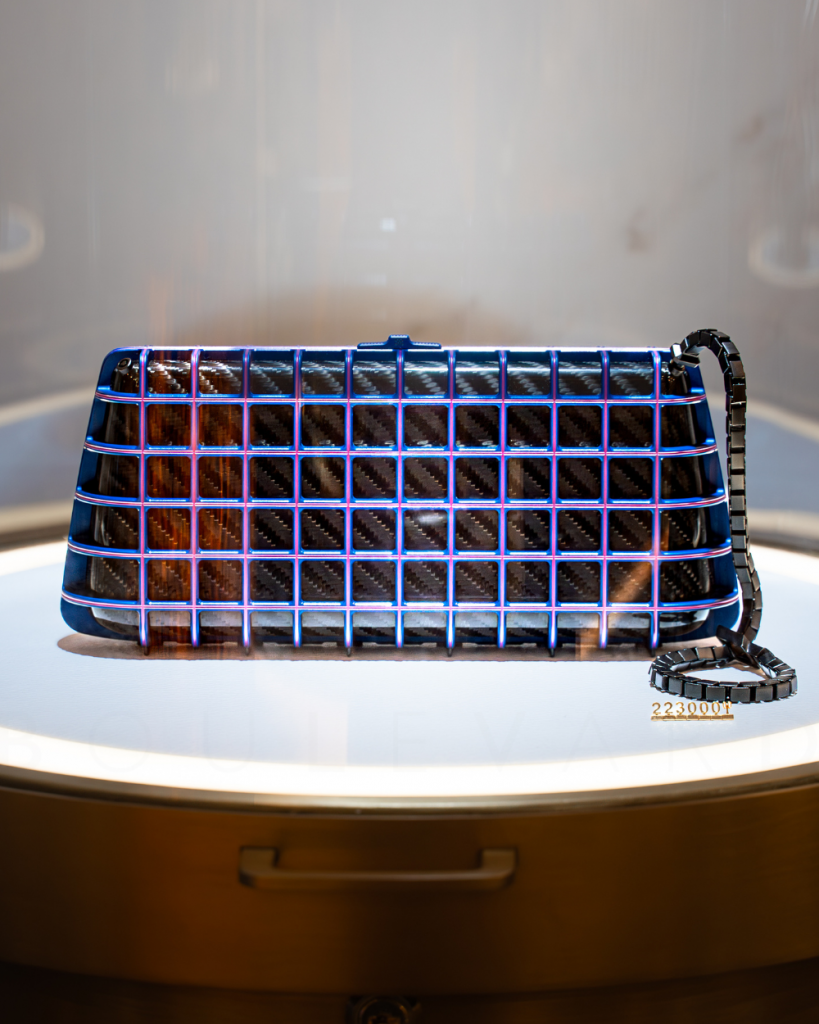
The ‘Oyster’ bag is wrought in carbon fibre.
He invokes Rolls-Royce as a reference point more than once, sitting at the intersection of hand finishing with high-tech engineering. The Mosaic bag, made from 160 ceramic tiles, weighs a couple of kilograms, but that’s the point. It feels substantial, much like the heft of a Rolls-Royce door.
Not every bag in the collection is built for daily use, but that’s somewhat beside the point. “The philosophy is that I design for a thousand years. We’re not really designing for today necessarily,” says Bullock. “We want to have lasting power over hundreds, thousands, of years, so that these products end up in museums one day.”
An engineer at heart
Bullock was born in Louisiana (his father was a scientist and professor) before moving to the Midwest as a teenager, then completing an international MBA across New York, London and Paris. He remembers having a creative, engineering streak even as a child, sharing an anecdote about building a writing tool for people without fingers for a school competition. He’s simultaneously candid and guarded in conversation, offering up personal detail, pulling up his phone to show us pictures of his two children, aged three and five, before pivoting back to the work.
The engineering instinct runs through everything he’s built—Surgenex, Montegrappa and now Abel Richard. What ties them together, in his view, is the same design logic: function, innovation and a refusal to accept the status quo. “We push the boundaries to what’s impossible,” he says. “So we fail all the time. We fail on our design work, we fail on our execution. Because we’re always pushing those boundaries.”
Whether the handbag industry is ready for a materials revolution remains to be seen. Richard Mille once seemed like an unlikely proposition too.
Read next:
2-4 bed | 3,498 - 8,395 sqft area POA

6 bed POA
6 bed | 16,145 sqft area POA
5 bed POA

4 bed | 6,997 sqft area 6,800,000 EUR